Dynamics & Expression
Appassionato
Pronounced ah-pahs-see-oh-NAH-toh
Appassionato means 'passionately': play with intense, heartfelt emotion, a full tone and strong dynamic shaping. It often joins a tempo word, as in Allegro appassionato.
Appassionato means "impassioned" or "passionate". It asks for intense, heartfelt feeling: a full, singing tone, strong dynamic contrasts, and phrases that surge and swell. It is often part of a tempo heading such as Allegro appassionato or Andante appassionato.
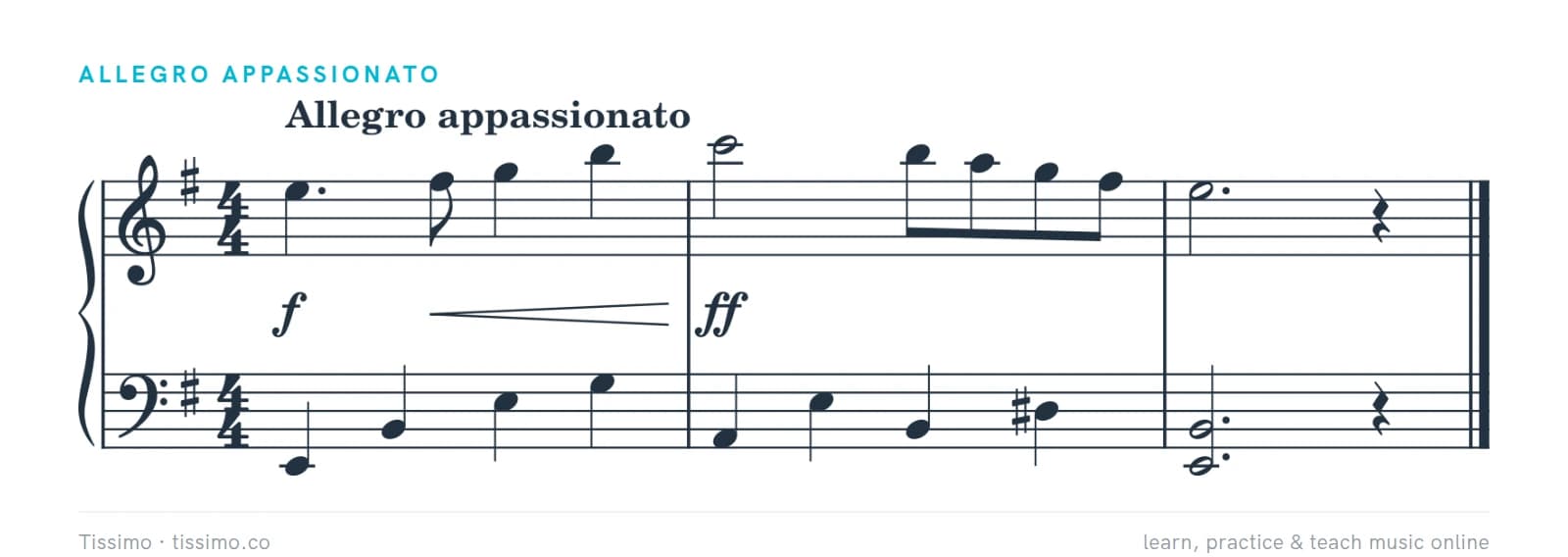
Appassionato in real music
- Mendelssohn's Violin Concerto in E minor opens Allegro molto appassionato: very fast and passionate.
- Beethoven's Piano Sonata in F minor, Op. 57, is famous as the "Appassionata". The nickname came later, from a publisher, not from Beethoven, but it shows how strongly the music suggests the word.
Passion with control
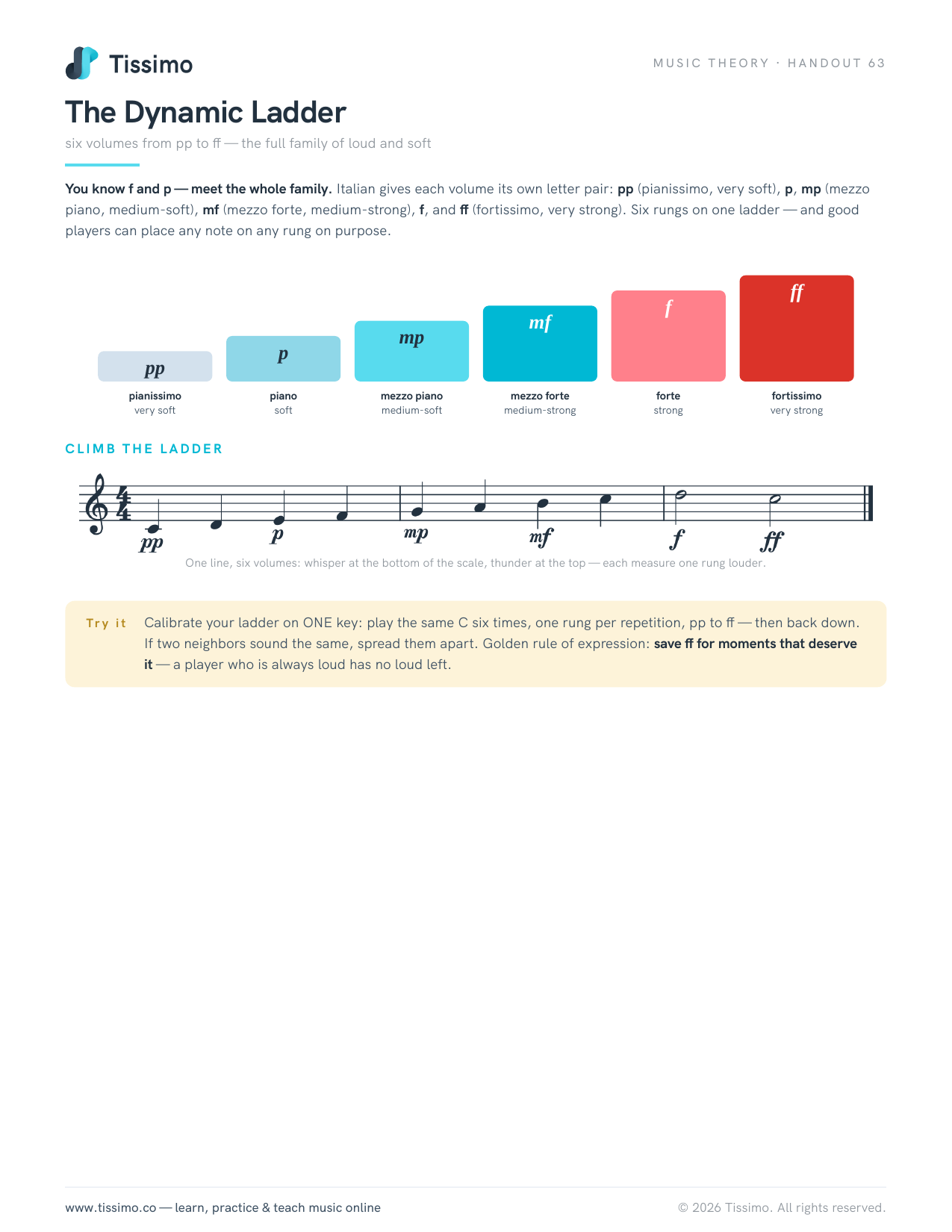
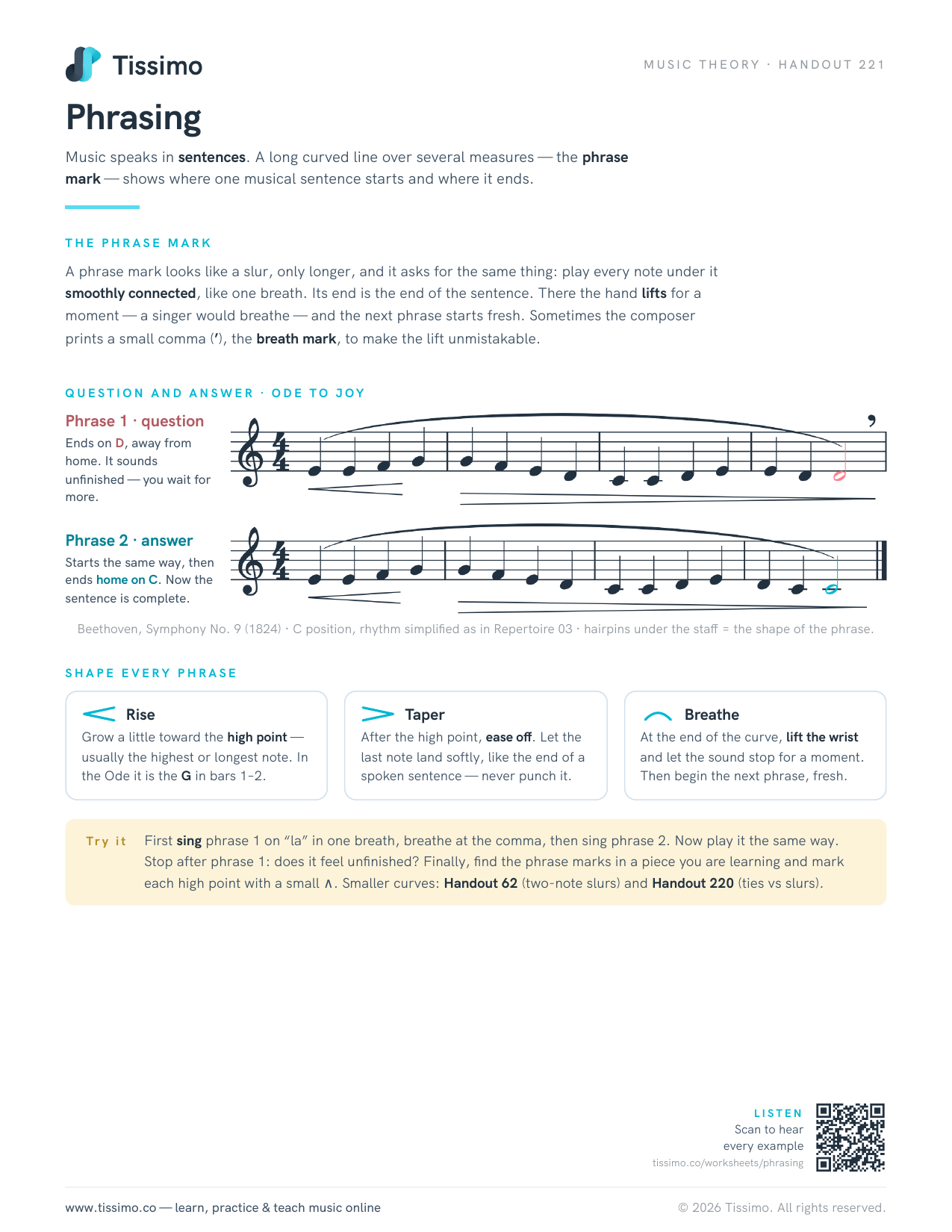
Appassionato invites big gestures: swelling crescendos, accents on expressive notes, a little push and pull in the tempo. The risk is losing control: harsh tone, rushed rhythm or blurred pedaling. Keep the tone round even at its loudest (the Dynamic Ladder handout's advice to save the loudest level for the moments that deserve it applies here), and let the intensity come from the shape of the phrase as much as from volume, as our Phrasing handout shows.
Related words
Espressivo (expressive) is gentler and more personal; con fuoco (with fire) and agitato (agitated) are more restless and driven; con brio (with spirit) is energetic rather than emotional. Appassionato sits at the warm, intense end of that family.
Common questions
What does appassionato mean?
Passionately: play with intense, heartfelt emotion, using a full tone, strong dynamic shaping and expressive phrasing.