Dynamics & Expression
Con Brio
Pronounced kohn BREE-oh
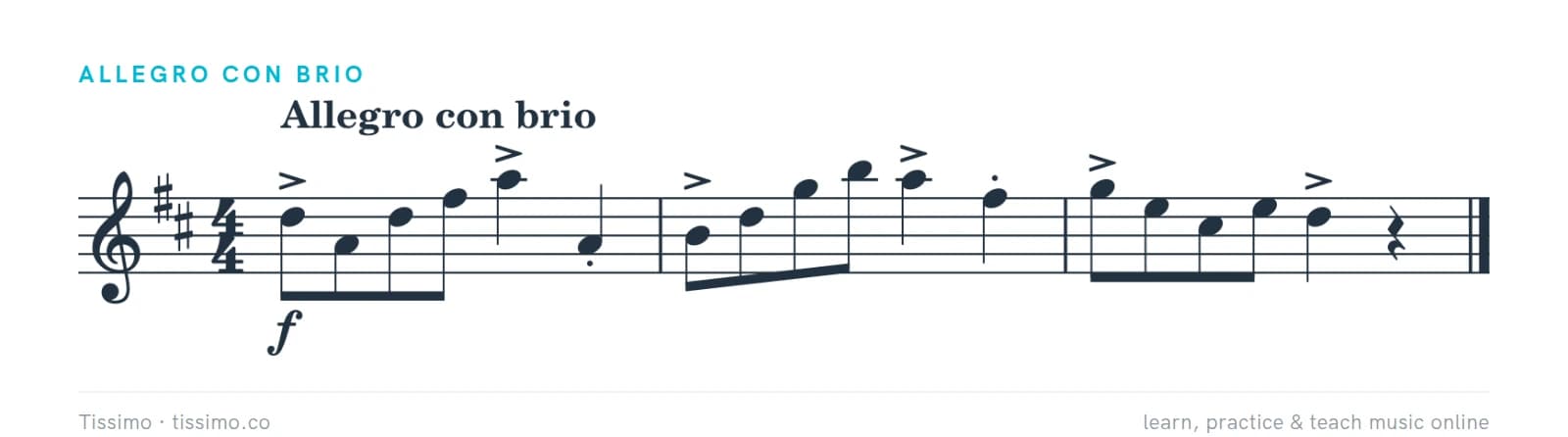
Con brio means 'with vigor' or 'with spirit': play with energy, brilliance and drive. It is most often joined to a tempo word, as in Allegro con brio.
Con brio means "with vigor" or "with spirit". Brio is energy, verve, a fiery liveliness, and con brio asks you to play with it: crisp rhythm, bright tone and forward drive. It is almost always attached to a fast tempo word, most famously in Allegro con brio.
Con brio in real music
- Beethoven's Third ("Eroica") and Fifth Symphonies both open Allegro con brio.
- His Pathétique Sonata moves from its slow introduction into Allegro di molto e con brio.
- Burgmüller's Ballade is marked Allegro con brio in the edition used for our Ballade study.
Tempo or character?
Con brio describes character first. It does not by itself make a tempo faster, but music played with brio tends to feel faster because the rhythms are sharper and the energy never sags. An Allegro con brio and a plain allegro might be taken at a similar speed; what changes is the attack, the accents and the sense of drive.
How to play con brio
- Crisp rhythms. Keep dotted rhythms and short notes sharp, and land accents cleanly.
- Bright, firm tone. Use firm fingertips and arm energy, but avoid banging; brilliance comes from clarity.
- Forward motion. Think in long phrases and keep the beat driving through rests and long notes.
Similar words: con fuoco ("with fire") is wilder; animato ("animated") is livelier; vivace stresses liveliness and speed.
Common questions
What does allegro con brio mean?
Fast and with vigor: a lively allegro tempo played with energy, spirit and brilliance.