Dynamics & Expression
Phrasing
Phrasing is how a musician groups notes into musical sentences and shapes them: where each phrase starts and ends, where it rises to its high point, and where it breathes. It is shown by phrase marks, breath marks and dynamics.
Phrasing is how a musician groups notes into musical sentences, called phrases, and shapes each one: where it begins and ends, where it rises to its high point, and where it breathes. Good phrasing is what makes a performance sound like speech or song instead of a string of separate notes.
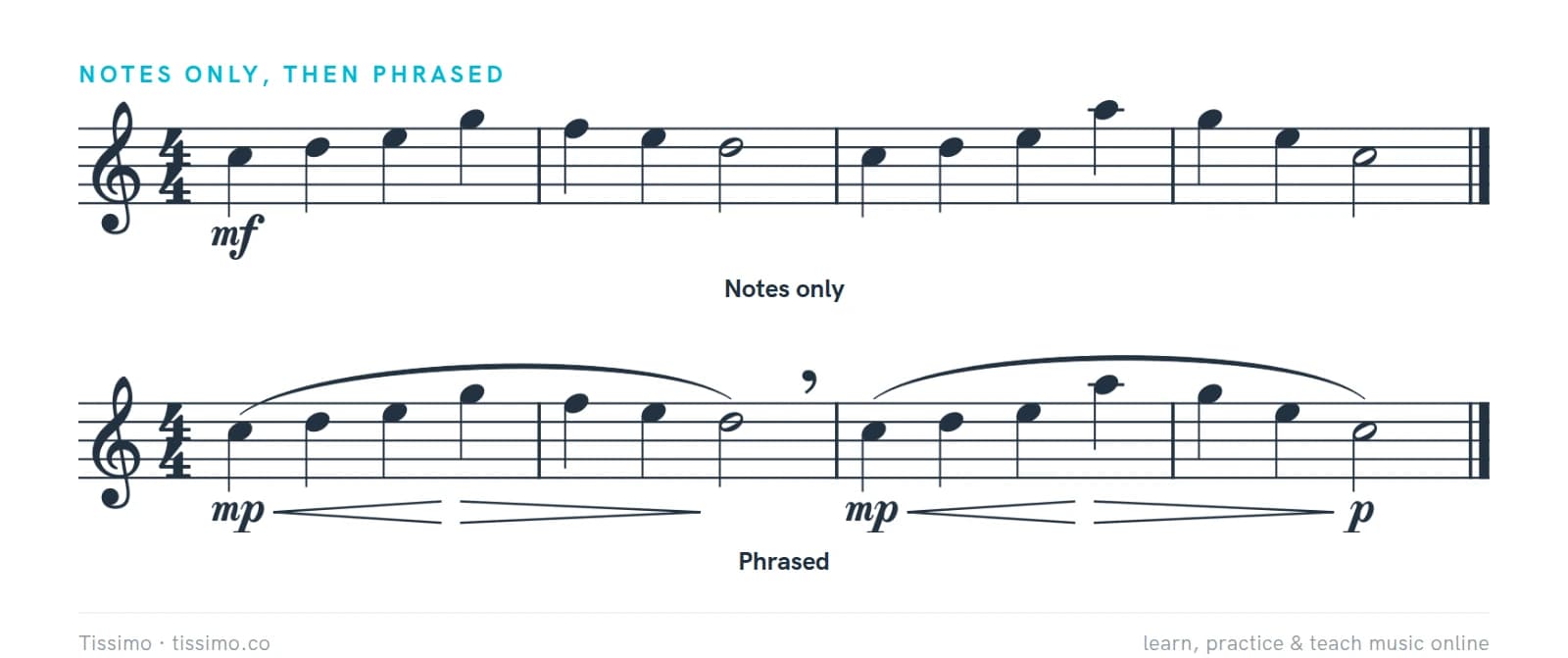
What a phrase is
A phrase is a stretch of melody that makes sense on its own, like a sentence. Many phrases last four bars, though two-bar, eight-bar and irregular phrases are common too. Phrases often pair up as a question and an answer: the first ends open, away from home, and the second closes the thought. Two phrases like that make a period; our Phrase and Period handout and the Question and Answer exercise explore the idea.
How phrasing is written
- Phrase marks. A curved line over a passage can show the extent of a phrase: shape the notes as one musical thought. It looks like a slur, but phrase grouping does not by itself require legato; the articulation marks within the phrase still apply.
- Breath marks. A small comma (a breath mark) or a caesura shows where to breathe or lift.
- Dynamics. Hairpins and dynamic marks show the shape inside the phrase.
- Articulation. Short slurs, staccatos and tenutos shape the smaller groups within it (see articulation).
Often, though, the score says very little, and the phrasing is up to you.
Shaping a phrase: rise, taper, breathe
Most phrases have a high point, often the highest or longest note or the most tense harmony. A natural shape grows toward it and then tapers away, and the last note lands gently, like the end of a spoken sentence, rather than being punched. Between phrases, a slight release can suggest a breath when the style allows. Do not automatically shorten written note values or insert silence at every phrase boundary. Our Phrasing handout calls these three steps rise, taper and breathe.
Phrasing and style
In Baroque music, phrasing often comes through articulation and grouping more than through large dynamic swells. Classical phrases tend to be clear and balanced, often in matching pairs. Romantic phrases are frequently long arches, shaped with rubato. In jazz and popular music, "phrasing" also describes how a singer or soloist places notes against the beat, slightly ahead or behind it, for expression.
Smaller curves inside a phrase are practiced in Two-Note Slurs and Ties vs Slurs.
Common questions
What is the difference between a phrase mark and a slur?
They can look the same, so context matters. A slur indicates connected articulation or an instrument-specific technique such as one bow stroke. A phrase mark groups a complete musical thought, which can contain shorter slurs, detached notes and rests; it does not automatically require every note to be legato.
How do I improve my phrasing?
Sing the melody, find each phrase's high point, and shape the dynamics toward it and away from it. Let phrase endings breathe where appropriate rather than adding automatic gaps. Recording yourself and listening back is one of the quickest ways to hear whether your phrases sound connected and shaped.
Practice it: free worksheets
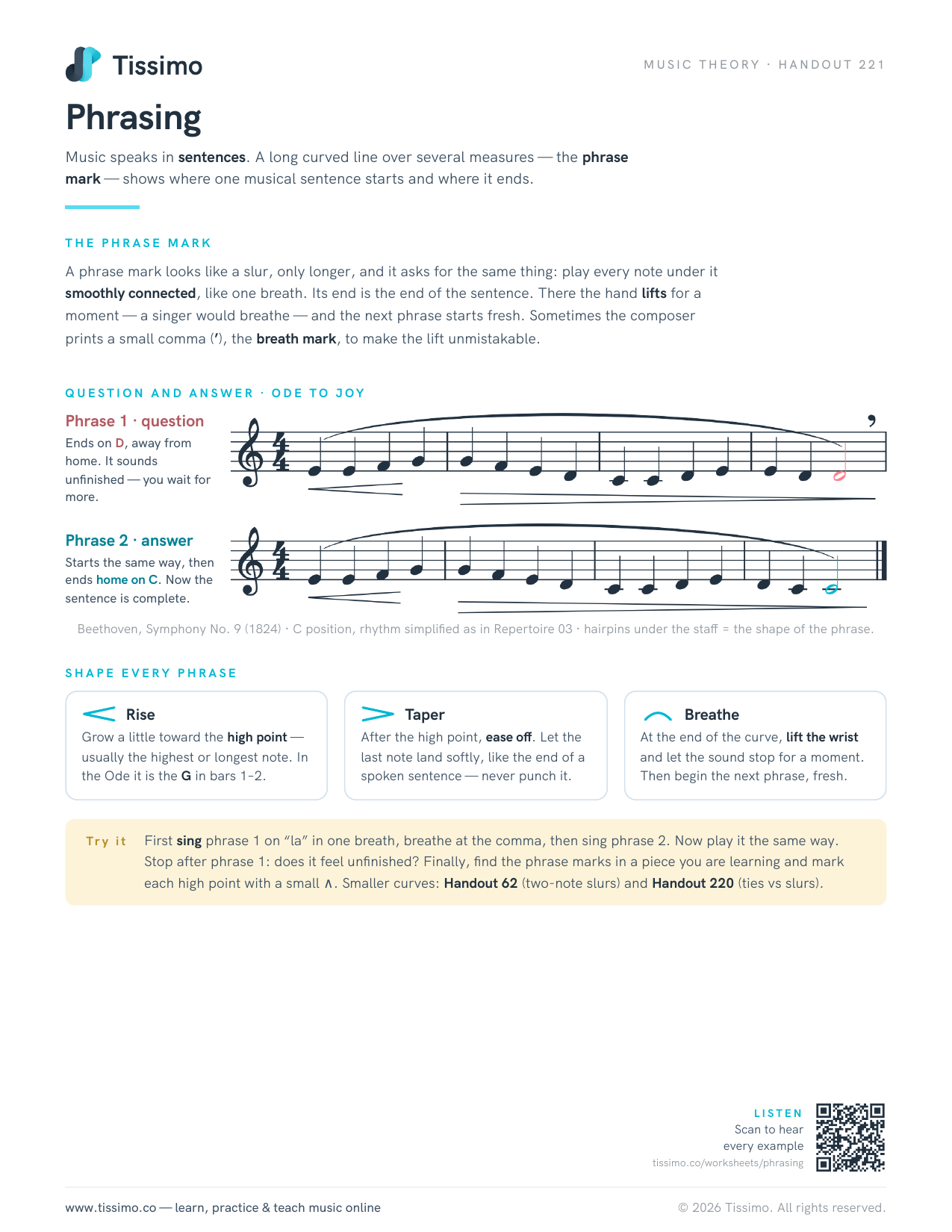 PhrasingMusic speaks in sentences. A long curved line over several measures — the phrase mark — shows where one musical sentence starts and where it ends.
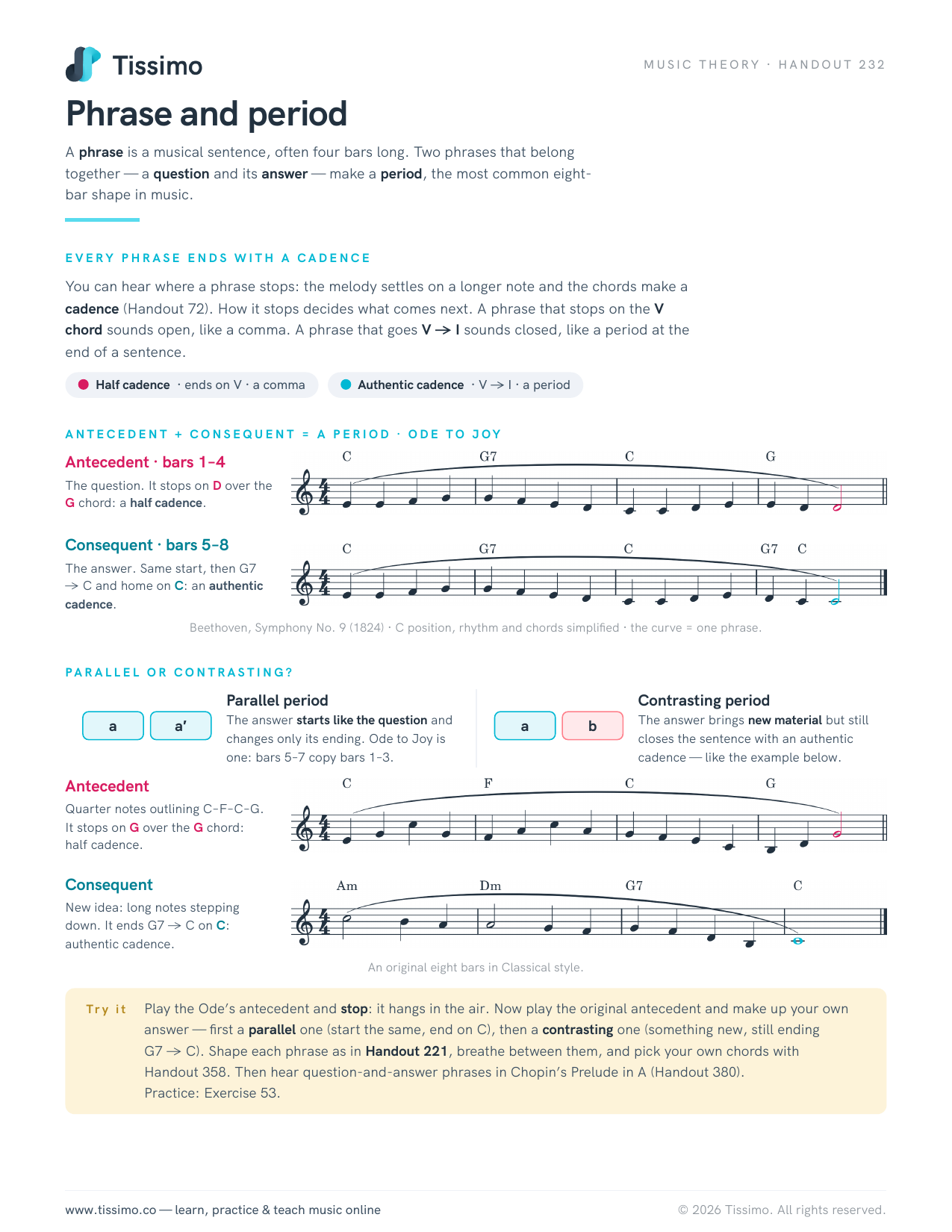 Phrase and periodA phrase is a musical sentence, often four bars long. Two phrases that belong together — a question and its answer — make a period, the most common eight-bar shape in music.
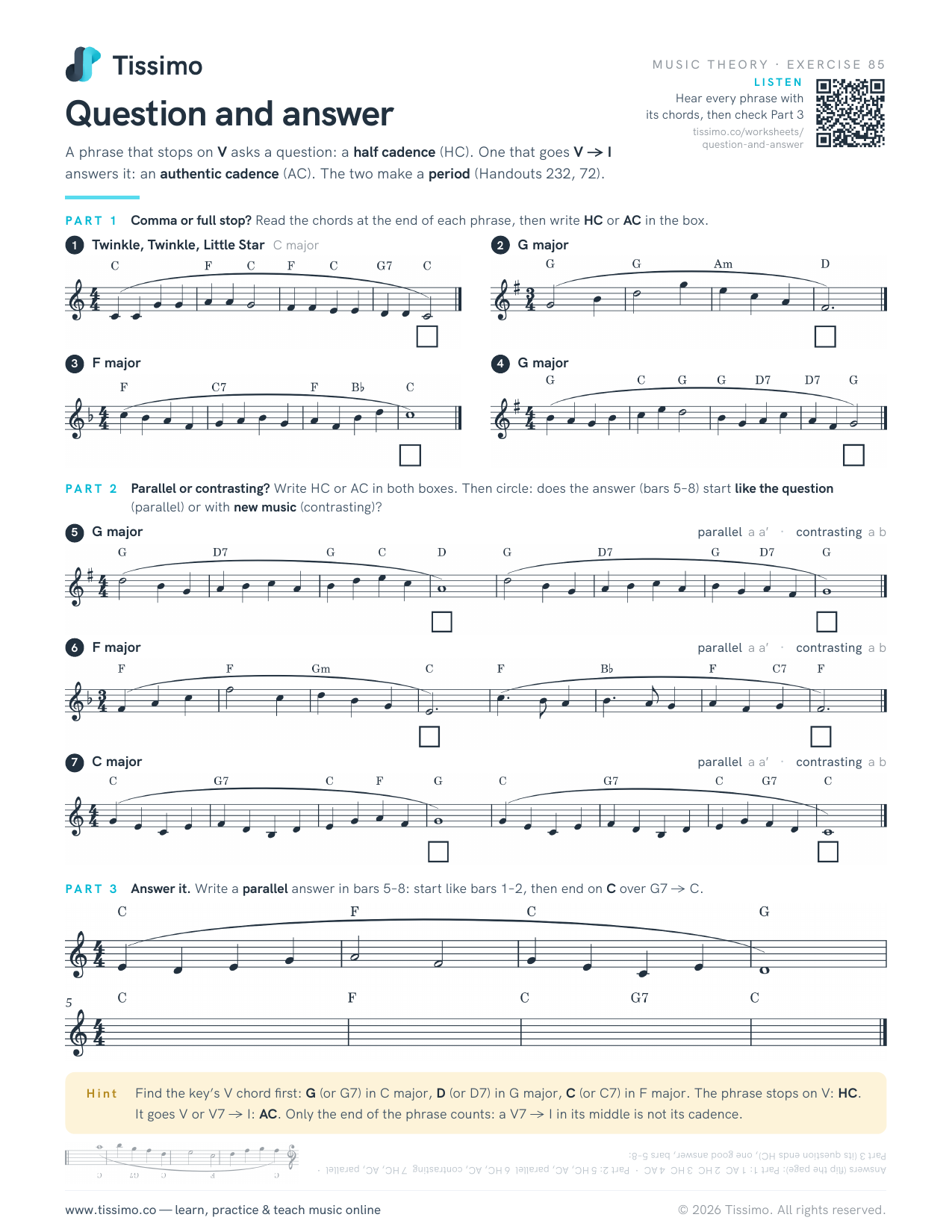 Question and answerA phrase that stops on V asks a question: a half cadence (HC). One that goes V → I answers it: an authentic cadence (AC). The two make a period (Handouts 232, 72).
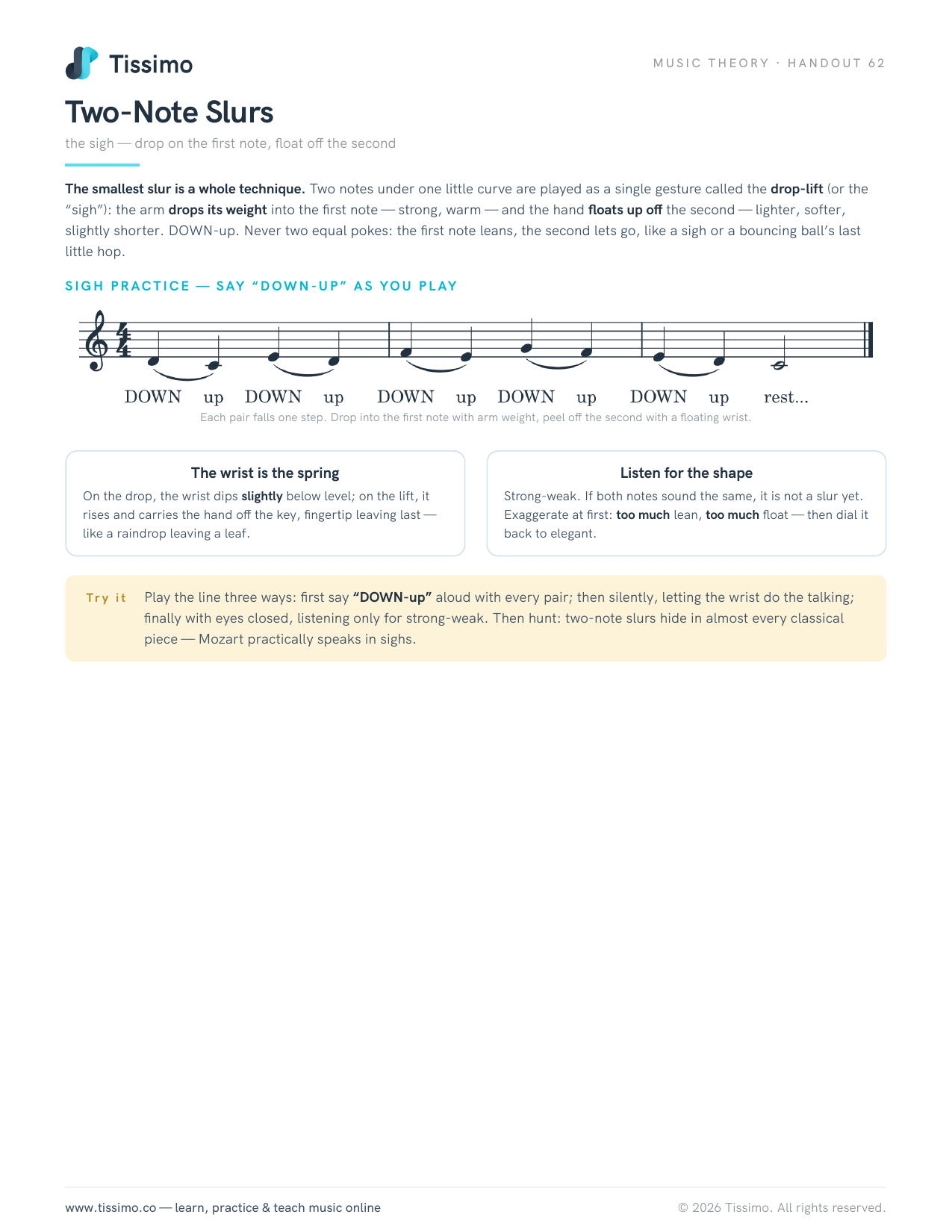 Two-Note Slursthe sigh — drop on the first note, float off the second
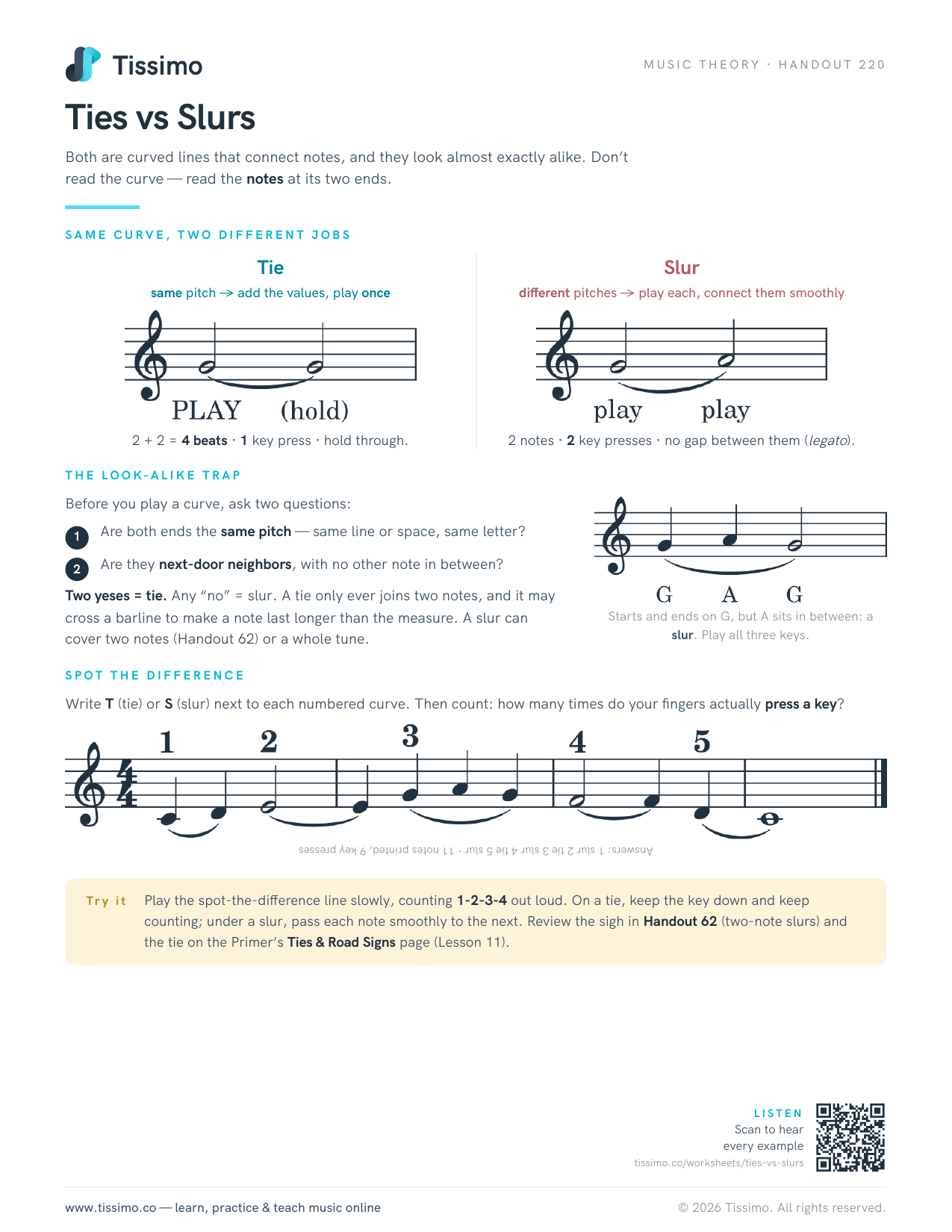 Ties vs SlursBoth are curved lines that connect notes, and they look almost exactly alike. Don’t read the curve — read the notes at its two ends.