Tempo Markings
Più Mosso
Pronounced pyoo MOHS-soh
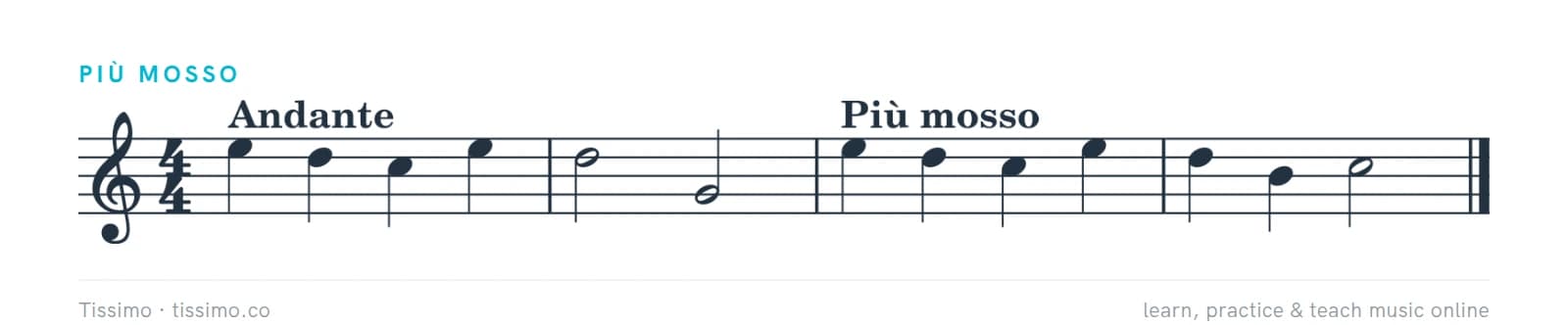
Più mosso means 'more motion': play faster from this point on. The new, quicker tempo starts at once, not gradually, and lasts until another tempo marking appears.
Più mosso combines più, "more", with mosso, "moved" or "in motion". It asks for a faster tempo starting at once, on the first note under the marking. It is printed above the staff, often in bold like a tempo word, and the new speed lasts until the next tempo marking, often Tempo I.
Sudden, not gradual
The difference from accelerando and stringendo is timing. An accelerando gets faster little by little; più mosso simply is faster from the marking on. Think of it as a new section in a new gear. Composers often use it for a contrasting middle section, or for a more urgent version of a theme heard earlier.
How much faster? The words do not say, so the context decides. Poco più mosso asks for a little faster (see poco), molto più mosso for a lot (molto). A change of roughly 10 to 25 percent is a sensible starting point for a plain più mosso.
Più with other words
Più means "more" of whatever word follows, so it does not always mean faster:
- Più allegro: faster.
- Più lento: slower (more slowly).
- Più forte, più piano: louder, softer.
The opposite of più mosso is meno mosso, "less motion".
Playing it
Before you reach the marking, hear the new tempo in your head. The first note of the più mosso should already be at the new speed; a change that creeps in over a bar or two sounds like an accelerando instead.
Compare the gradual changes practiced in Ritardando & Accelerando.
Common questions
Does più mosso mean faster or slower?
Faster. Più means "more" and mosso "motion", so the music moves more: a quicker tempo from the marking onward. The opposite is meno mosso.