Melody, Texture & Counterpoint
Homophony
Pronounced huh-MOF-uh-nee
Homophony is a texture with one main melody supported by accompaniment, either chords that move in the same rhythm as the tune or a separate accompaniment pattern beneath it.
Homophony is a texture with one main melody and a supporting accompaniment. It is the texture of most of the music around you: a singer with a guitar, a pop song with a band, a hymn, a Classical sonata with a running left hand.
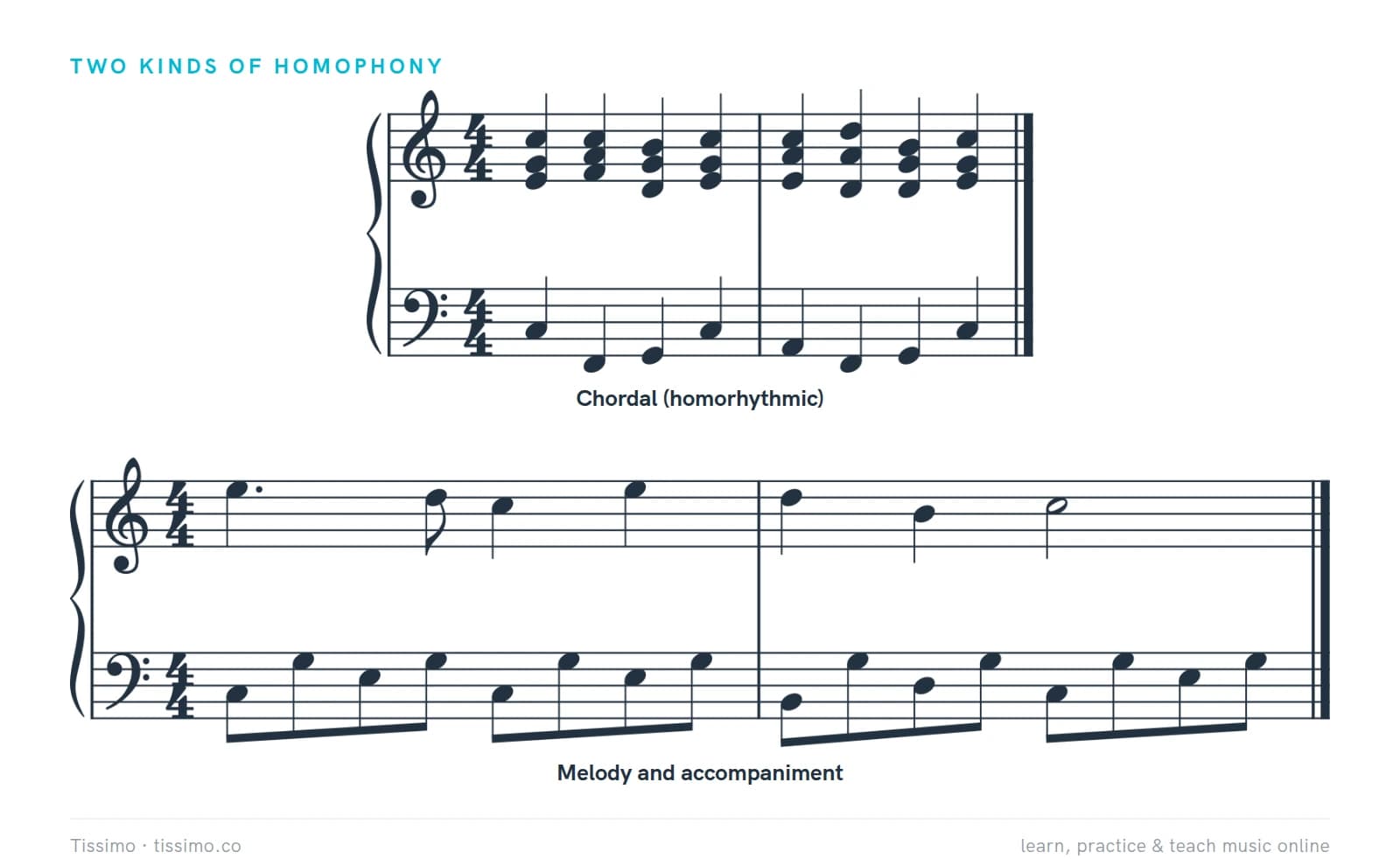
Two kinds of homophony
- Chordal (also called homorhythmic): all the parts move together in the same rhythm, in block chords. The top voice carries the tune and the others fill in the harmony, as in a hymn or a chorale. The first panel of the example works this way.
- Melody and accompaniment: the tune sits on top, and the accompaniment has its own rhythm, such as Alberti bass, broken chords, strummed chords or an oom-pah pattern. The second panel uses Alberti bass.
What both have in common is that one line clearly leads and the others support it.
Homophony or polyphony?
In polyphony several lines are equally important, each a melody in its own right. In homophony only one is the melody. There is a middle ground: an accompaniment with an active countermelody is still mostly homophonic, but it leans toward polyphony.
Playing homophonic music
Because only one line is the tune, balance is everything. Let the melody sing out and keep the accompaniment softer underneath it. On the piano that often means a stronger right hand and a lighter left hand, even when the left hand has more notes. Tissimo's Voicing and Balance handout shows how.
Explore common accompaniment patterns in Accompaniment patterns, and test your ear with Ear Training: One Line, Tune with Chords, or Two Independent Lines?.
Common questions
What is an example of homophony?
A hymn sung in four parts, a pop singer with a band, or a piano piece with a melody in the right hand and chords in the left are all homophonic: one main melody, with the other parts supporting it.
What is the difference between homophony and polyphony?
Homophony has one main melody with accompaniment. Polyphony has two or more independent melodies of equal importance sounding at once.
Practice it: free worksheets
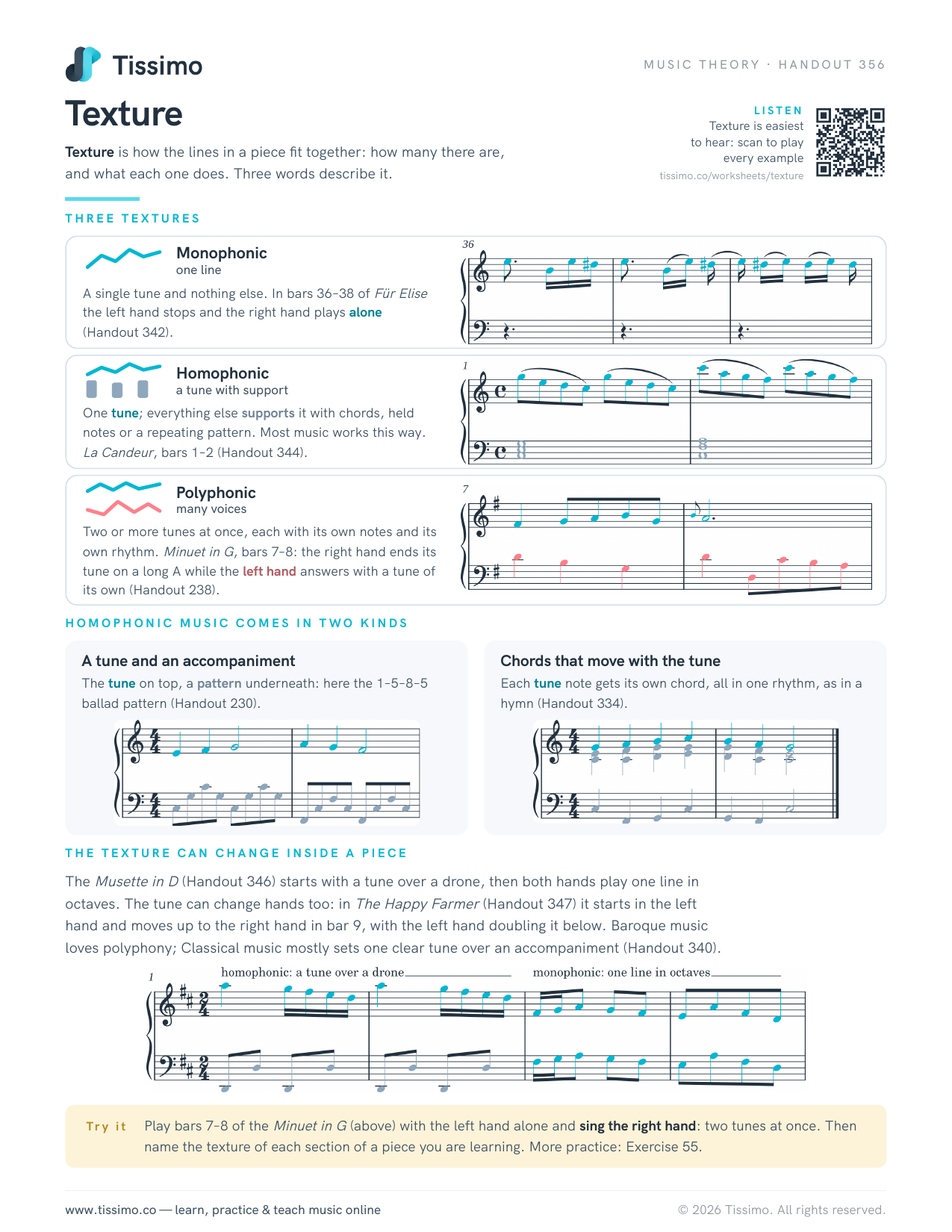 TextureTexture is how the lines in a piece fit together: how many there are, and what each one does. Three words describe it.
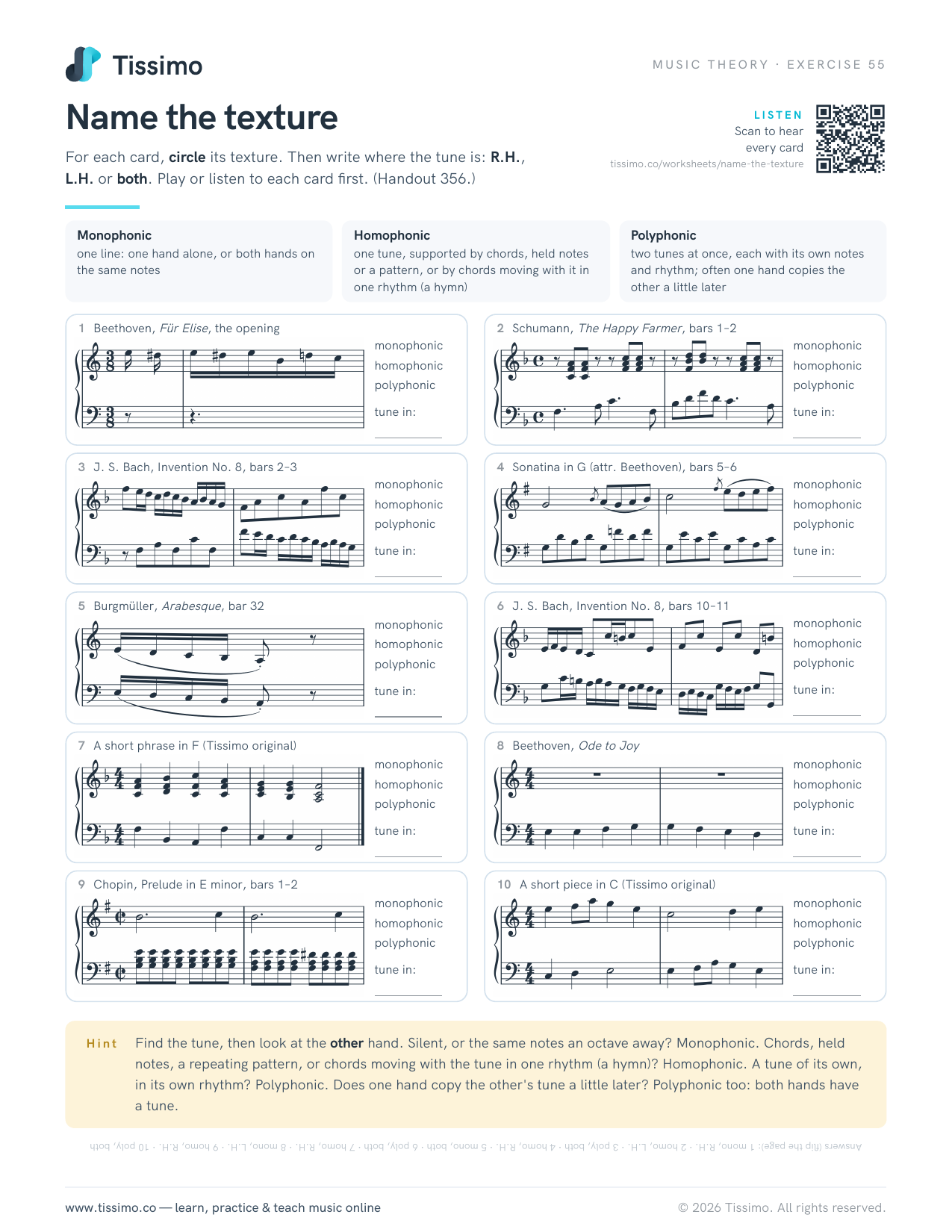 Name the textureFor each card, circle its texture. Then write where the tune is: R.H., L.H. or both. Play or listen to each card first. (Handout 356.)
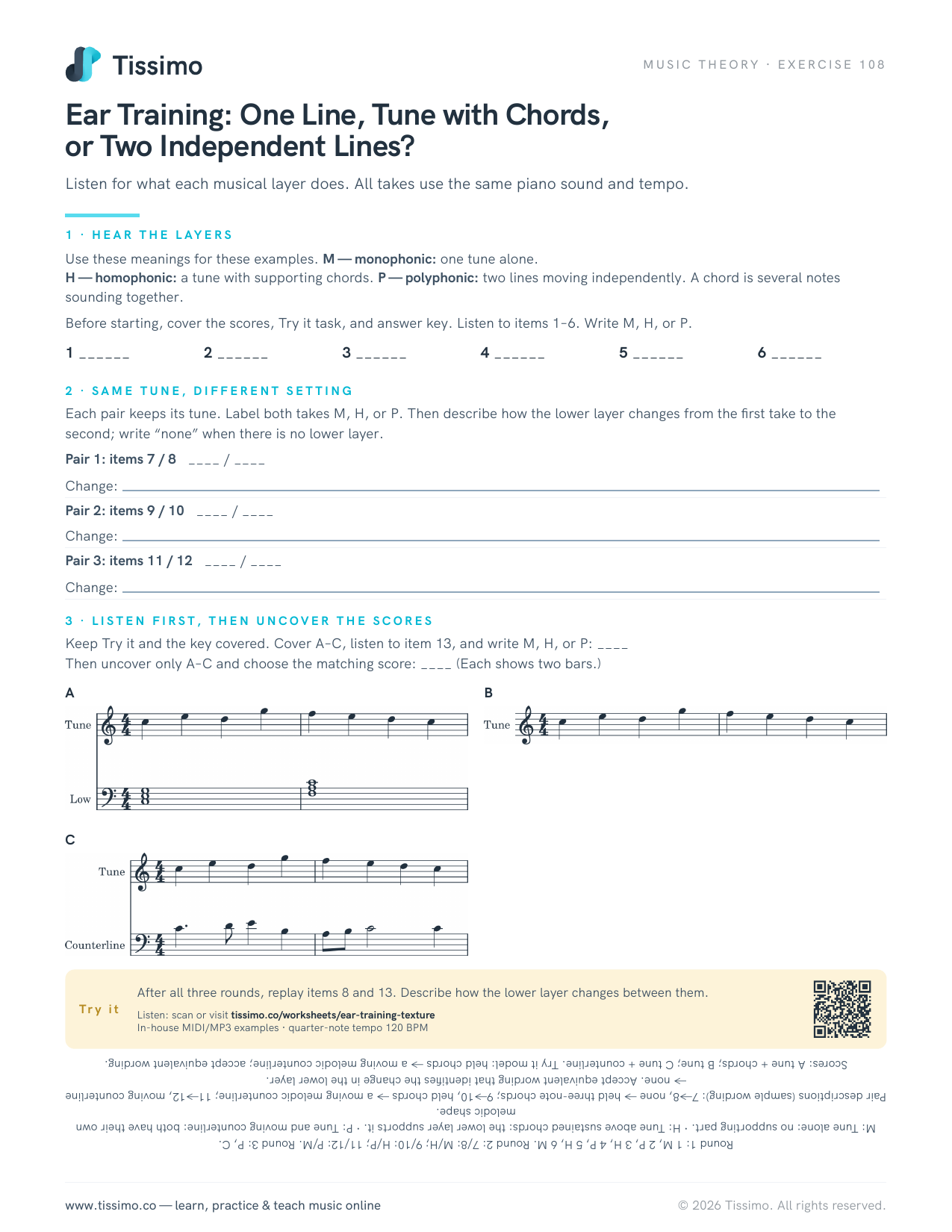 Ear Training: One Line, Tune with Chords, or Two Independent Lines?Listen for what each musical layer does. All takes use the same piano sound and tempo.
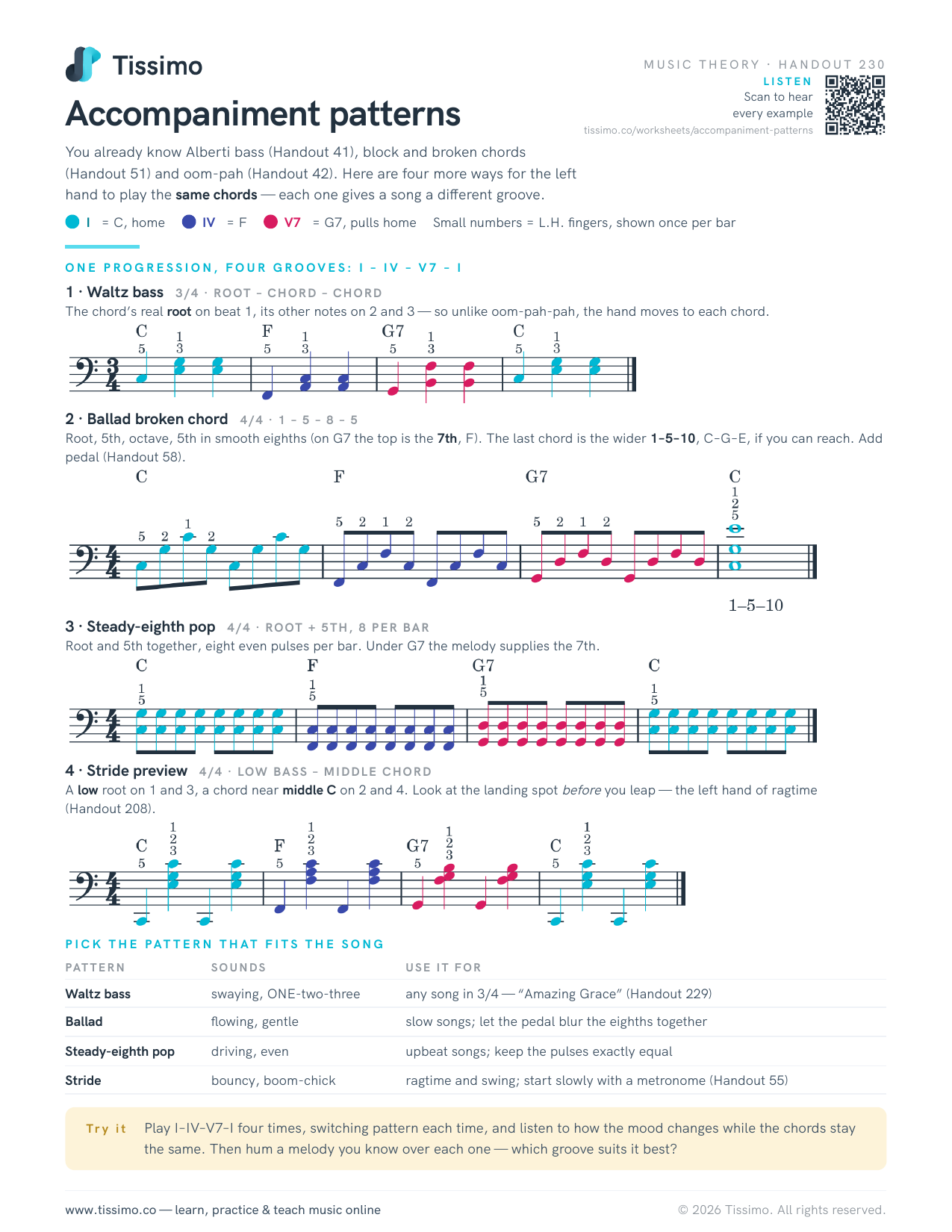 Accompaniment patternsYou already know Alberti bass (Handout 41), block and broken chords (Handout 51) and oom-pah (Handout 42). Here are four more ways for the left hand to play the same chords — each one gives a song a different groove.
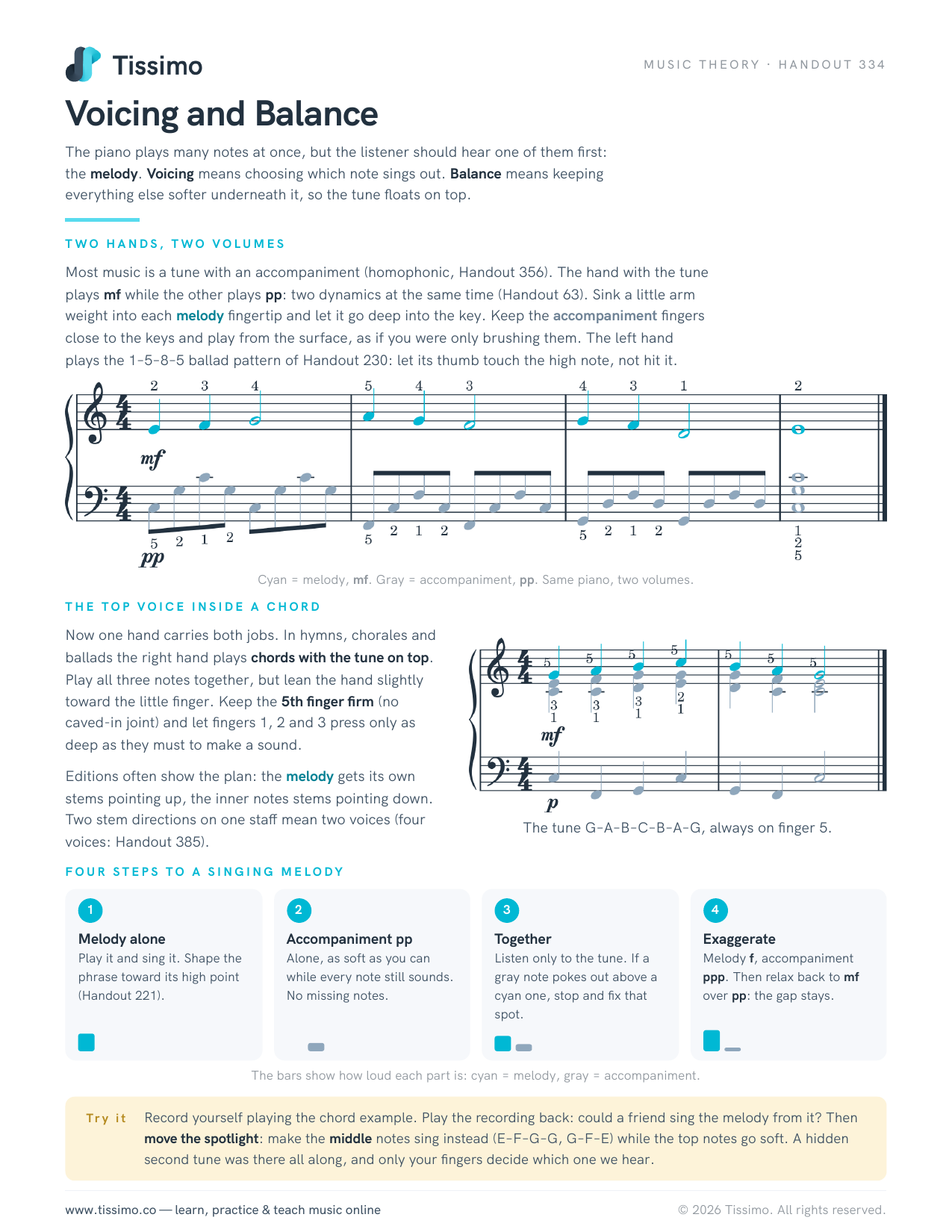 Voicing and BalanceThe piano plays many notes at once, but the listener should hear one of them first: the melody. Voicing means choosing which note sings out. Balance means keeping everything else softer underneath it, so the tune floats on top.
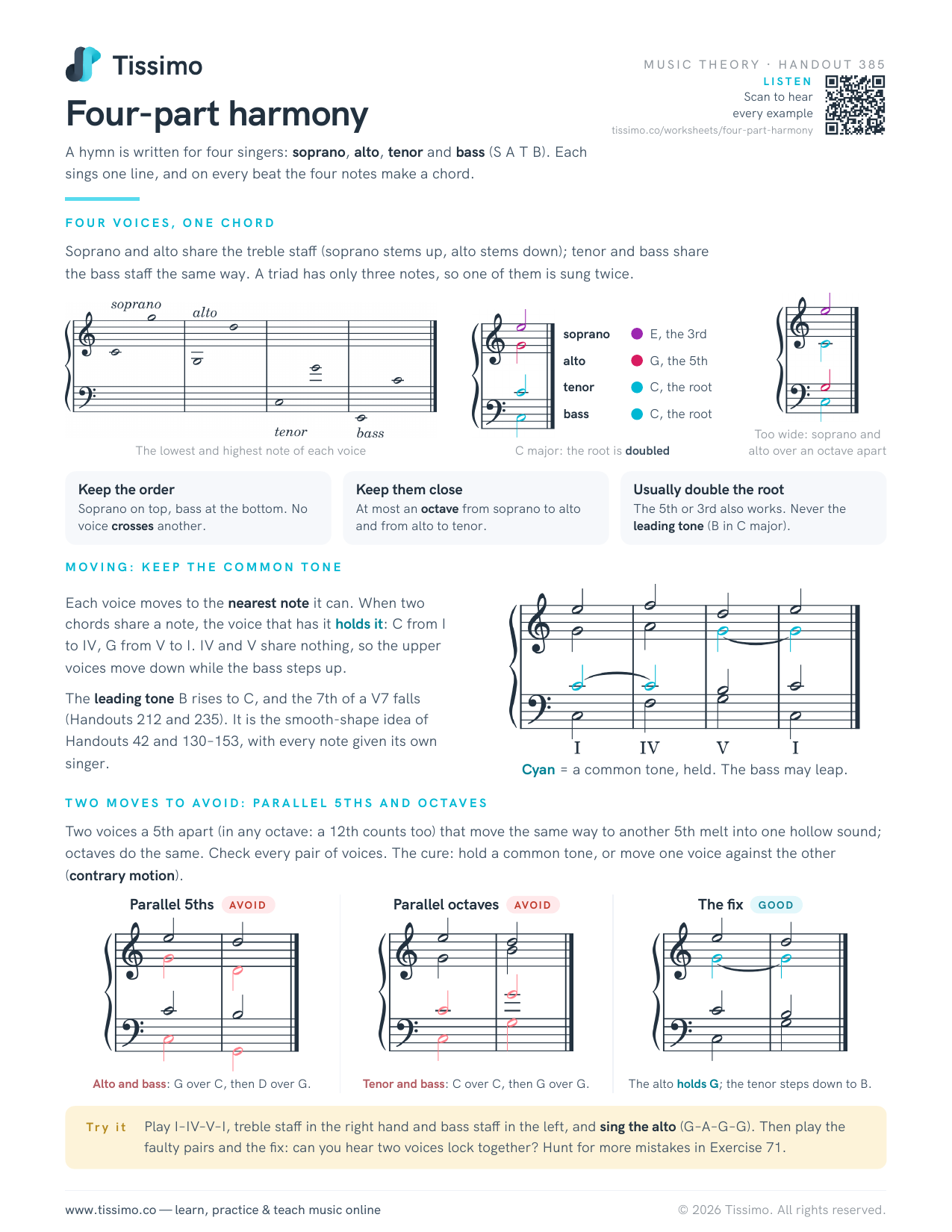 Four-part harmonyA hymn is written for four singers: soprano, alto, tenor and bass (S A T B). Each sings one line, and on every beat the four notes make a chord.