Chords & Harmony
Broken Chord
A broken chord is a chord whose notes are played separately instead of all at once, in any order or pattern. Arpeggios, Alberti bass and many guitar picking patterns are kinds of broken chord.
A broken chord is a chord whose notes are played separately instead of all at once. The notes can go straight up or down, as in an arpeggio, or follow a pattern that jumps around inside the chord. Either way your ear still hears one harmony, spread out in time.
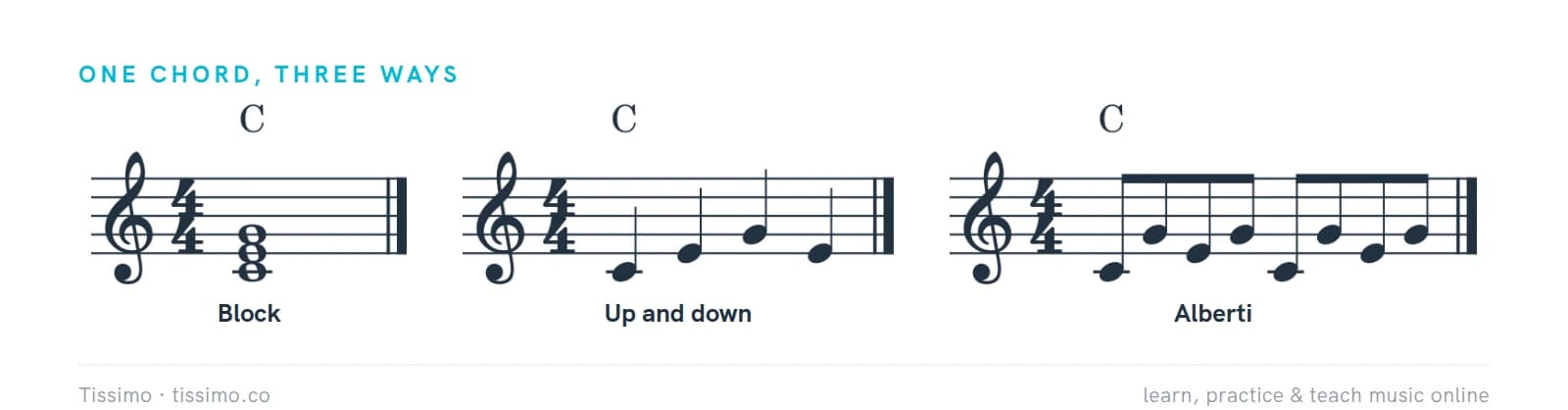
Common patterns
- Up and down: C–E–G–E. The simplest pattern, and a good first left-hand accompaniment.
- Alberti bass: C–G–E–G, lowest, highest, middle, highest. A hallmark of Classical-era keyboard music; see Alberti bass.
- Root and fifth: C–G or C–G–C, the backbone of many bass lines and waltz accompaniments.
- Wide spreads: patterns like C–G–C–E that reach beyond an octave, for a fuller, flowing sound in ballads and Romantic piano music.
Why composers break chords
A piano or guitar note starts to fade as soon as it is played. Breaking a chord keeps the sound moving, fills the time between melody notes, and gives a piece rhythm and drive without changing the harmony. It also lightens the texture: a broken chord in the left hand leaves room for the melody to sing on top.
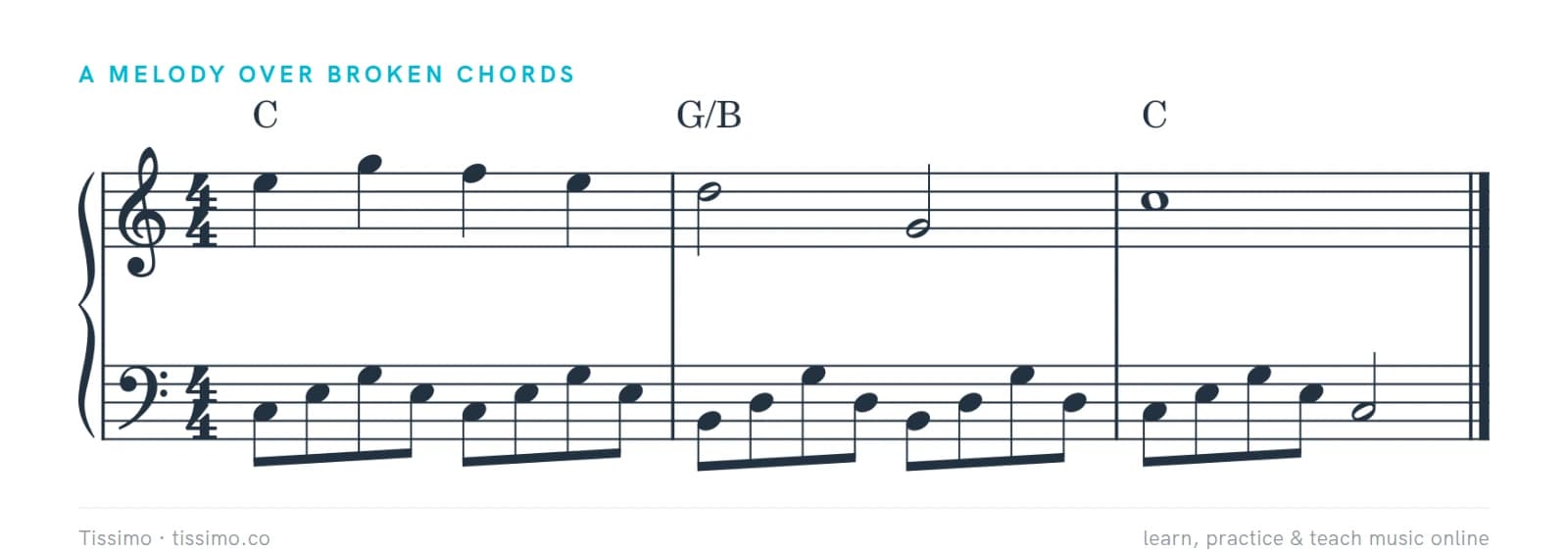
Broken, block or rolled?
A block chord sounds all its notes together. A rolled chord (arpeggiando) spreads them very quickly from the bottom up, almost together. A broken chord gives each note its own place in the rhythm.
Block & Broken Chords compares the two side by side, and Accompaniment patterns gives you more left-hand patterns to try. Guitarists get the same effect by fingerpicking the strings of a chord one at a time.
Common questions
Is a broken chord the same as an arpeggio?
An arpeggio is one kind of broken chord: the notes played in order, up or down. "Broken chord" also covers patterns that change direction, like the Alberti bass.
What is the opposite of a broken chord?
A block chord, in which every note of the chord is played at the same moment.
Practice it: free worksheets
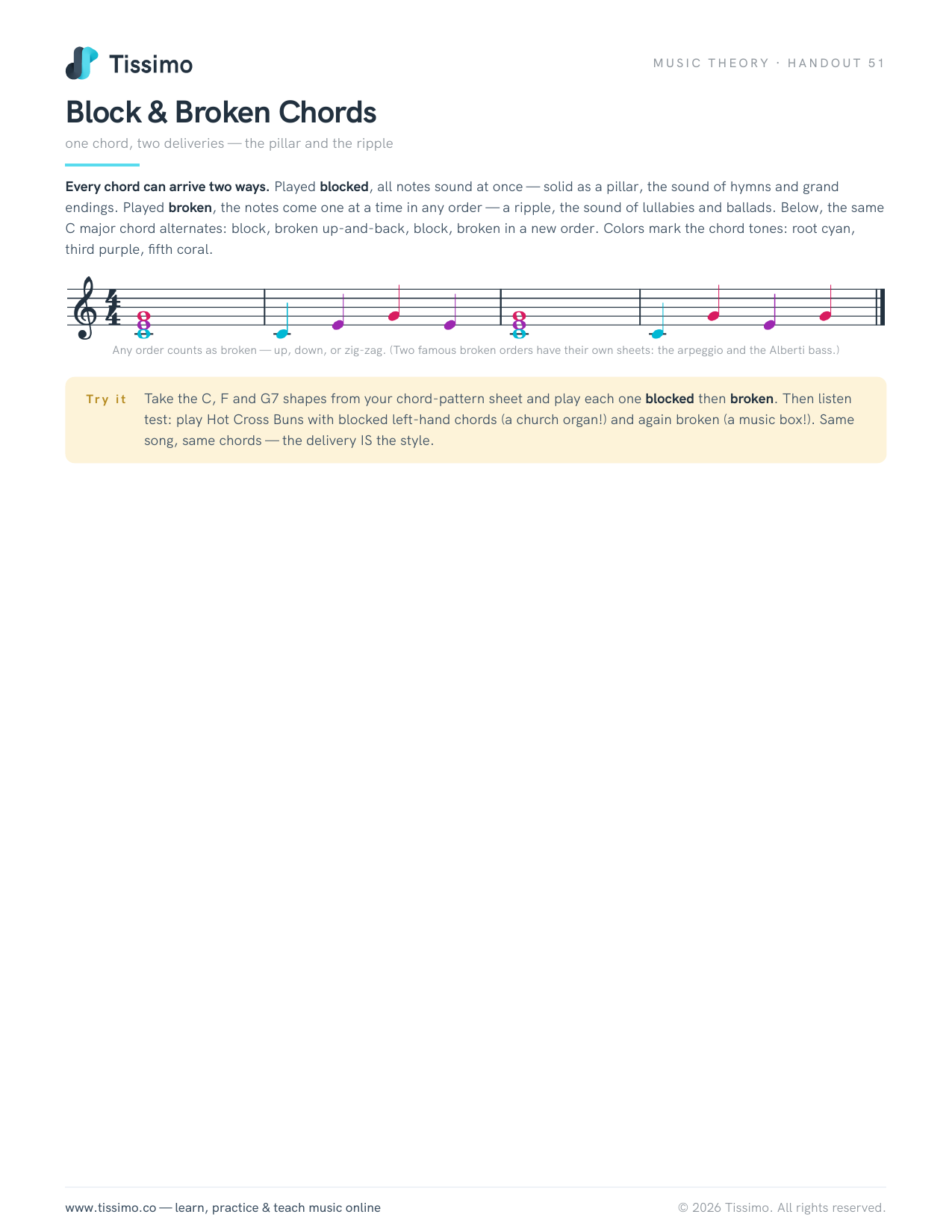 Block & Broken Chordsone chord, two deliveries — the pillar and the ripple
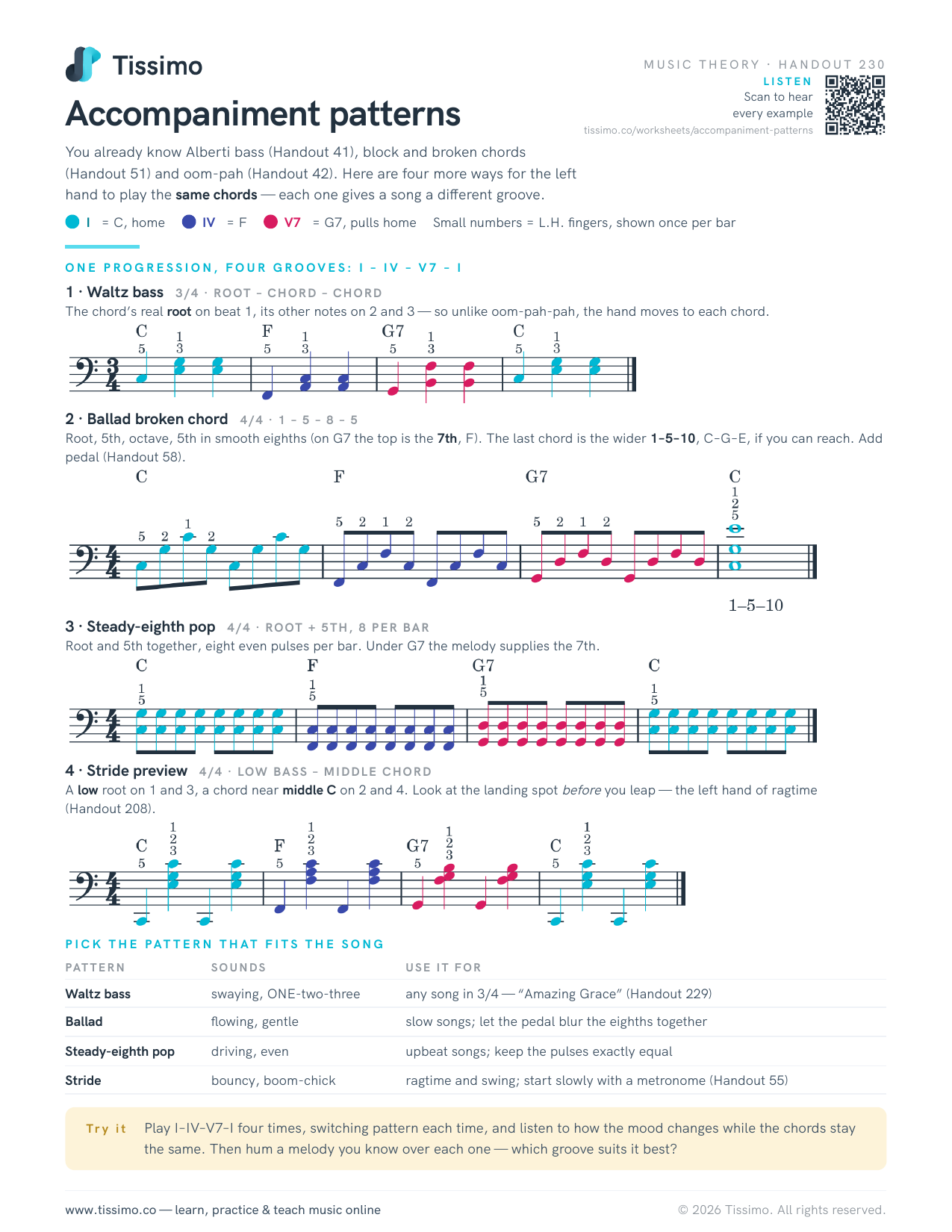 Accompaniment patternsYou already know Alberti bass (Handout 41), block and broken chords (Handout 51) and oom-pah (Handout 42). Here are four more ways for the left hand to play the same chords — each one gives a song a different groove.
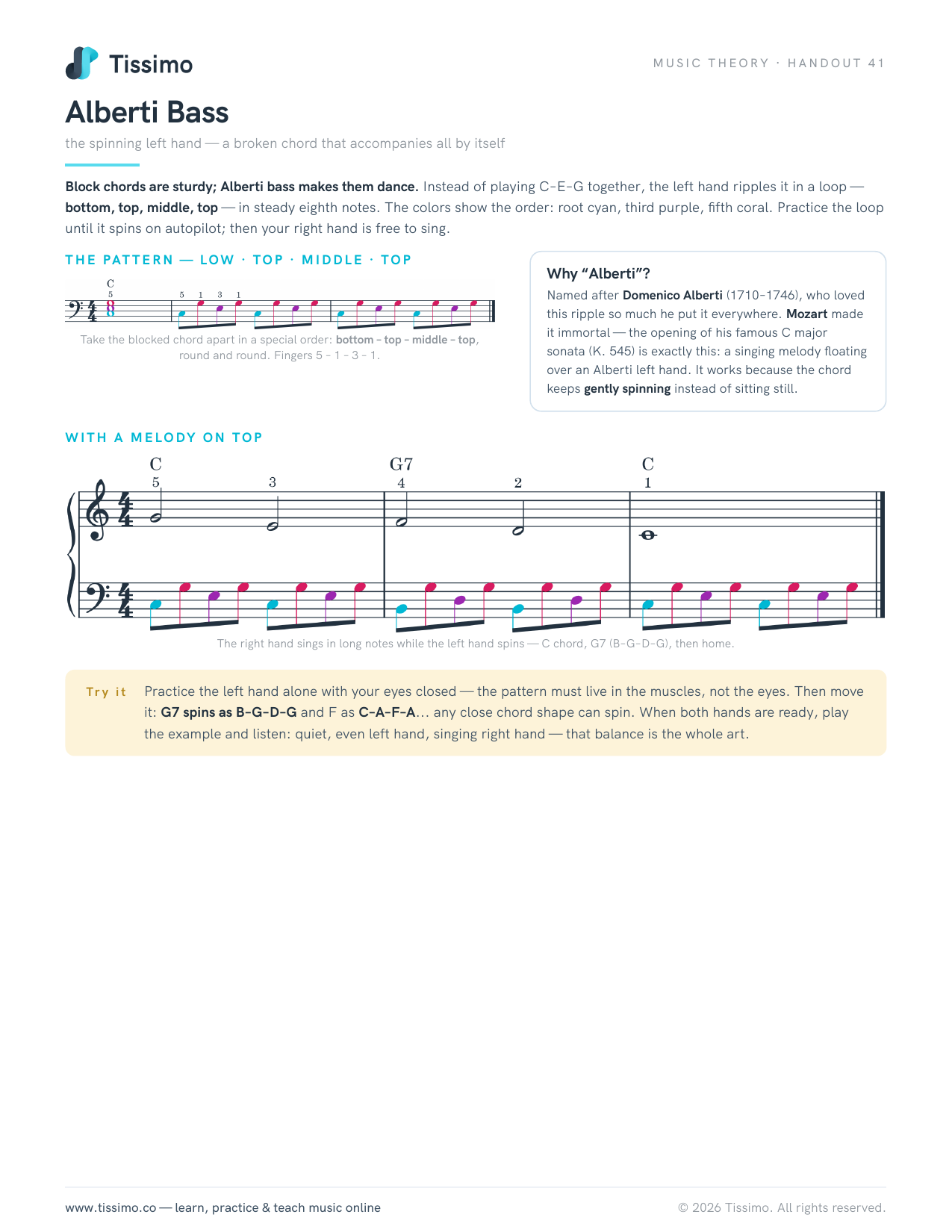 Alberti Bassthe spinning left hand — a broken chord that accompanies all by itself
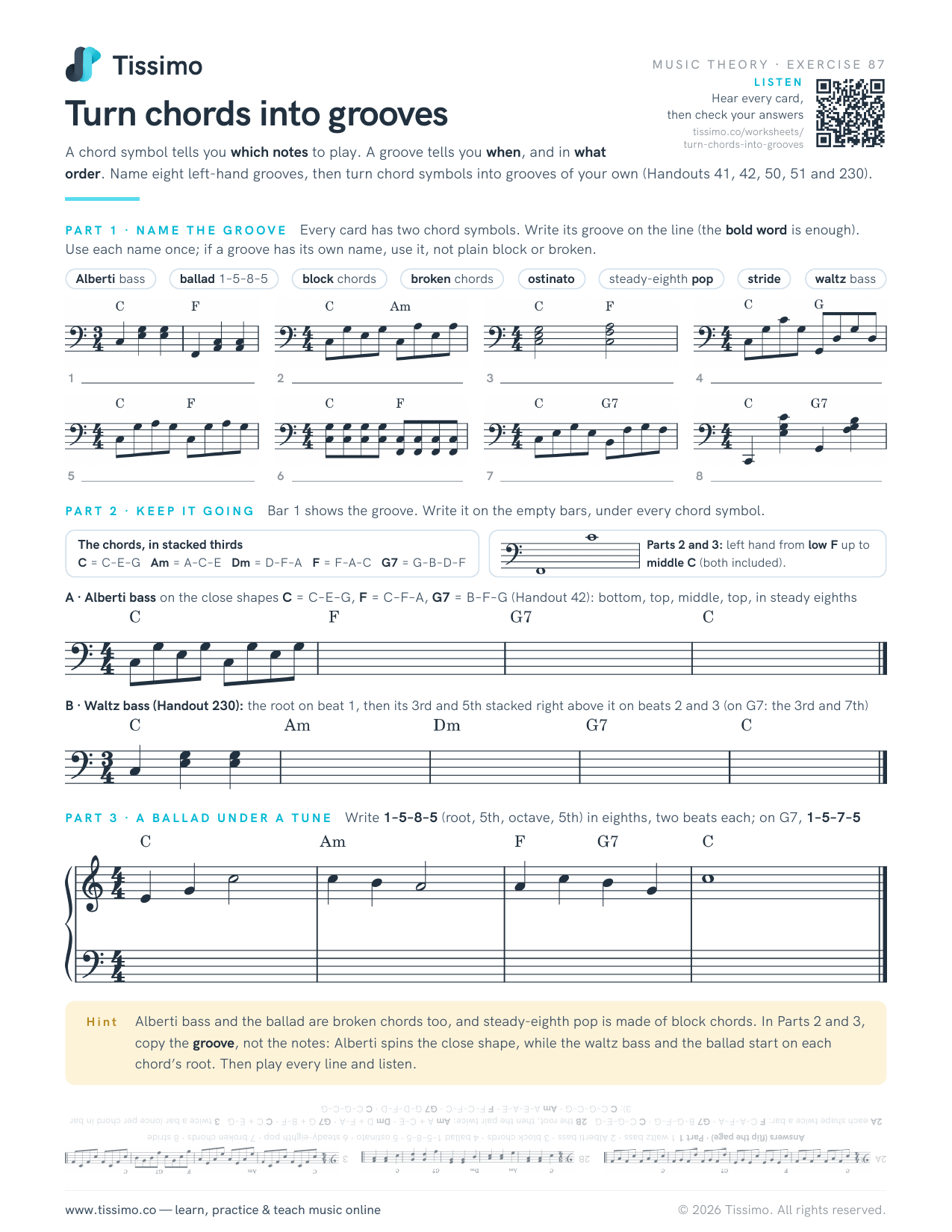 Turn chords into groovesA chord symbol tells you which notes to play. A groove tells you when, and in what order. Name eight left-hand grooves, then turn chord symbols into grooves of your own (Handouts 41, 42, 50, 51 and 230).
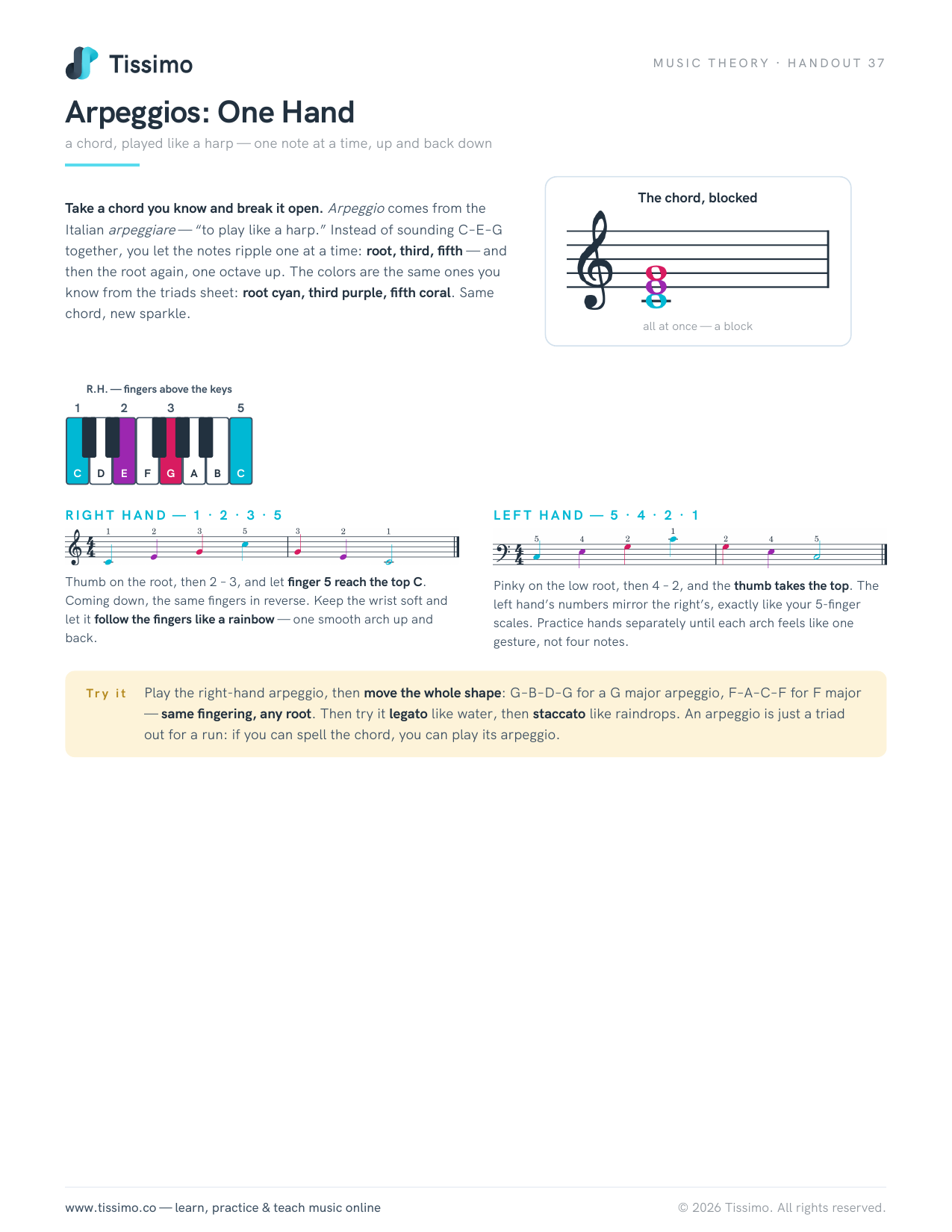 Arpeggios: One Handa chord, played like a harp — one note at a time, up and back down