Melody, Texture & Counterpoint
Motif
Pronounced moh-TEEF
A motif (or motive) is a short, distinctive musical idea, a few notes with a recognizable rhythm and shape, that comes back and is developed through a piece.
A motif, also spelled motive, is the smallest idea in a piece that you can still recognize: a handful of notes with a distinctive rhythm and shape. Composers rarely write a brand-new idea in every bar. Instead they take one motif and use it again and again: the same, higher, lower, upside down, stretched or squeezed. Once you spot the motif, a page of notes turns into a few shapes you already know.
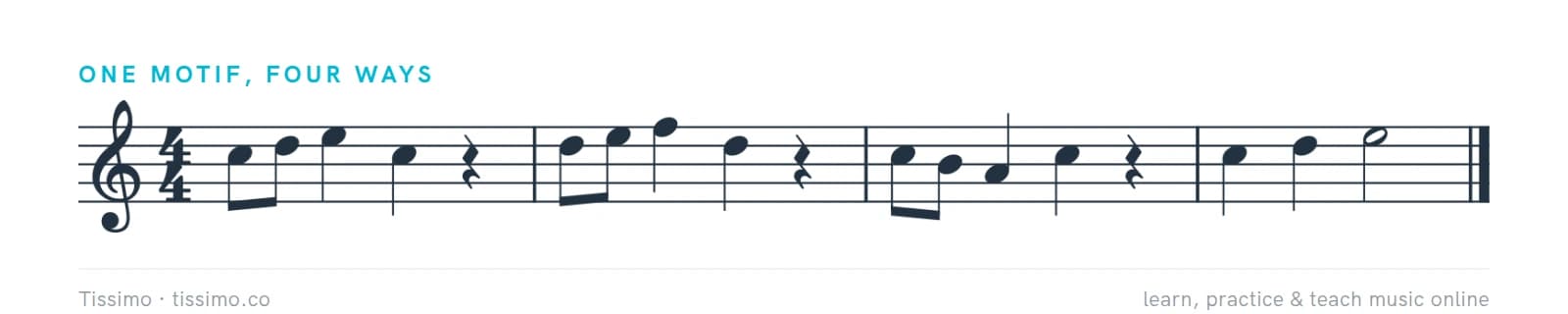
Ways a motif can change
- Repetition: the same notes again.
- Sequence: the same shape starting on a higher or lower note.
- Inversion: turned upside down, so every step up becomes a step down.
- Augmentation: the same notes in longer values, often twice as long.
- Diminution: the same notes in shorter values.
- Fragmentation: only part of the motif, often just its first few notes, repeated on its own.
- Rhythmic or interval change: the rhythm kept with new notes, or the notes kept with a new rhythm.
The rhythm is often the most recognizable part. Many famous motifs can be identified from their rhythm alone, tapped on a table.
Motif, theme and phrase
A motif is a building block. A phrase is a complete musical sentence, usually made from one or two motifs. A theme is a larger idea, often a whole phrase or more, that serves as a main subject of a piece. In the Classical sentence, a two-bar idea is stated, repeated, and then broken into fragments that drive toward the cadence: see An Idea, Its Repeat, and a Push to the End.
Motifs beyond classical music
Film composers attach motifs to characters, places or ideas, in the tradition of the opera leitmotif. In popular music a short repeated instrumental motif is called a riff, and a catchy vocal one often becomes the hook.
Practice spotting them with Motif and sequence and Find the motif and the sequence.
Common questions
What is the difference between a motif and a theme?
A motif is a short idea of a few notes. A theme is a longer, complete melodic idea, often a whole phrase or more, that a piece is built around. Themes are usually made from motifs.
Is it spelled motif or motive?
Both are correct. American music theory books often use motive; motif is common in British books and in everyday use.
Practice it: free worksheets
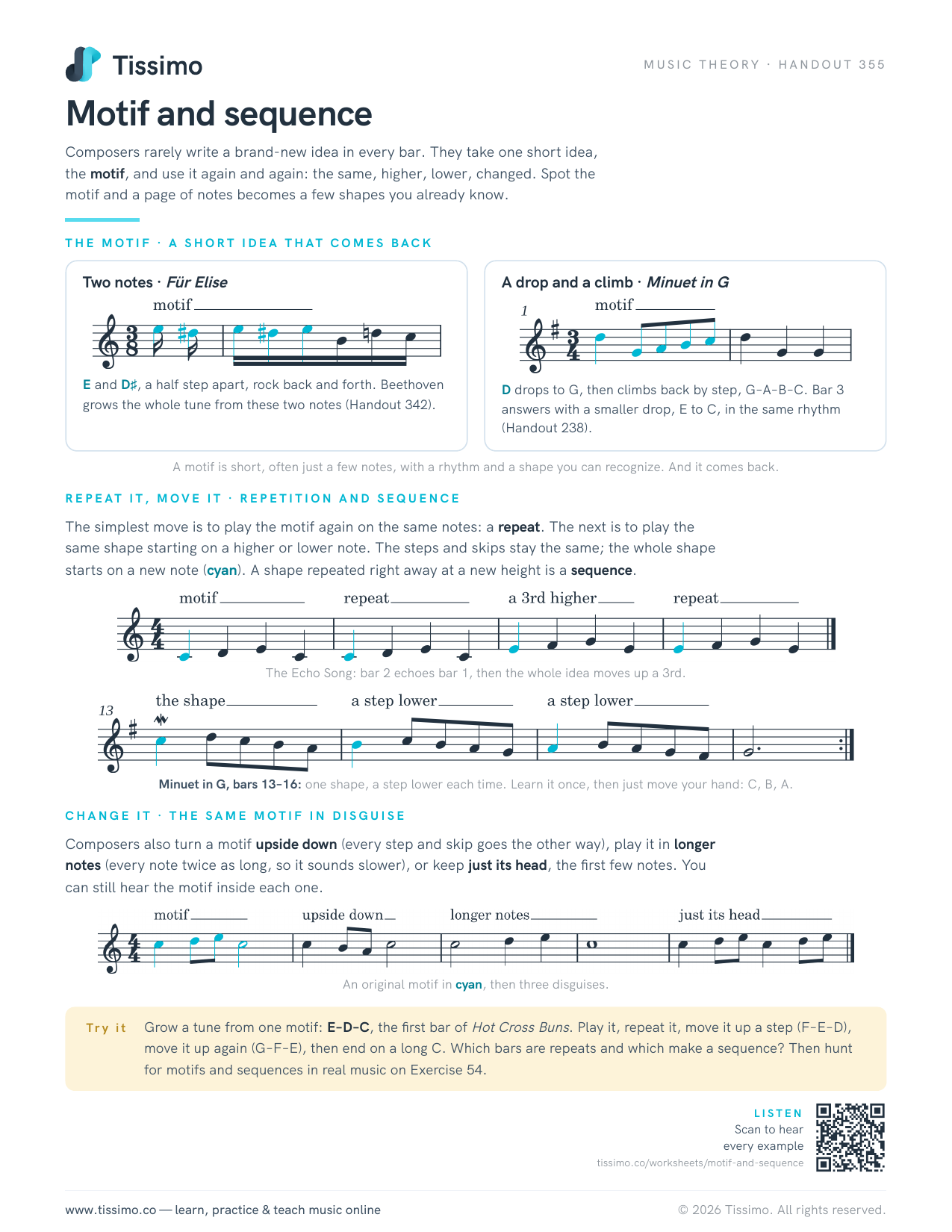 Motif and sequenceComposers rarely write a brand-new idea in every bar. They take one short idea, the motif, and use it again and again: the same, higher, lower, changed. Spot the motif and a page of notes becomes a few shapes you already know.
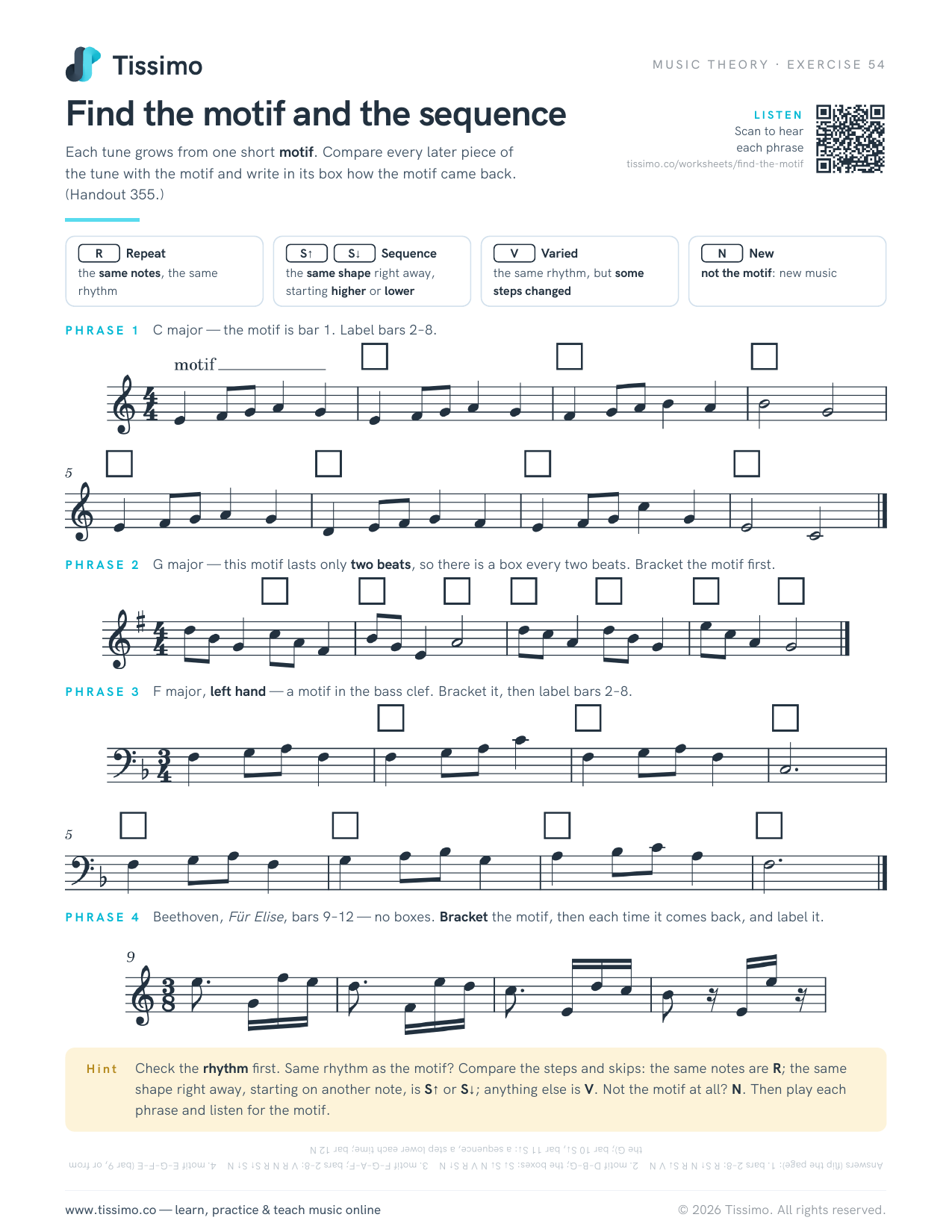 Find the motif and the sequenceEach tune grows from one short motif. Compare every later piece of the tune with the motif and write in its box how the motif came back. (Handout 355.)
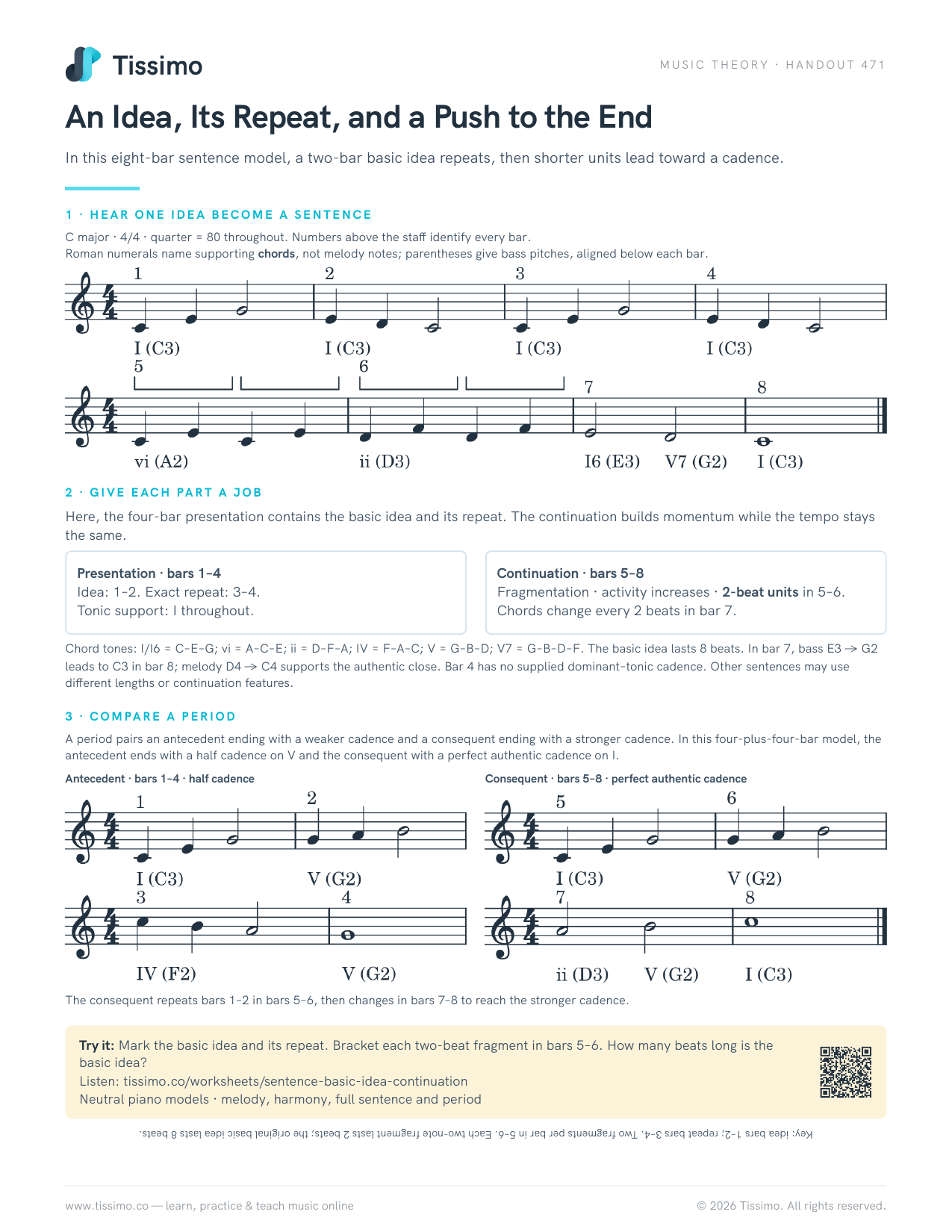 An Idea, Its Repeat, and a Push to the EndIn this eight-bar sentence model, a two-bar basic idea repeats, then shorter units lead toward a cadence.
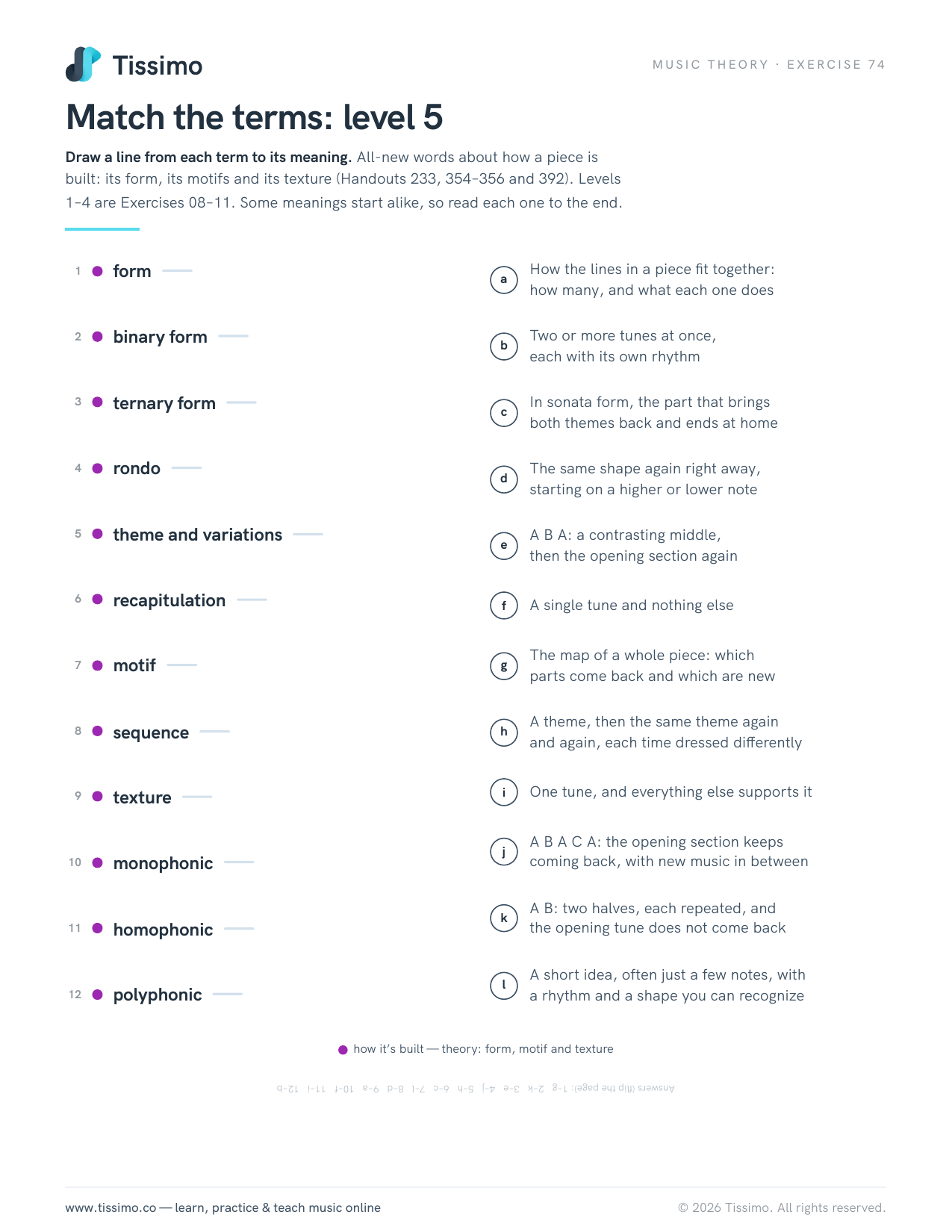 Match the terms: level 5Draw a line from each term to its meaning. All-new words about how a piece is built: its form, its motifs and its texture (Handouts 233, 354–356 and 392). Levels 1–4 are Exercises 08–11. Some meanings start alike, so read each one to the end.