Styles, Genres & Eras
R&B (Rhythm and Blues)
R&B, or rhythm and blues, is a family of African American popular styles that began in the 1940s with blues-based dance music and later grew to include soul, funk and contemporary R&B.
Rhythm and blues was a name adopted in the late 1940s for African American popular music, replacing the older record-industry label "race records." Over the decades the term has covered several related styles, so "R&B" means something different depending on the era.
Three eras of R&B
- 1940s–50s rhythm and blues: upbeat, blues-based dance music with saxophone, piano, bass and drums, such as the "jump blues" of Louis Jordan, as well as vocal groups and ballads. It fed directly into rock and roll.
- 1960s–70s soul and funk: soul combined R&B with gospel singing. Ray Charles, Aretha Franklin, Otis Redding and Sam Cooke were leading voices, and the record labels Motown (Detroit) and Stax (Memphis) each developed a distinctive sound. Funk, led by James Brown, stripped music down to tight, interlocking rhythmic patterns with heavy emphasis on the first beat of the bar.
- 1980s to today, contemporary R&B: smooth vocals, lush harmony and production shaped by drum machines, synthesizers and hip-hop. Whitney Houston, Mariah Carey and Beyoncé are among its biggest stars, and neo-soul artists such as D'Angelo and Erykah Badu reconnected it with earlier soul.
Musical features
- Groove: a strong backbeat and a bass line that locks with the drums.
- Expressive, gospel-influenced vocals, with long runs (melismas), ad-libs and layered harmonies.
- Rich harmony: major seventh, minor seventh and ninth chords, especially in contemporary R&B and neo-soul.
- Syncopated rhythms, including the swung sixteenth notes of many modern R&B grooves.
R&B and other genres
R&B is one of the main roots of rock, and today it overlaps constantly with pop and hip-hop. Many current pop hits use R&B harmony, rhythm and vocal style.
Playing R&B keyboard
Learn seventh and ninth chord voicings in several keys and practice moving smoothly between them, often with the left hand playing the root and the right hand the upper notes. The Major 7th and Minor 7th worksheets introduce the chords, and Syncopation the rhythms.
Common questions
What does R&B stand for?
Rhythm and blues. The term came into use in the late 1940s for African American popular music and now covers soul, funk and contemporary R&B as well.
What is the difference between R&B and soul?
Soul is one style within the larger R&B family: the 1960s–70s blend of rhythm and blues with gospel singing, associated with artists such as Aretha Franklin and Otis Redding.
Practice it: free worksheets
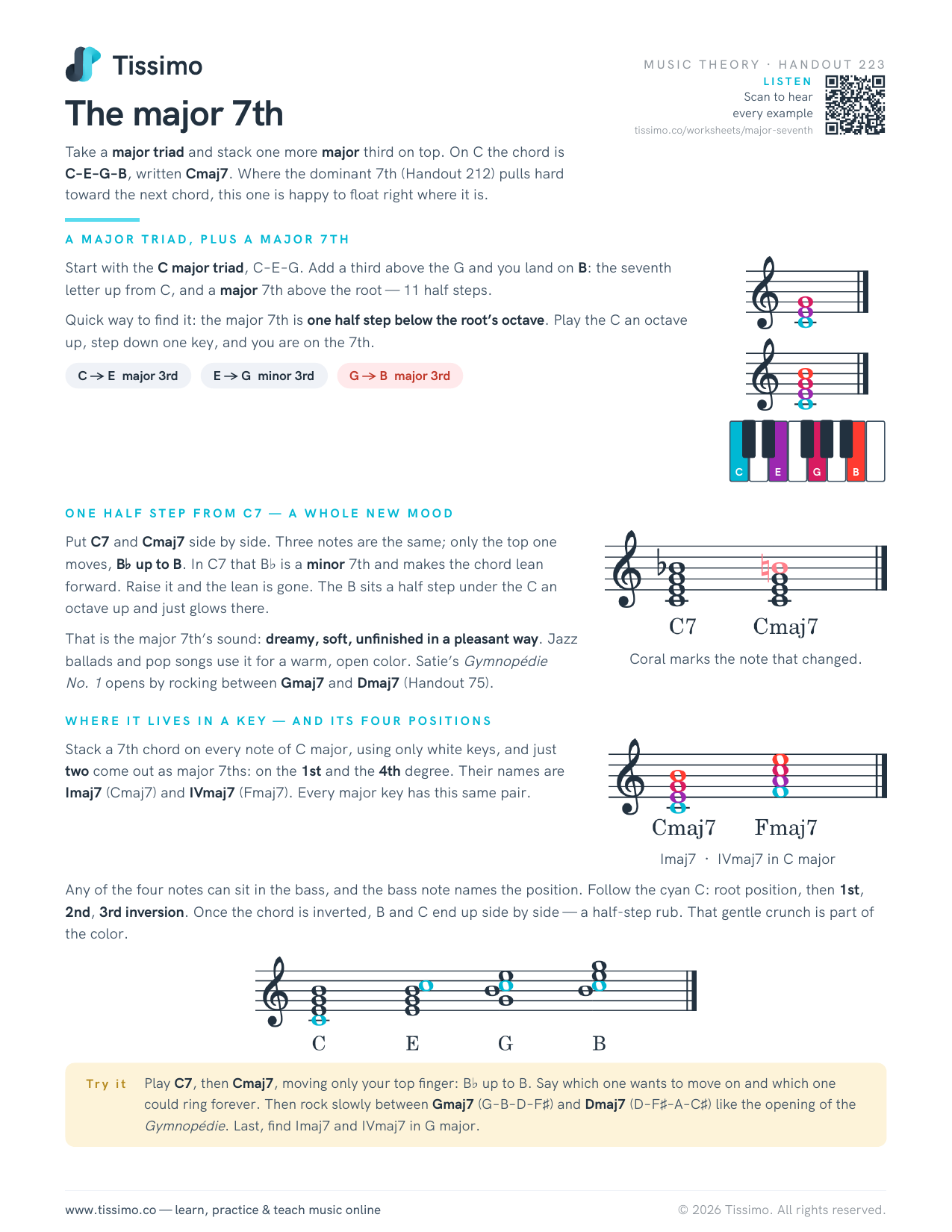 The major 7thTake a major triad and stack one more major third on top. On C the chord is C–E–G–B, written Cmaj7. Where the dominant 7th (Handout 212) pulls hard toward the next chord, this one is happy to float right where it is.
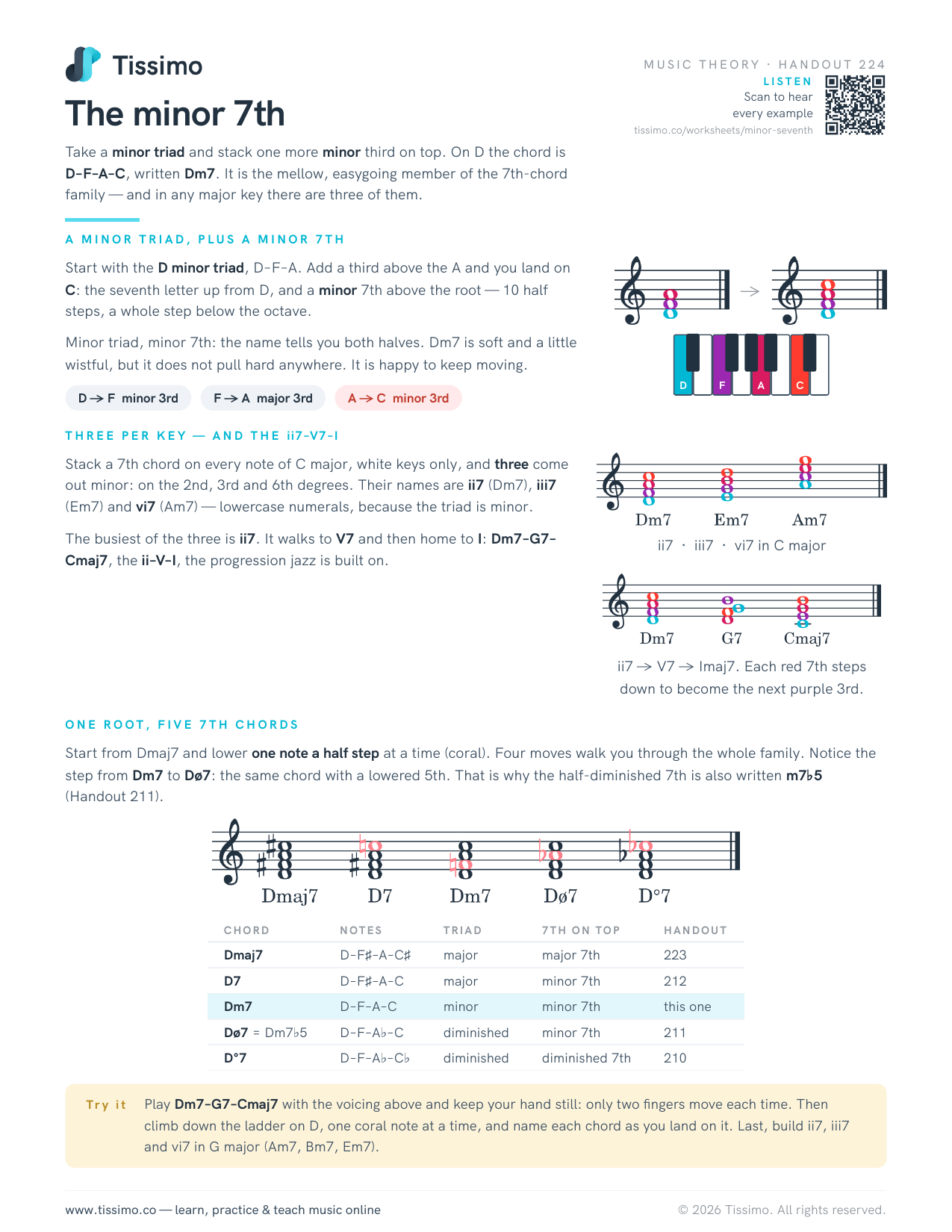 The minor 7thTake a minor triad and stack one more minor third on top. On D the chord is D–F–A–C, written Dm7. It is the mellow, easygoing member of the 7th-chord family — and in any major key there are three of them.
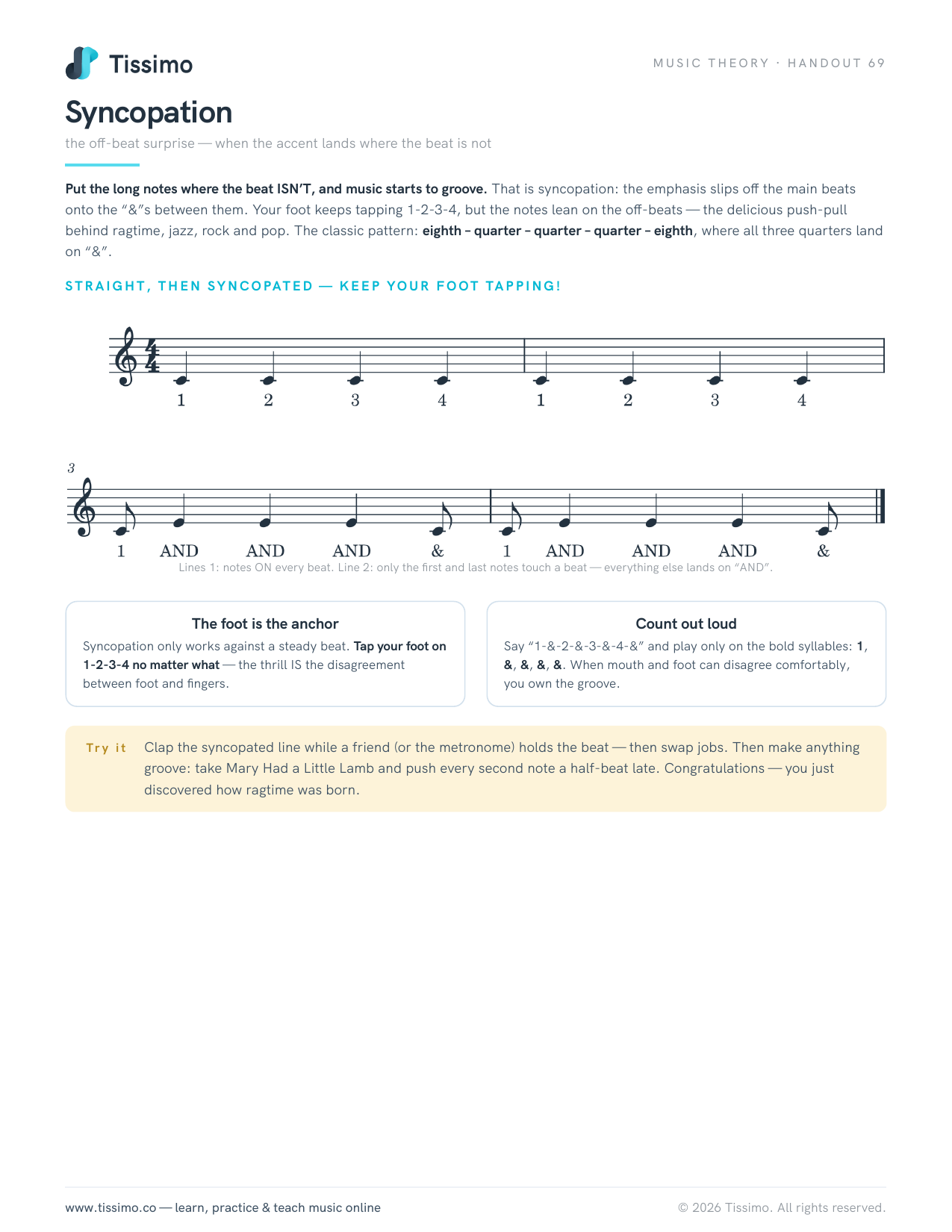 Syncopationthe off-beat surprise — when the accent lands where the beat is not
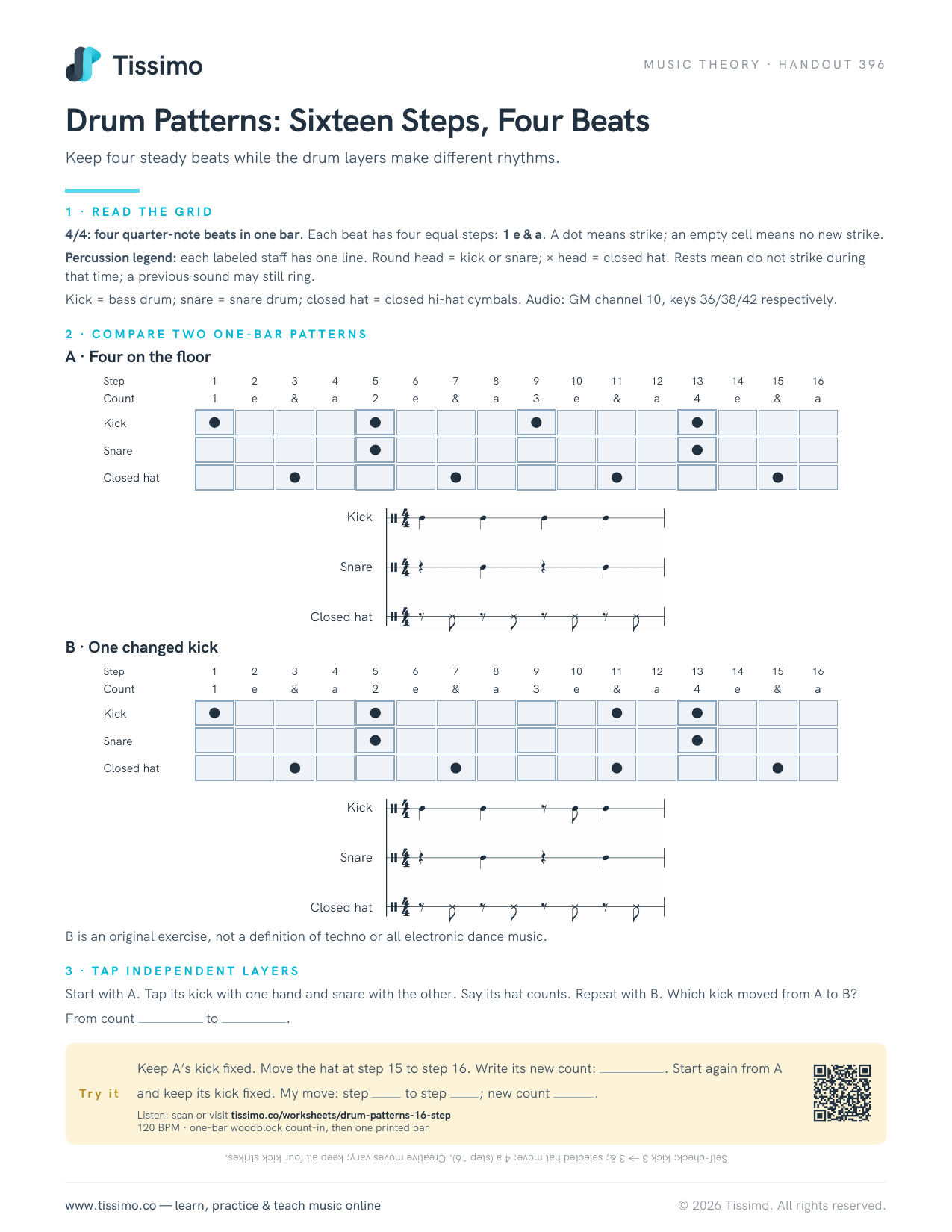 Drum Patterns: Sixteen Steps, Four BeatsKeep four steady beats while the drum layers make different rhythms.