Articulation & Ornaments
Glissando
Pronounced glih-SAHN-dohWritten as gliss.
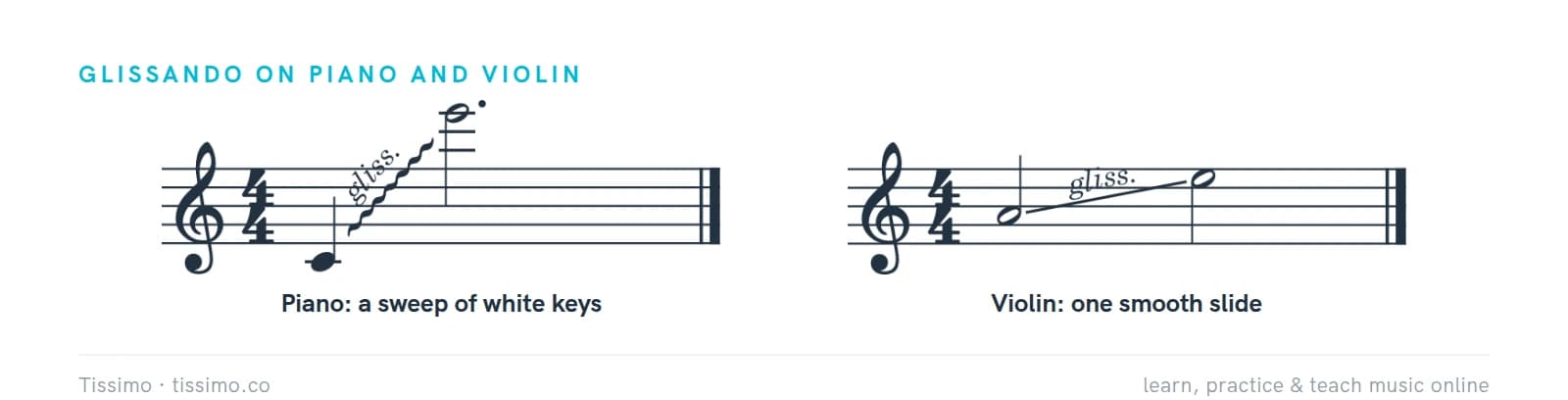
A glissando is a slide from one note to another: a rapid sweep across the keys or strings on piano and harp, or a smooth, continuous slide in pitch on strings, trombone or voice. It is shown by a line between two notes.
A glissando, usually shortened to gliss., is a slide from one note to another that sounds the pitches in between. On the page it is a straight or wavy line joining two notes, often with gliss. written along it. The first note is where the slide starts and the second is where it lands; the line tells you to fill the space between them.
The word looks Italian, but it was made from the French verb glisser, "to slide."
Two kinds of slide
Instruments with fixed pitches, such as the piano and the harp, can only sweep through their separate notes very quickly, so you hear a blur of scale notes. Instruments that can change pitch smoothly, such as the violin family, the trombone, the voice and the pedal timpani, can make a truly continuous slide. Some musicians call that continuous kind portamento and keep "glissando" for the sweep; in everyday use, glissando covers both.
How to play a piano glissando
- Going up (right hand): turn your hand over and let the back of the nail of your third finger, or of the second and third together, glide along the white keys.
- Going down: use the outer edge of your thumbnail.
- Keep the pressure light and the wrist loose; the speed comes from moving the arm, not from pressing harder. Land on the last note with a normal finger, so it sounds clear and on time.
A black-key glissando works the same way and sounds a pentatonic scale, since the black keys form one. On heavy or stiff keyboards a glissando can scrape your skin, so go gently.
Glissandos on other instruments
- Harp: the classic glissando instrument. Because each pedal sets one letter name, the harpist can tune the strings so that a sweep sounds a scale or even a chord.
- Trombone: a smooth slide glissando stays on one harmonic, so it covers at most about a tritone, the distance from first to seventh position.
- Violin, viola, cello, double bass: one finger slides along the string.
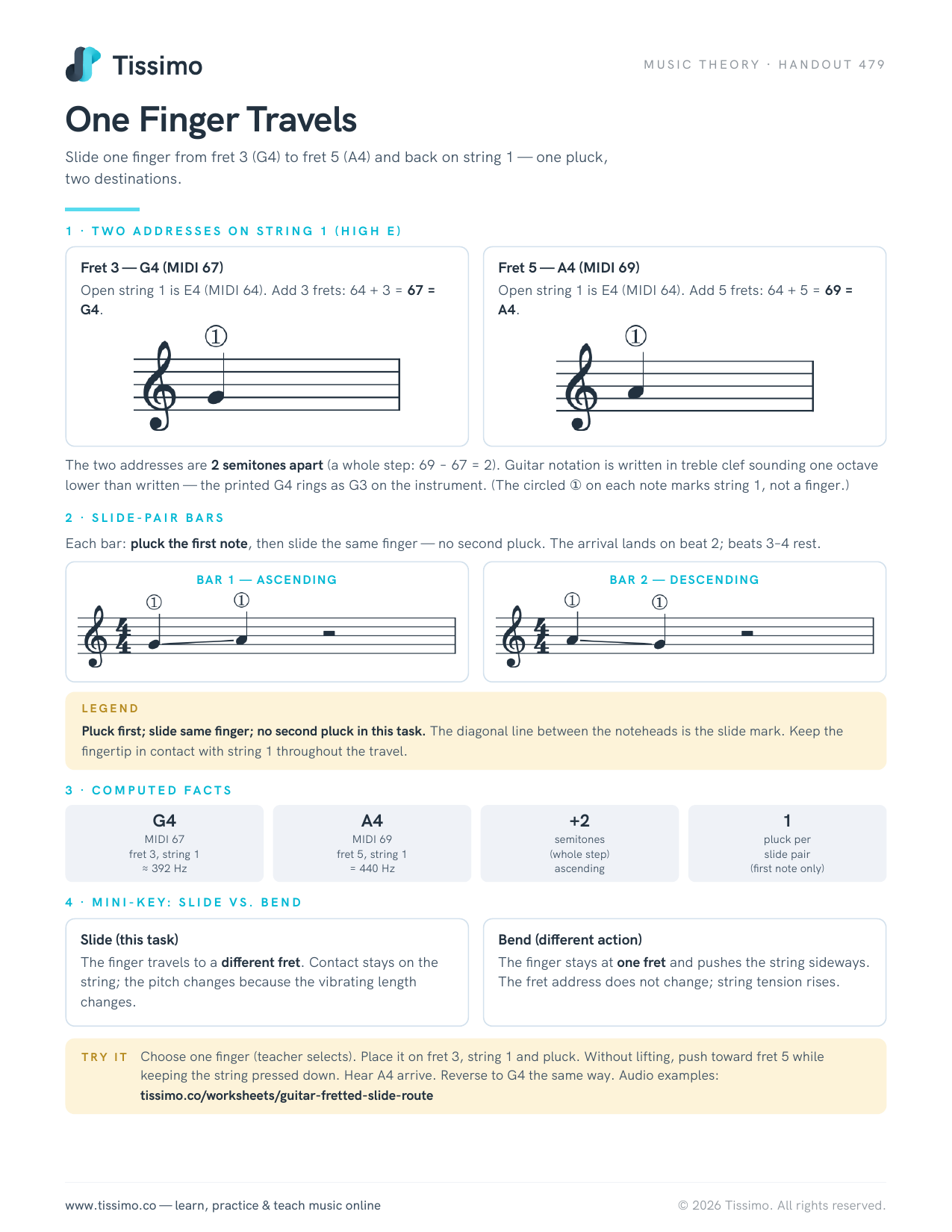
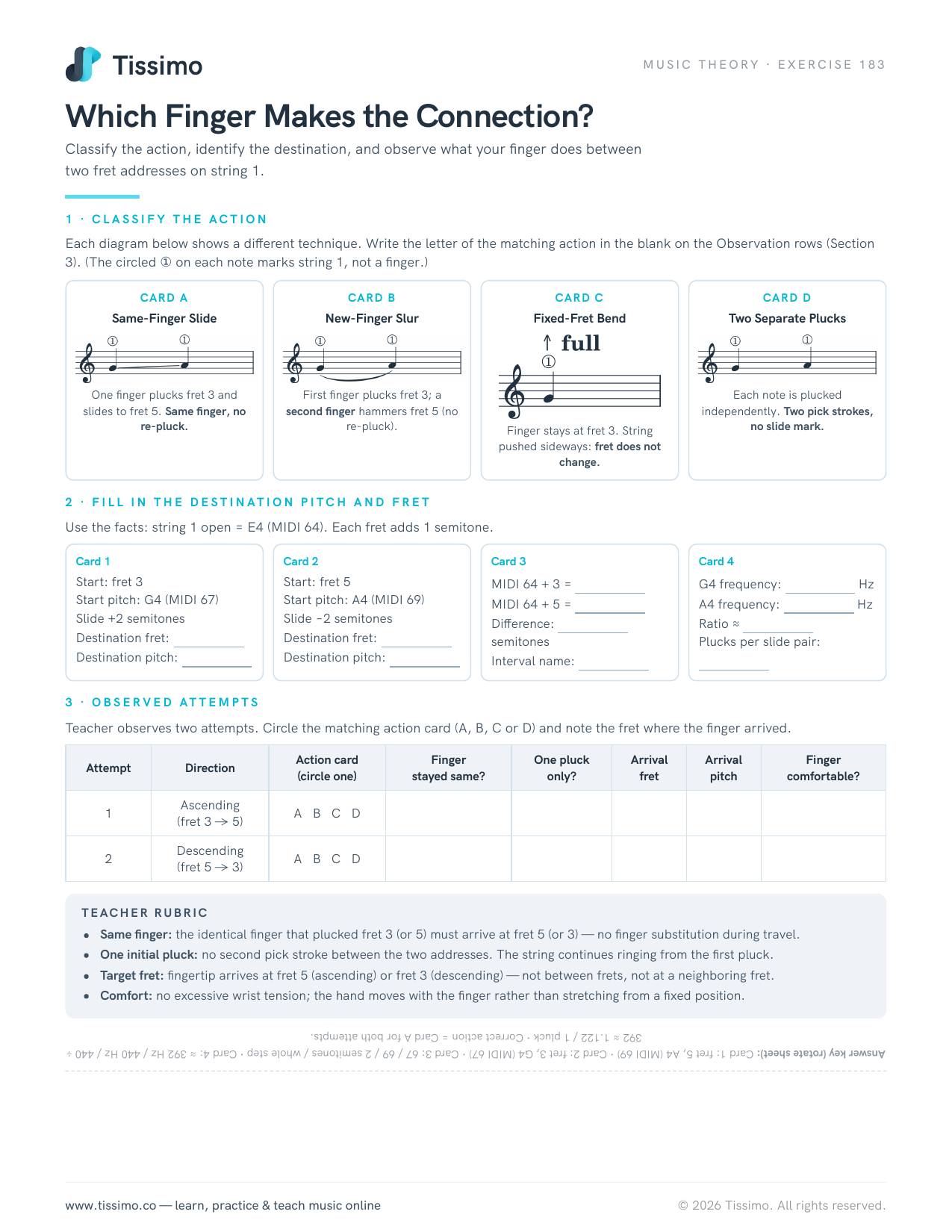
- Guitar: a finger slides along the string; on a fretted guitar you hear the frets as tiny steps, while a bottleneck slide makes a smooth glide. Try it with One Finger Travels.
- Voice: singers slide between notes for expression, from opera to pop.
Do not confuse a glissando line with a slur: a slur connects notes smoothly but plays only the written notes, while a glissando fills in everything between them.
Common questions
How do you do a glissando on the piano?
Going up, turn your right hand over and glide the back of your third fingernail along the white keys; going down, use the edge of your thumbnail. Keep it light and let the arm move, then land on the final note with a finger.
What is the difference between a glissando and a portamento?
Both are slides between notes. Many musicians use glissando for a sweep through separate notes (piano, harp) and portamento for a smooth, continuous slide in pitch (voice, strings), but in everyday use glissando covers both.