Instruments & Voices
Trombone
The trombone is a brass instrument that changes pitch with a sliding tube instead of valves. Its seven slide positions each lower the pitch a half step, and it reads bass and tenor clefs at concert pitch.
The trombone is the brass instrument with a slide. Instead of pressing valves, you move a long U-shaped tube in and out to make the instrument longer or shorter. That gives it a unique ability among the brass: it can glide smoothly between notes in a true glissando, and it can adjust the tuning of every note continuously.
How a trombone makes its sound
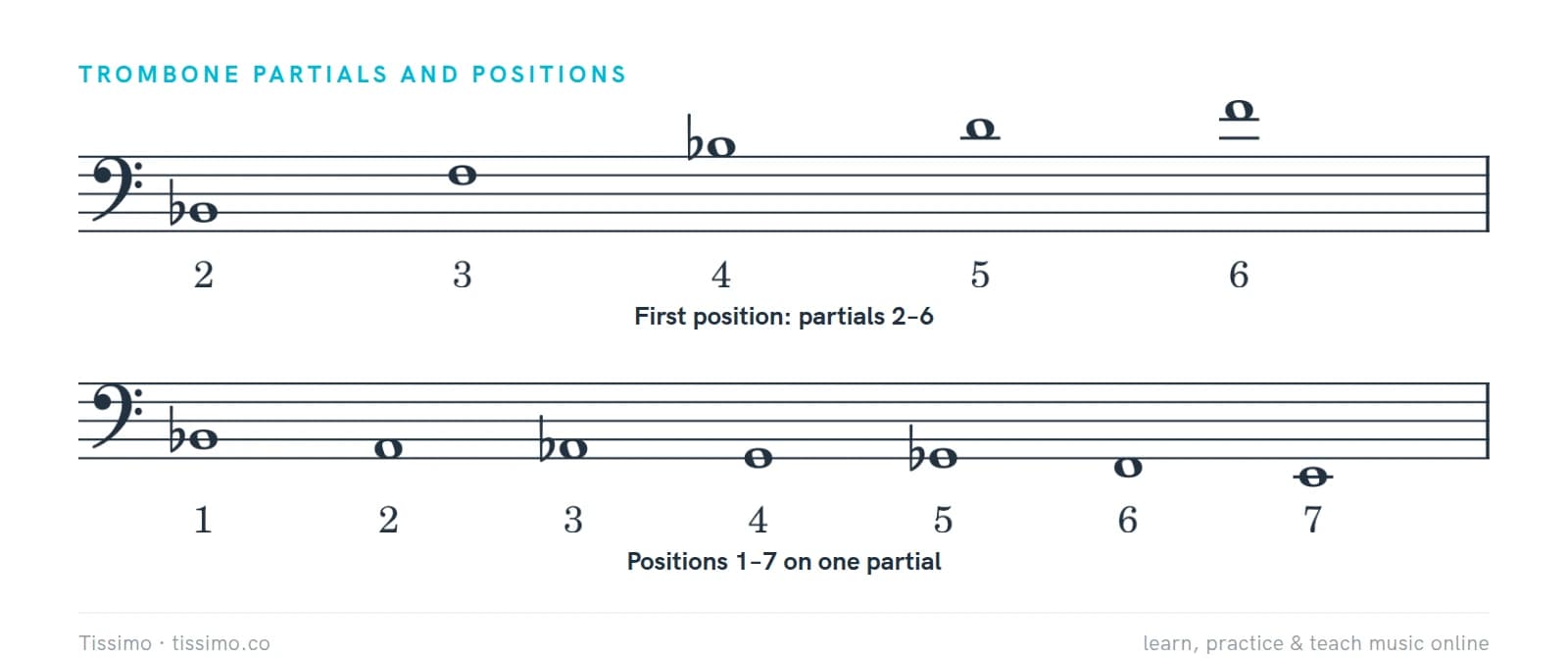
Like every brass instrument, the trombone sounds when you buzz your lips into the mouthpiece. With the slide in one place you can play several notes, the harmonics (partials) of the tube's harmonic series, by changing your lip tension and air. Moving the slide changes which series you are on.
The slide has seven positions. First position is with the slide all the way in; each position further out lowers every note by a half step, so seventh position is six half steps (a tritone) below first. Many tenor trombones also have an F attachment, a valve worked by the left thumb that adds tubing and gives easier alternatives for low notes.
Range
A straight tenor trombone without an attachment has a normal chromatic range beginning at E2, with pedal tones from about B♭1 downward below a gap. An F attachment extends the usable low range into that gap. The upper range reaches about B♭4 for many players and F5 or higher for advanced ones. The bass trombone, with a wider bore and usually two valves, covers the lowest part of the section.
How trombone music is written
Trombone parts are written at concert pitch, usually in bass clef, with tenor clef (a C clef) for higher passages and, in older music, occasionally alto clef. The main exception is the British-style brass band, where tenor trombone parts are written in treble clef as a transposing instrument in B♭, sounding a major ninth lower than written.
Its role
Orchestras usually have two tenor trombones and a bass trombone. Trombones are central to concert and marching bands, jazz big bands (often a section of four), New Orleans jazz, ska, salsa and funk horn sections, and brass quintets.
Tips for beginners
- Learn the positions by ear as much as by sight: listen and adjust, since there are no fixed markings on the slide.
- Hold the slide lightly with the fingertips of the right hand and move from the elbow, keeping the wrist relaxed.
- Move the slide quickly between notes, and time the move with your tongue so notes don't smear unless you want them to.
- Keep the slide clean and lubricated so it moves freely.
Common questions
Is the trombone a transposing instrument?
Usually not. Although the tenor trombone is built in B♭, it reads bass and tenor clef at concert pitch. The exception is British brass band music, where trombone parts are written in treble clef and transposed.
How many positions does a trombone have?
Seven. Each position, moving out from first, lowers the pitch by a half step. Each position gives a whole series of notes (partials), so most notes can be played in more than one position.
Practice it: free worksheets
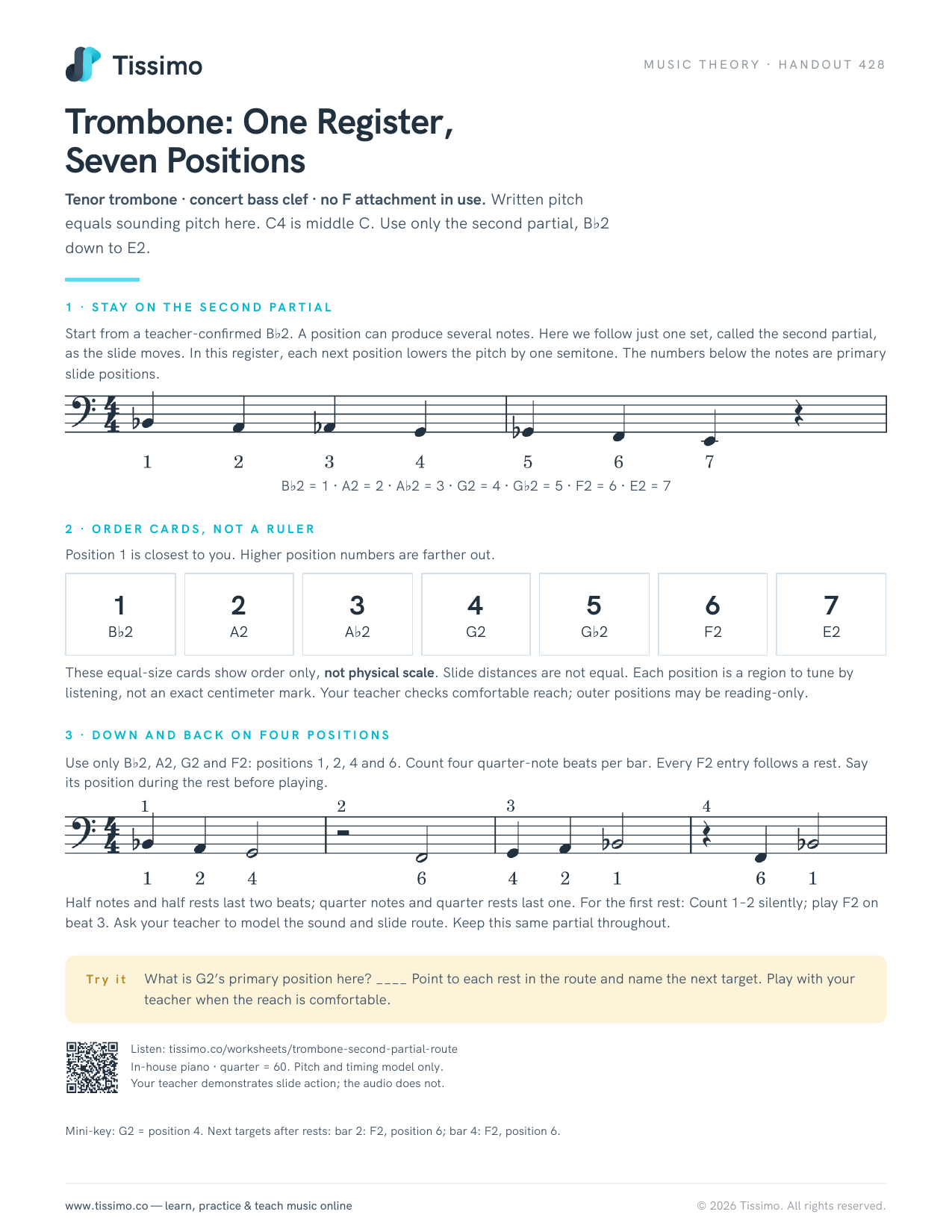 Trombone: One Register, Seven PositionsTenor trombone · concert bass clef · no F attachment in use. Written pitch equals sounding pitch here. C4 is middle C. Use only the second partial, B♭2 down to E2.
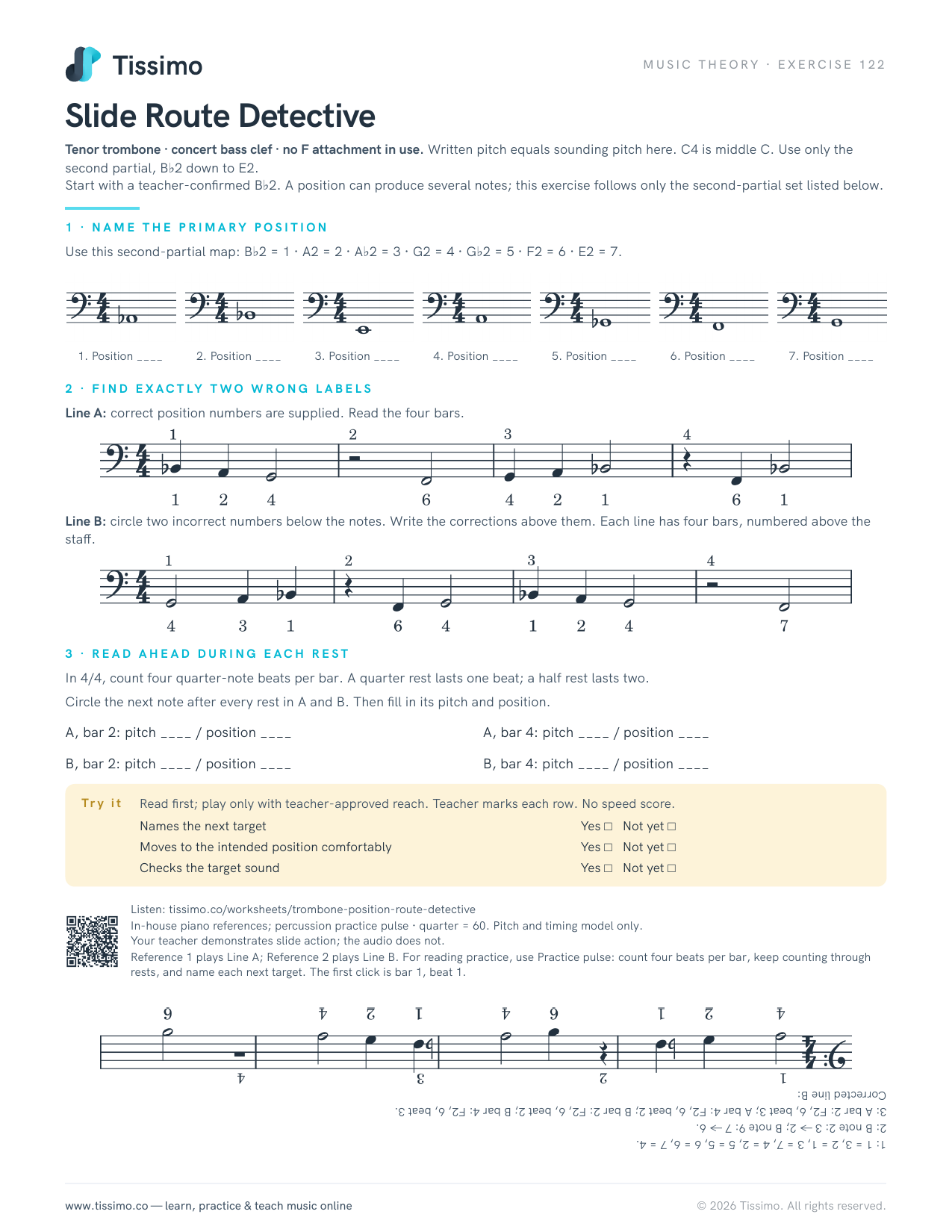 Slide Route DetectiveTenor trombone · concert bass clef · no F attachment in use. Written pitch equals sounding pitch here. C4 is middle C. Use only the second partial, B♭2 down to E2. Start with a teacher-confirmed B♭2. A position can produce several notes; this exercise follows only the second-partial set listed below.
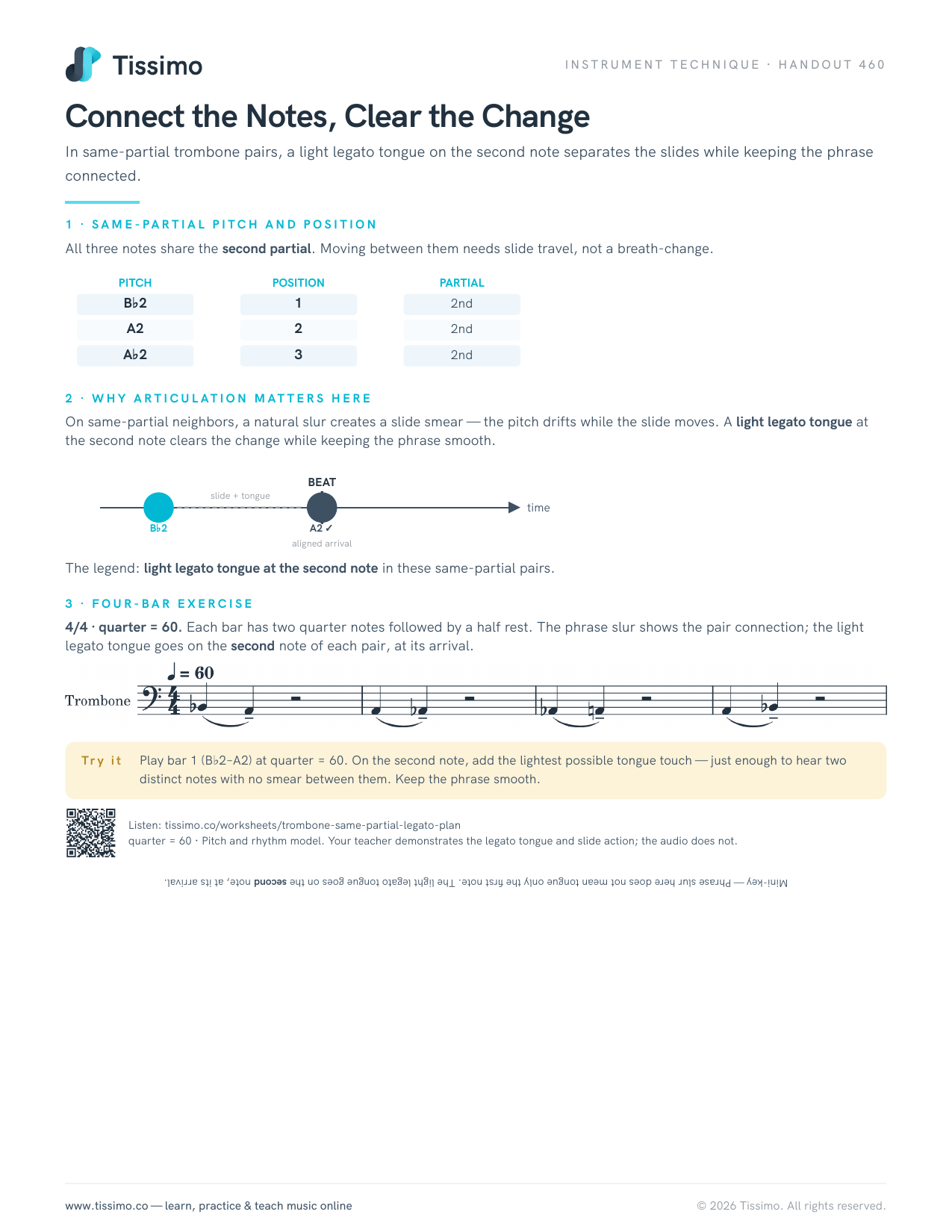 Connect the Notes, Clear the ChangeIn same-partial trombone pairs, a light legato tongue on the second note separates the slides while keeping the phrase connected.
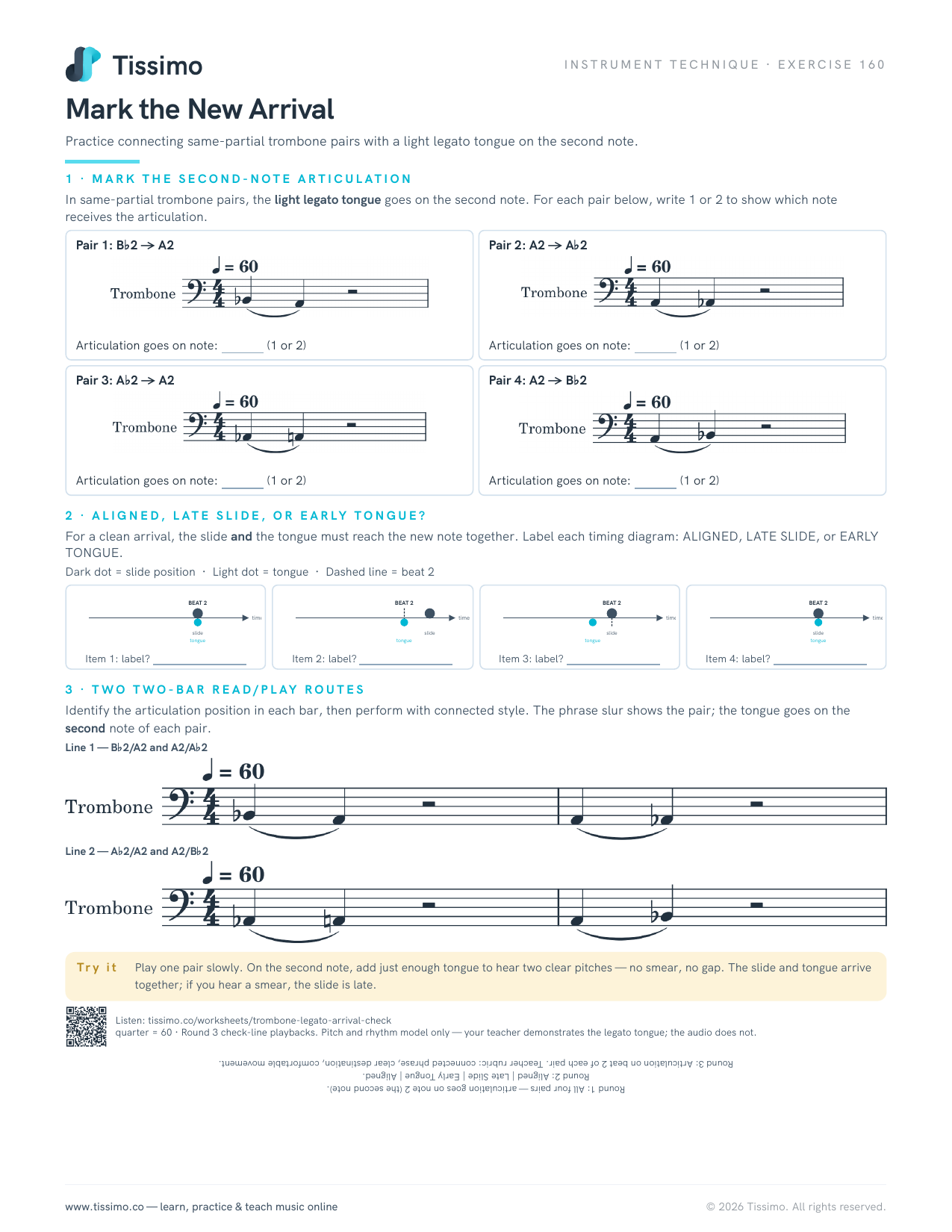 Mark the New ArrivalPractice connecting same-partial trombone pairs with a light legato tongue on the second note.
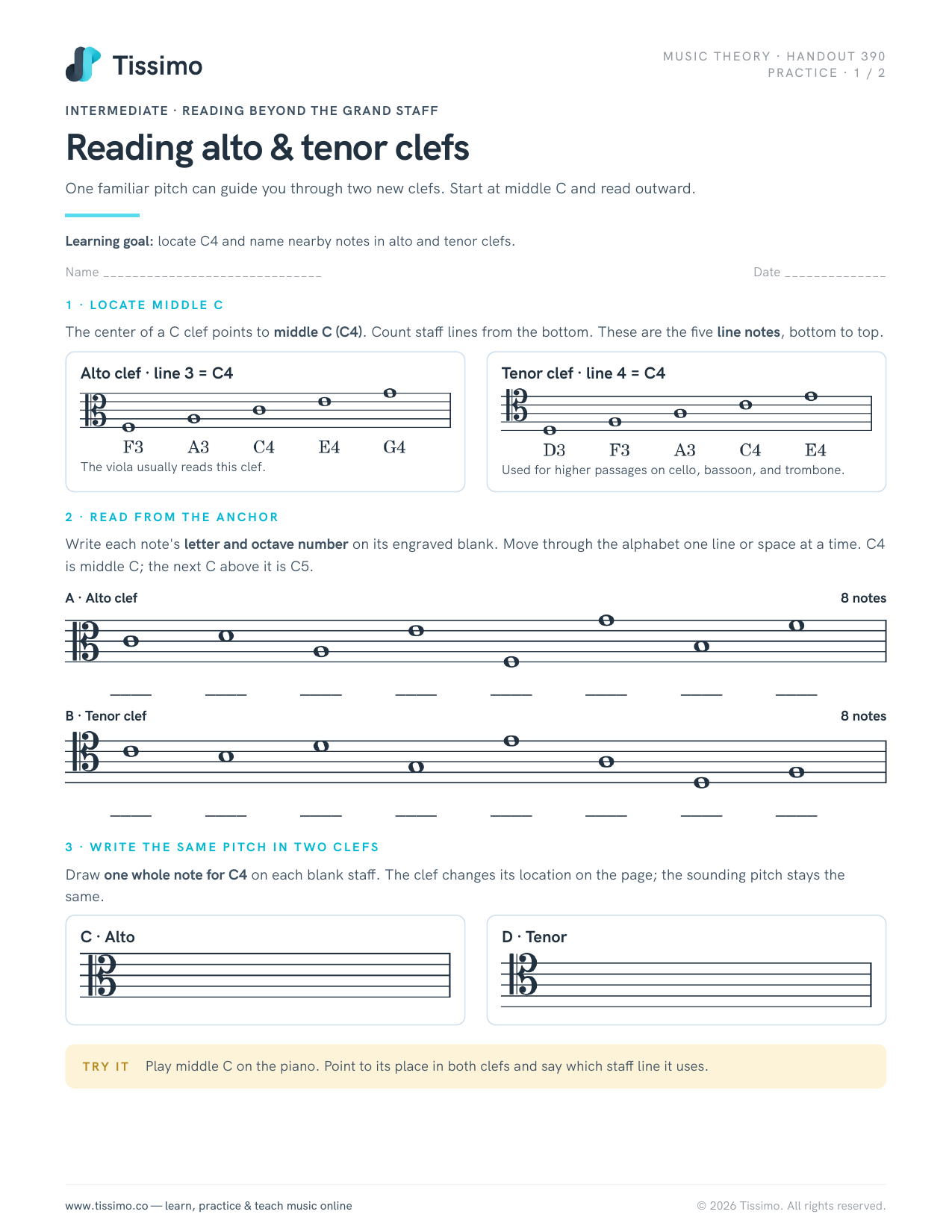 Reading alto & tenor clefsOne familiar pitch can guide you through two new clefs. Start at middle C and read outward.