Melody, Texture & Counterpoint
Bass Line
The bass line is the lowest part of the music. It supports the harmony by sounding the bass note of each chord, and it helps drive the rhythm.
The bass line is the lowest part in a piece of music. It is played by the bass guitar or double bass in a band, the cellos and double basses in an orchestra, the left hand at the piano, or the basses in a choir. Listeners often notice it less than the melody, but it does two big jobs at once: it anchors the harmony and drives the rhythm.
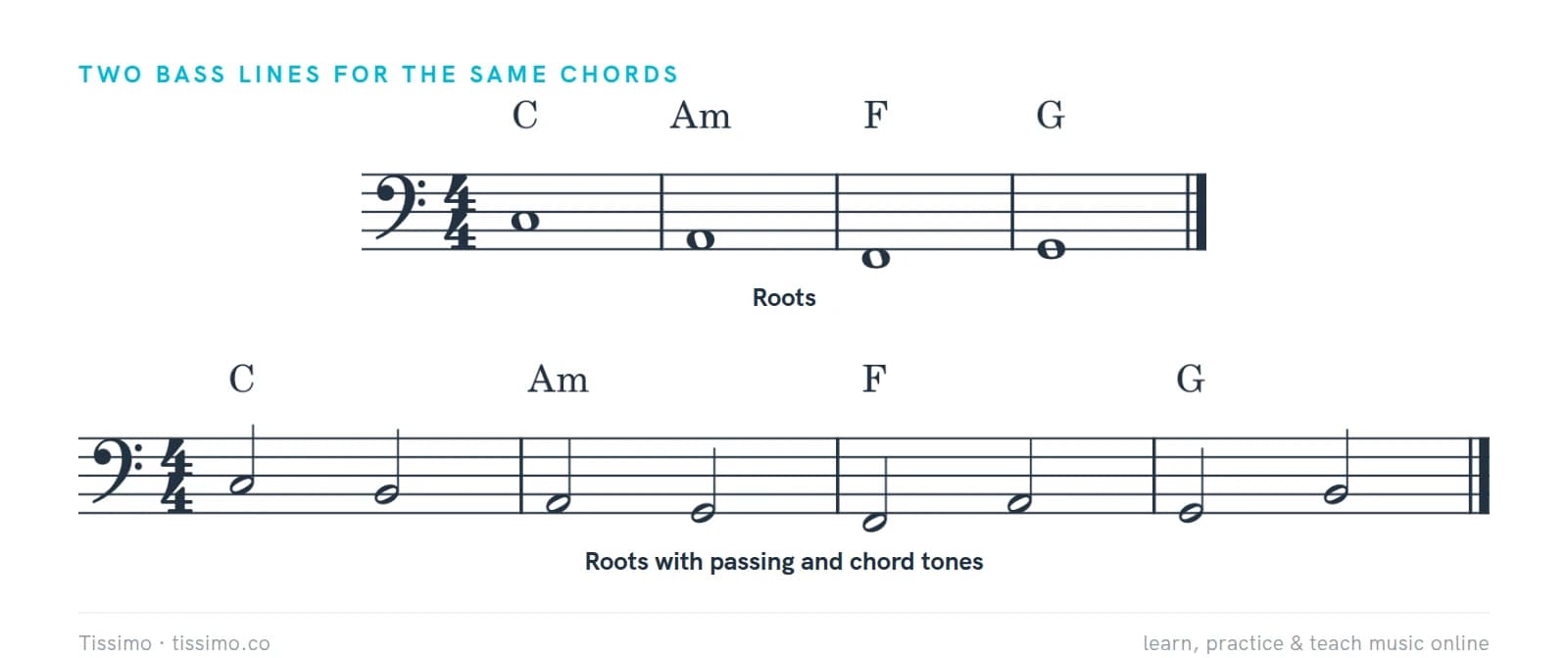
What a bass line does
- Harmony. The bass note shapes how a chord sounds. C–E–G with C in the bass sounds settled; the same chord with E or G in the bass sounds lighter and less final. Chord symbols such as C/E name the bass note when it is not the root (see slash chord and chord inversion).
- Rhythm. Together with the drums, the bass sets the groove. In much popular music the bass and the kick drum lock together.
- Motion. A good bass line is a melody in its own right, moving by step and by chord leaps, with a shape that connects one chord to the next. Classical voice leading treats the bass as the second most important line, after the melody.
Kinds of bass line
- Roots: the simplest bass line plays the root of each chord, as in the first panel.
- Stepwise lines: passing notes fill the gaps, like the descending C–B–A–G in the second panel.
- Walking bass: steady quarter notes through the changes, as in jazz.
- Broken-chord patterns, such as Alberti bass.
- Held or repeated notes: pedal points and drones.
- Repeating patterns: ostinatos and riffs.
Reading bass lines
Bass parts are written in bass clef. The double bass and bass guitar sound an octave lower than written, which keeps their parts on the staff instead of far below it on ledger lines.
Practice with Build a Bassline from Chord Roots, train your ear with Hear the Bass of the Triad, and write a left hand from chord symbols in Realize a lead sheet.
Common questions
Is the bass line always the root of the chord?
No. The root is the most common and most stable choice, but bass lines often use other chord tones and passing notes. When another chord tone is in the bass, the chord is in an inversion. A passing note or pedal note outside the chord does not by itself make an inversion.
Practice it: free worksheets
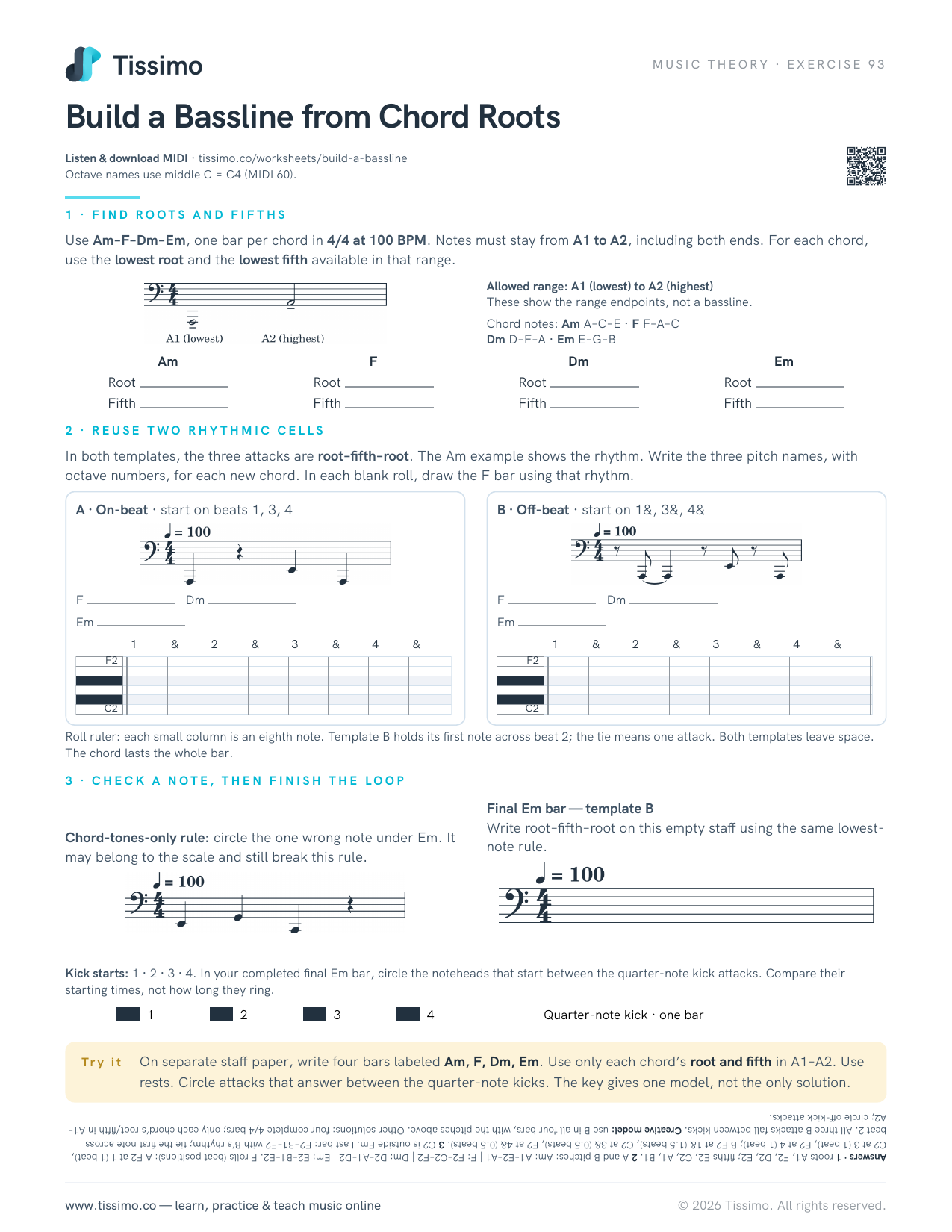 Build a Bassline from Chord Roots
 Hear the Bass of the TriadHear the lowest note of a known chord. Decide whether it is the root, third or fifth.
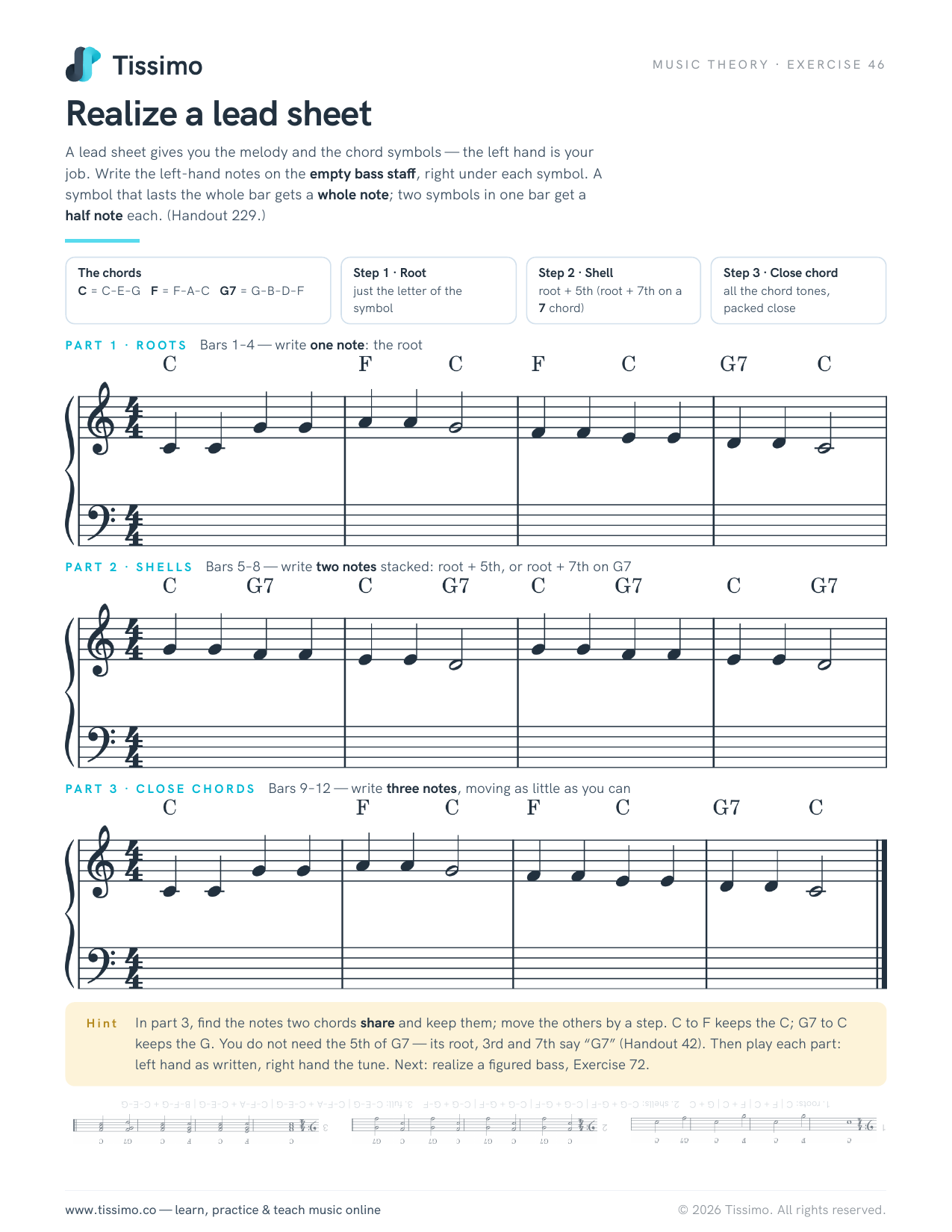 Realize a lead sheetA lead sheet gives you the melody and the chord symbols — the left hand is your job. Write the left-hand notes on the empty bass staff, right under each symbol. A symbol that lasts the whole bar gets a whole note; two symbols in one bar get a half note each. (Handout 229.)
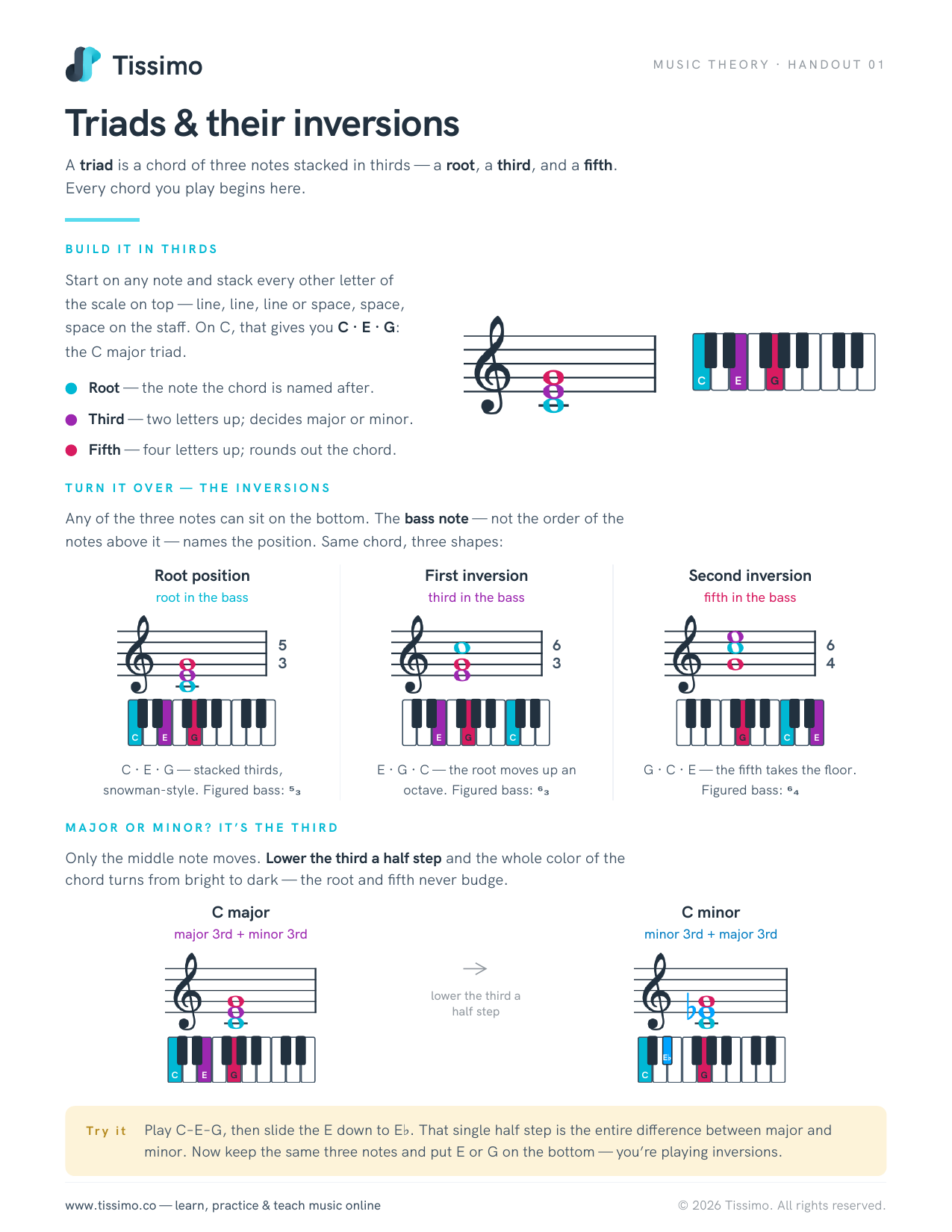 Triads & their inversionsA triad is a chord of three notes stacked in thirds — a root, a third, and a fifth. Every chord you play begins here.