Chords & Harmony
Voicing
A voicing is the specific arrangement of a chord's notes: which octave each note is in, which are doubled or left out, and which note is on top or in the bass. C–E–G and C–G–E–C are two voicings of one chord.
A voicing is one particular way of laying out a chord's notes. A C major chord is always C, E and G, but you decide which octave each note goes in, which notes to double or leave out, which note sits in the bass and which one is on top. Each of those choices is a voicing, and each one sounds different even though the chord's name stays the same.
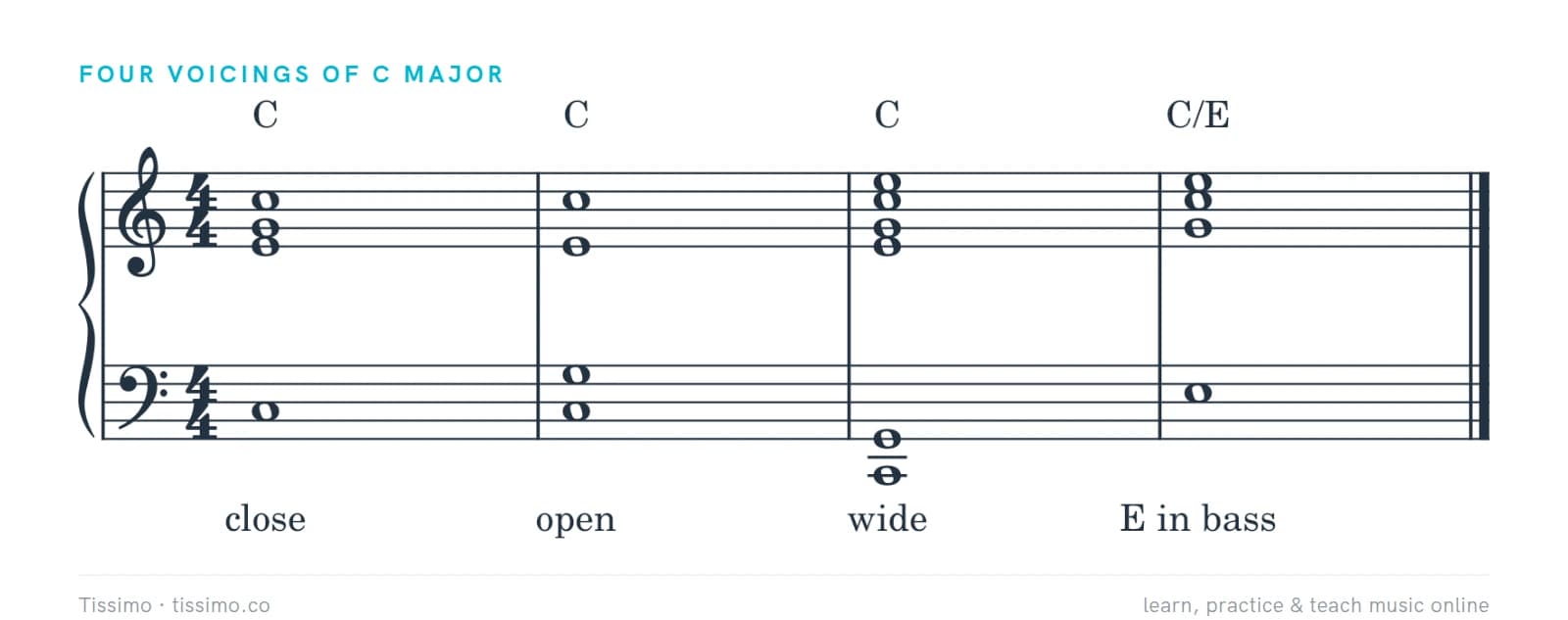
What you can change
- Spacing: in a close voicing the upper notes are packed together; in an open voicing they are spread out.
- Bass note: putting the third or fifth at the bottom makes an inversion.
- Top note: the highest note is the one listeners notice most, so it usually carries the melody.
- Doubling and omission: you can double a note in another octave, or leave one out. The fifth is usually the first to go, because it adds the least color.
- Register: the same voicing sounds dark and heavy low on the piano, bright and light up high.
A few guidelines
- Keep wide gaps at the bottom and closer intervals higher up, roughly the way the overtones of a low note are spaced. Close thirds very low in the bass tend to sound muddy.
- Avoid doubling the leading tone and the seventh of a chord.
- When chords change, choose voicings that let each note move a short distance to the next chord: good voice leading and voicing go together.
Voicing on different instruments
Pianists voice chords to fit the hands and to balance melody and accompaniment. Guitarists choose between open-string shapes, barre chords and smaller shapes higher up the neck, each a different voicing of the same chord. Jazz pianists use compact voicings such as shells (the root with the third, the seventh or both) and rootless voicings, especially for extended chords. Arrangers voice chords across the instruments of a band or the voices of a choir (four-part harmony).
Explore further with Shell Voicings and Voice a Chord Loop in MIDI.
Common questions
What is the difference between a chord and a voicing?
The chord is the set of notes (C, E, G). The voicing is how you arrange them: which octaves, which note is on top, which is in the bass, and which are doubled or left out.
What are close and open voicings?
In a close voicing the upper notes of the chord sit as near together as possible, within an octave. In an open voicing they are spread out, with gaps you could fit other chord notes into.
Practice it: free worksheets
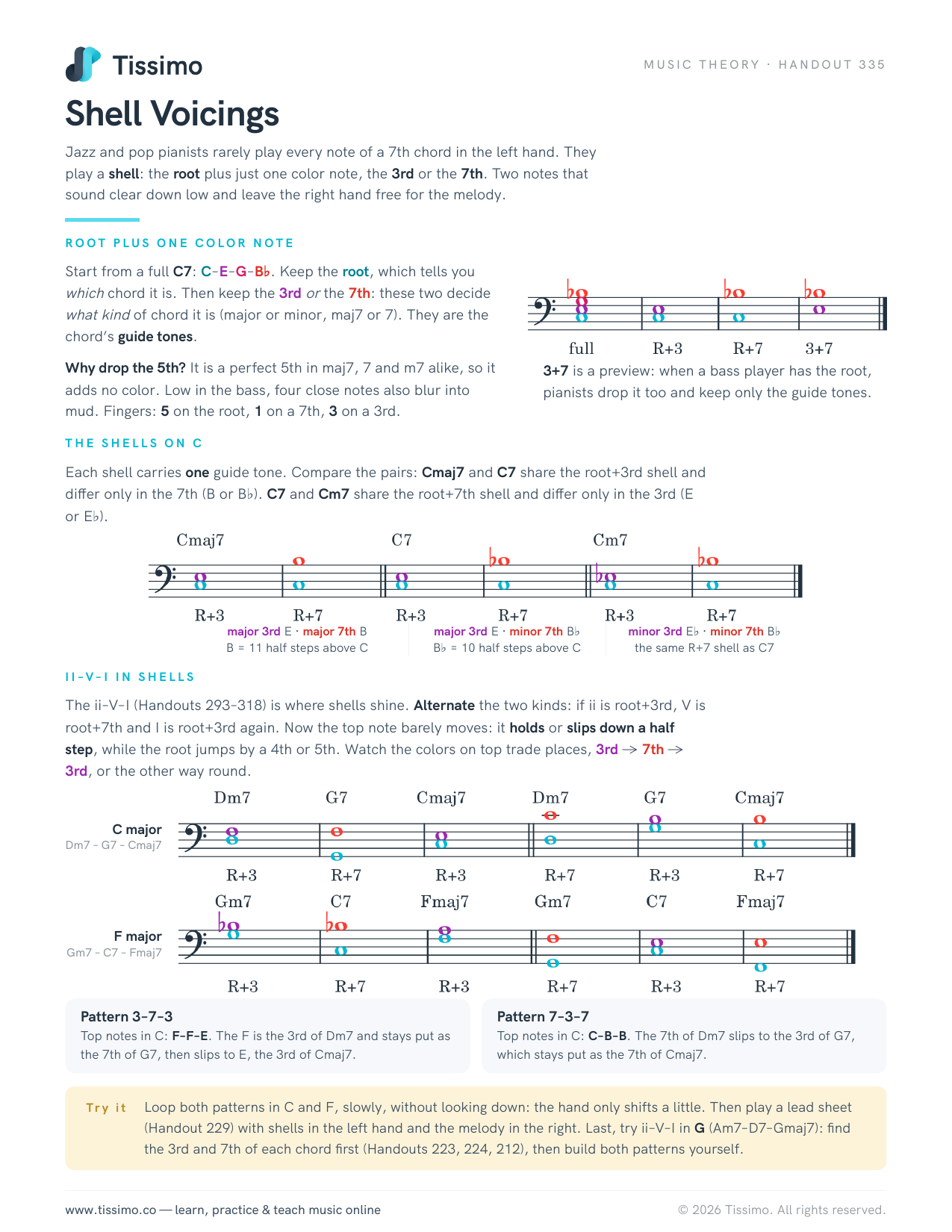 Shell VoicingsJazz and pop pianists rarely play every note of a 7th chord in the left hand. They play a shell: the root plus just one color note, the 3rd or the 7th. Two notes that sound clear down low and leave the right hand free for the melody.
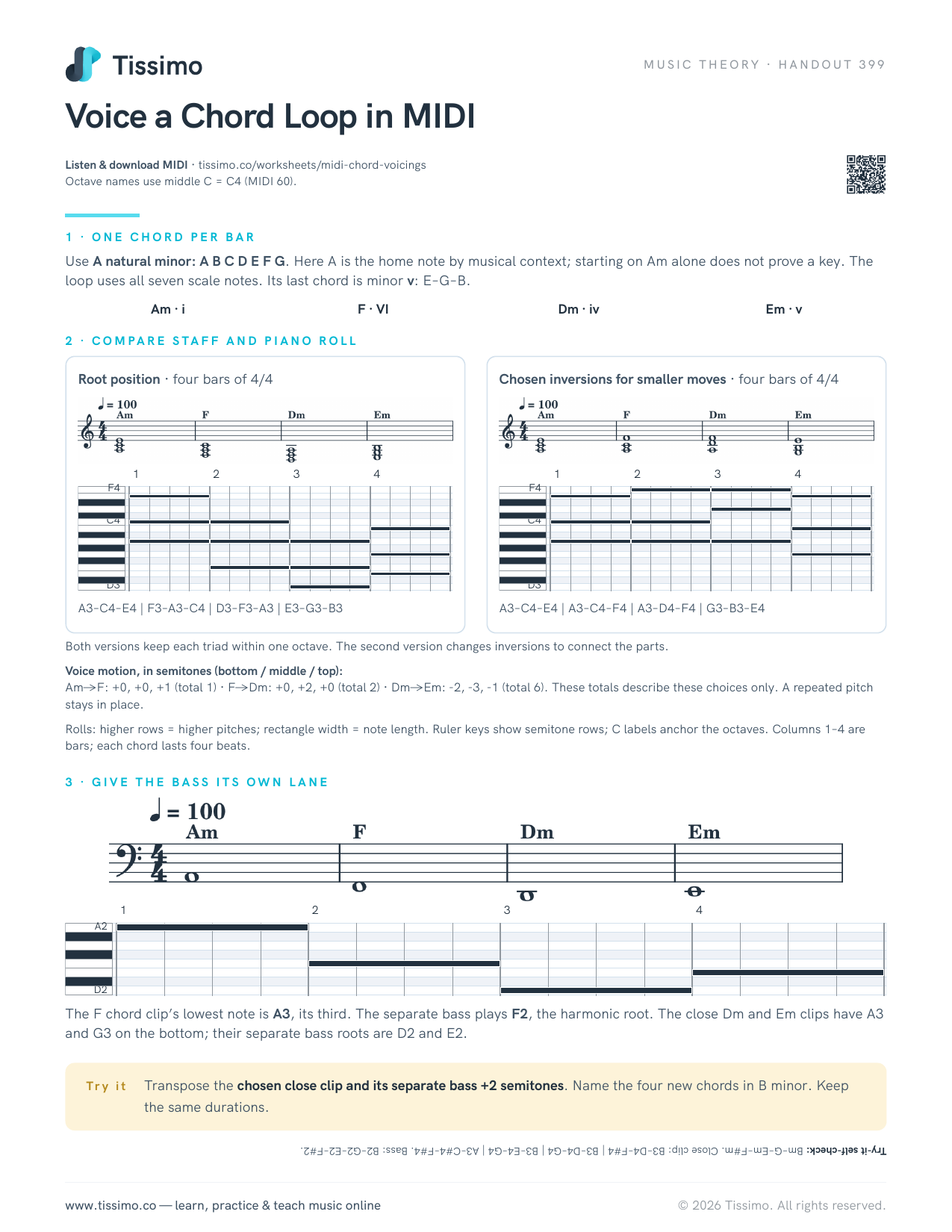 Voice a Chord Loop in MIDI
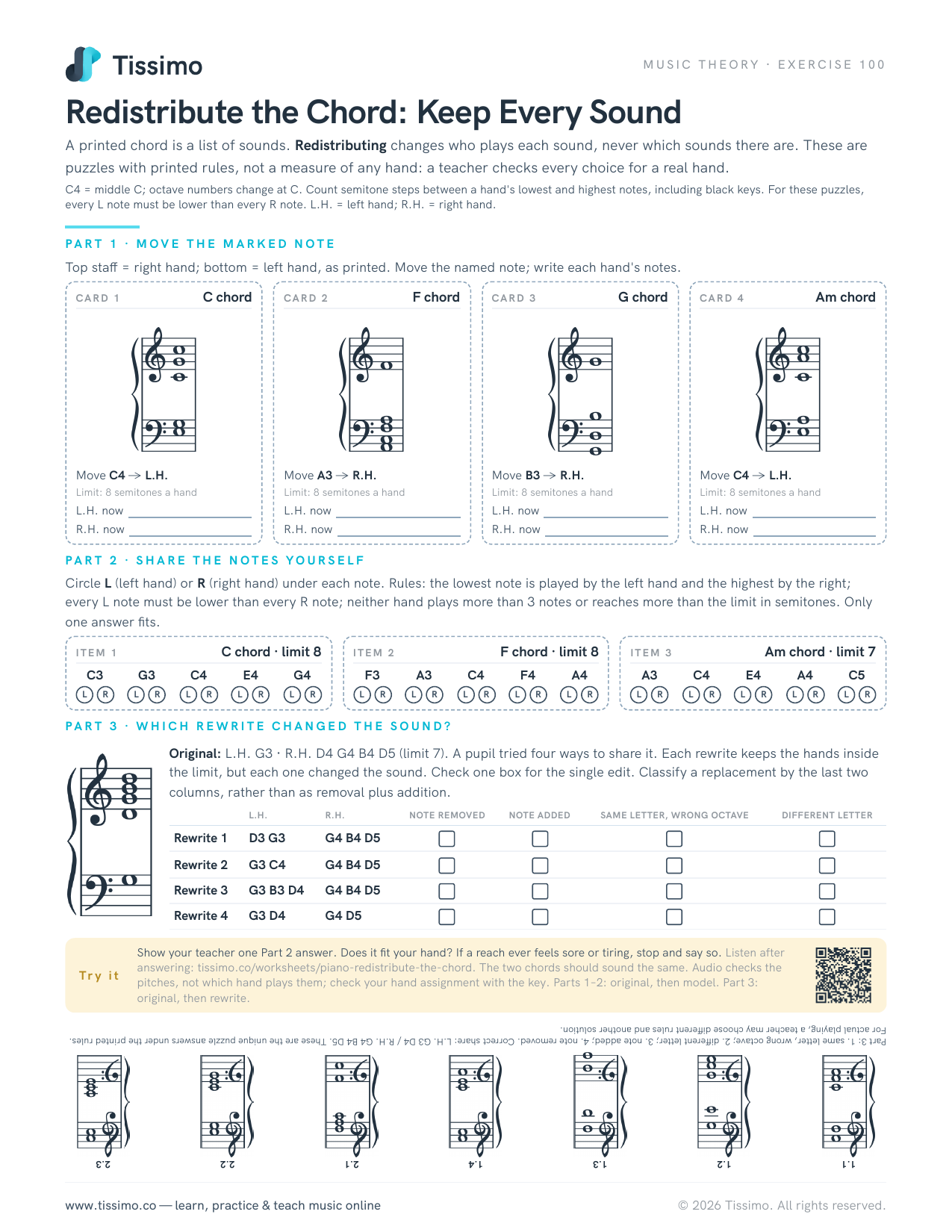 Redistribute the Chord: Keep Every SoundA printed chord is a list of sounds. Redistributing changes who plays each sound, never which sounds there are. These are puzzles with printed rules, not a measure of any hand: a teacher checks every choice for a real hand.
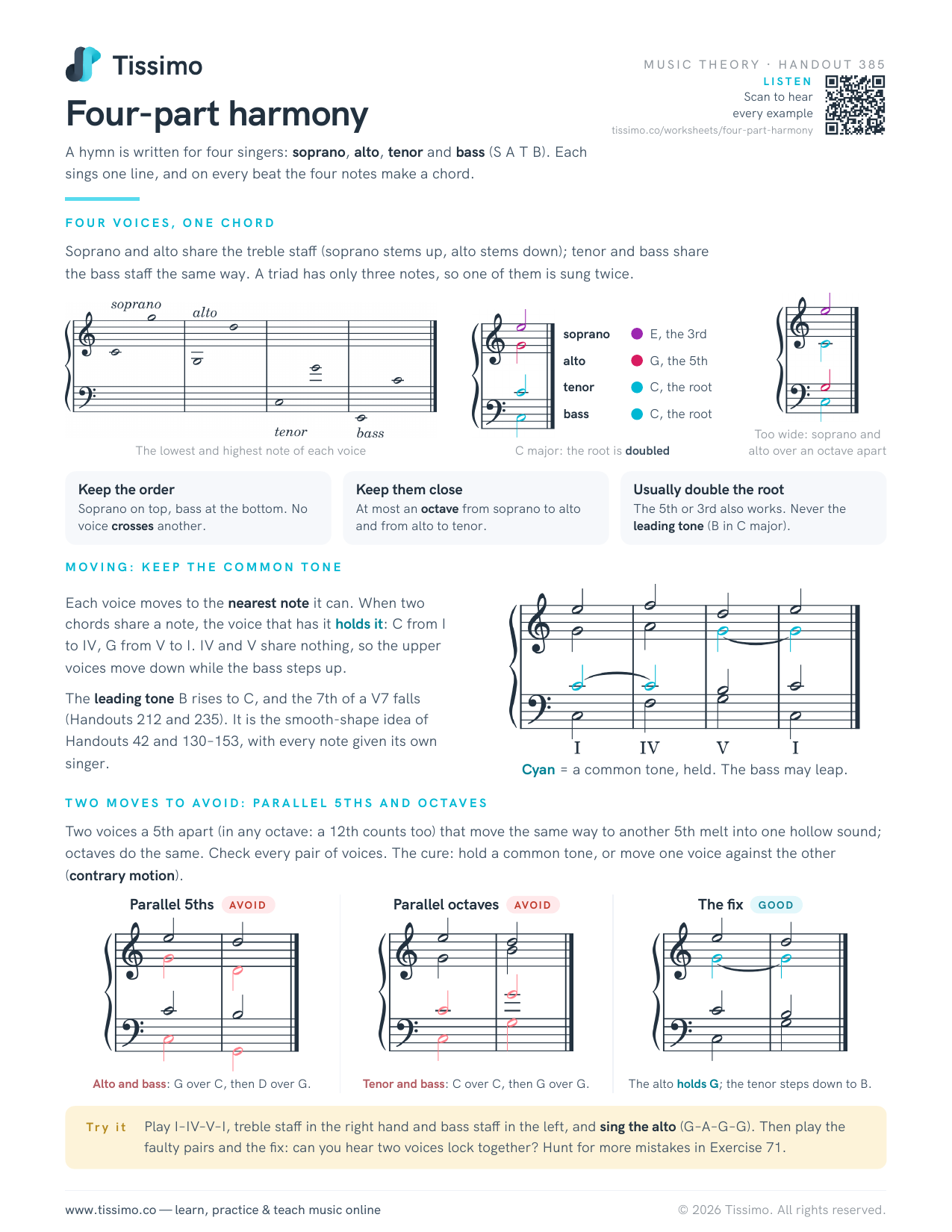 Four-part harmonyA hymn is written for four singers: soprano, alto, tenor and bass (S A T B). Each sings one line, and on every beat the four notes make a chord.