Technique & Performance
Comping
Comping is the chordal accompaniment a jazz pianist or guitarist plays behind a soloist or singer: chords placed in short, rhythmic, often syncopated figures that support the music without crowding it.
The word is usually explained as short for accompanying, though some musicians say complementing, which describes the job just as well. Where a classical accompaniment is usually written out note for note, a jazz comper reads chord symbols from a lead sheet and invents the rhythm and the voicings on the spot, listening and responding to the soloist.
What a comper does
- Plays the harmony of the tune, so the soloist and the listeners hear the chords.
- Adds rhythm. Comping chords are usually short and placed off the beat or in syncopated figures, rather than on every beat.
- Leaves space. Good comping is as much about what you leave out. When the soloist is busy, comp sparingly; when they pause, you can fill the gap.
- Stays out of the bass player's way. With a bassist in the band, pianists and guitarists usually avoid the low register and use voicings in the middle of the instrument.
Rhythms to start with
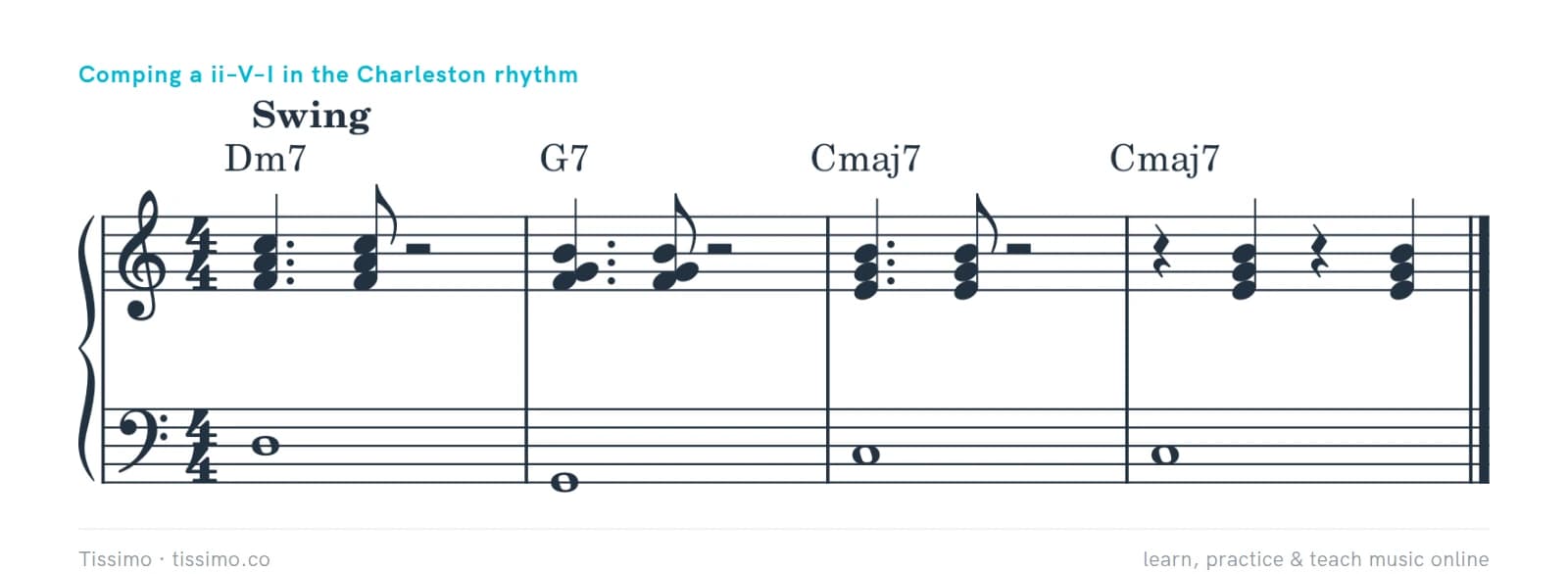
The Charleston rhythm is a classic first comping figure: a chord on beat 1 and another on the "and" of beat 2, with the rest of the bar left open. In a swing tune the "and" falls late, in the swing feel. Other simple choices are chords on beats 2 and 4, or a single chord on the "and" of 4 that anticipates the next bar.
Voicings to start with
- Shell voicings: the root with the 3rd, the 7th or both. Two or three notes outline the chord clearly; Shell Voicings shows how they work.
- Three-note voicings built from the 3rd and 7th plus one more note, moving smoothly by step from chord to chord: good voice leading.
- Rootless voicings, for when a bassist is covering the roots.
A practice routine
- Take a ii–V–I progression in C major: Dm7, G7, Cmaj7.
- Play the voicings from the example as whole notes until the changes are smooth.
- Play them in the Charleston rhythm with a metronome clicking on beats 2 and 4.
- Vary the rhythm one bar at a time while keeping the same voicings.
- Comp along with a recording or a backing track, and listen to the soloist as you play.
In a recording studio, "comping" has a different meaning: compiling the best moments of several takes into one finished part (see overdub).
Common questions
What does comping mean in jazz?
Accompanying a soloist or singer with chords, played in a free, rhythmic way from chord symbols. Pianists and guitarists comp; the word is usually explained as short for accompanying.
What is the Charleston rhythm?
A two-note rhythmic figure: a chord on beat 1 and another on the “and” of beat 2, written as a dotted quarter followed by an eighth. It is one of the first comping rhythms jazz students learn.
Practice it: free worksheets
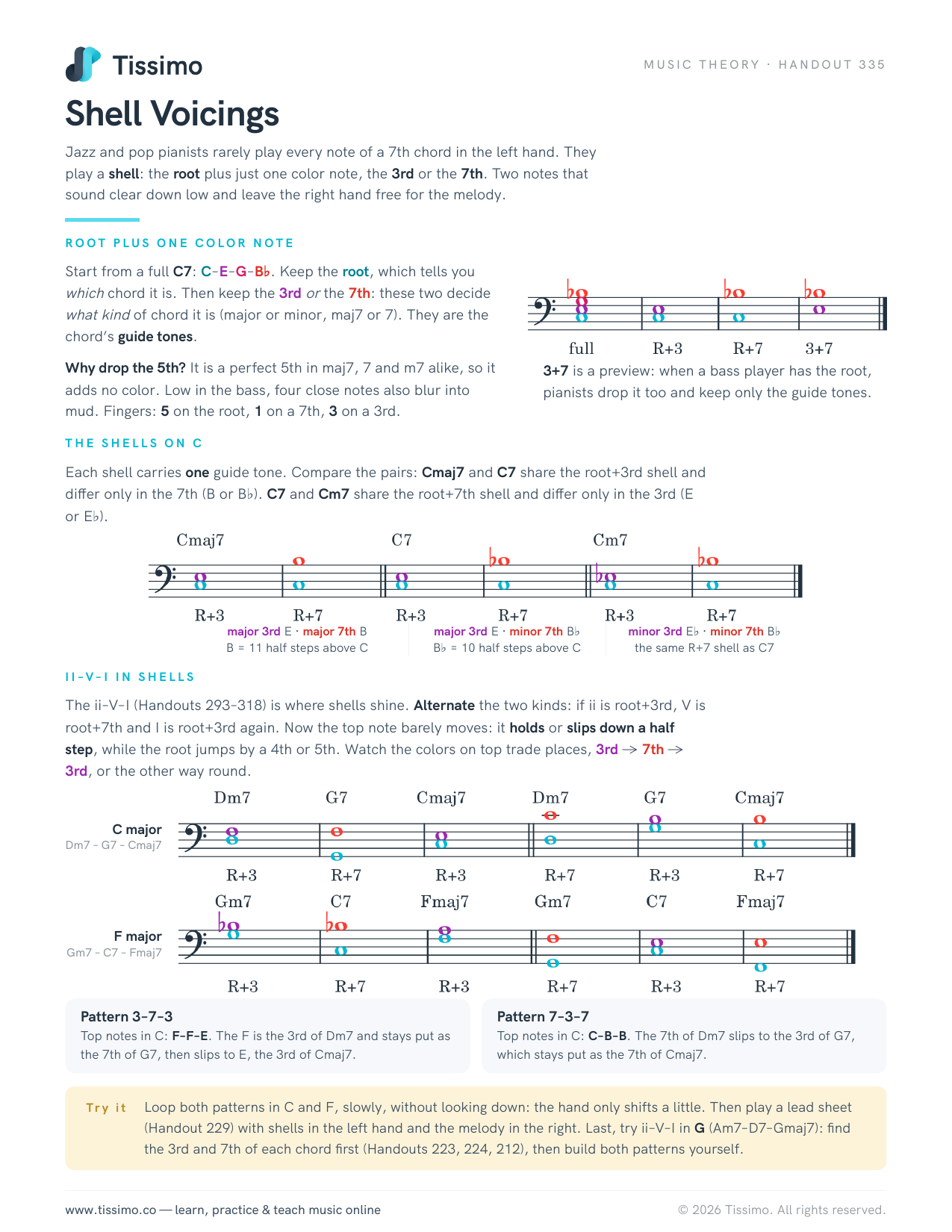 Shell VoicingsJazz and pop pianists rarely play every note of a 7th chord in the left hand. They play a shell: the root plus just one color note, the 3rd or the 7th. Two notes that sound clear down low and leave the right hand free for the melody.
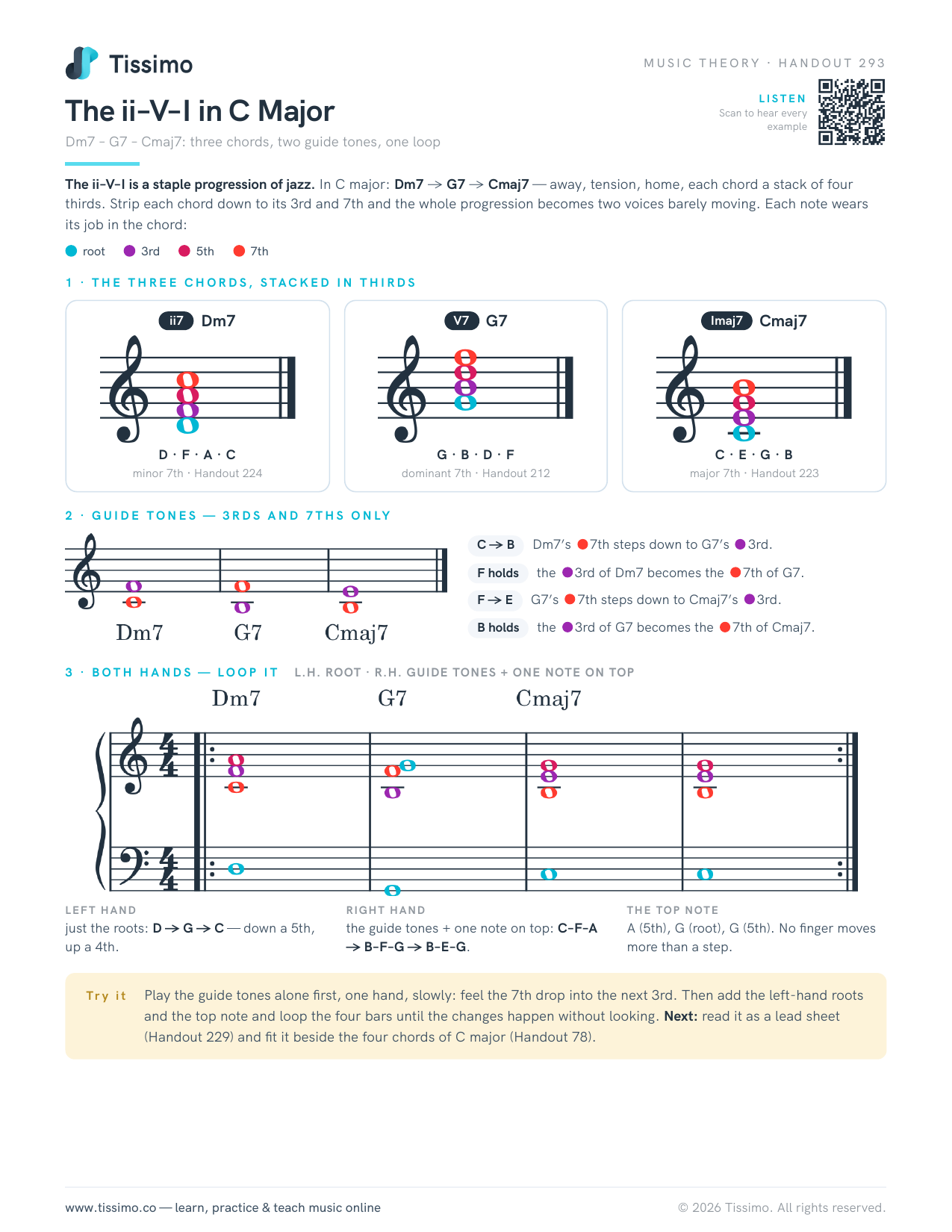 The ii–V–I in Every KeyThe most-played progression in jazz: three chords, two guide tones, one loop, in all 24 keys.
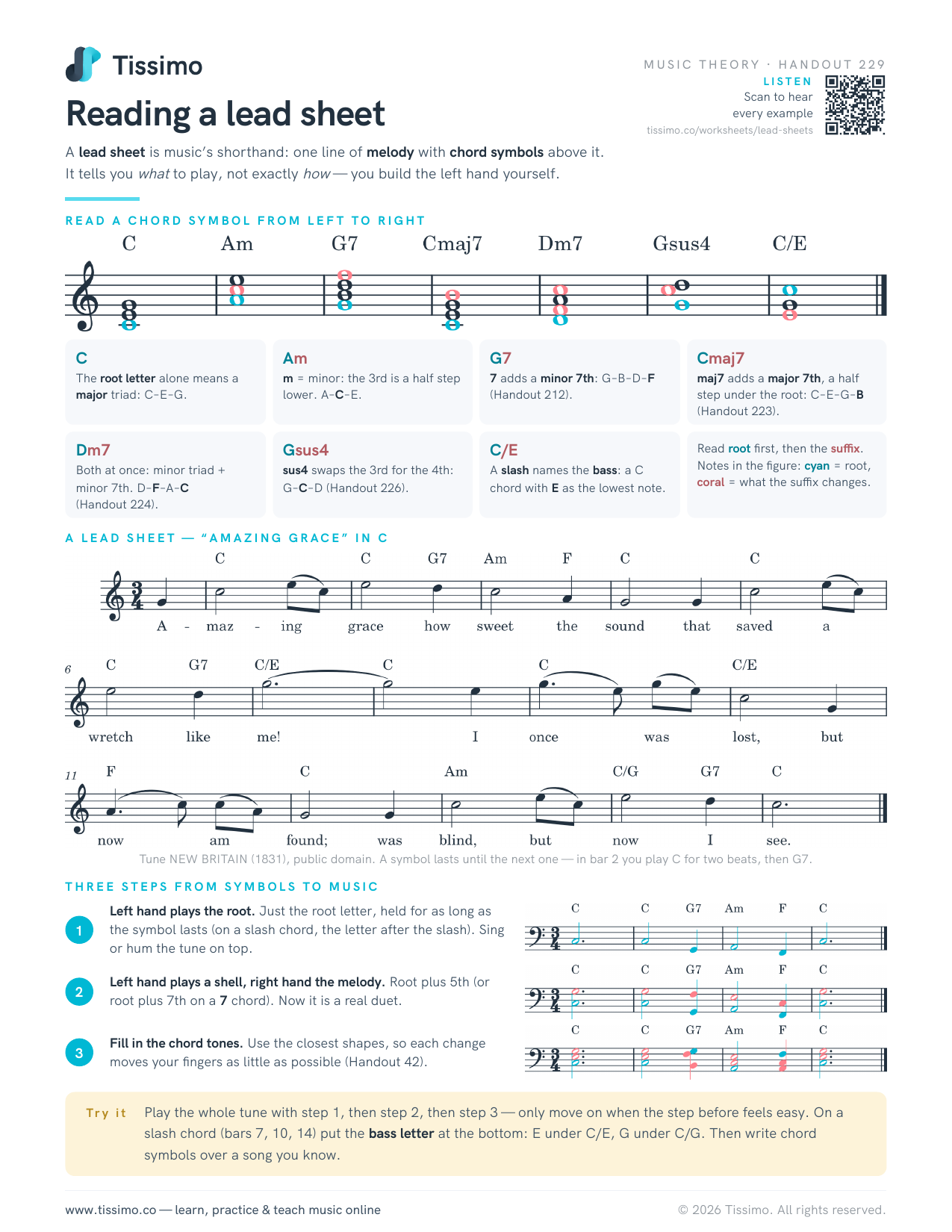 Reading a lead sheetA lead sheet is music’s shorthand: one line of melody with chord symbols above it. It tells you what to play, not exactly how — you build the left hand yourself.
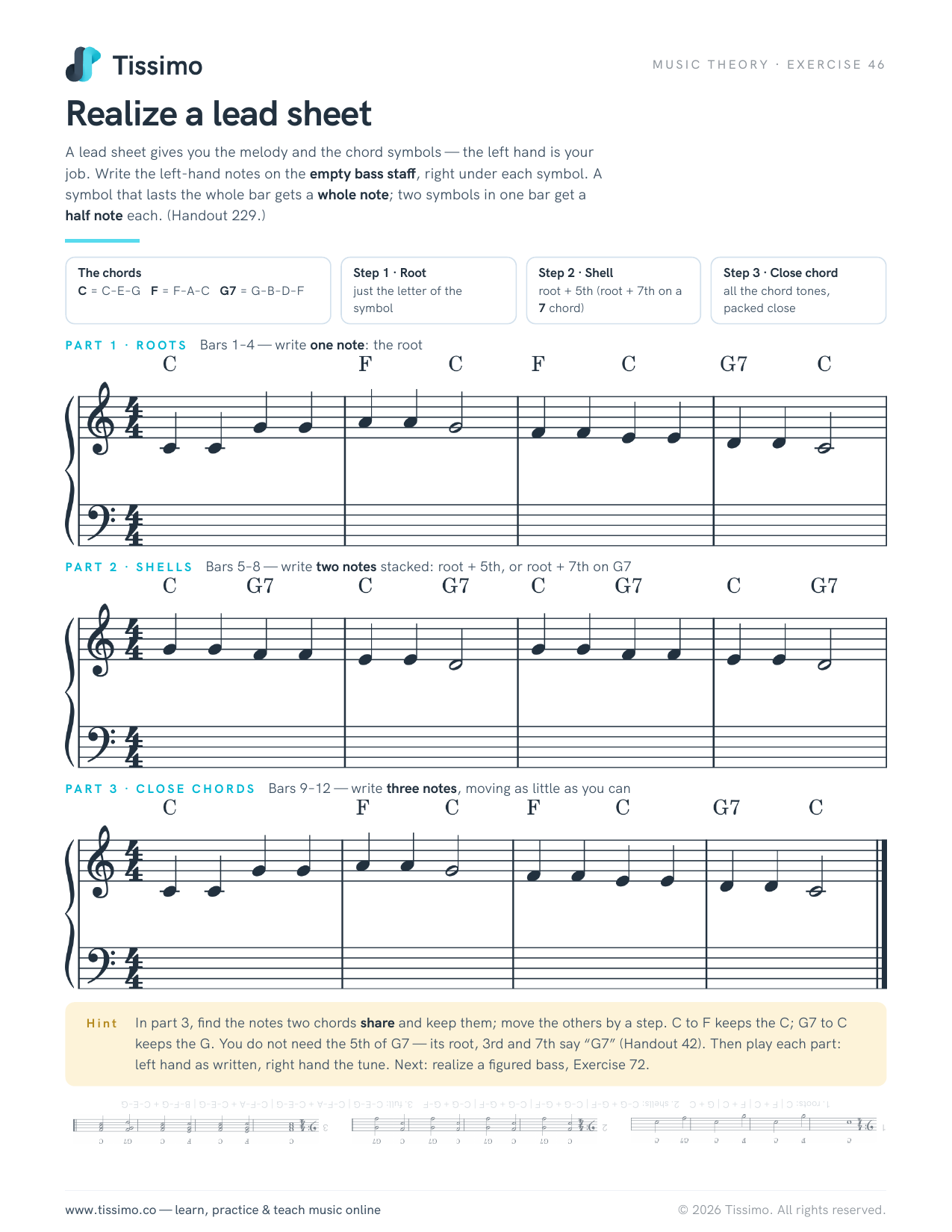 Realize a lead sheetA lead sheet gives you the melody and the chord symbols — the left hand is your job. Write the left-hand notes on the empty bass staff, right under each symbol. A symbol that lasts the whole bar gets a whole note; two symbols in one bar get a half note each. (Handout 229.)
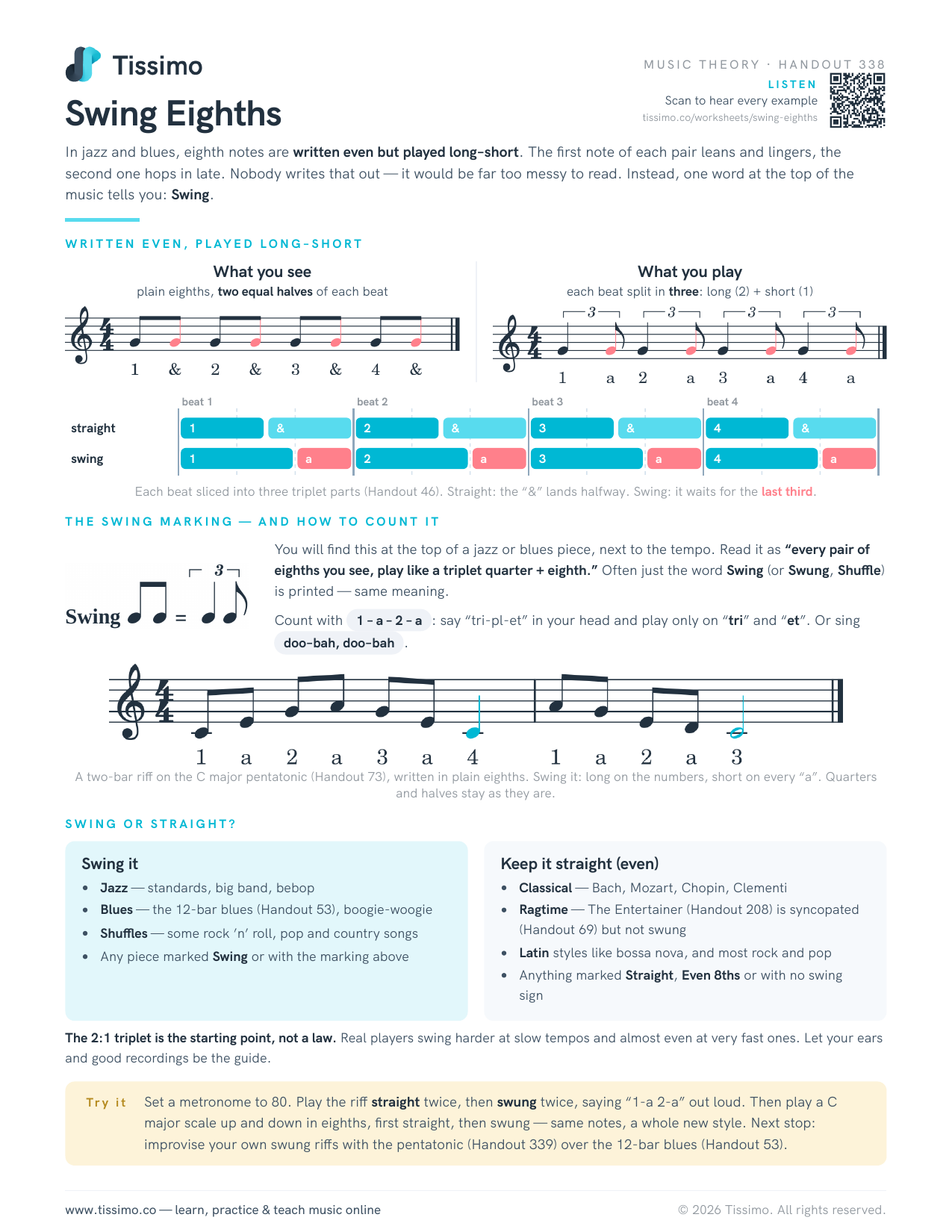 Swing EighthsIn jazz and blues, eighth notes are written even but played long–short. The first note of each pair leans and lingers, the second one hops in late. Nobody writes that out — it would be far too messy to read. Instead, one word at the top of the music tells you: Swing.
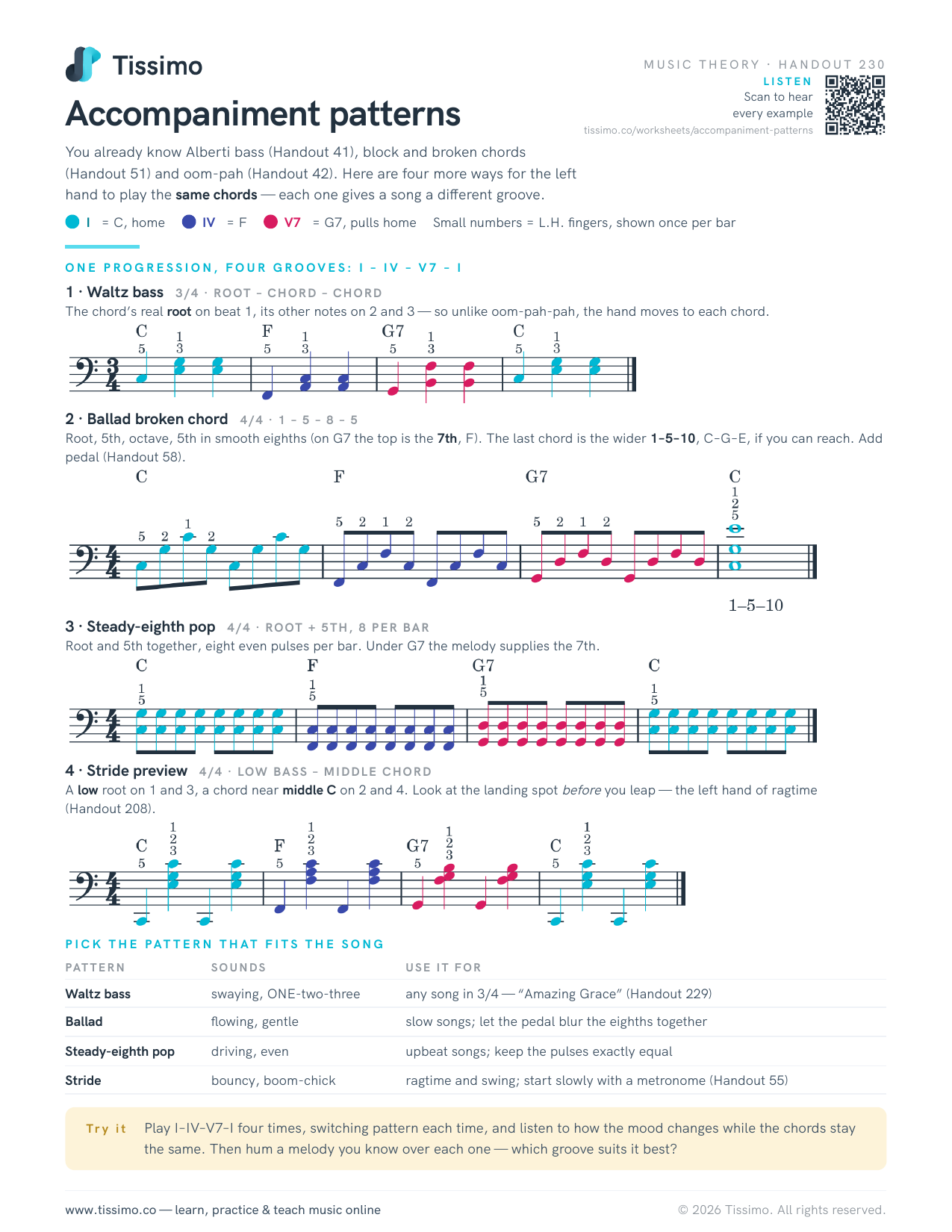 Accompaniment patternsYou already know Alberti bass (Handout 41), block and broken chords (Handout 51) and oom-pah (Handout 42). Here are four more ways for the left hand to play the same chords — each one gives a song a different groove.