Rhythm & Meter
Double-Dotted Note
A double-dotted note has two dots after it. The first adds half the note's value and the second adds a quarter, making seven-fourths of the original duration. A double-dotted quarter lasts one and three-quarter quarter-note beats.
A second dot after a note adds half of what the first dot added. So a double-dotted note lasts its own value, plus half of it, plus a quarter of it:
- double-dotted half note = half + quarter + eighth = 3½ beats in 4/4
- double-dotted quarter note = quarter + eighth + sixteenth = 1¾ beats in 4/4
- double-dotted eighth note = eighth + sixteenth + thirty-second = ⅞ of a beat in 4/4
A double dot is a neat way to write a long note that leaves only a small gap before the next beat.
The short note that follows
A double-dotted note is nearly always followed by one short note that completes the beat or the bar:
- double-dotted quarter + sixteenth = 2 beats
- double-dotted half + eighth = 4 beats (a full bar of 4/4)
- double-dotted eighth + thirty-second = 1 beat
The result is a sharper, more snapped long-short rhythm than a single dot gives. With one dot, a quarter note's partner is an eighth note; with two dots it shrinks to a sixteenth and arrives later.
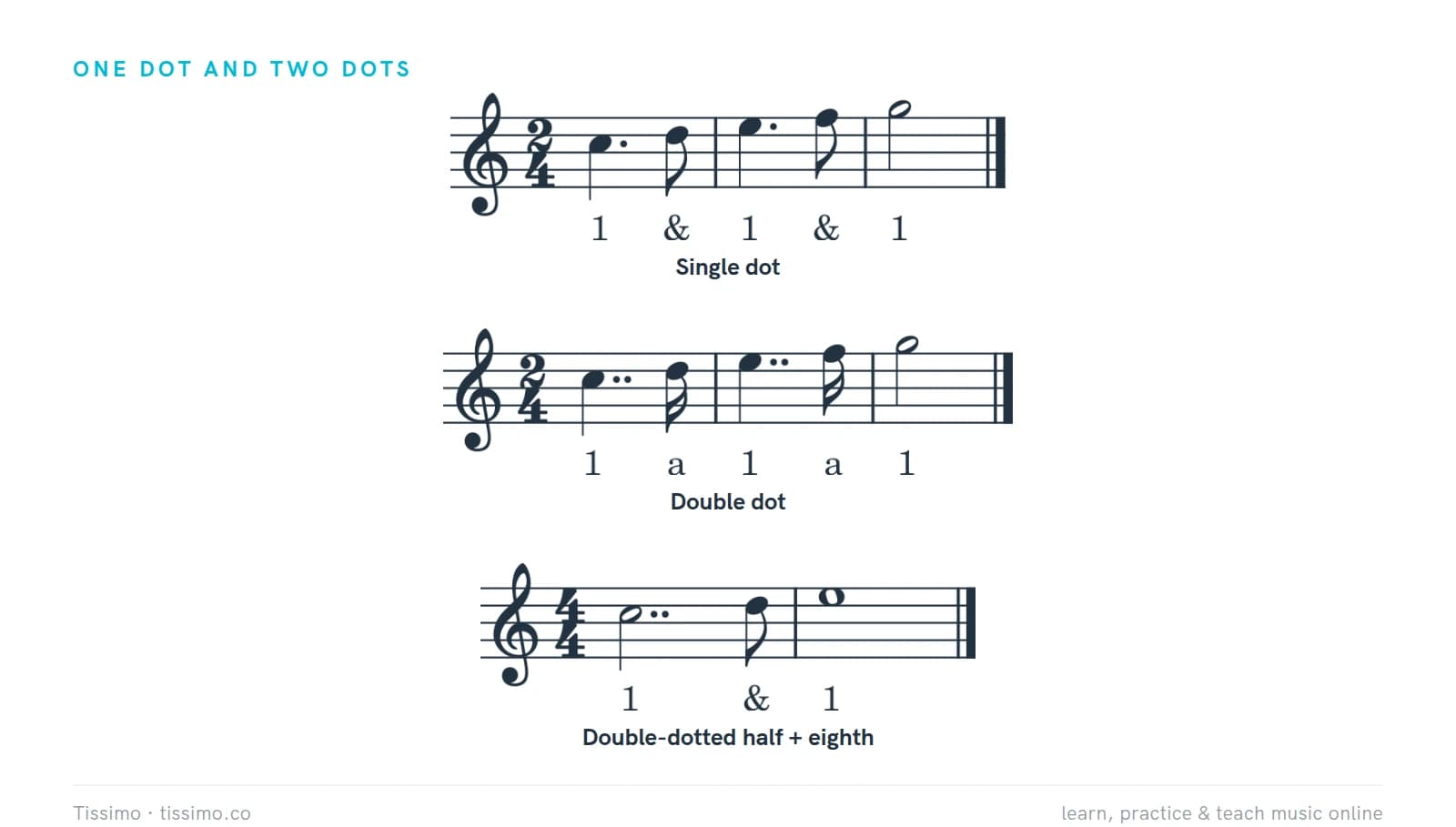
Counting double dots
Count in sixteenths. A double-dotted quarter on beat 1 lasts "1 e & a 2 e &", and its sixteenth falls on the "a" of beat 2. Say every syllable at first, then only the ones where notes start. The Double Dot worksheet practices exactly this, and The Dotted Eighth + Sixteenth is a good warm-up.
Where you meet them
Double dots turn up in slow, stately music and in Baroque pieces in the French overture style, with their sharp dotted rhythms. Performers and historians have long discussed whether Baroque players sometimes played single-dotted rhythms as if they were double-dotted, a practice called overdotting. How widely it applied is still debated, so editions and teachers differ.
Triple dots also exist, each dot adding half of the one before, but they are rare.
Common questions
How long is a double-dotted half note?
Three and a half beats when the quarter note gets the beat: two for the half note, one for the first dot and half a beat for the second. It is usually followed by an eighth note to complete a bar of 4/4.
What does the second dot add?
Half of what the first dot added. On a quarter note, the first dot adds an eighth and the second adds a sixteenth.
Practice it: free worksheets
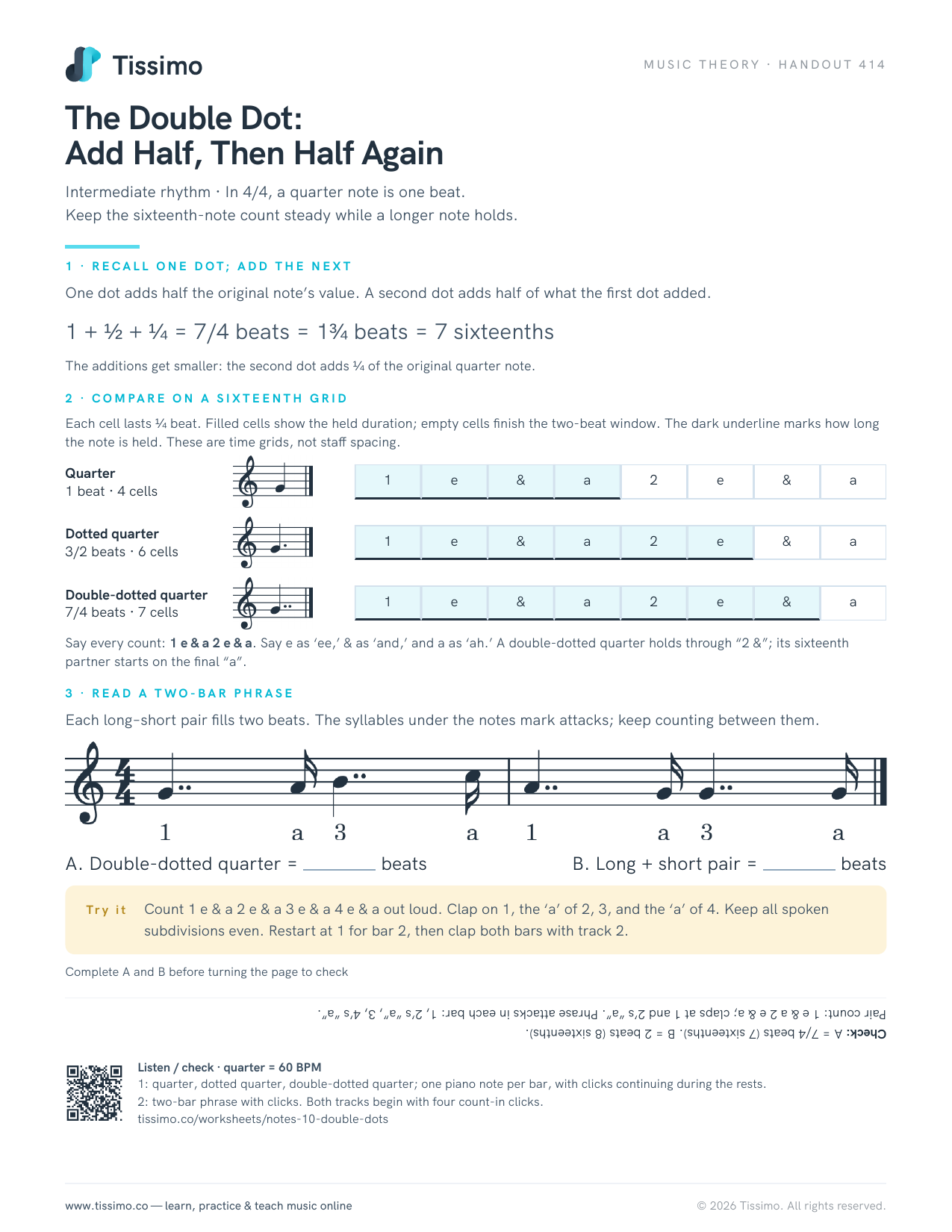 The Double Dot: Add Half, Then Half AgainIntermediate rhythm · In 4/4, a quarter note is one beat. Keep the sixteenth-note count steady while a longer note holds.
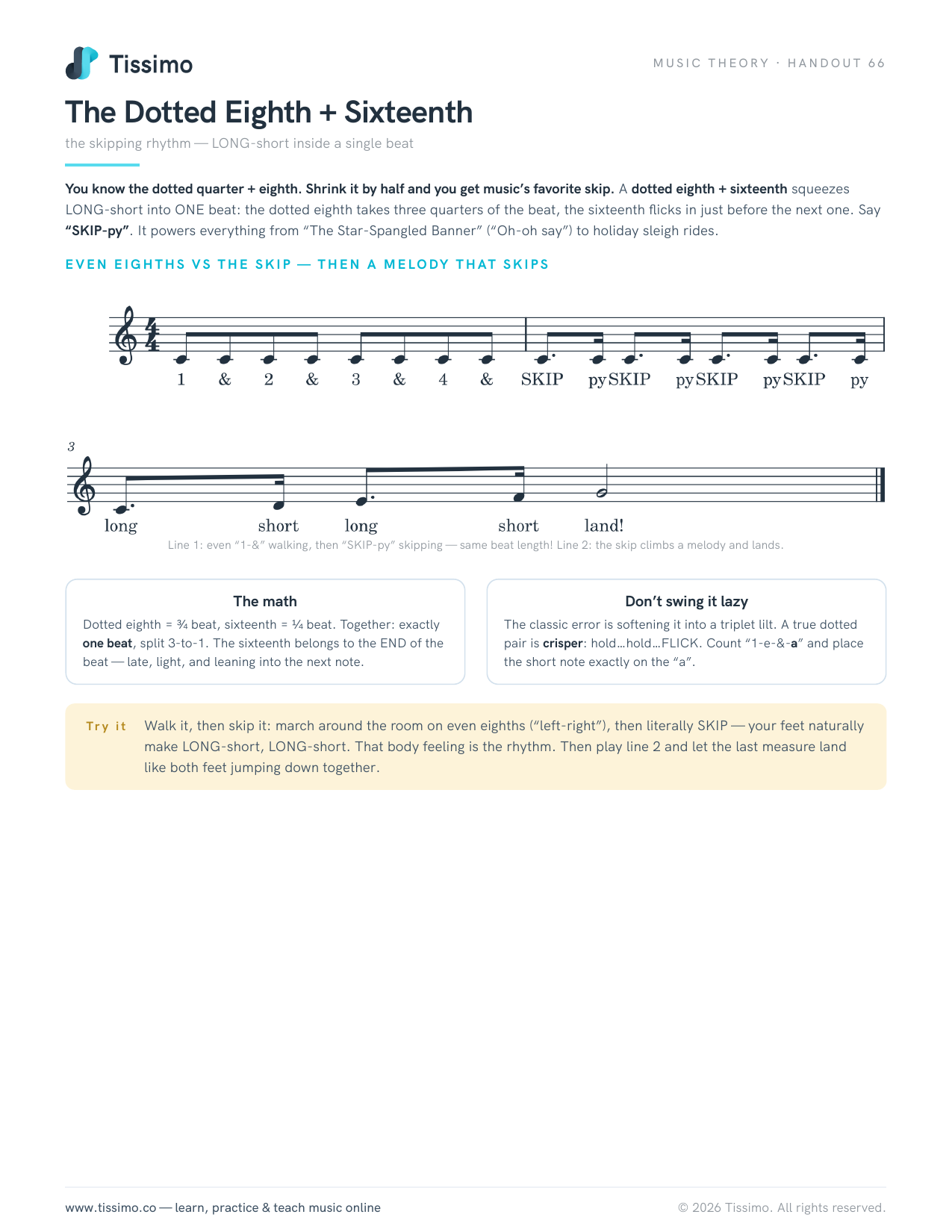 The Dotted Eighth + Sixteenththe skipping rhythm — LONG-short inside a single beat
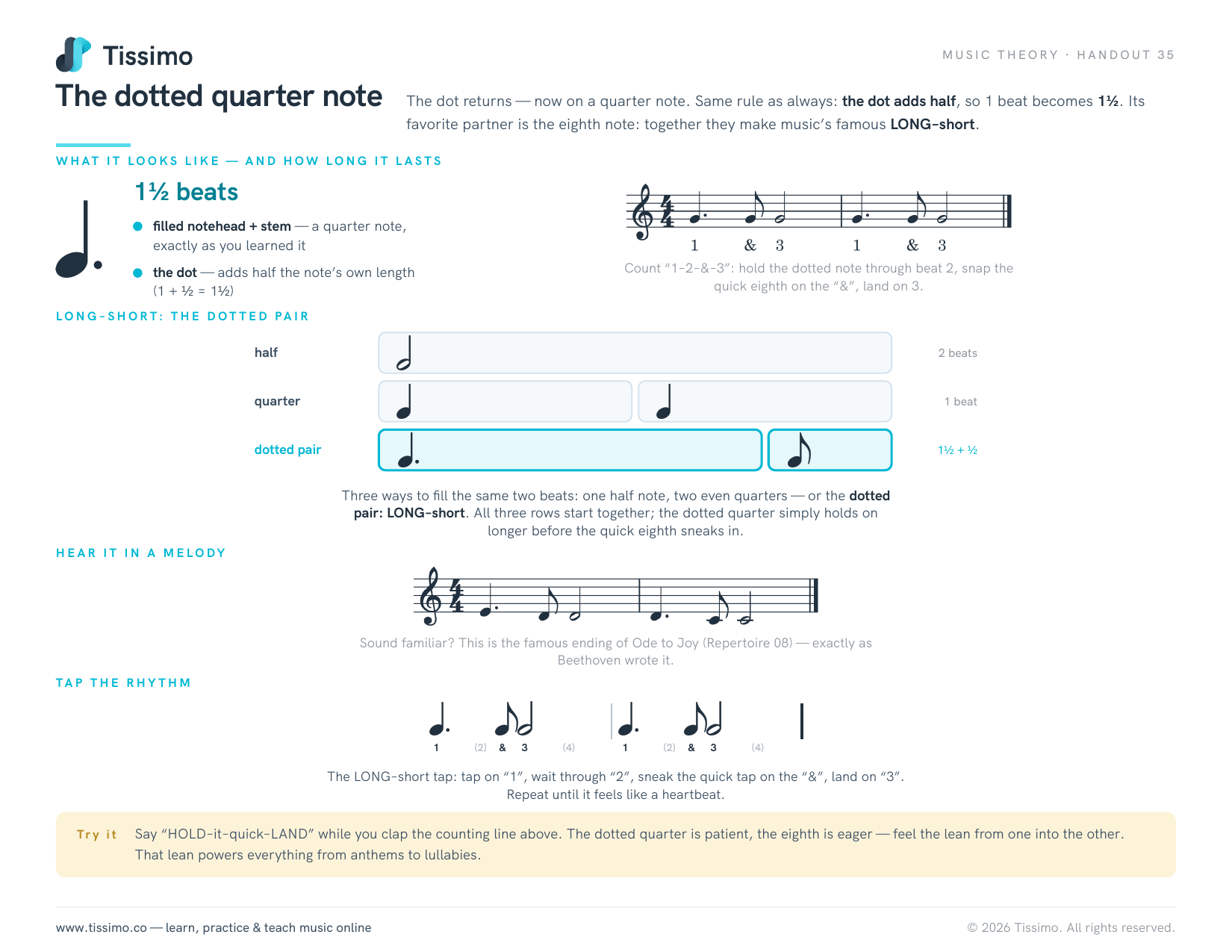 The dotted quarter noteThe dot returns — now on a quarter note. Same rule as always: the dot adds half, so 1 beat becomes 1½. Its favorite partner is the eighth note: together they make music’s famous LONG–short.