Dynamics & Expression
Grazioso
Pronounced graht-see-OH-soh
Grazioso means 'gracefully': play with elegance and charm, with a light touch, gentle accents and neatly shaped phrases. It often marks dance-like music such as minuets.
Grazioso means "graceful" or "charming". It asks for elegance: a light touch, clean articulation, gently shaped phrases and nothing heavy or forced. It appears as an expression word below the staff or with a tempo word, as in Allegretto grazioso or Andante grazioso.
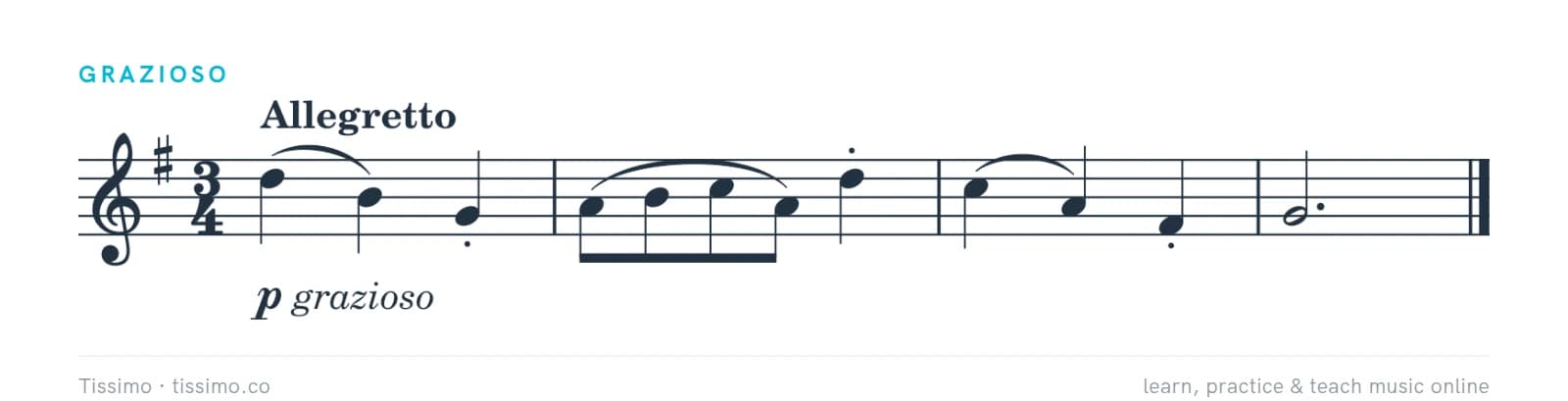
What grace sounds like
Grazioso is closely tied to dance, especially the elegant dances of the 18th century such as the minuet. Typical features:
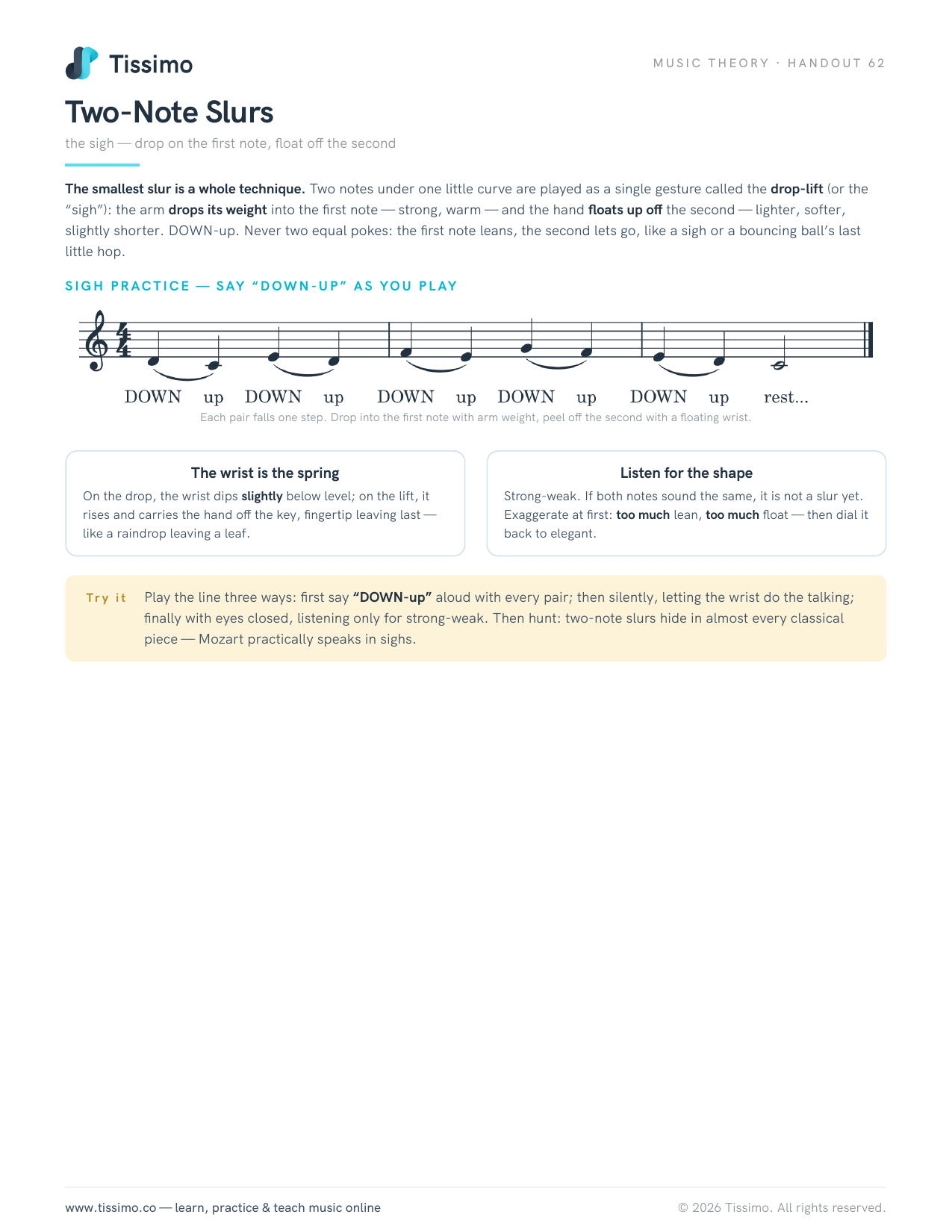
- Two-note slurs and light endings. The first note of a slurred pair leans slightly; the second is softer and lifted.
- Neat staccatos. Short, light, never punched.
- A gentle lilt in the meter. In 3/4, a slight emphasis on the first beat and lighter second and third beats.
- Moderate tempo. Fast enough to dance, never hurried.
Grazioso, scherzando, giocoso
Three light characters, often confused:
- Grazioso: elegant and charming, like a courtly dance.
- Scherzando: playful and joking, with surprises.
- Giocoso: merry and good-humored, bouncier and more boisterous.
Playing grazioso
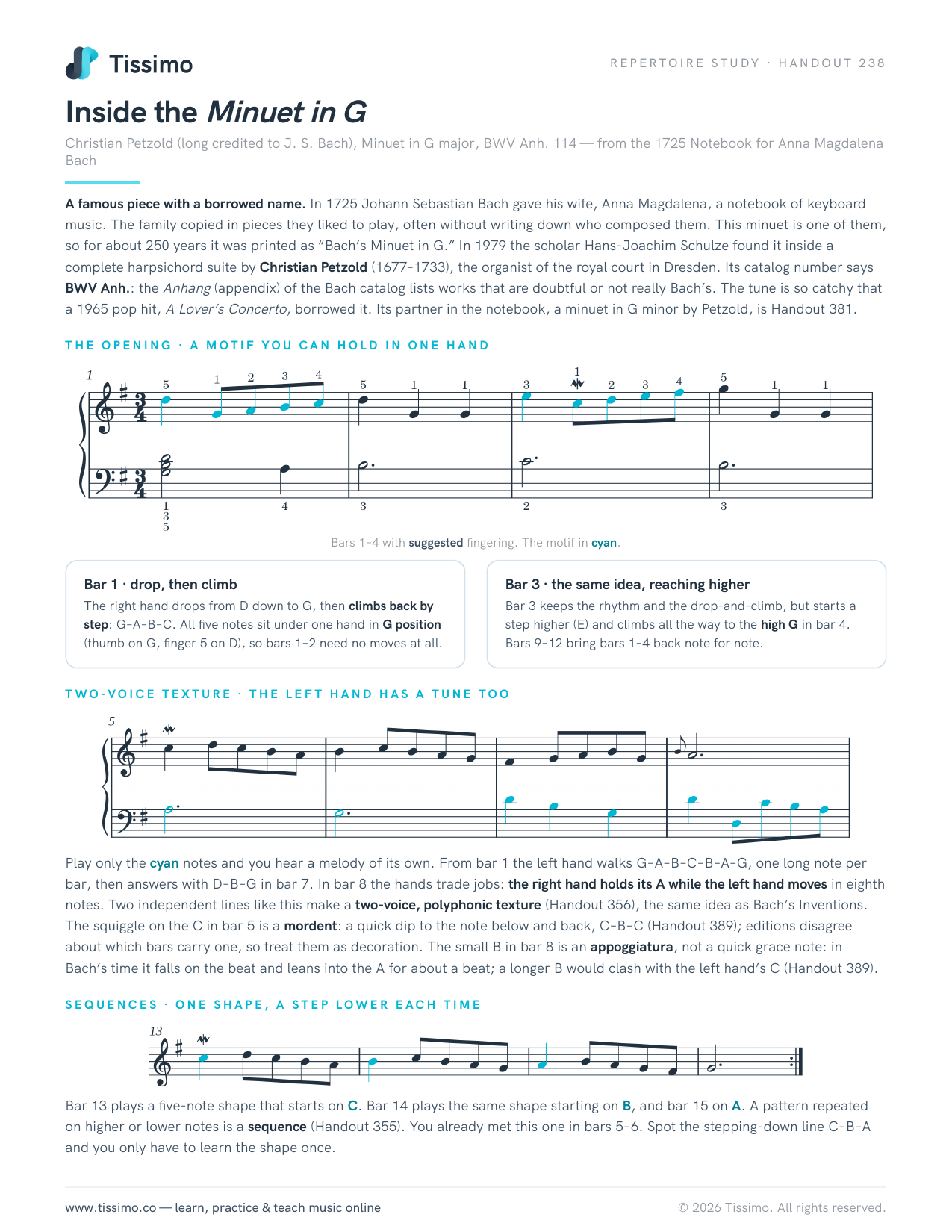
Use small motions from the wrist and fingers, keep the arm light, and let slurs taper, the hand lifting gently at the end of each one; our Two-Note Slurs handout practices exactly that gesture. The Minuet in G, long credited to Bach, is a good piece on which to practice this kind of elegance. Grace is easy to lose when a passage gets difficult; practice the hard spots slowly until they can sound effortless.
Common questions
What does grazioso mean in music?
Gracefully: play with elegance and charm, with a light touch, gentle accents and neatly tapered phrases.