Styles, Genres & Eras
Electronic Dance Music (EDM)
Electronic dance music (EDM) is a family of dance styles made mainly with synthesizers, drum machines and computers, including house, techno, trance, drum and bass and dubstep, built around a steady beat for DJs and clubs.
Electronic dance music is an umbrella term for dance styles created mainly with electronic instruments: synthesizers, drum machines, samplers and, today, the computer DAW. It is made to be mixed by DJs and danced to in clubs and at festivals. In the United States, "EDM" became a popular label in the 2010s, especially for big-stage, festival-oriented dance pop.
Roots and major styles
- Disco (1970s) supplied the steady four-on-the-floor beat and the club culture.
- House (mid-1980s, Chicago): drum machines, soulful vocals and a beat around 120–130 BPM. Frankie Knuckles is often called its godfather.
- Techno (mid-1980s, Detroit): more mechanical and futuristic, developed by Juan Atkins, Derrick May and Kevin Saunderson.
- Acid house and rave (late 1980s, especially in the UK): the squelching sound of the Roland TB-303 bass synthesizer.
- Trance (1990s): long build-ups, euphoric melodies and arpeggiated synths.
- Jungle and drum and bass (1990s, UK): fast breakbeats, often around 160–180 BPM, under deep bass lines.
- Dubstep (2000s, UK): around 140 BPM with a half-time feel and heavy, wobbling bass.
Musical features
- Four-on-the-floor: the bass drum on every beat in many styles, with a clap or snare on 2 and 4 and off-beat hi-hats.
- Loops and layers: short patterns repeat and are added or removed to build and release energy.
- Phrases in multiples of 8 bars (8, 16, 32), so DJs can mix tracks smoothly.
- Build-up and drop: tension rises with risers, snare rolls and filter sweeps, then the full beat and bass return at the drop.
- Sound design: much of the creativity lies in the timbres themselves, crafted on synthesizers.
Instruments that shaped the sound
Roland's TR-808 and TR-909 drum machines and TB-303 bass synthesizer, sequencers, samplers, and later software instruments and DAWs, became the tools of the genre.
Making EDM
Start in a DAW: program a four-bar drum loop on a 16-step grid, add a bass line, then a chord loop and an arpeggiator pattern. Arrange the parts so the track builds and drops over 8-bar sections. The Drum Patterns, Arpeggiator Patterns and Synth Waveforms worksheets cover the essentials.
Common questions
What is the difference between house and techno?
Both grew up in the mid-1980s (house in Chicago, techno in Detroit) with a four-on-the-floor beat. House tends to be warmer and more soulful, often with vocals; techno is usually more mechanical, repetitive and futuristic.
What BPM is EDM?
It depends on the style: house is usually around 120–130 BPM, dubstep around 140, and drum and bass around 160–180.
Practice it: free worksheets
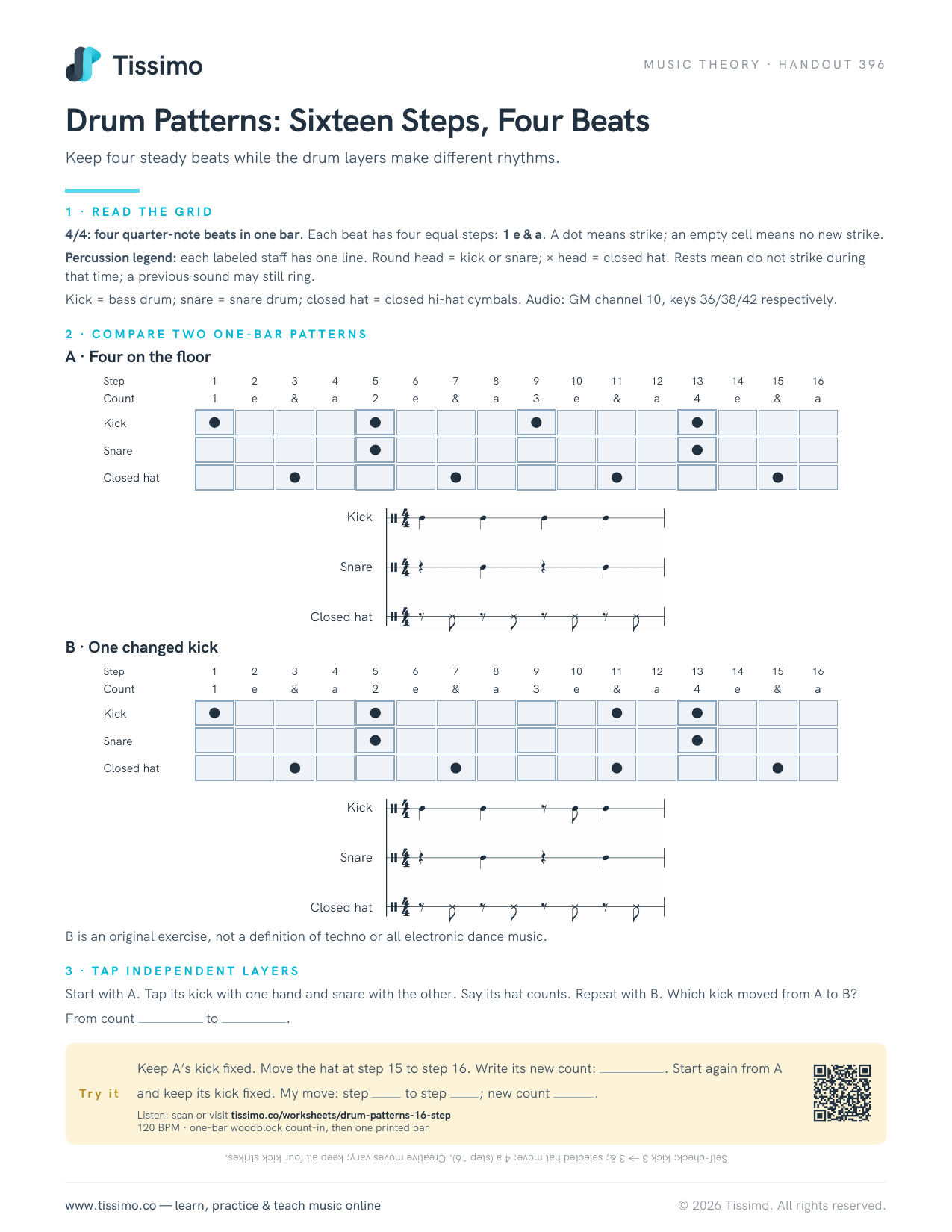 Drum Patterns: Sixteen Steps, Four BeatsKeep four steady beats while the drum layers make different rhythms.
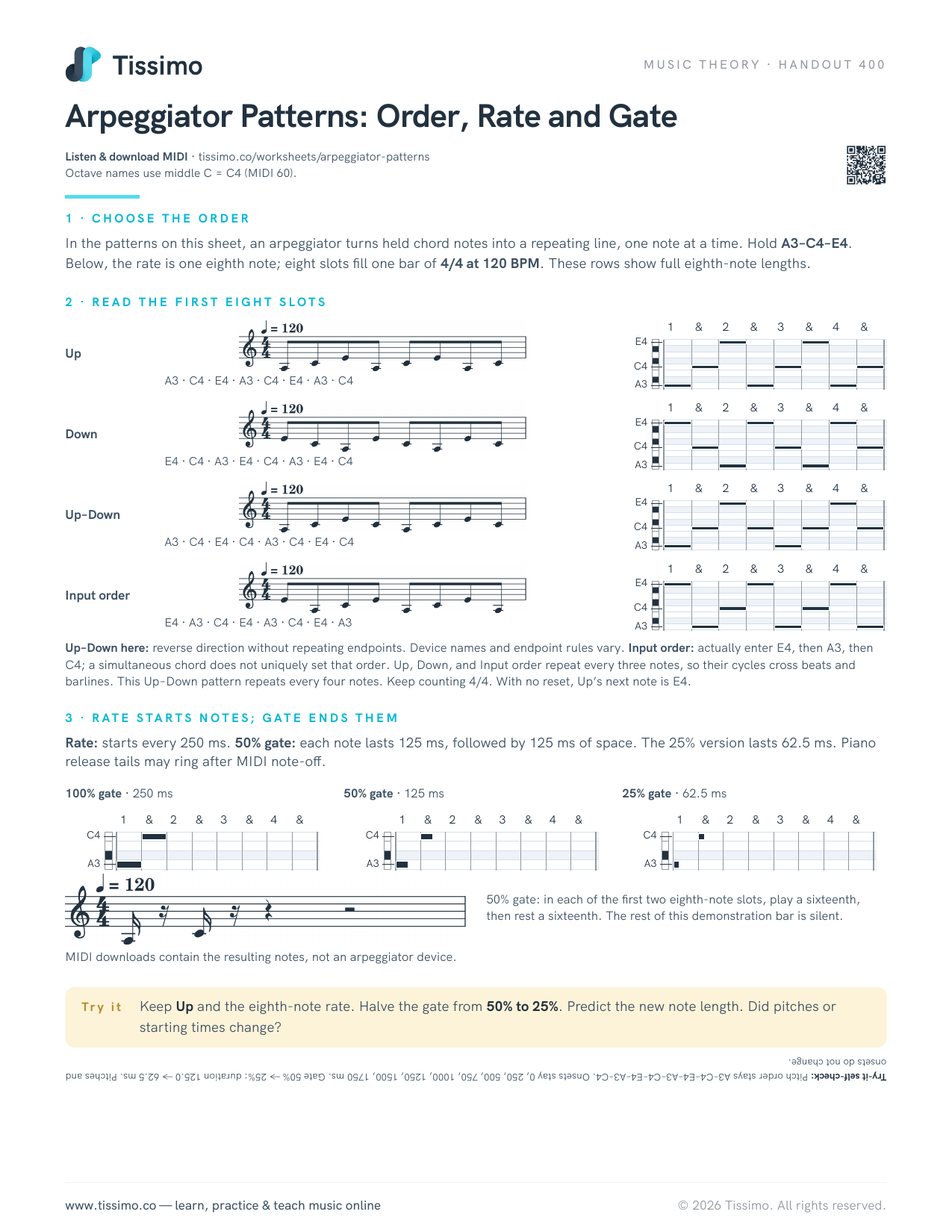 Arpeggiator Patterns: Order, Rate and Gate
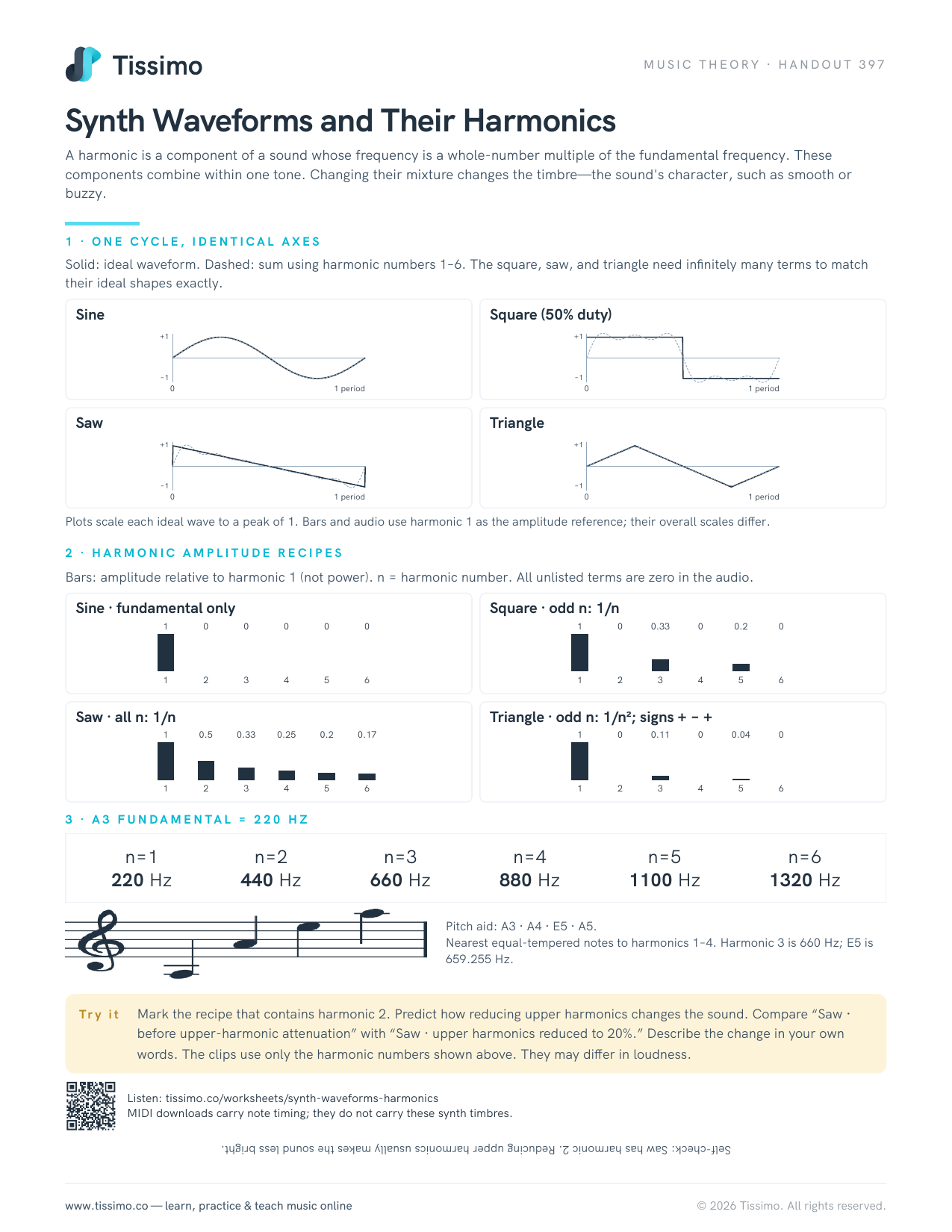 Synth Waveforms and Their HarmonicsA harmonic is a component of a sound whose frequency is a whole-number multiple of the fundamental frequency. These components combine within one tone. Changing their mixture changes the timbre—the sound's character, such as smooth or buzzy.
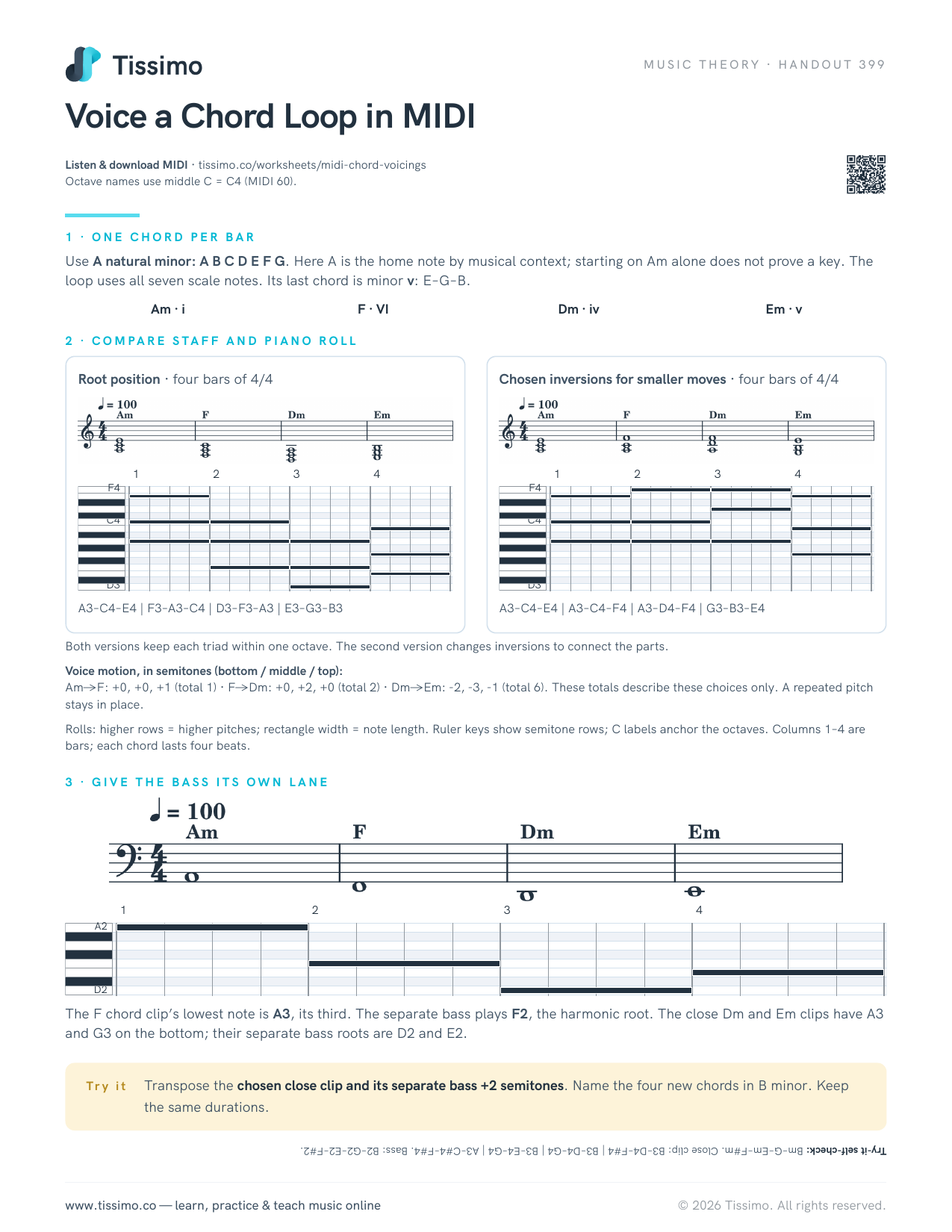 Voice a Chord Loop in MIDI
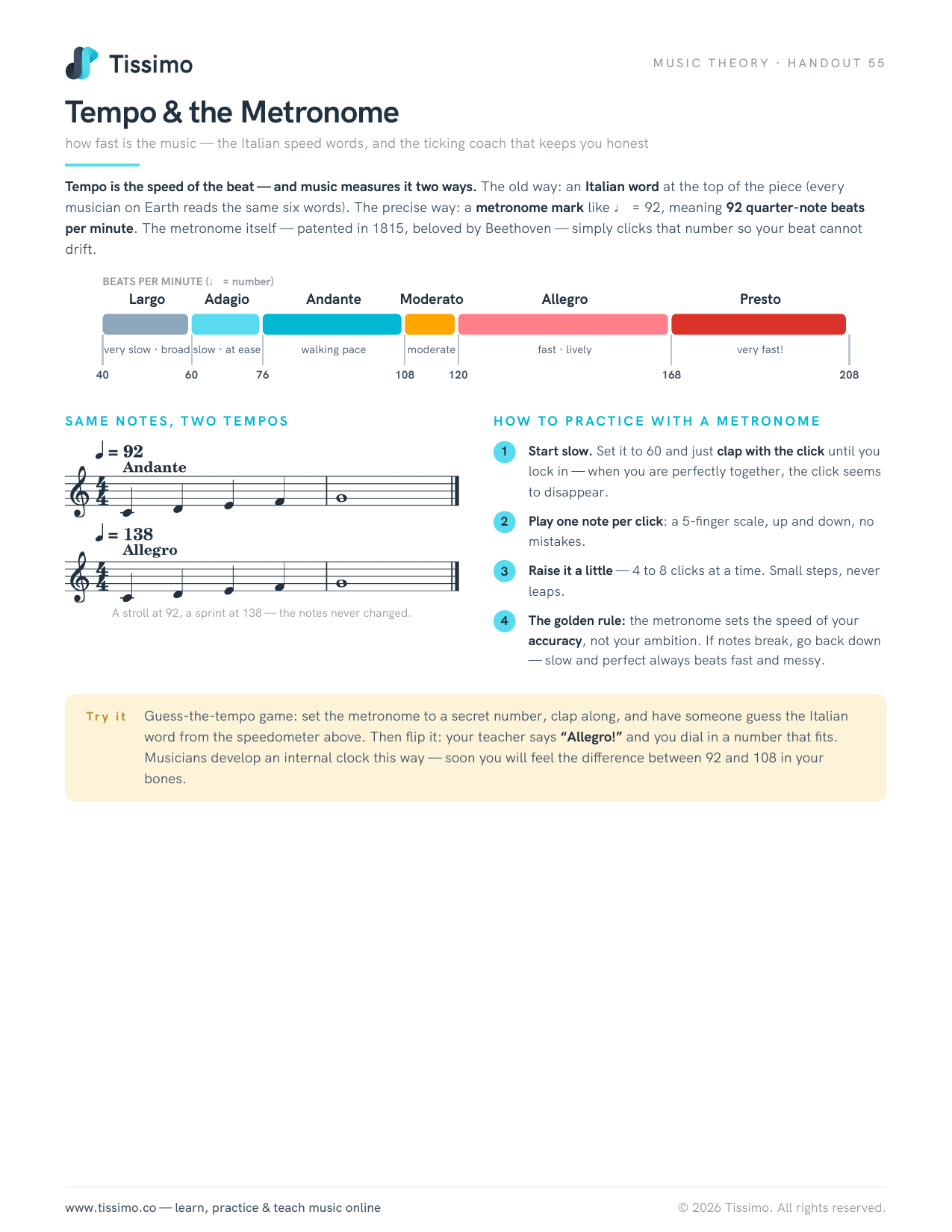 Tempo & the Metronomehow fast is the music — the Italian speed words, and the ticking coach that keeps you honest