Technique & Performance
Repertoire
Pronounced REP-er-twahr
Repertoire is the collection of pieces a musician or ensemble knows and can perform, and also the whole body of music written for an instrument, voice or group, such as the piano repertoire.
The word has two related meanings.
Your repertoire
Your personal repertoire is the list of pieces you have learned well enough to play or sing for someone, today or after a little review. A singer might say a song "isn't in my repertoire yet"; an audition panel asks you to bring pieces from your repertoire.
Building a repertoire is different from always moving on to the next new piece. Many students learn a piece, play it once at a lesson and let it go. Keeping a few pieces performance-ready means you always have something to play when someone asks, and returning to old pieces with new skills is one of the clearest ways to hear how far you have come.
The repertoire of an instrument
The word also means all the music written for an instrument, voice or ensemble. The piano repertoire includes sonatas, études, nocturnes, preludes and much more, written over several centuries. The standard repertoire is the set of works performed and taught most often, the pieces audiences and audition panels expect to hear. Musicians also speak of the jazz repertoire (the "standards"), the choral repertoire, or the repertoire for a particular exam grade.
Choosing pieces
A balanced repertoire mixes:
- Periods and styles: for example a Baroque piece, a Classical sonata movement, a Romantic character piece and something from the twentieth century or today. Each teaches different skills; The Periods of Music History gives an overview.
- Tempos and moods: something fast and brilliant beside something slow and lyrical.
- Difficulty: most pieces comfortably within reach, with one that stretches you.
Keeping it alive
- Keep a written list of your pieces, with the date you last played each one.
- Rotate them: play one or two older pieces each week, from memory if that is how you learned them (memorization).
- Before a recital or an exam, choose from pieces that are already secure rather than learning something new at the last minute.
A teacher can help you plan a repertoire that fits your goals; book a lesson to talk it through.
Common questions
What does repertoire mean in music?
The pieces a musician can perform, or the whole body of music written for a particular instrument, voice or ensemble.
How many pieces should I have in my repertoire?
There is no fixed number. A good start is three or four contrasting pieces you could play at any time, adding to them as you learn.
Practice it: free worksheets
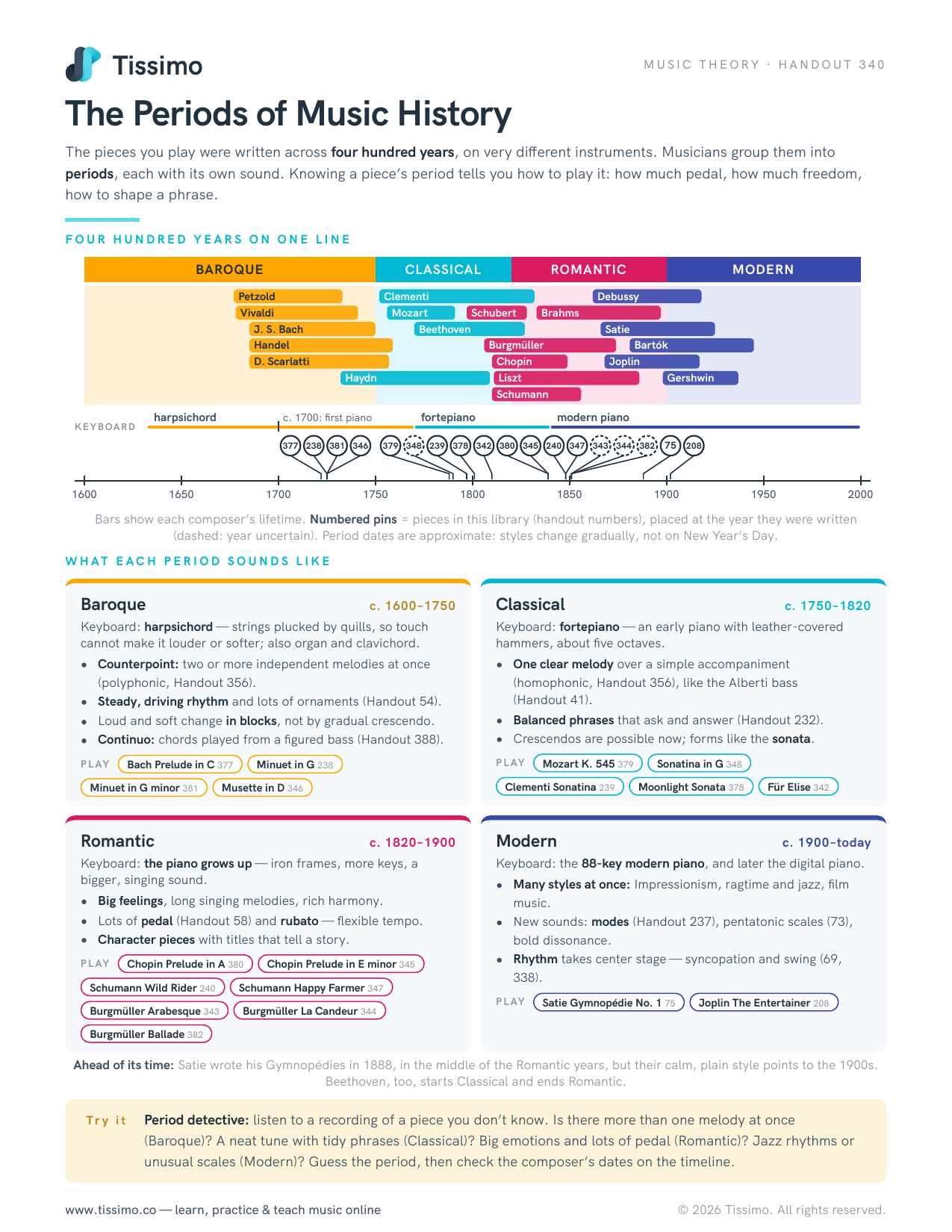 The Periods of Music HistoryThe pieces you play were written across four hundred years, on very different instruments. Musicians group them into periods, each with its own sound. Knowing a piece’s period tells you how to play it: how much pedal, how much freedom, how to shape a phrase.
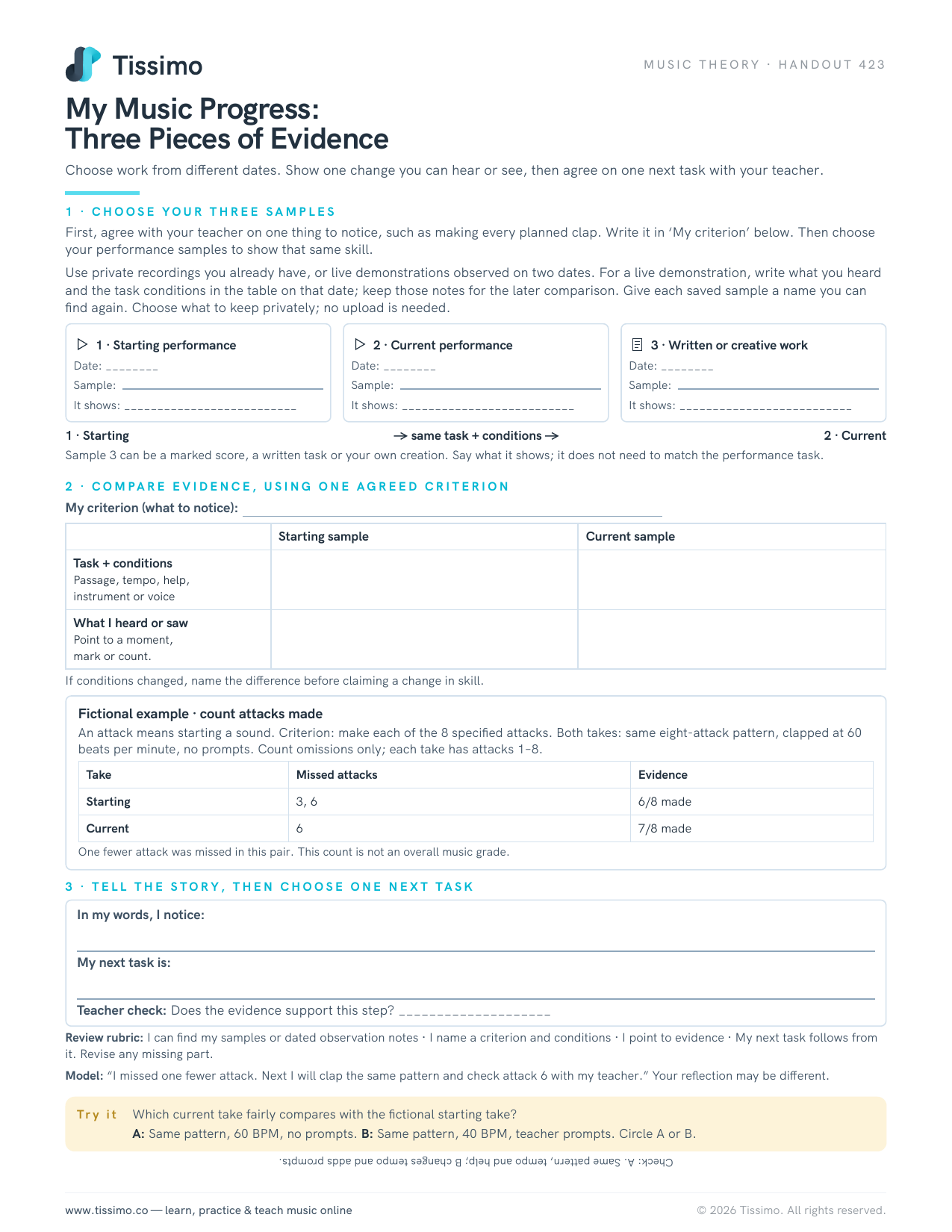 My Music Progress: Three Pieces of EvidenceChoose work from different dates. Show one change you can hear or see, then agree on one next task with your teacher.