Form & Structure
Nocturne
Pronounced NOK-turn
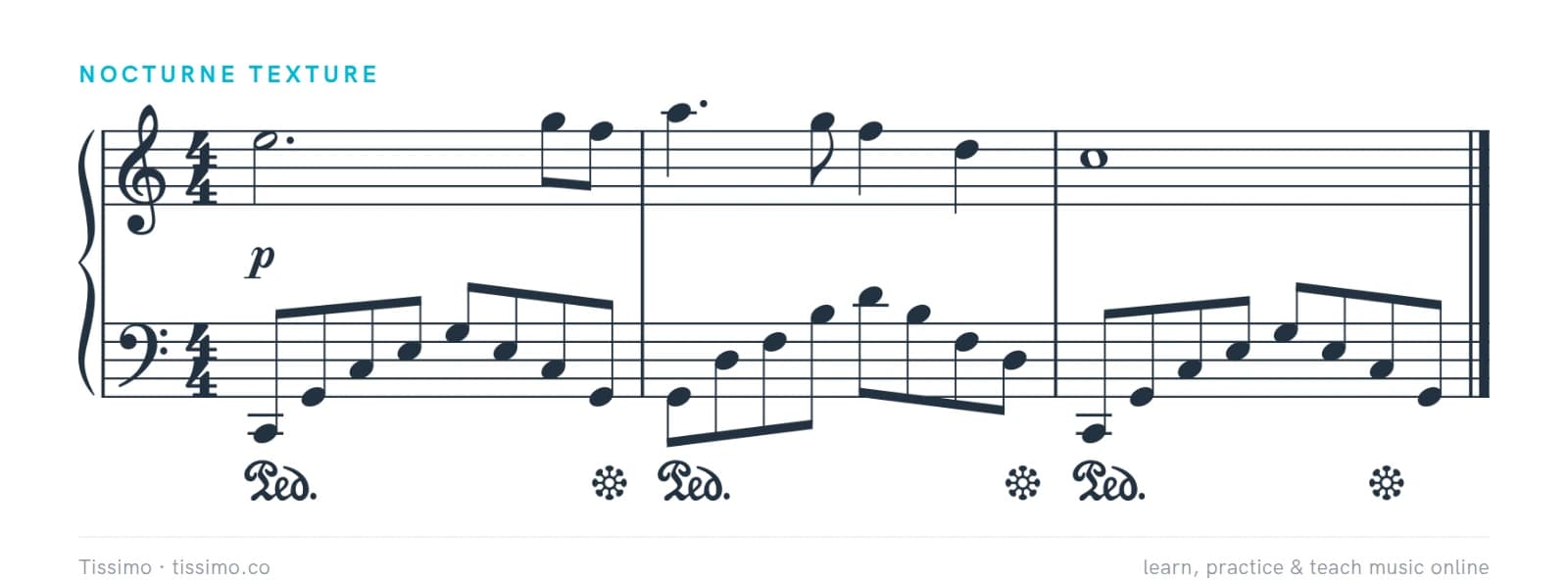
A nocturne is a dreamy, lyrical piece, usually for solo piano, with a singing melody over a broken-chord accompaniment. The piano nocturne was created by John Field and made famous by Chopin.
A nocturne is a "night piece": calm or wistful, intimate, and built around a long singing melody. As a piano genre it is a product of the early 19th century, when pianos became capable of sustaining a melody over a rich, pedaled accompaniment.
What a nocturne sounds like
- A singing right-hand melody, often decorated with delicate runs and turns in the style of an operatic singer.
- A left-hand accompaniment of broken chords, frequently spread over more than an octave, held together with the sustain pedal.
- A slow or moderate tempo, flexible rubato and soft dynamics, with a stormier middle section in many pieces.
- Often ternary form (ABA): a lyrical A, a contrasting B, and a decorated return of A.
Field and Chopin
The Irish composer and pianist John Field is credited with inventing the piano nocturne in the early 1800s. Frédéric Chopin took the genre over and made it his own: his 21 nocturnes, with their bel canto melodies and adventurous harmony, are the best-known examples. Later composers, including Fauré (thirteen nocturnes for piano), continued the tradition, and Debussy borrowed the title for his orchestral Nocturnes, which are atmospheric pictures rather than song-like piano pieces.
Earlier, in the 18th century, the Italian word notturno meant something quite different: a light piece for a small ensemble, often played as evening entertainment.
Playing a nocturne
- Let the melody sing. Play it with more weight than the accompaniment (see voicing) and connect it with a true legato.
- Keep the left hand quiet and even. Its wide leaps should sound like a soft, rolling background, never like separate thumps.
- Change the pedal with each harmony, listening for a clean change. Too little pedal breaks the accompaniment into pieces; too much blurs the chords.
- Use rubato sparingly. A good rule: let the right hand breathe, but keep the left hand's pulse steady underneath.
Nocturne or prelude?
Both are Romantic character pieces, but a nocturne is about a sustained, song-like mood, while a prelude can be any character and is often very short. Chopin's Prelude in E minor, for example, is a sighing miniature rather than a nocturne. Compare it in the Chopin Prelude in E Minor study.
Common questions
Who invented the nocturne?
The Irish composer John Field is credited with creating the piano nocturne in the early 1800s. Chopin, who wrote 21 nocturnes, made the genre famous.
What makes a piece a nocturne?
A calm or wistful character, a long singing melody, and a broken-chord accompaniment held together with pedal, usually for solo piano and often in ABA form.
Practice it: free worksheets
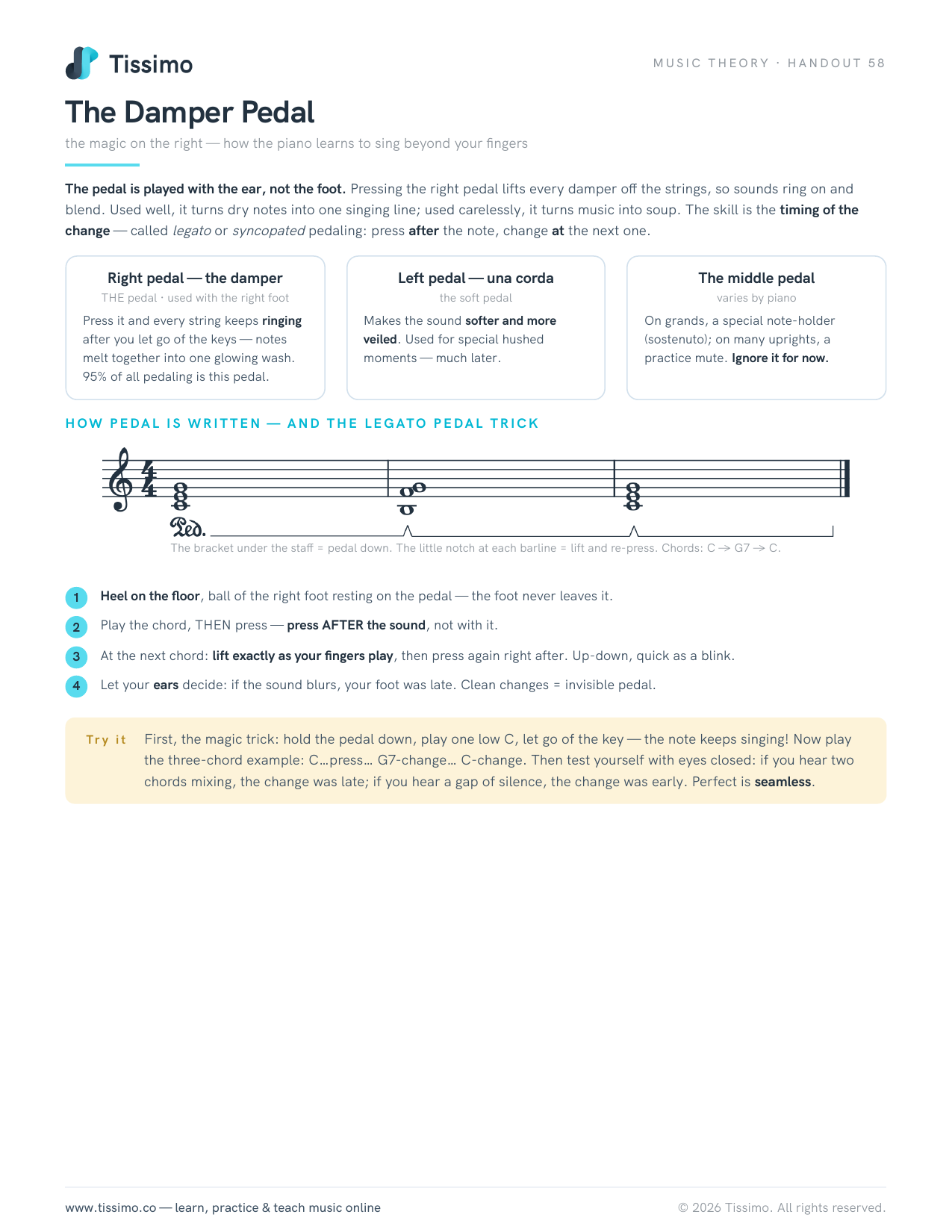 The Damper Pedalthe magic on the right — how the piano learns to sing beyond your fingers
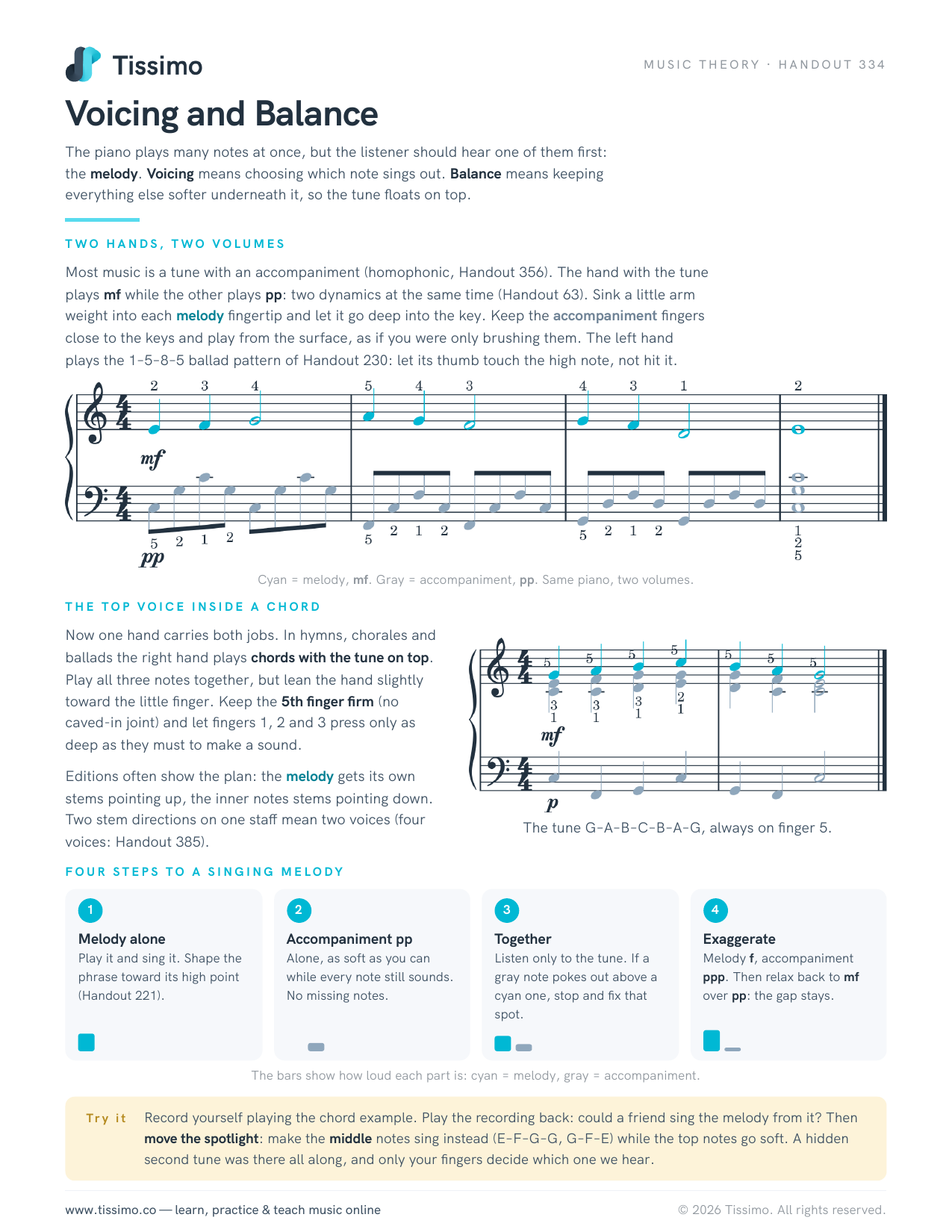 Voicing and BalanceThe piano plays many notes at once, but the listener should hear one of them first: the melody. Voicing means choosing which note sings out. Balance means keeping everything else softer underneath it, so the tune floats on top.
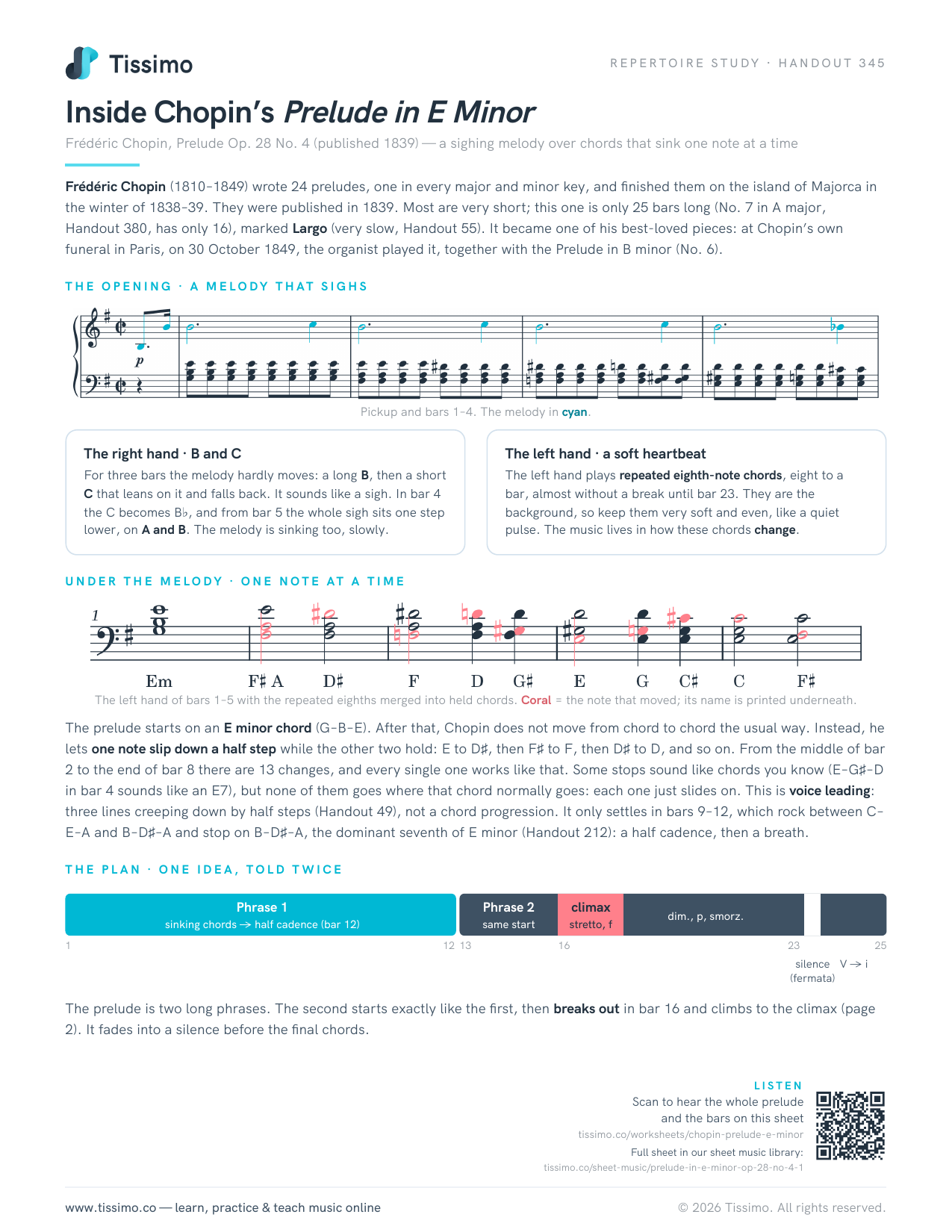 Inside Chopin’s Prelude in E MinorFrédéric Chopin, Prelude Op. 28 No. 4 (published 1839) — a sighing melody over chords that sink one note at a time
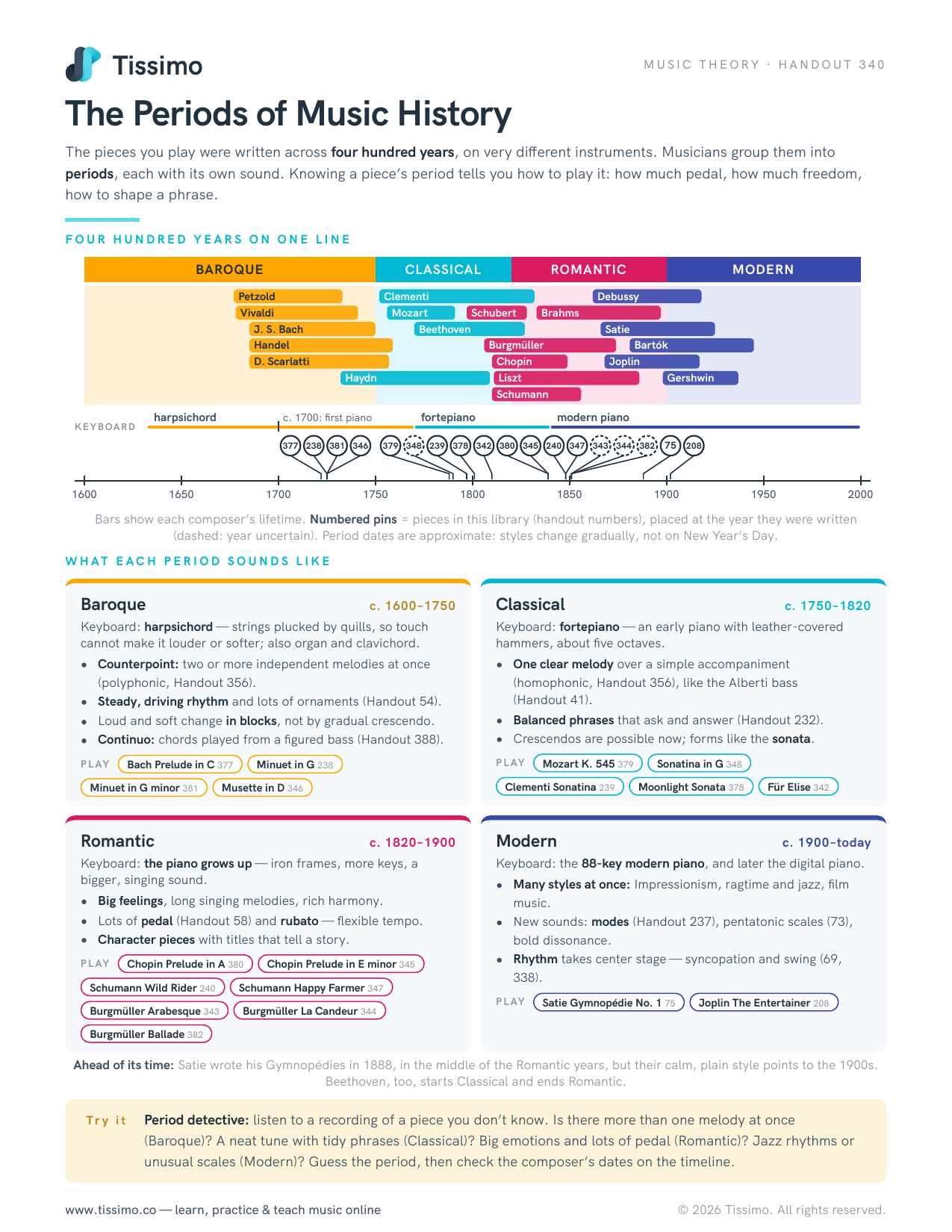 The Periods of Music HistoryThe pieces you play were written across four hundred years, on very different instruments. Musicians group them into periods, each with its own sound. Knowing a piece’s period tells you how to play it: how much pedal, how much freedom, how to shape a phrase.