Chords & Harmony
Neighbor Tone
A neighbor tone is a non-chord tone that steps away from a chord tone and returns to the same note, such as E–F–E over a C chord. An upper neighbor steps up first, a lower neighbor steps down.
A neighbor tone is a non-chord tone that steps away from a chord tone and then returns to the same note. Over a C major chord, the F in E–F–E is an upper neighbor; the B in C–B–C is a lower neighbor. Neighbor tones decorate a single note without moving the melody anywhere, which makes them one of the simplest ways to add motion over a held harmony.
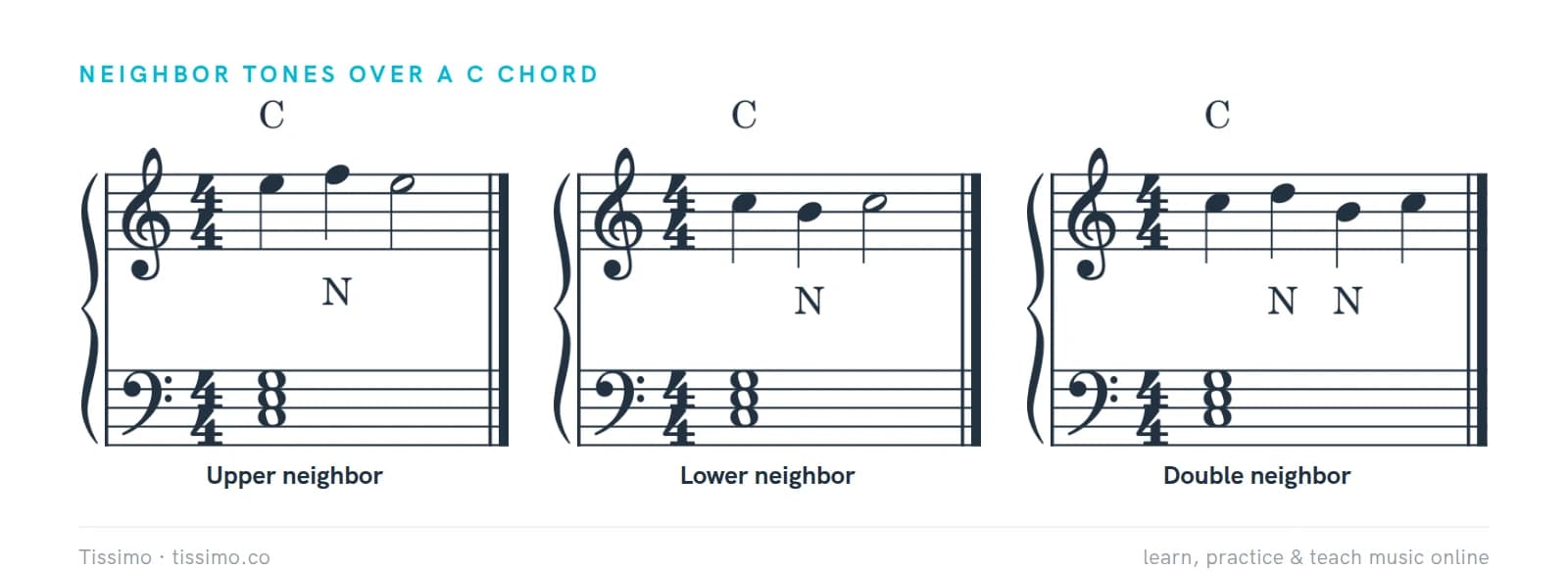
Kinds of neighbor tone
- Upper neighbor: a step above the chord tone, then back down.
- Lower neighbor: a step below, then back up. Lower neighbors often lie a half step below the main note, either naturally (C–B–C) or with an accidental (G–F♯–G), so that they lean into it like a leading tone.
- Double neighbor (or neighbor group): both in turn before the return, as in C–D–B–C.
- Incomplete neighbor: a neighbor approached or left by leap instead of by step. These are usually classified as appoggiaturas or escape tones.
Neighbor tones and ornaments
Several ornaments are quick neighbor-tone figures. A mordent flicks to the lower neighbor and back, an inverted mordent to the upper neighbor and back, and a trill alternates rapidly with the upper neighbor. A turn combines upper and lower neighbors around the main note.
Neighbor chords
Harmony can move by neighbor motion too. Over a held C in the bass, C – F/C – C moves two upper voices up a step and back (E–F–E and G–A–G). The middle chord is a neighbor chord, also called a pedal six-four (see six-four chord).
Practice with Non-chord tones and Label the non-chord tones, and train your ear with Hear the Visitor: Continue or Return?
Common questions
What is the difference between an upper and a lower neighbor?
An upper neighbor steps up from a chord tone and back down (E–F–E); a lower neighbor steps down and back up (C–B–C).
Is a neighbor tone the same as an auxiliary note?
Yes. Auxiliary note is an older name, still common in British books, for the same thing.
Practice it: free worksheets
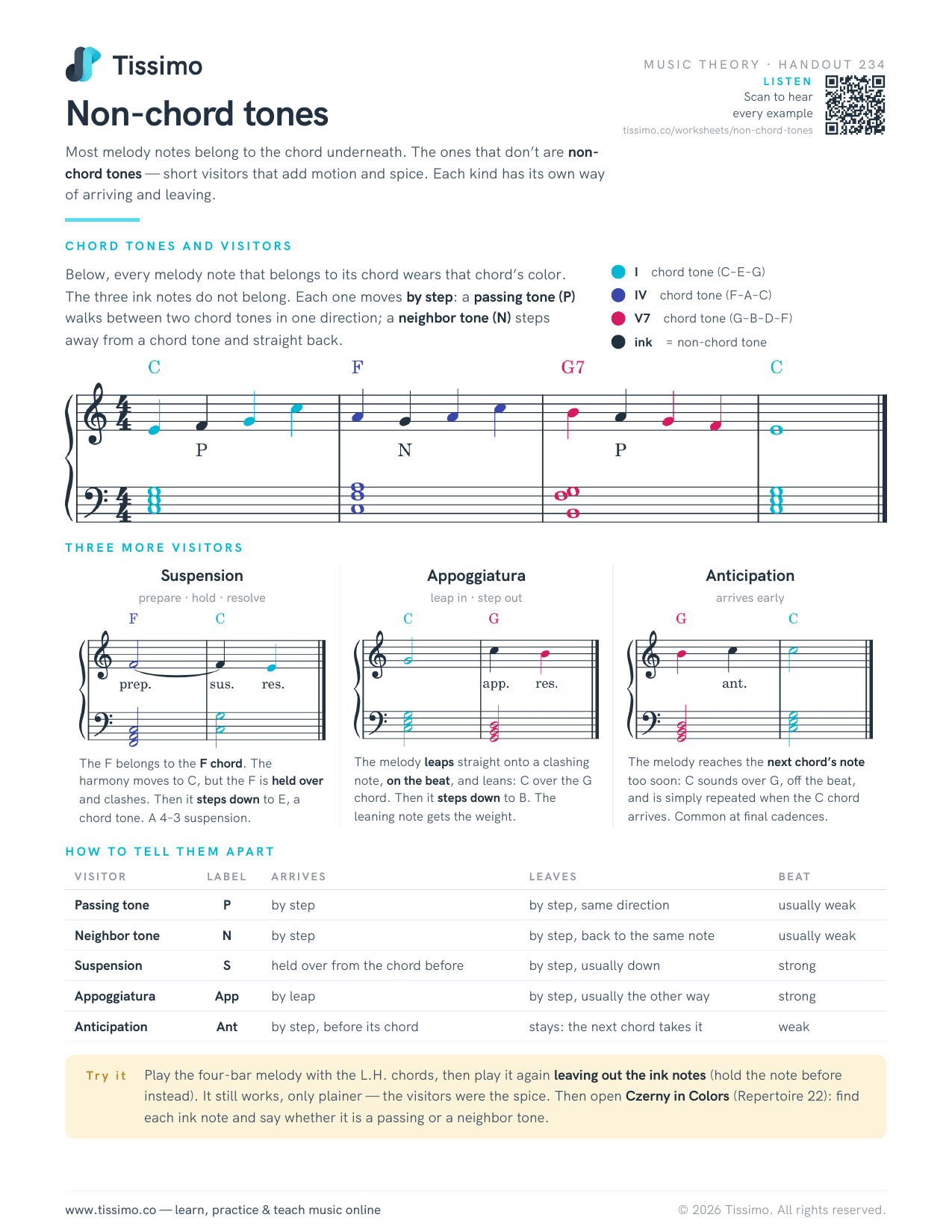 Non-chord tonesMost melody notes belong to the chord underneath. The ones that don’t are non-chord tones — short visitors that add motion and spice. Each kind has its own way of arriving and leaving.
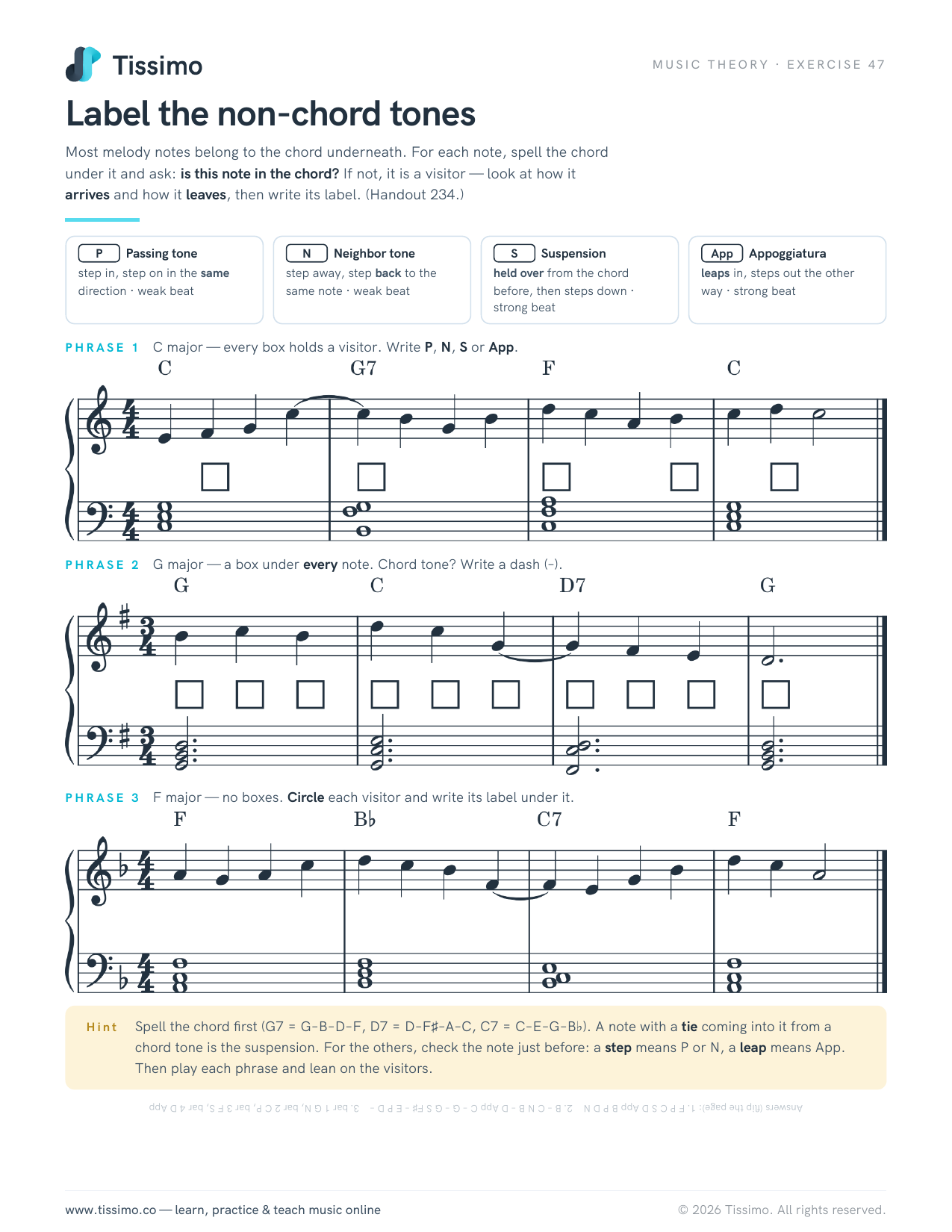 Label the non-chord tonesMost melody notes belong to the chord underneath. For each note, spell the chord under it and ask: is this note in the chord? If not, it is a visitor — look at how it arrives and how it leaves, then write its label. (Handout 234.)
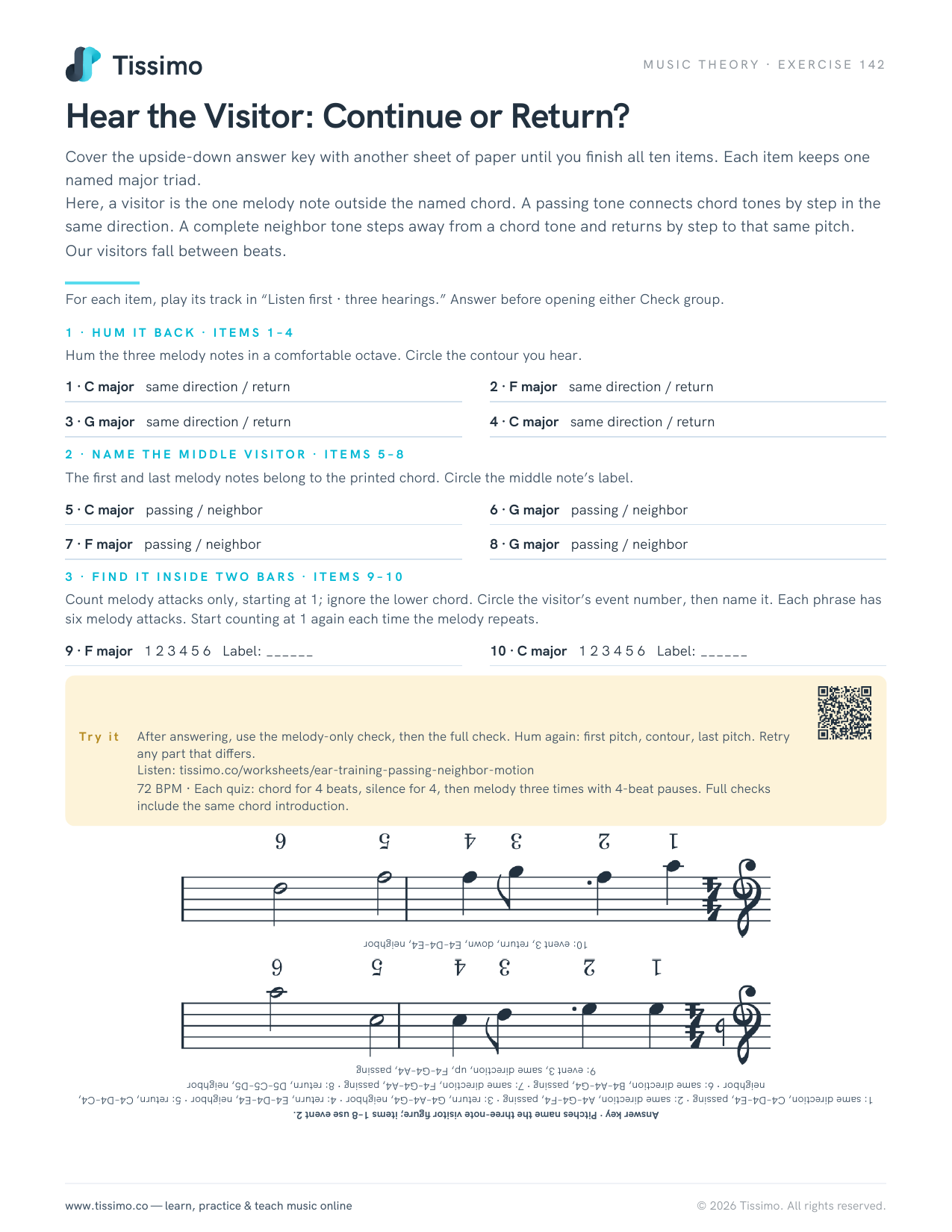 Hear the Visitor: Continue or Return?Cover the upside-down answer key with another sheet of paper until you finish all ten items. Each item keeps one named major triad. Here, a visitor is the one melody note outside the named chord. A passing tone connects chord tones by step in the same direction. A complete neighbor tone steps away from a chord tone and returns by step to that same pitch. Our visitors fall between beats.