Technique & Performance
Recital
A recital is a performance by one musician or a small group, often a soloist with a pianist. Students give recitals to share what they have learned, and many music degrees require them.
A recital is usually smaller and more personal than an orchestral concert: a solo pianist, a singer with an accompanist, a violinist and pianist, or a chamber group playing a planned program. For students it is a milestone, a fixed date to prepare toward and the experience of playing for listeners. Many teachers hold studio recitals once or twice a year, and many university music degrees include required recitals.
Preparing well
- Choose music that is already secure. Pick pieces you have known for a while, a little below your hardest level. Nerves take something off every performance.
- Perform before the day. Play for family, friends, a camera or a video call. Each run-through in front of someone makes the real one more familiar.
- Practice recovering. Start from several places in each piece, and practice carrying on after a deliberate slip without stopping.
- Rehearse the whole event, not just the music: walking on, adjusting the bench or stand, bowing, beginning and walking off. My First Recital: Rehearse the Whole Trip walks through every step, and Recital Ready: What Would You Do Next? practices what to do when something unexpected happens.
- Try the instrument and the room if you can. A different piano, with a different touch and pedal, or a hall with a different echo can surprise you.
On the day
- Warm up gently and leave plenty of time, so you aren't rushed (warm-up).
- Before you begin, take a breath and hear the first bar in your head at the right tempo.
- If you slip, keep going. Most listeners won't notice a small mistake unless you stop.
- At the end, let the last sound fade, then stand and bow to acknowledge the applause.
Nerves are normal
Almost every performer feels nervous: a faster heartbeat, cold hands, shaky breath. Those feelings are your body getting ready, and they usually ease once you begin. Slow breathing, a familiar routine and thorough preparation keep them manageable, and performing often in low-pressure settings is one of the best ways to grow more comfortable. Solid memorization, if you play from memory, and a well-chosen repertoire do the rest.
Common questions
What happens if I make a mistake in a recital?
Keep going. Small slips are common, and most listeners won't notice them if the beat carries on. Practicing recovery before the day makes this much easier.
What is the difference between a recital and a concert?
A recital usually features one performer or a small group, often in a smaller hall; a concert can be any size, up to a full orchestra or band. The words overlap, and many solo events are simply called concerts.
Practice it: free worksheets
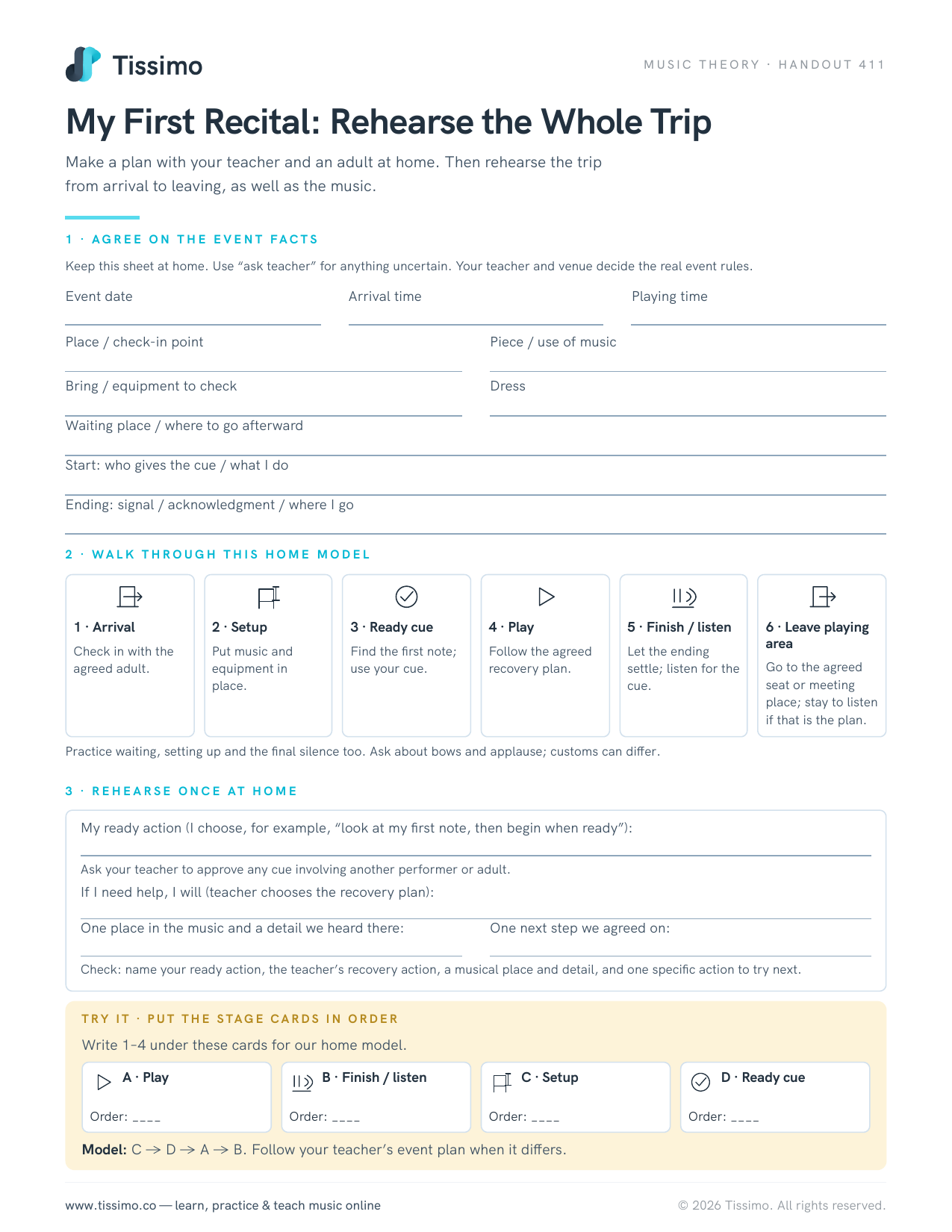 My First Recital: Rehearse the Whole TripMake a plan with your teacher and an adult at home. Then rehearse the trip from arrival to leaving, as well as the music.
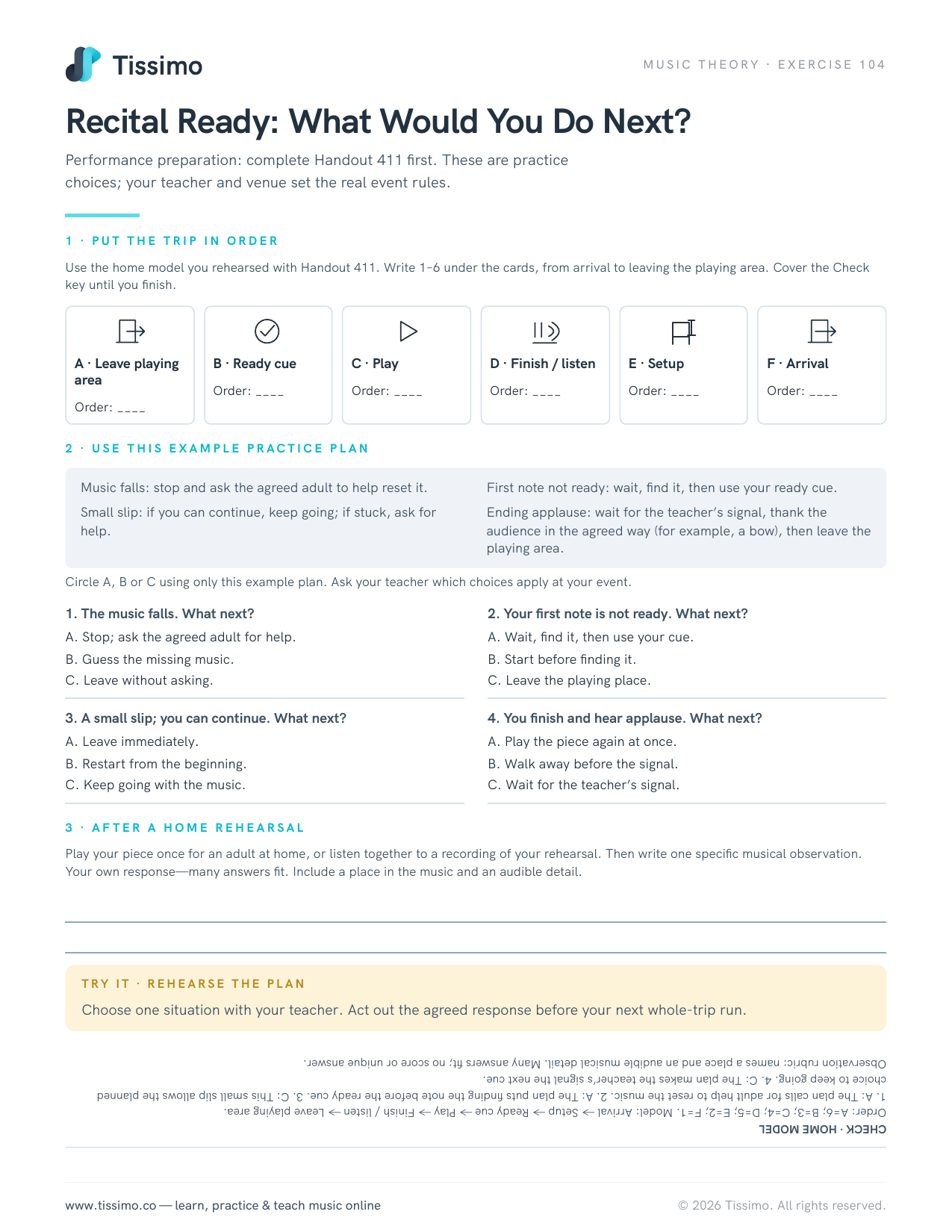 Recital Ready: What Would You Do Next?Performance preparation: complete Handout 411 first. These are practice choices; your teacher and venue set the real event rules.
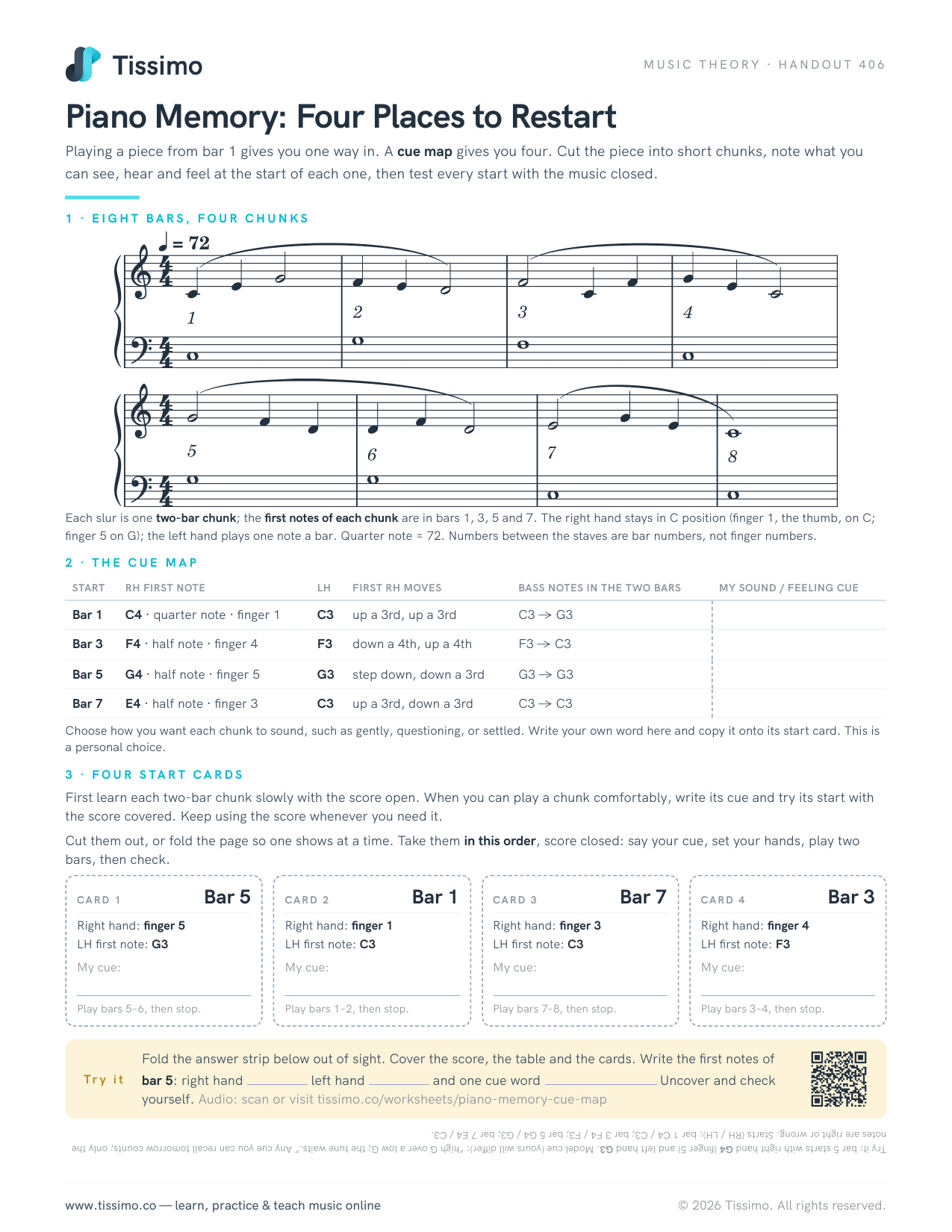 Piano Memory: Four Places to RestartPlaying a piece from bar 1 gives you one way in. A cue map gives you four. Cut the piece into short chunks, note what you can see, hear and feel at the start of each one, then test every start with the music closed.