Form & Structure
Recitative
Pronounced res-ih-tuh-TEEV
Recitative is a style of singing that imitates the rhythms of speech, used in opera, oratorio and cantata for dialogue and narration that move the story forward between arias and choruses.
Recitative is sung speech. In an opera, oratorio or cantata, it carries the plot: conversations, narration, instructions, sudden news. The melody follows the natural rhythm and inflection of the words, so a singer can deliver a lot of text quickly and clearly. Then, when the drama reaches a moment of feeling, the music settles into an aria, an ensemble or a chorus.
Two main kinds
- Secco recitative (recitativo secco, "dry recitative"): accompanied only by the continuo, typically a harpsichord with a cello or another bass instrument, which plays sparse chords under the voice. It is the standard way of setting dialogue in Baroque opera and in Mozart's Italian comic operas.
- Accompanied recitative (recitativo accompagnato or obbligato): accompanied by the orchestra, which adds dramatic gestures between the vocal lines. Composers saved it for intense moments: a vision, a decision, a character on the edge.
How it looks and sounds
Recitative is usually written in 4/4 time, but singers perform it with the freedom of speech, stretching important words and moving quickly through unimportant ones. The vocal line has many repeated notes and few long melodic phrases. In Baroque and Classical style, singers also add unwritten ornaments, especially an appoggiatura on certain phrase endings where the score shows two repeated notes. The final cadence of a secco recitative is often played by the continuo after the singer has finished.
Where it came from
Recitative goes back to the very beginnings of opera around 1600, when composers in Florence wanted a way of singing that let the words be heard as clearly as in spoken drama. In the 19th century, the strict division between recitative and aria gradually faded, as composers such as Verdi and Wagner wrote more continuous music.
Recitative outside opera
Bach's cantatas use recitative throughout, and in his Passions it belongs above all to the narrator, the Evangelist, who tells the story between the arias and chorales. Handel's oratorios, including Messiah, use both secco and accompanied recitative.
Singing recitative
Speak the text aloud first, in rhythm, until it sounds like natural speech. Then sing it on the written pitches, keeping the same rhythm and emphasis. Coordinate with your accompanist: in secco recitative, chords usually come in under or just before the words they support, so the accompanist has to follow you rather than a fixed beat.
Common questions
What is the purpose of recitative in opera?
To move the story forward. It sets dialogue and narration in speech-like singing so the words are clear, linking the arias, ensembles and choruses, where the action pauses for emotion.
What is the difference between secco and accompanied recitative?
Secco recitative is accompanied only by continuo instruments such as harpsichord and cello. Accompanied recitative uses the orchestra and is reserved for more dramatic moments.
Practice it: free worksheets
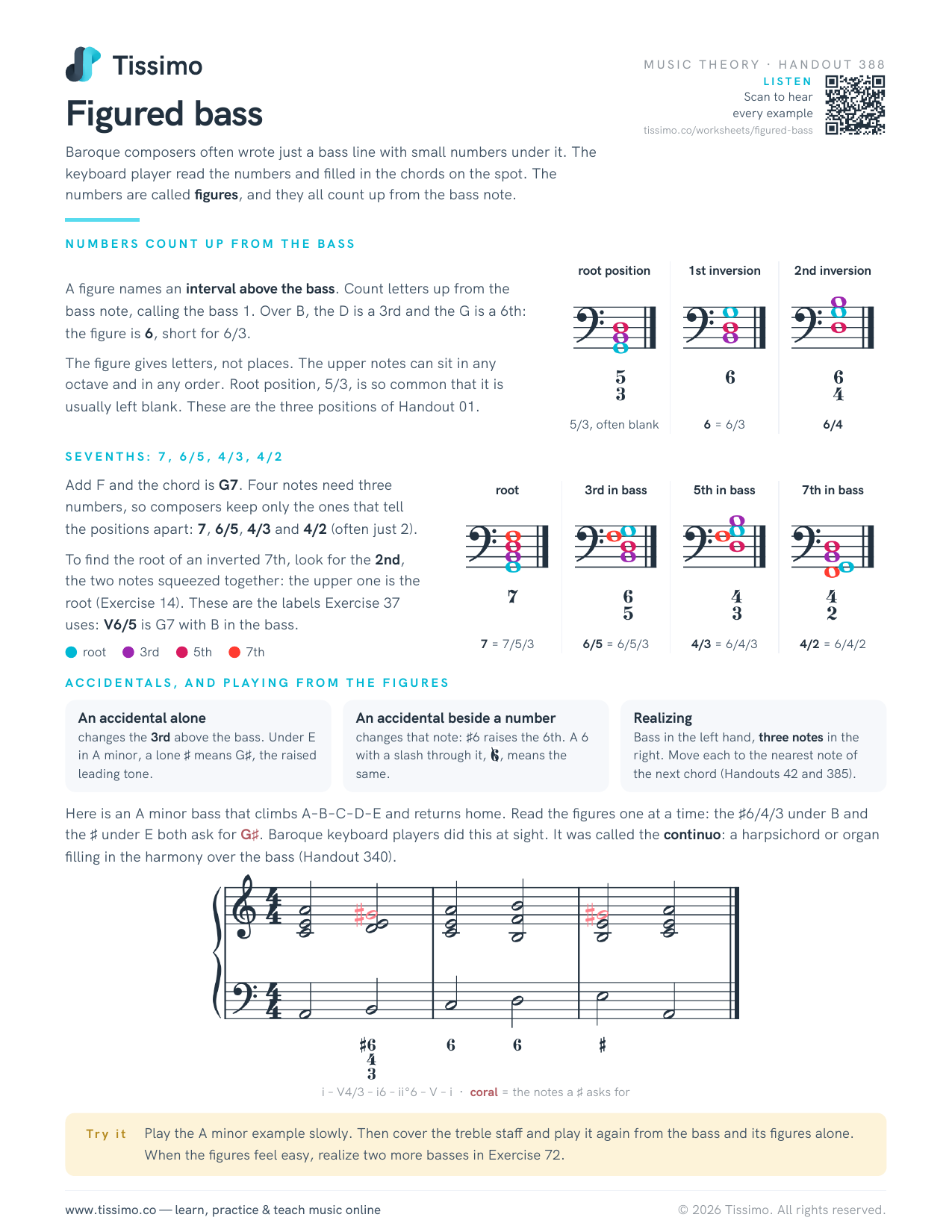 Figured bassBaroque composers often wrote just a bass line with small numbers under it. The keyboard player read the numbers and filled in the chords on the spot. The numbers are called figures, and they all count up from the bass note.
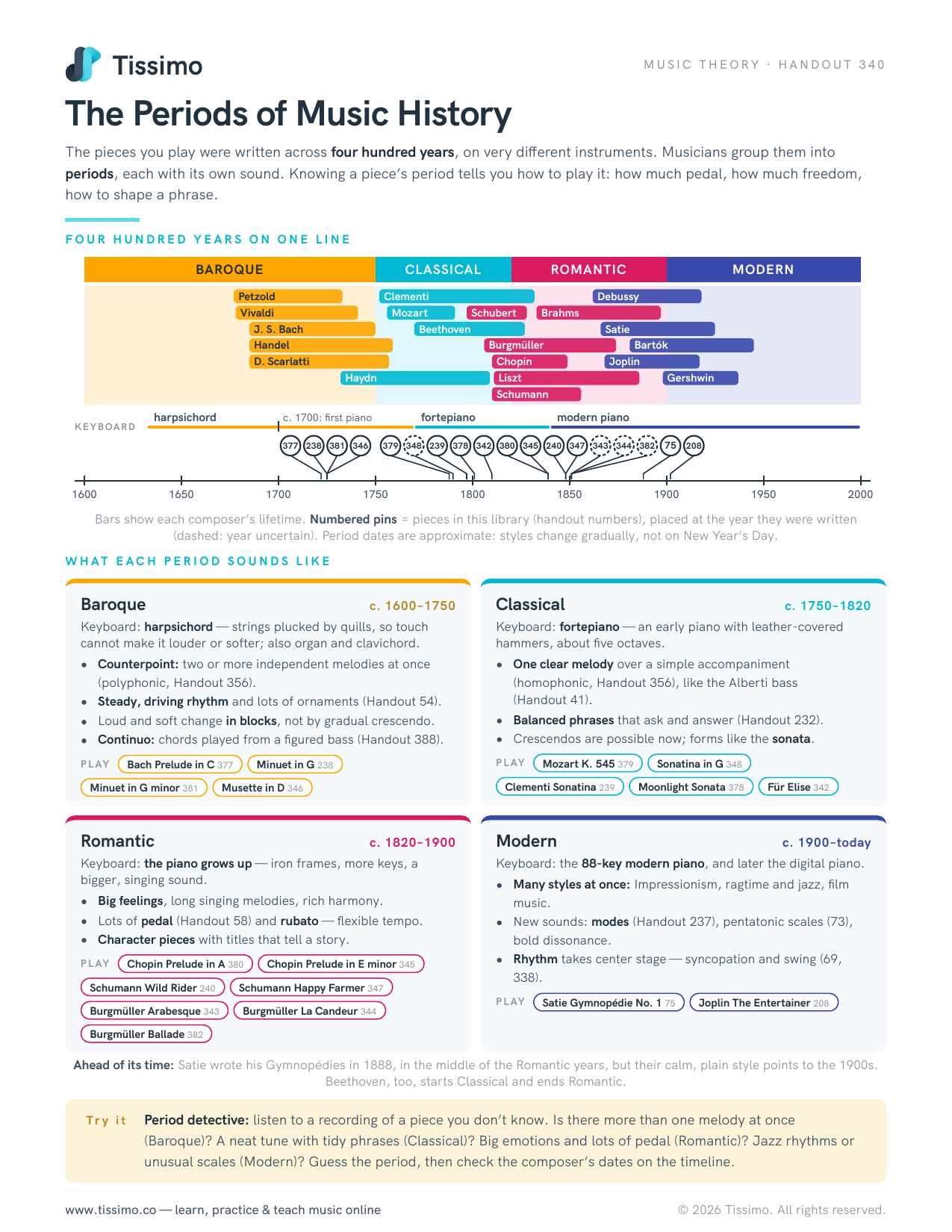 The Periods of Music HistoryThe pieces you play were written across four hundred years, on very different instruments. Musicians group them into periods, each with its own sound. Knowing a piece’s period tells you how to play it: how much pedal, how much freedom, how to shape a phrase.