Form & Structure
Aria
Pronounced AH-ree-uh
An aria is a song for solo voice with accompaniment, usually part of an opera, oratorio or cantata, in which a character expresses emotion at a moment when the action pauses.
An aria is the big solo song of an opera, oratorio or cantata. In the recitative before it, the plot moves along in speech-like singing; in the aria, time seems to stop, and a character reflects on what has happened: love, rage, grief, triumph, despair. Arias are where singers show their tone, range and agility, and they are the numbers audiences remember.
The da capo aria
In the late Baroque, the standard type was the da capo aria, an ABA form:
- A: the main section, setting the first lines of the text.
- B: a contrasting section, often in a related key and a different mood.
- A again: marked da capo ("from the beginning"), so it is not written out. The singer was expected to add fresh ornaments to the return, showing off taste and skill.
Handel's operas and oratorios contain hundreds of da capo arias, and singers today still prepare their own ornaments for the returns.
Later arias
After the Baroque, arias took many shapes. In the 19th century, Italian opera often used a two-part plan: a slow, lyrical first part (cantabile), then a fast, brilliant ending called the cabaletta. Composers such as Verdi and Puccini increasingly blended arias into the surrounding scene, and Wagner largely abandoned separate numbers.
Famous arias
- "Der Hölle Rache," the Queen of the Night's furious aria from Mozart's The Magic Flute, with its famous high F's.
- "Nessun dorma," the tenor aria from Puccini's Turandot.
- "O mio babbino caro" from Puccini's Gianni Schicchi.
Related forms
- Arioso: halfway between recitative and aria, more melodic than recitative but less self-contained than an aria.
- Aria as an instrumental piece: the word can also name a song-like instrumental movement, as in the aria that frames Bach's Goldberg Variations. The English word air is used the same way.
- Concert aria: a stand-alone aria for voice and orchestra, not part of an opera.
Singing an aria
Learn the text first: speak it in rhythm and know what every word means in translation. Mark the breaths, then work on the long phrases and any melismas slowly. In a da capo aria, plan the ornaments of the return with your teacher so they suit your voice and the style.
Common questions
What is the difference between an aria and a recitative?
A recitative is speech-like singing that moves the story forward, with a flexible rhythm and simple accompaniment. An aria is a melodic, structured song in which a character expresses emotion while the action pauses.
What is a da capo aria?
A Baroque aria in ABA form. After the contrasting B section, the singer returns to the beginning (da capo) and repeats A, adding ornaments.
Practice it: free worksheets
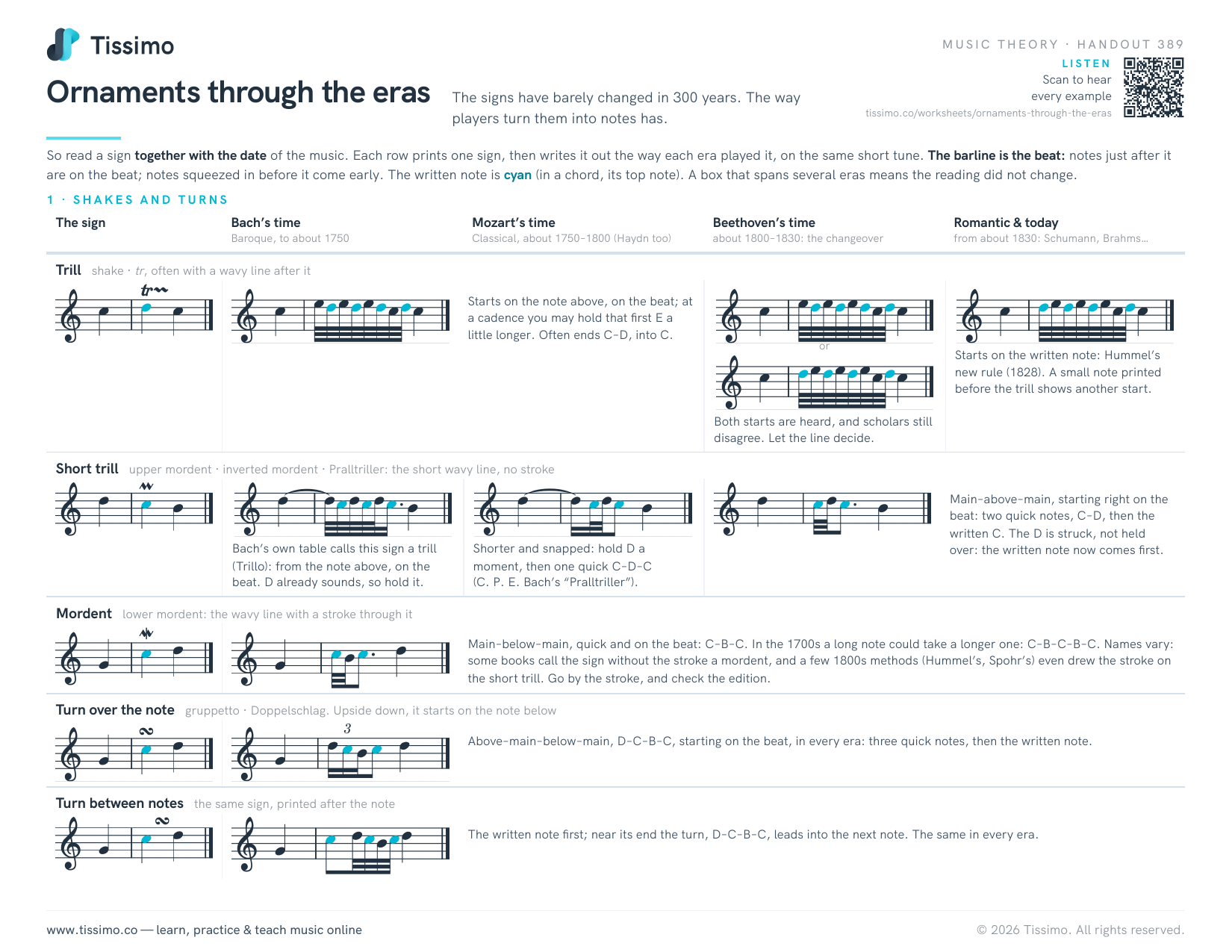 Ornaments through the erasThe signs have barely changed in 300 years. The way players turn them into notes has.
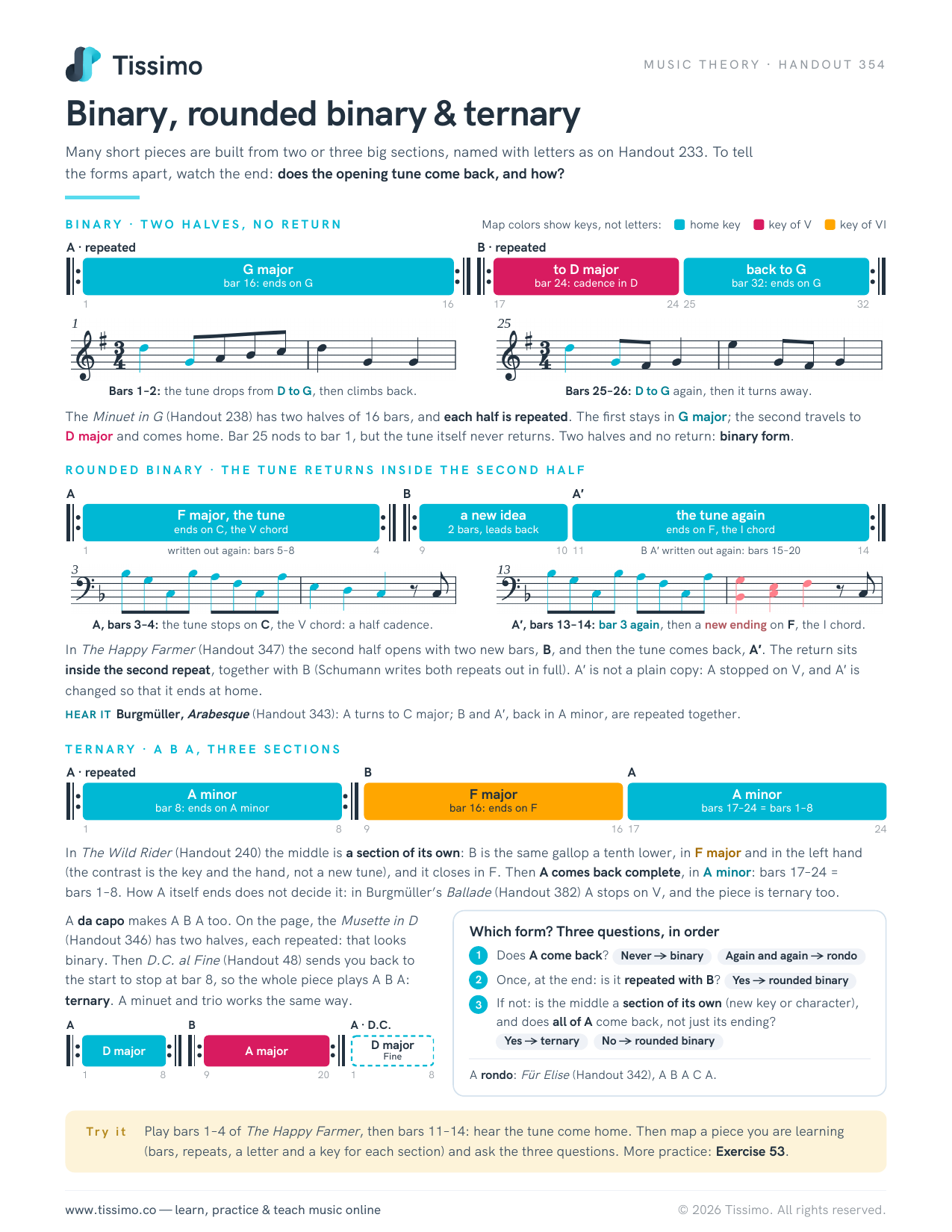 Binary, rounded binary & ternaryMany short pieces are built from two or three big sections, named with letters as on Handout 233. To tell the forms apart, watch the end: does the opening tune come back, and how?