Instruments & Voices
Mezzo-Soprano
Pronounced MET-soh suh-PRAN-oh
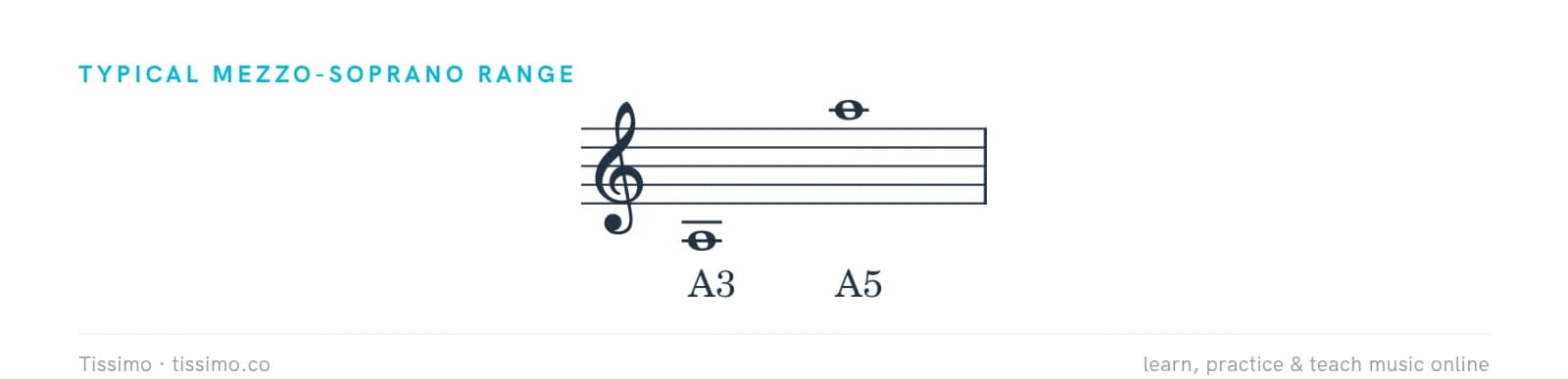
Mezzo-soprano is the female voice type between soprano and alto, with a darker, richer color than a soprano. Its typical classical range is about A3 to A5.
The mezzo-soprano ("mezzo" for short) sits between the soprano and the alto. The name means "half soprano" in Italian, but a mezzo is not a weaker soprano: the voice has its own darker, warmer color, especially in the middle and lower range, and many mezzos have plenty of high notes too.
Range
A typical classical mezzo-soprano range is about A3 to A5. Many mezzos can sing a little lower or higher, and the boundaries with soprano and alto overlap. What sets the voice apart is usually its color and its most comfortable area (tessitura), which lies lower than a soprano's.
Kinds of mezzo-soprano
- Coloratura mezzo: agile, with fast runs and a wide range; much Rossini writing suits this voice.
- Lyric mezzo: smooth and warm, often cast in "trouser roles," young male characters sung by women, such as Cherubino in Mozart's The Marriage of Figaro.
- Dramatic mezzo: rich and powerful, with a strong lower range. The title role of Bizet's Carmen is one of the most famous mezzo roles.
In a choir
Choirs usually have only soprano and alto parts for women, so a mezzo sings whichever suits her better, often second soprano or first alto. Mezzos are valuable in both sections because they can strengthen the lower soprano notes or the upper alto line.
How mezzo parts are written
Mezzo-soprano parts are written in treble clef at the pitch they sound.
Tips for mezzo-sopranos
- Don't push the chest voice too high; blend into a mixed sound through the middle of the range.
- Explore songs that sit in the middle of the staff, where the voice's color shows best.
- Range alone won't tell you whether you are a soprano or a mezzo. A teacher listens to color, comfort and where your voice changes register.
Common questions
What is the difference between a soprano and a mezzo-soprano?
Mostly color and comfort zone. A mezzo's voice is darker and fuller in the middle and lower range, and its most comfortable area sits a little lower. The ranges overlap a lot, so a mezzo may sing high notes and a soprano may sing low ones.
Is a mezzo-soprano an alto?
Not exactly. In a choir a mezzo may sing the alto part, but as a solo voice type the mezzo lies between soprano and contralto, the lowest female voice.
Practice it: free worksheets
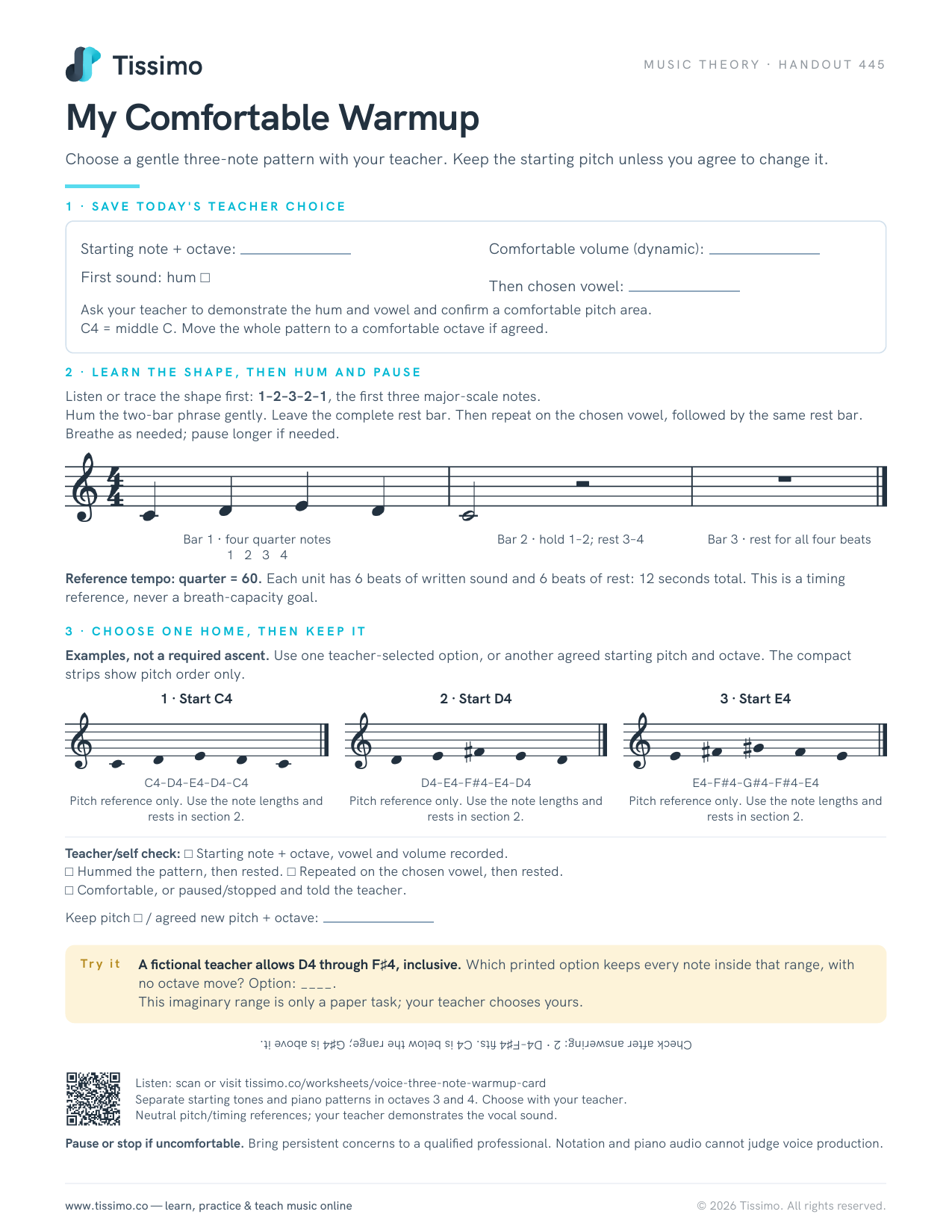 My Comfortable WarmupChoose a gentle three-note pattern with your teacher. Keep the starting pitch unless you agree to change it.
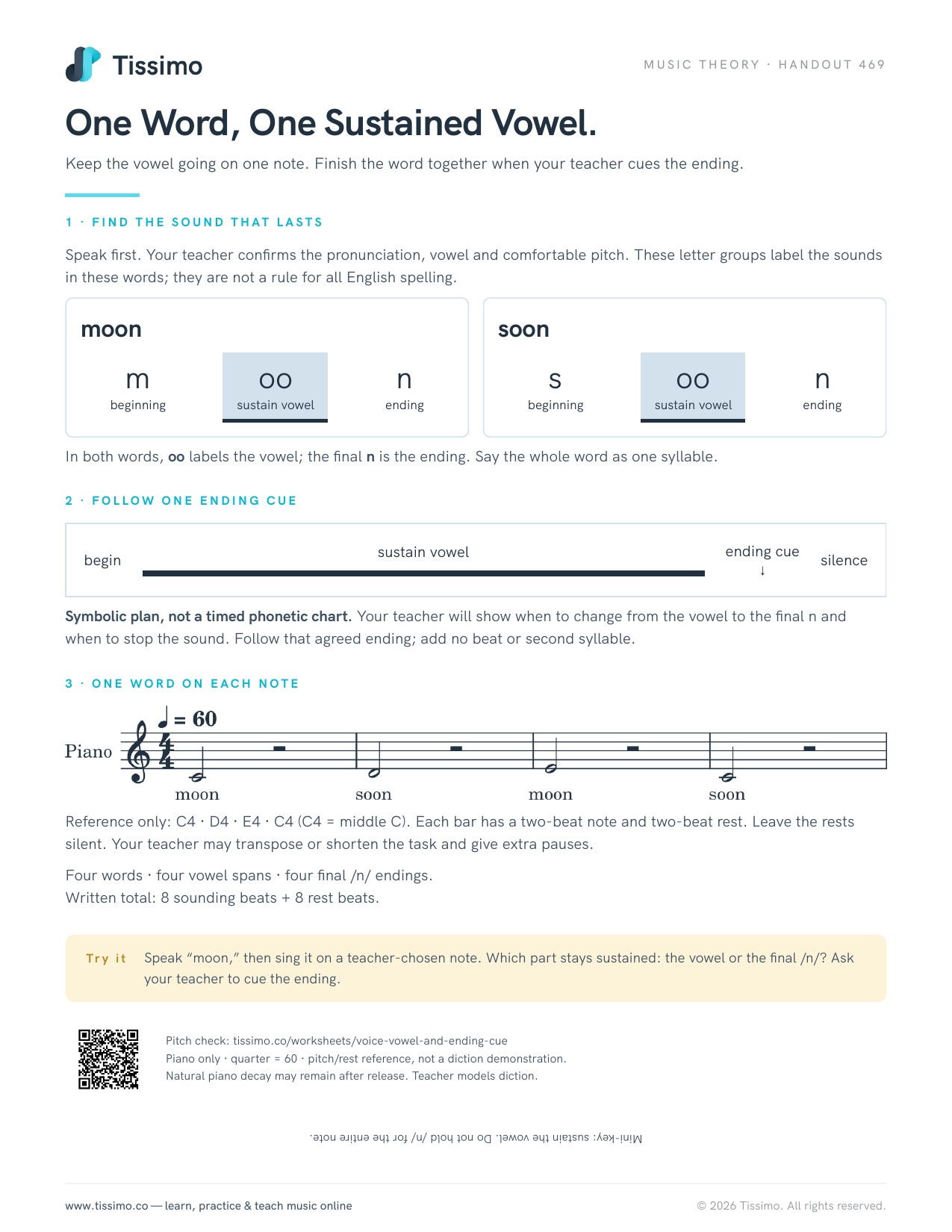 One Word, One Sustained Vowel.Keep the vowel going on one note. Finish the word together when your teacher cues the ending.
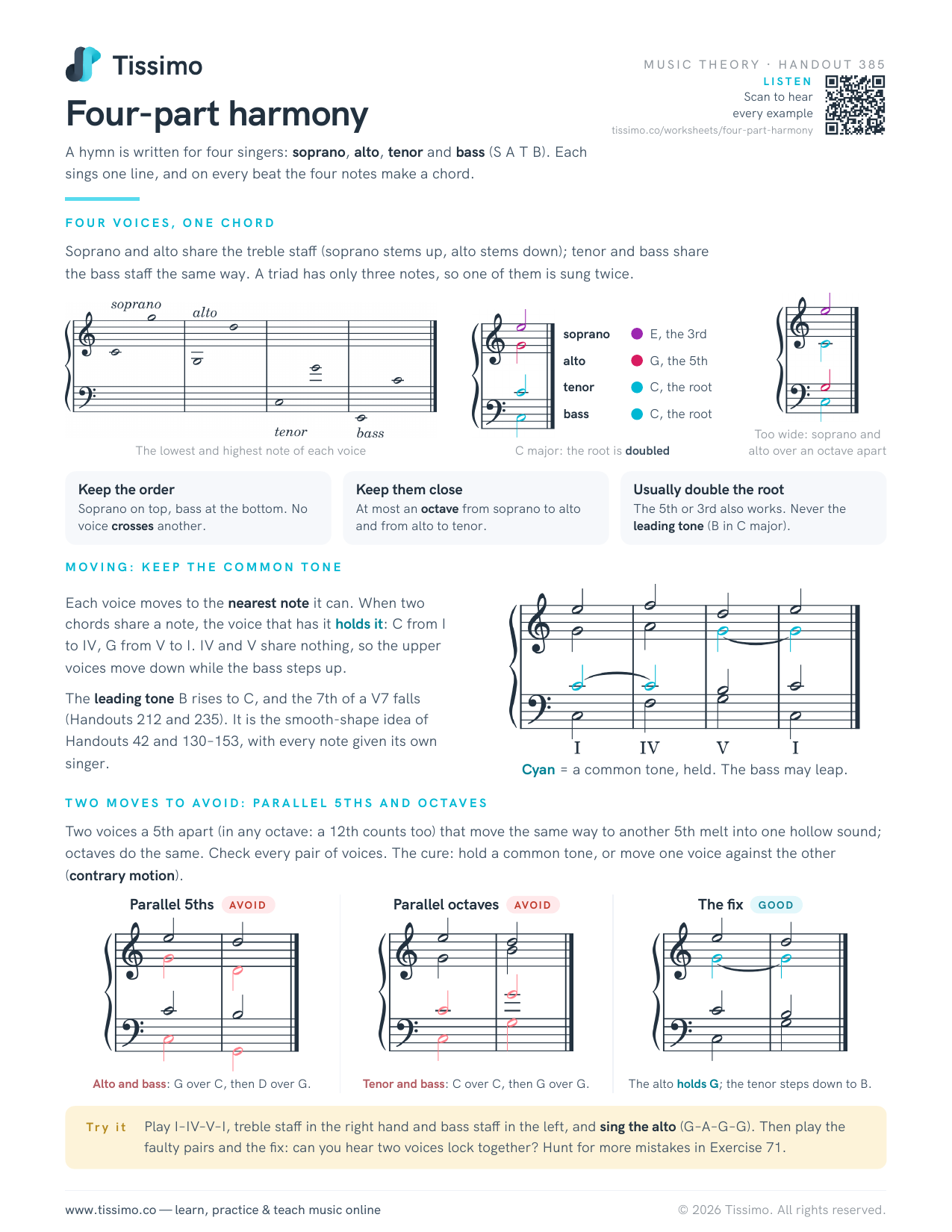 Four-part harmonyA hymn is written for four singers: soprano, alto, tenor and bass (S A T B). Each sings one line, and on every beat the four notes make a chord.