Articulation & Ornaments
Tremolo
Pronounced TREM-oh-lohWritten as trem.
A tremolo is a rapid repetition of one note or chord, or a rapid alternation between two notes that are further apart than a step. It is shown by short slanted strokes through a note's stem or between two notes.
Tremolo is Italian for "trembling." It means a rapid repetition: either of one note or chord, or an alternation between two notes that are further apart than a step. On the page it is shown by short, thick slanted strokes, either through the stem of one note or between two notes.
Single-note tremolo
Strokes through the stem tell you to divide the note into quick repeated notes of the same pitch. Each stroke acts like an additional beam: on an unflagged note, one stroke means repeated eighth notes and two strokes repeated sixteenths. Count any existing flags or beams too: an eighth note with one stroke is divided into sixteenths. Composers and arrangers use this shorthand all the time for repeated chords, because it is far quicker to write and to read.
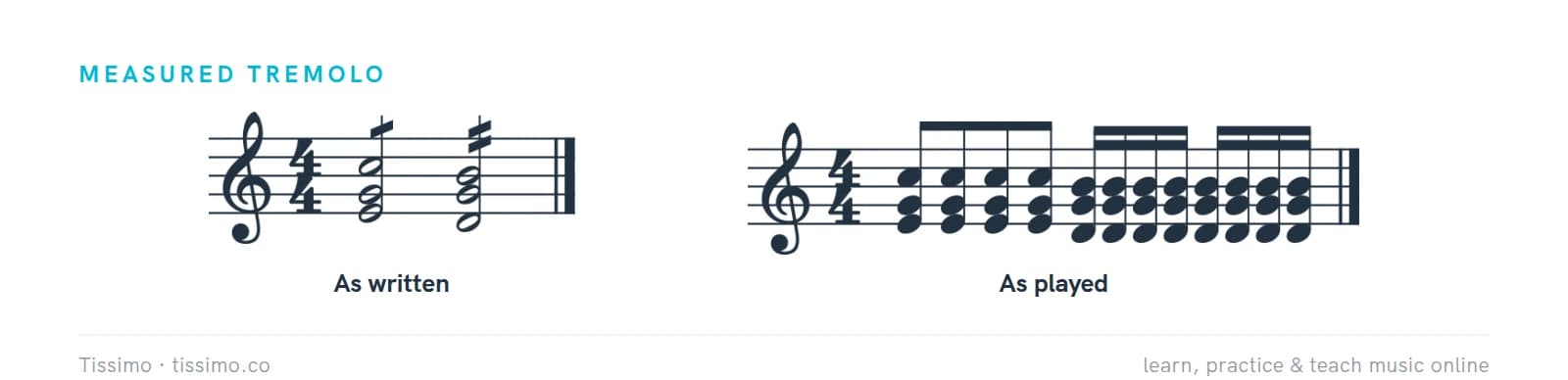
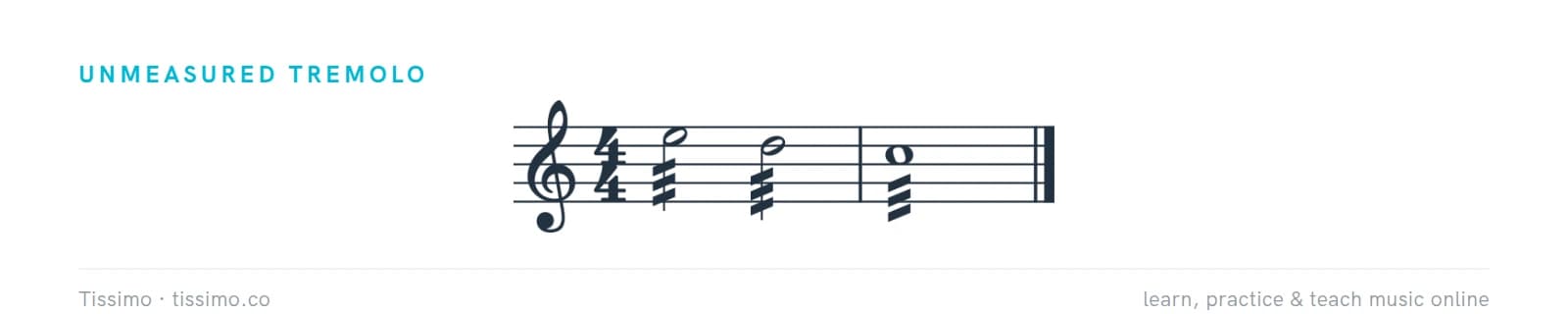
Three strokes often mean an unmeasured tremolo: not a counted rhythm, but as many notes as you can play evenly, a shimmer of sound. In measured contexts they can instead mean 32nd notes; the tempo, instrument and any explicit instructions decide. The famous unmeasured string tremolo of orchestral music is made with tiny, fast bow strokes. On a whole note, which has no stem, the strokes sit above or below the notehead.
Two-note tremolo
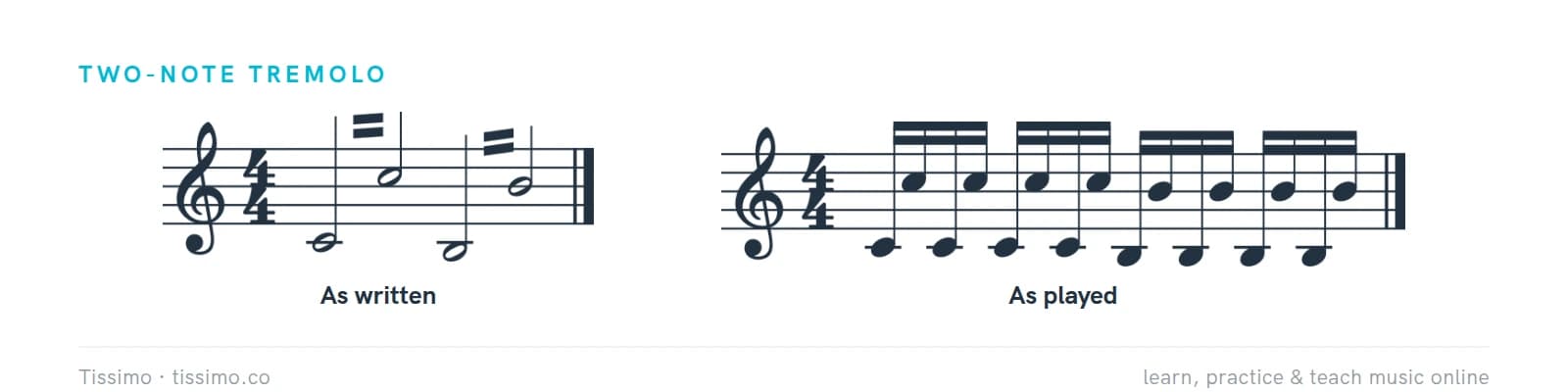
Strokes drawn between two notes mean alternate them rapidly. Here notation has a quirk that puzzles many readers: each of the two notes is written with the length of the whole tremolo, so two half notes joined by strokes last only one half note together. On the piano this kind of tremolo, often between octaves or chord notes, imitates the sound of an orchestra and is common in Romantic piano music and piano arrangements of orchestral scores.
On different instruments
- Strings: a bowed tremolo is a very quick back-and-forth of the bow; a fingered tremolo alternates two notes with the left hand under one bow.
- Percussion: a roll on timpani, snare drum or marimba is written with the same strokes. See One Written Note, Many Single Strokes.
- Mandolin and guitar: tremolo picking, rapid strokes on one string.
- Piano: repeated chords, or a fast alternation of octaves or chord tones.
Tremolo, trill or vibrato?
A trill alternates two neighboring notes and is an ornament. A tremolo repeats one note, or alternates notes further apart. Vibrato is a wavering of pitch within one sustained note. Electric guitars mix the names up: the "tremolo arm" or whammy bar bends the pitch, which is really vibrato, while the "tremolo" effect on many amplifiers pulses the volume.
Common questions
What do the slashes through a note's stem mean?
They are tremolo strokes: repeat the note. Count the strokes together with existing flags or beams: one total means eighth notes, two means sixteenths. Three may mean measured 32nd notes or an unmeasured tremolo, depending on the tempo, instrument and instructions.
What is the difference between tremolo and vibrato?
A tremolo repeats a note, or alternates two notes, very quickly. Vibrato keeps one sustained note and makes its pitch waver slightly.
Practice it: free worksheets
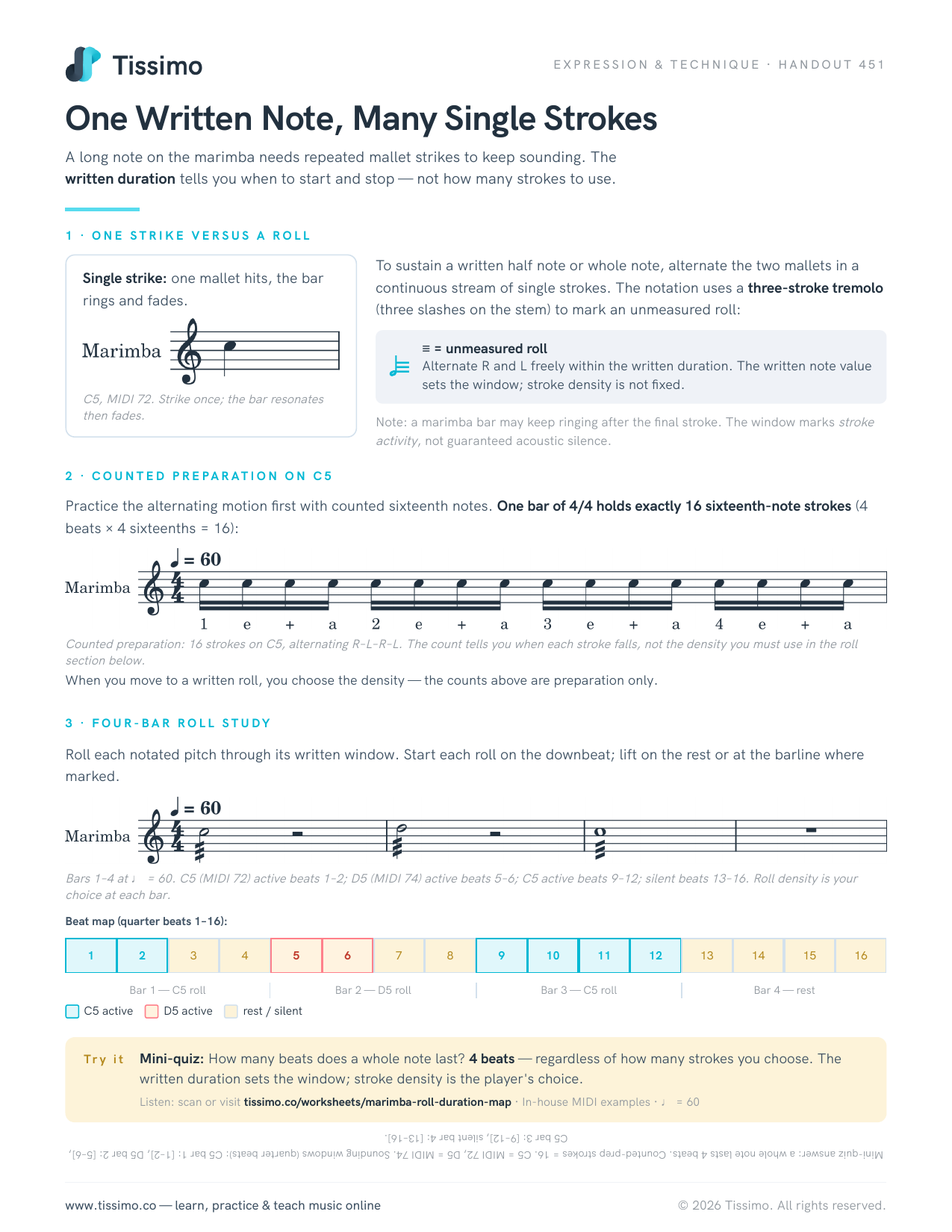 One Written Note, Many Single StrokesA long note on the marimba needs repeated mallet strikes to keep sounding. The written duration tells you when to start and stop — not how many strokes to use.
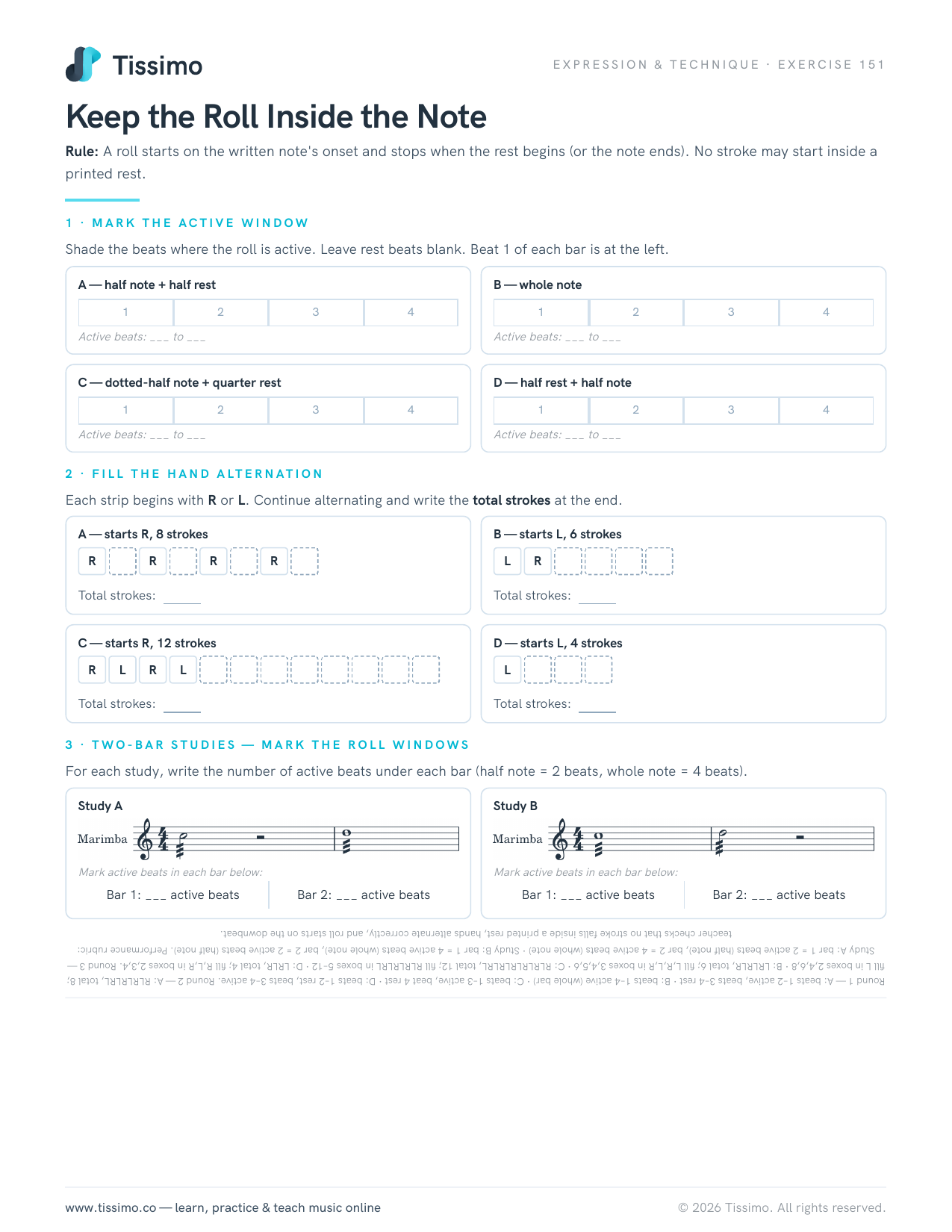 Keep the Roll Inside the NoteRule: A roll starts on the written note's onset and stops when the rest begins (or the note ends). No stroke may start inside a printed rest.
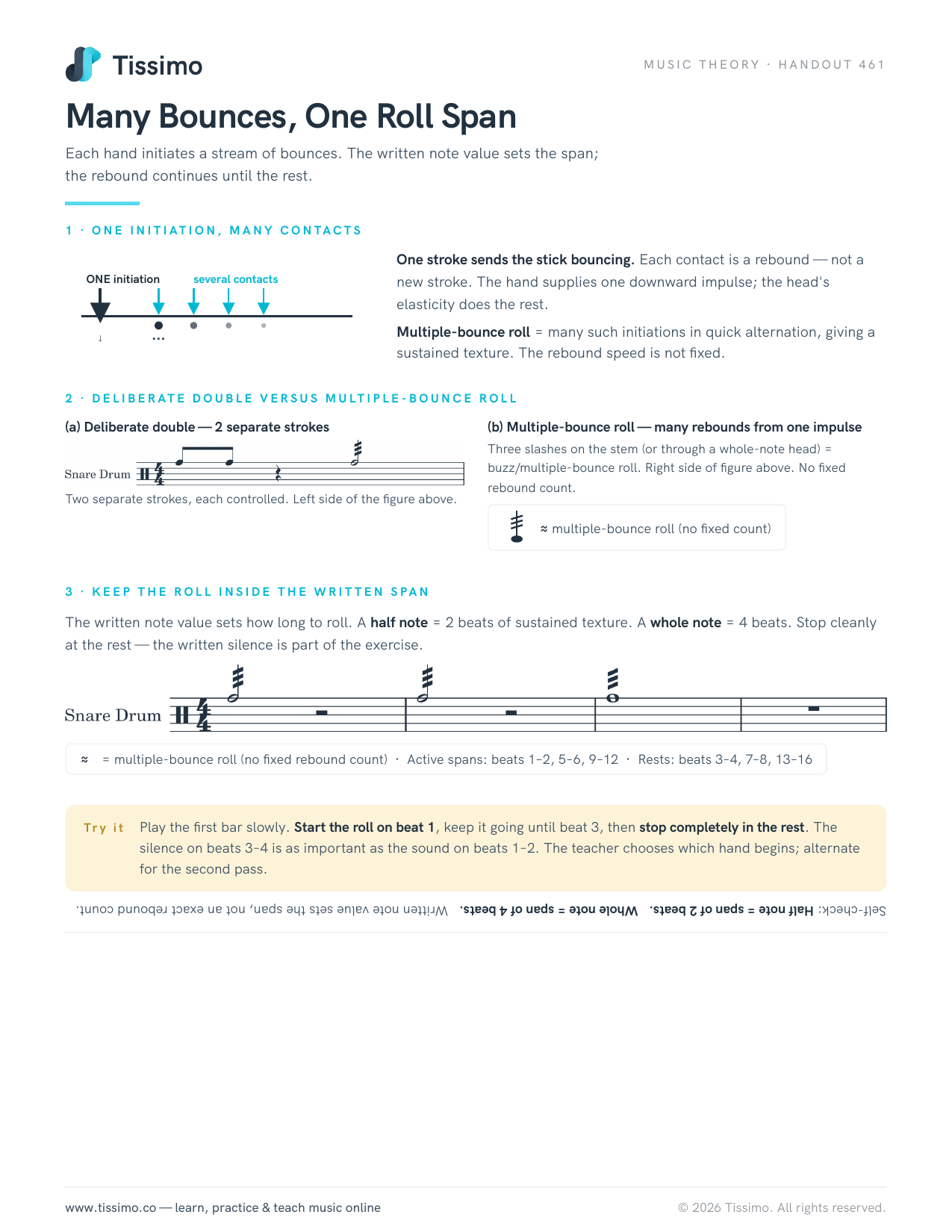 Many Bounces, One Roll SpanEach hand initiates a stream of bounces. The written note value sets the span; the rebound continues until the rest.