Instruments & Voices
Rhythm Section
A rhythm section is the group of players in a band who supply the beat and the chords under the melody: usually drums, bass and a chord instrument such as piano or guitar.
The rhythm section is the engine room of a band. Its players keep the pulse, set the feel and lay down the harmony, so that a singer or soloist has something steady to play over. In jazz the term sets these players apart from the horn sections, the saxophones, trumpets and trombones.
Who is in it
- Drums: the drum kit keeps time, usually on the hi-hat or ride cymbal and the bass drum, and adds accents and fills.
- Bass: the double bass or bass guitar plays the bass line, often the roots of the chords, or a walking bass line in jazz. It links the rhythm and the harmony.
- Chord instruments: piano, guitar, organ or synthesizer fill in the harmony, playing rhythmic chords behind the melody (comping in jazz).
Some bands add percussion such as congas or shakers, and some leave an instrument out: a trio of guitar, bass and drums is a complete rhythm section. In the classic swing big band it was piano, guitar, string bass and drums. Earlier jazz bands often used a banjo and a tuba; around the swing era the guitar and string bass replaced them, and the beat became smoother and more even.
How rhythm-section parts are written
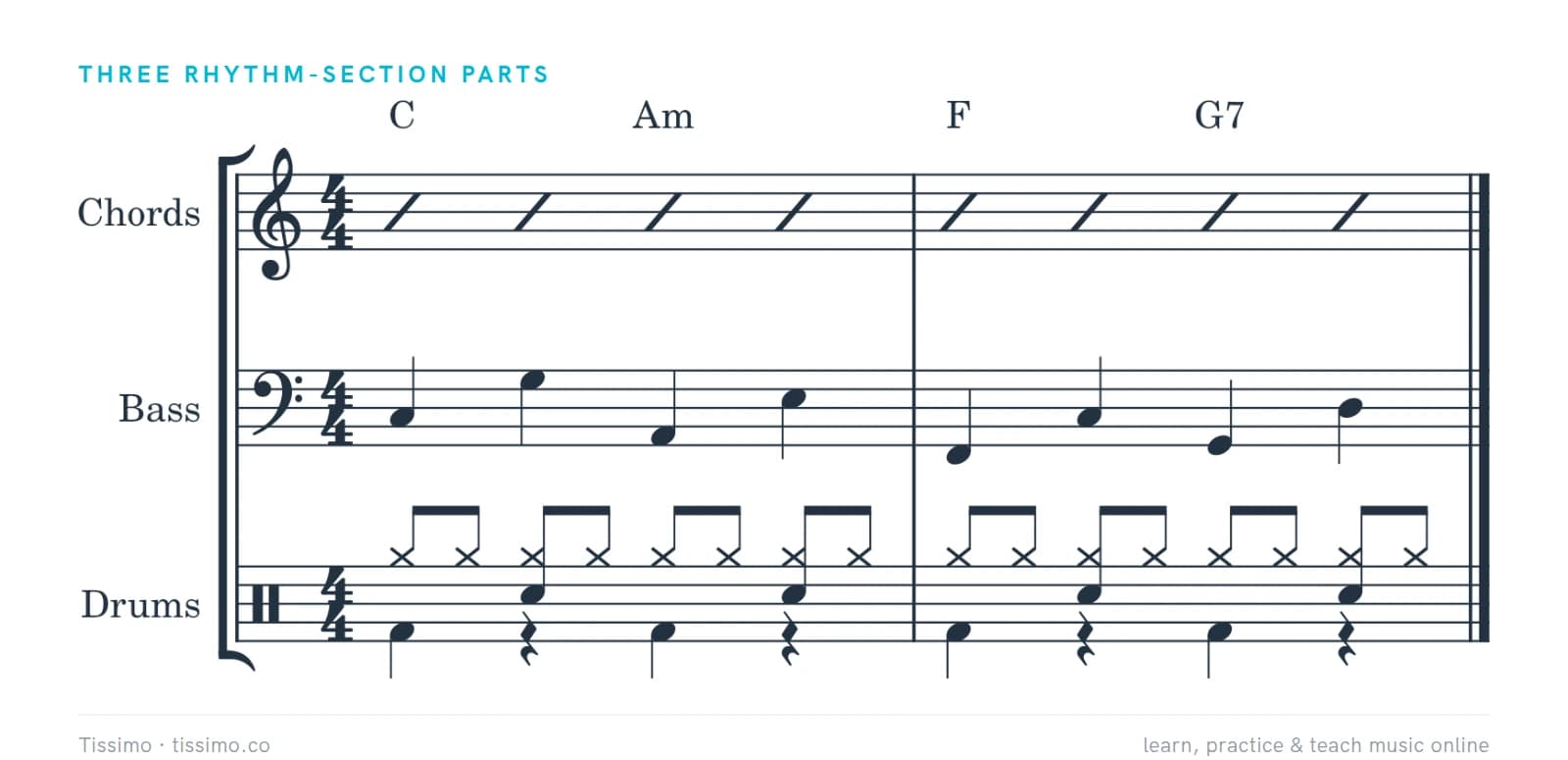
Rhythm-section players often get far less than a full score. A lead sheet or chord chart gives the form and the chord symbols, and each player makes up a part in the right style. Slashes without stems, one per beat, mean "keep playing these chords in time": you choose the rhythm and the voicings to suit the style. Slashes with stems show an exact rhythm to play. Bassists often build their lines from the same chord symbols.
How the section works together
The rhythm section succeeds as a unit. The bassist and the drummer lock together, often lining up bass notes with the kick drum. The chord players leave room for the melody instead of filling every gap. Above all, the whole section shares one sense of time: if the bassist pushes ahead while the drummer holds back, the groove suffers. Rhythm-section players also take a solo at times, then return to the accompaniment.
A common confusion
The name suggests rhythm only, but the section carries the harmony too: the bass and the chord instruments play the chord progression the whole song is built on. "Rhythm guitar" is a related idea. In a rock band the rhythm guitarist plays the chords and riffs with the rhythm section, while the lead guitarist plays melodies and solos.
Practice the chord player's and the bassist's jobs in Realize a lead sheet and Build a Bassline from Chord Roots.
Common questions
What instruments are in a rhythm section?
Usually drums, bass (double bass or bass guitar) and at least one chord instrument, such as piano, guitar or organ. Some bands add percussion, and some leave one of these out.
Is the rhythm section only about rhythm?
No. The bass and the chord instruments also play the harmony, the chord progression the song is built on. The rhythm section provides the beat, the feel and the chords at the same time.
Practice it: free worksheets
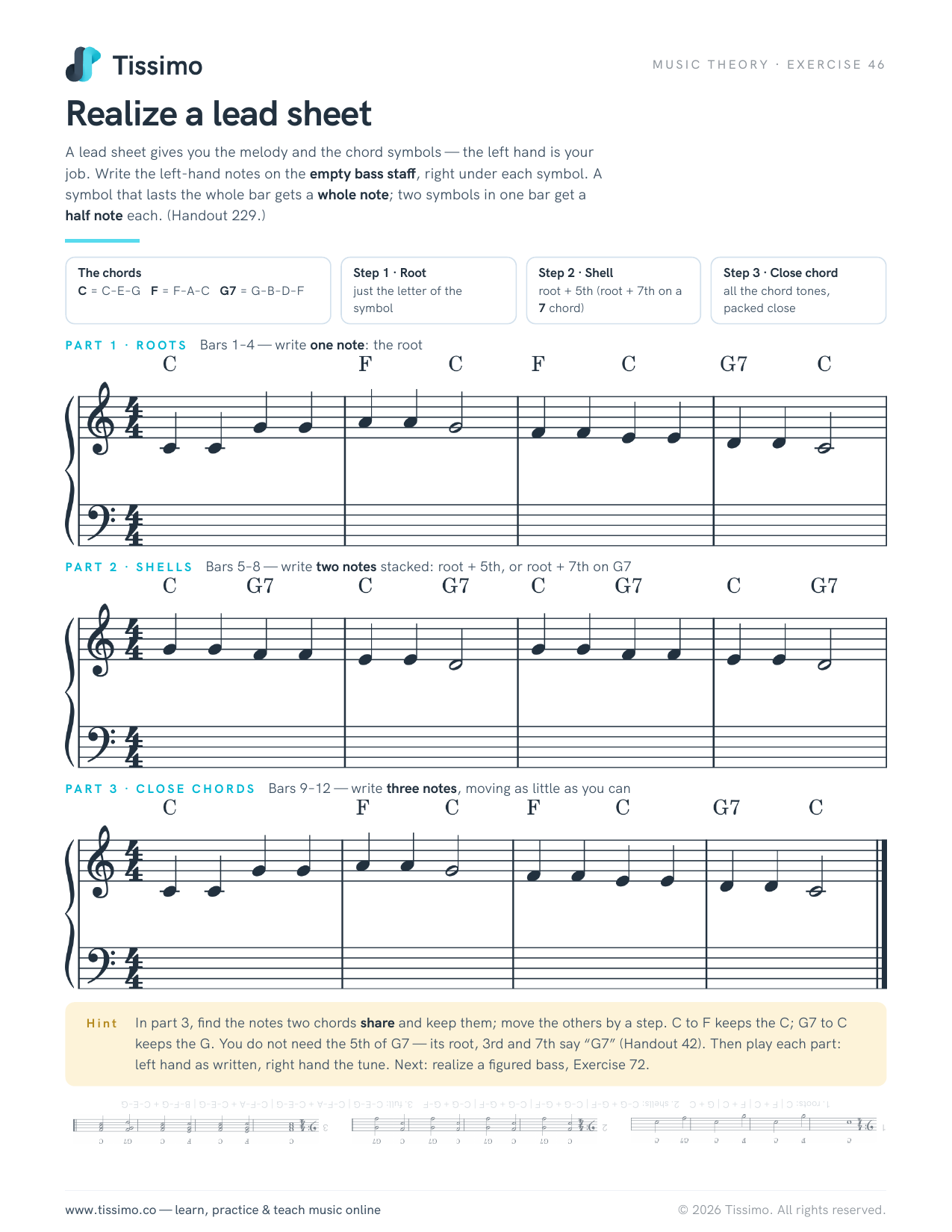 Realize a lead sheetA lead sheet gives you the melody and the chord symbols — the left hand is your job. Write the left-hand notes on the empty bass staff, right under each symbol. A symbol that lasts the whole bar gets a whole note; two symbols in one bar get a half note each. (Handout 229.)
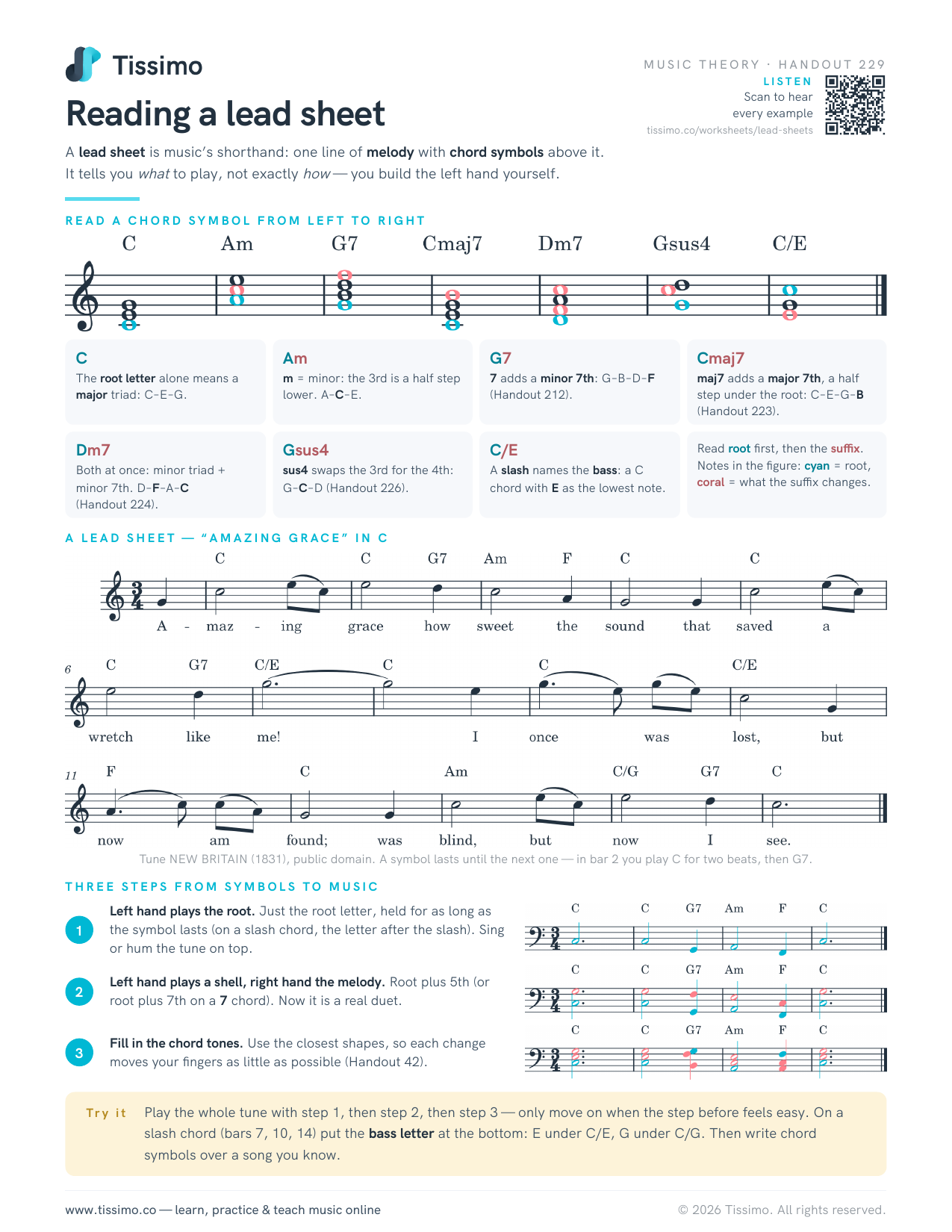 Reading a lead sheetA lead sheet is music’s shorthand: one line of melody with chord symbols above it. It tells you what to play, not exactly how — you build the left hand yourself.
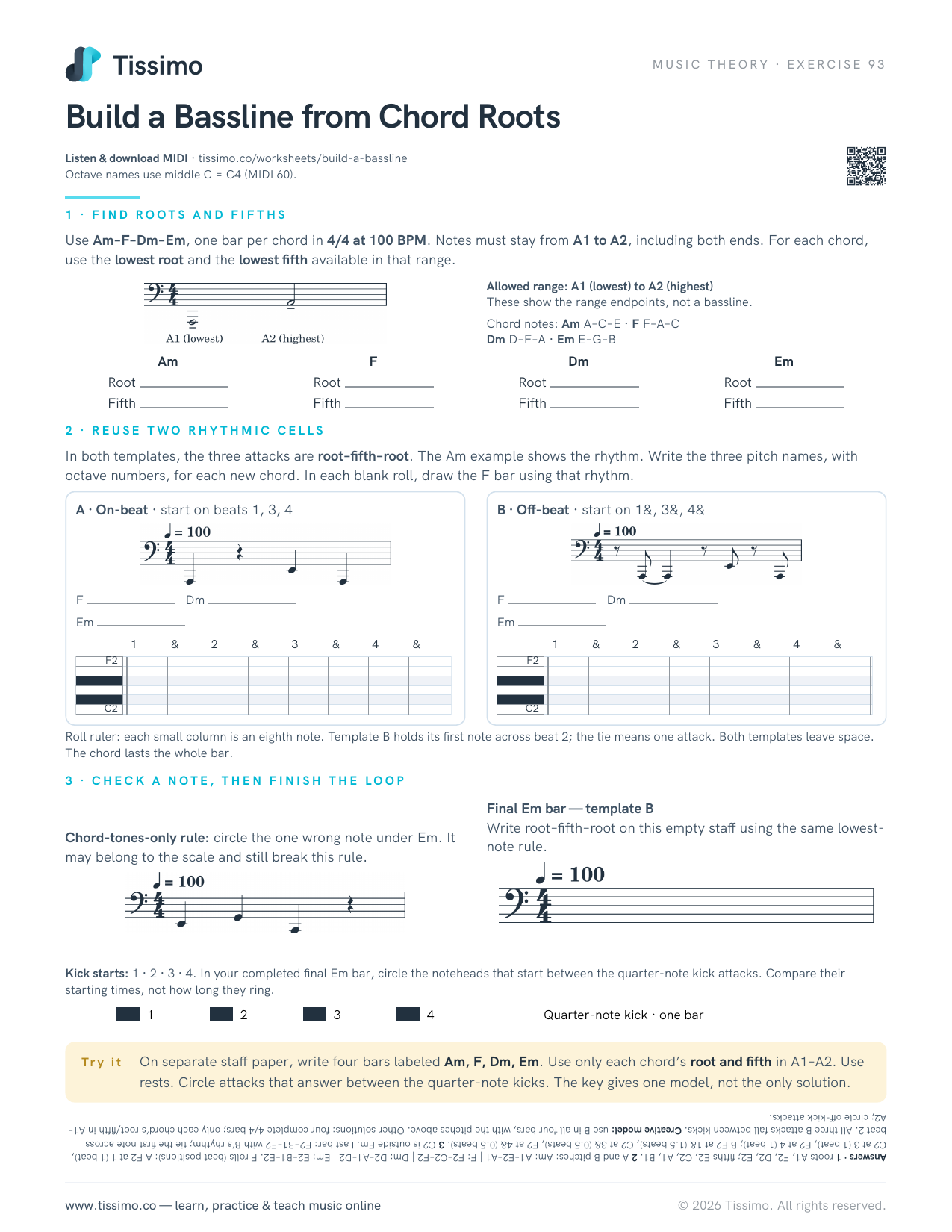 Build a Bassline from Chord Roots
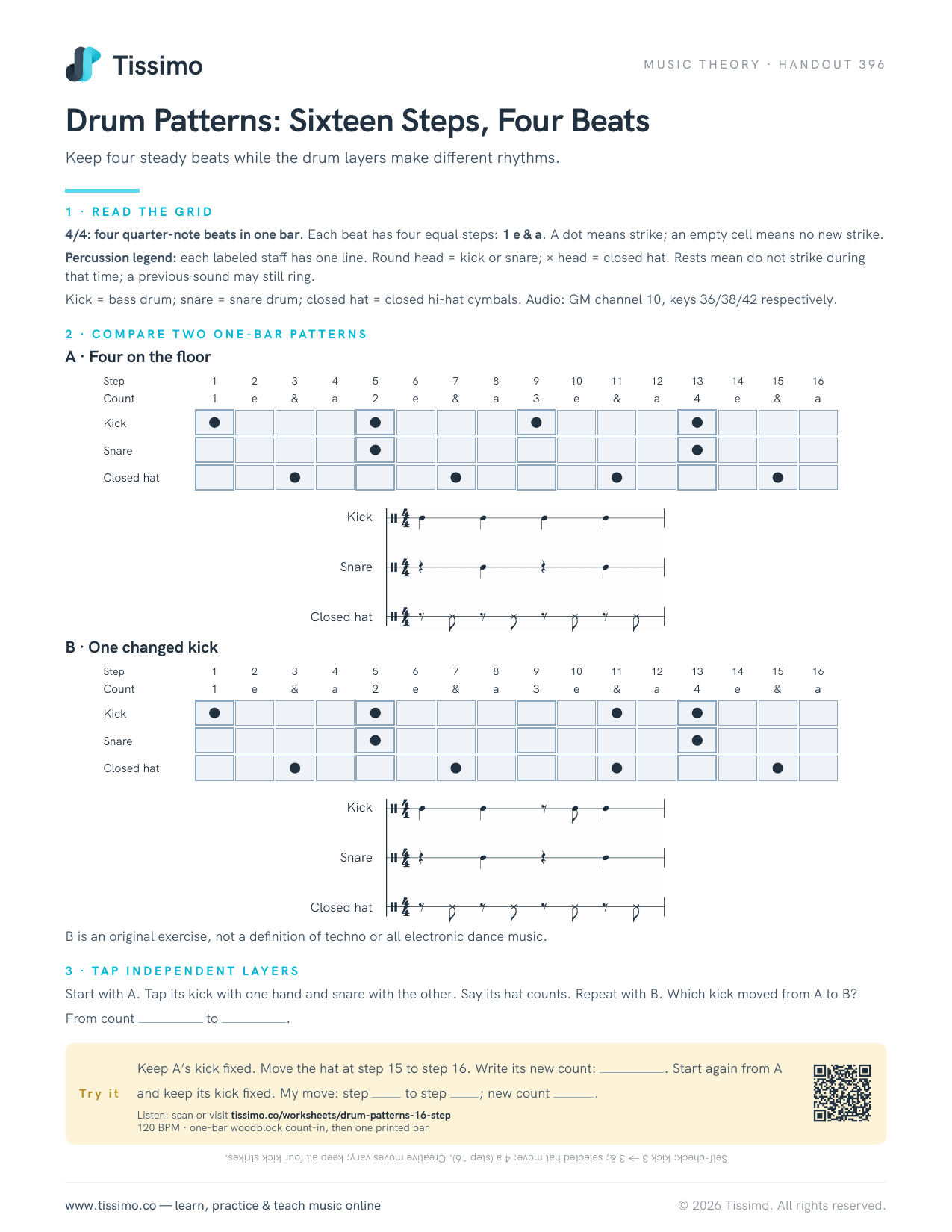 Drum Patterns: Sixteen Steps, Four BeatsKeep four steady beats while the drum layers make different rhythms.
Comments