Notation & Symbols
Solo
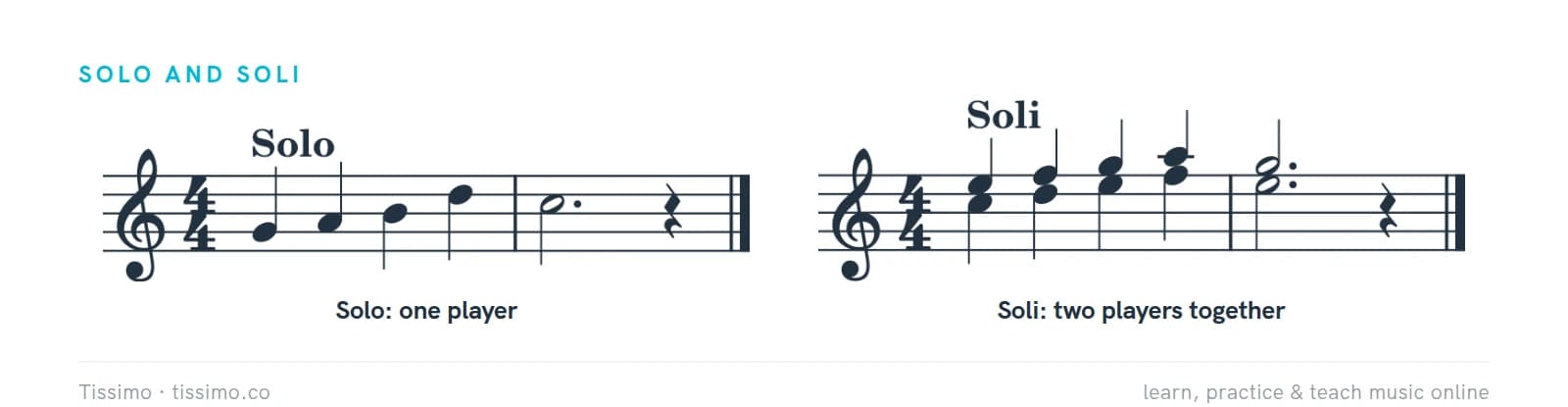
A solo is music performed by one player or singer, or a passage in which one performer stands out from the group. Written over a part, Solo marks a passage for one player instead of the whole section.
Solo is Italian for "alone". A solo is music performed by one player or singer, or a passage in which one performer stands out from the rest of the group. The performer is the soloist.
A piece for one, or one in front
The word covers two situations. A piece can be a solo in the full sense, for one instrument or voice with nobody else, such as an unaccompanied violin partita. More often a solo is accompanied: the solo part of a concerto is played with an orchestra, and a singer's solo in a song has a piano or a band behind it. Either way, the soloist leads, and the others support or stop.
Solo as a marking in a part
Over a passage in an orchestral or band part, Solo has a practical meaning. In a section part, such as the first violins, it tells one player, usually the principal, to play the passage alone; the others rest until tutti, "all", brings them back in. In a part for a single player, such as the first oboe, Solo usually marks a featured melody that should be heard clearly while the others accompany or stay silent.
Soli
Soli is the Italian plural. Over a passage it asks a small group to play together as featured players, often in harmony. In big-band arrangements a soli is a whole section, very often the saxophones, playing a harmonized melody as if with one voice.
Improvised solos and cadenzas
In jazz a solo is usually improvised: one player makes up a new melody over the tune's chord progression while the rhythm section provides the accompaniment. In a concerto, the soloist's moment completely alone is the cadenza, where the orchestra stops.
Solo does not mean soft or unaccompanied
A solo can be loud or quiet, so play the printed dynamic. It does not have to be unaccompanied either: most solos have some accompaniment. A concert given by one performer, often with a pianist, is called a recital.
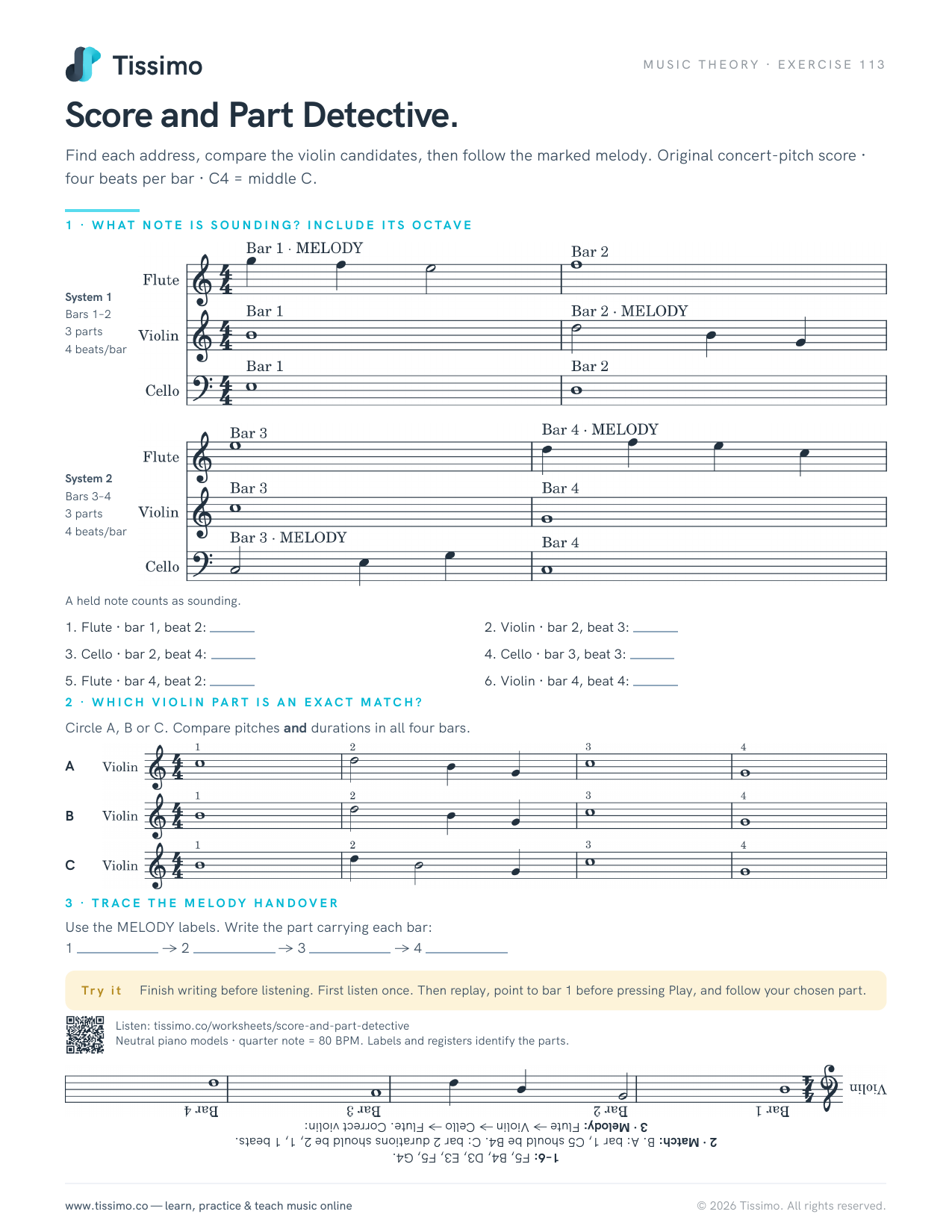
To practice finding who plays where in a score and its parts, try Score and Part Detective.
Common questions
What does soli mean in music?
Soli is the Italian plural of solo. It marks a passage for a small featured group playing together, such as a big-band saxophone section playing a harmonized melody.
What is the opposite of solo in music?
Tutti, Italian for "all". In a part, Solo means one player and Tutti means that everyone comes back in.
Comments