Notation & Symbols
Tutti
Pronounced TOO-tee
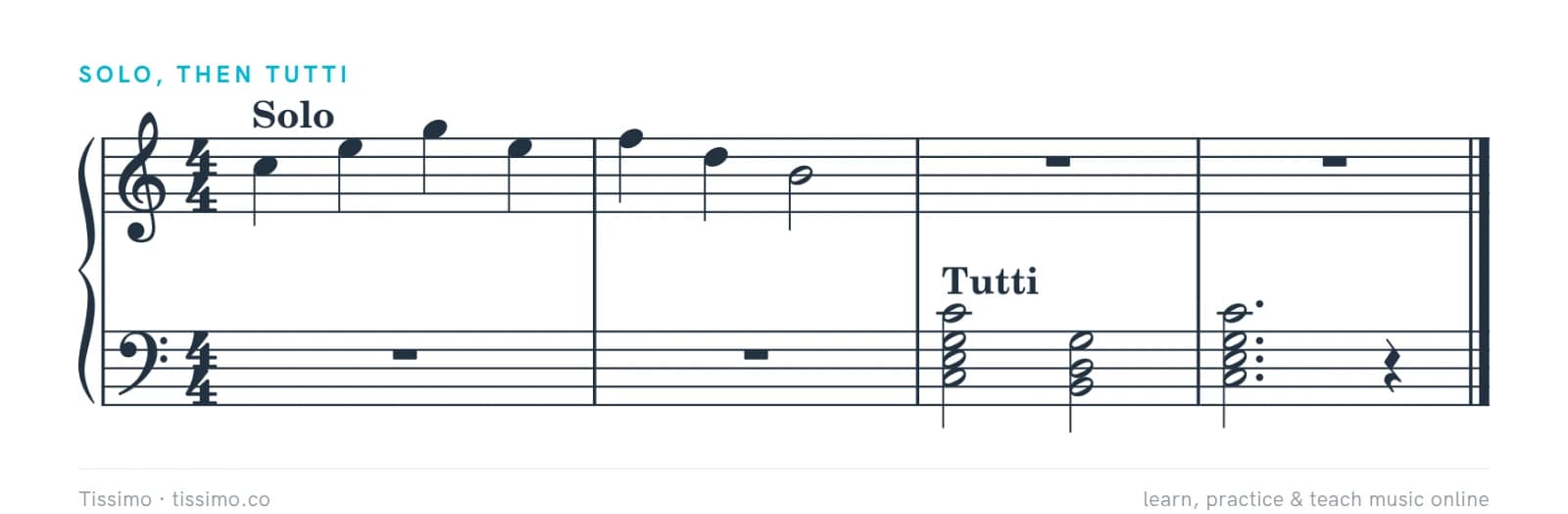
Tutti is Italian for "all". In a score or part it marks music for the whole group, most often where everyone comes back in after a solo passage.
Tutti is Italian for "all". Written in a score or a part, it marks music for all the performers, and it most often appears where the full group comes back in after someone has played alone.
After a solo
In an orchestral string section, a passage marked Solo is played by one player, usually the section's principal, while the others wait. At the word Tutti the rest of the section joins in again. Choirs use the same pair of words: a solo singer takes a phrase, and at tutti the whole section or choir sings.
Soloist and orchestra
In a concerto, tutti means the full orchestra as opposed to the soloist. Musicians also use the word as a noun: a tutti is a passage for the whole ensemble, such as the orchestral music before the soloist's first entry. In the Baroque concerto grosso, the full string group, also called the ripieno, alternates with a small group of soloists, the concertino.
On the organ
On a pipe organ, the tutti is a control, usually a piston or a toe stud, that brings on the full organ at once.
Who plays, not what or how loud
Tutti tells you who plays. It does not say that everyone plays the same notes: a tutti passage can be in harmony, and string players may still be told to split into divisi parts. A return to one shared line after divisi is marked unis., for unison. Tutti is not a dynamic either. A full ensemble often sounds louder, but play the printed dynamics, whether piano or forte.
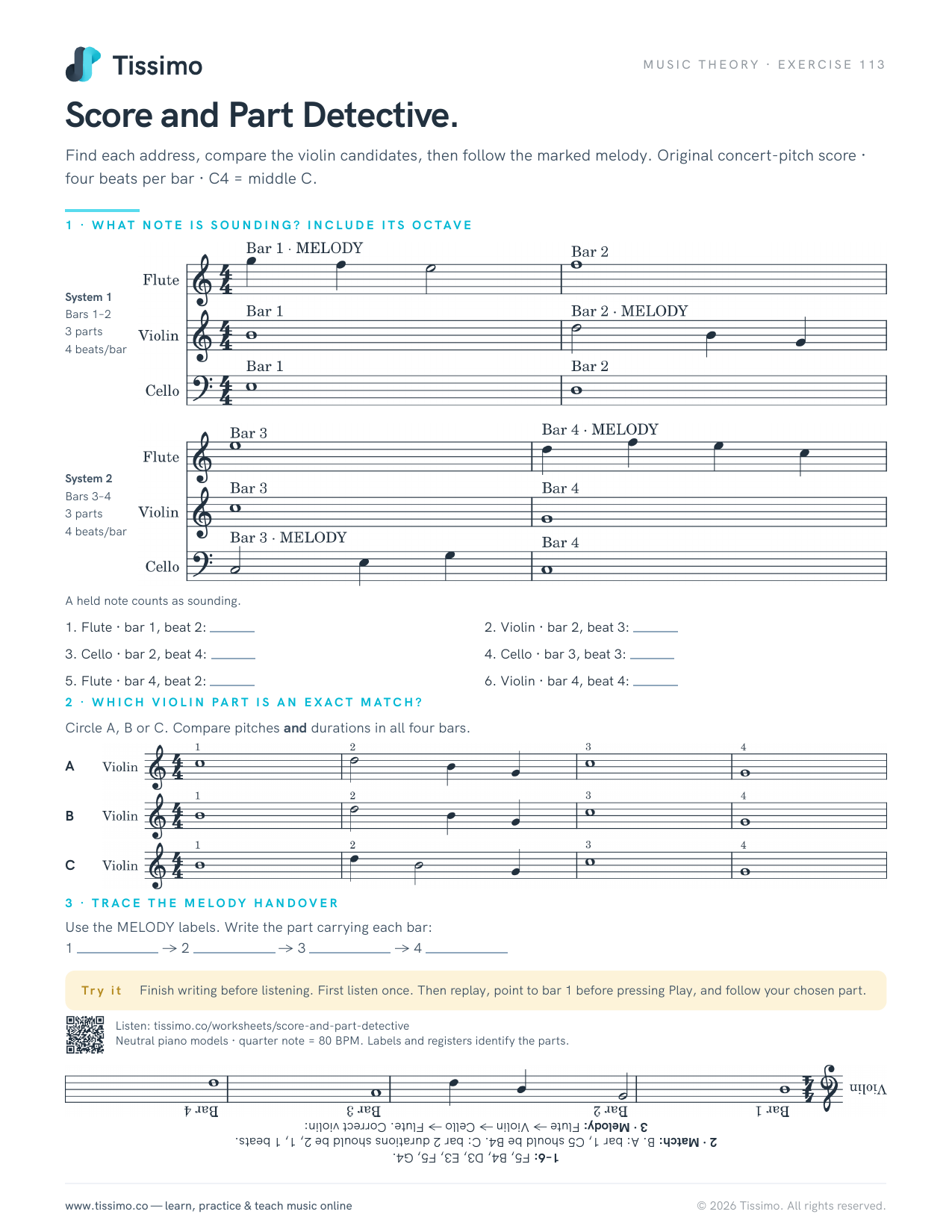
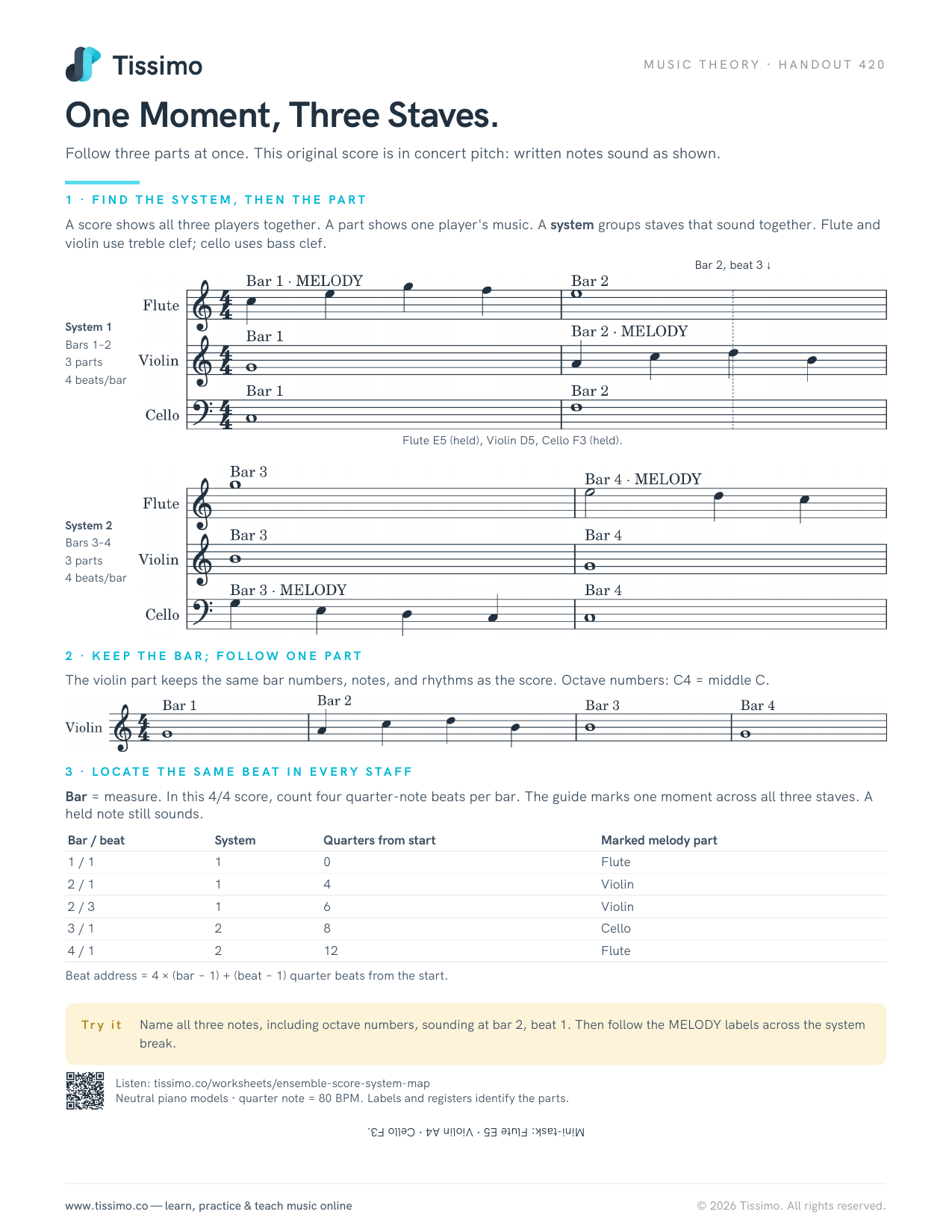
If your part has a long silence before a tutti, count the rests and listen for a cue, so that you come in together with everyone else. Practice following parts and entries in a full score with Score and Part Detective and One Moment, Three Staves.
Common questions
What does tutti mean in music?
All. It marks music for the whole group, usually where everyone comes back in after a passage marked solo.
What is the difference between tutti and unison?
Tutti says who plays: everyone. Unison says what they play: the same line. A tutti passage can be in harmony, and a unison passage can be for only part of the group.
Comments