Form & Structure
Oratorio
Pronounced or-uh-TOR-ee-oh
An oratorio is a large work for solo singers, chorus and orchestra, usually on a sacred subject, that tells or reflects on a story, normally in concert, without scenery, costumes or acting.
An oratorio is a large work for solo singers, chorus and orchestra that tells a story or reflects on a subject, most often a sacred one. It is dramatic, but it is normally performed as a concert, in a hall or a church, with no scenery, costumes or acting. If an opera is a drama you watch, an oratorio is a drama you hear: the music does all the storytelling.
What an oratorio is made of
Oratorios use the same building blocks as Baroque opera:
- Recitatives carry the story and the dialogue. Some oratorios, like Bach's Passions, give the story to a narrator.
- Arias stop the action so that a character, or the listener, can reflect.
- Choruses usually have a larger part than in most operas. The choir can play a crowd, comment on what has happened or sing praise.
- The orchestra accompanies and plays instrumental movements, such as an opening overture.
Where the name comes from
Oratorio is Italian for "oratory," a prayer hall. The genre grew out of religious plays given at the Oratory of St. Philip Neri in Rome in the mid-16th century, and the musical form took shape around 1600. Emilio de' Cavalieri's Rappresentazione di Anima e di Corpo (The Representation of Soul and Body) is often named as the first oratorio, although it was performed in costume. Carissimi, Alessandro Scarlatti and Schütz followed in the 17th century.
Famous oratorios
- Handel, Messiah: first performed in Dublin in April 1742, and probably the most popular oratorio of all. Its text, compiled from the Bible by Charles Jennens, is a series of reflective scenes rather than an acted-out plot, which makes it unusual among Handel's many oratorios.
- Bach, Christmas Oratorio: six cantatas written for six days of the Christmas season of 1734-35.
- Haydn, The Creation.
- Mendelssohn, Elijah, in which the chorus sings the part of the people.
- Not every oratorio is sacred: Handel's Semele and Tippett's A Child of Our Time are oratorios on other subjects.
Oratorio, opera and cantata
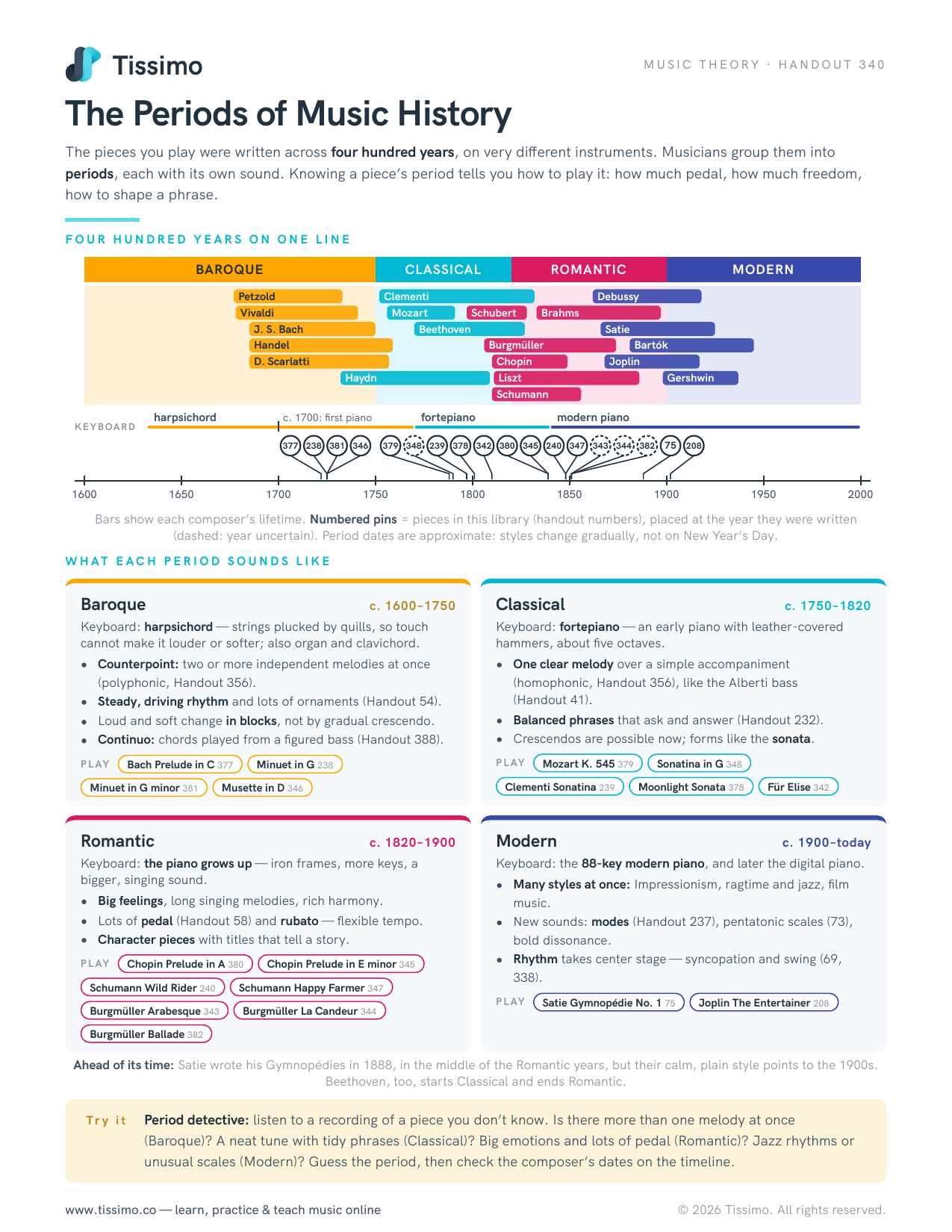
An opera is staged; an oratorio normally is not. A cantata is usually shorter and, in the Baroque era, often written for a single church service. The borders blur: some 20th-century choral works could be called either an oratorio or a cantata. To see where the Baroque, Classical and Romantic eras of these works fall, use The Periods of Music History.
Common questions
What is the difference between an oratorio and an opera?
Both use recitatives, arias, choruses and an orchestra, and both can tell a story. An opera is staged, with scenery, costumes and acting. An oratorio is normally performed as a concert, usually on a sacred subject, and the chorus often has a larger role.
Is Handel's Messiah an oratorio?
Yes. It is an English oratorio, first performed in Dublin in 1742. Unlike most of Handel's oratorios, it does not act out a plot with named characters; its words, compiled from the Bible by Charles Jennens, reflect on prophecy, the life of Christ and redemption.
Comments