Form & Structure
Chorale
Pronounced kuh-RAL
A chorale is a hymn tune of the German Lutheran church, sung by the congregation. The word also names a four-part setting of such a tune, like the hundreds of chorales harmonized by J. S. Bach.
A chorale is a hymn of the German Lutheran church: a plain, singable tune with rhyming verses, made for the whole congregation to sing. Martin Luther wanted ordinary churchgoers to take part in the service, so he and his followers wrote German words to tunes that were new or adapted from older melodies, including plainchant. Luther's "Ein feste Burg ist unser Gott" ("A Mighty Fortress Is Our God") is one of the most famous.
How a chorale looks on the page
Today "chorale" usually means a four-part setting of such a tune, as in the example: soprano and alto on the treble staff, tenor and bass on the bass staff. The melody is in the soprano. Early on it was in the tenor; from the late 16th century it moved to the top voice, which became the norm in the 17th. The other three voices complete the four-part harmony, mostly one chord to a melody note, so the texture is homophonic. A fermata marks the end of each line of the hymn text, where the singers breathe.
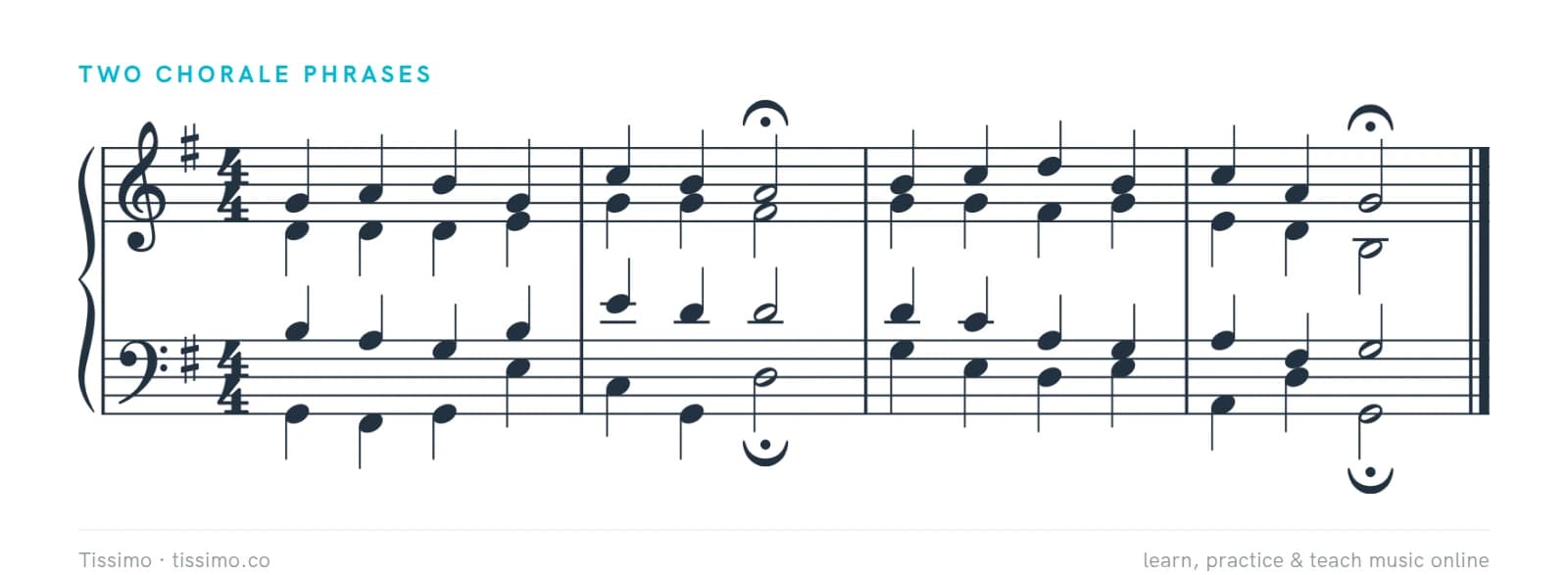
The tune is strophic: every verse is sung to the same music. Within a verse, many chorales follow bar form (AAB): an opening section sung twice, then a different closing section.
Bach's chorales
Bach harmonized hundreds of chorales. He placed them at the end of his cantatas and within his Passions, where listeners heard familiar tunes in new harmony. Musicians have studied these settings ever since as models of voice leading and cadences. Bach himself taught harmony with chorales, and so do many harmony courses today: try Four-part harmony and Harmonize a melody.
Chorales for organ
A chorale prelude is an organ piece built on a chorale melody, once played before the congregation sang it. Bach's are the best known, and Brahms and Reger wrote them too. That is why chorales belong to the organ repertoire as much as to the choir's.
Chorale or choral?
Choral (with no final e) is an adjective: anything for a choir. Chorale is the hymn or its setting. In the United States, "Chorale" is also used in the names of choirs. And the four-part chorale style described in four-part harmony is named after these hymns.
Common questions
What is the difference between a chorale and a hymn?
A chorale is a hymn, specifically a hymn of the German Lutheran tradition. In music theory the word usually means a four-part setting of such a hymn, such as Bach's.
Did Bach write the chorale melodies?
Mostly not. He harmonized hundreds of existing Lutheran hymn tunes, many of them written a century or more before his time, and composed only a small number of melodies of his own.
Practice it: free worksheets
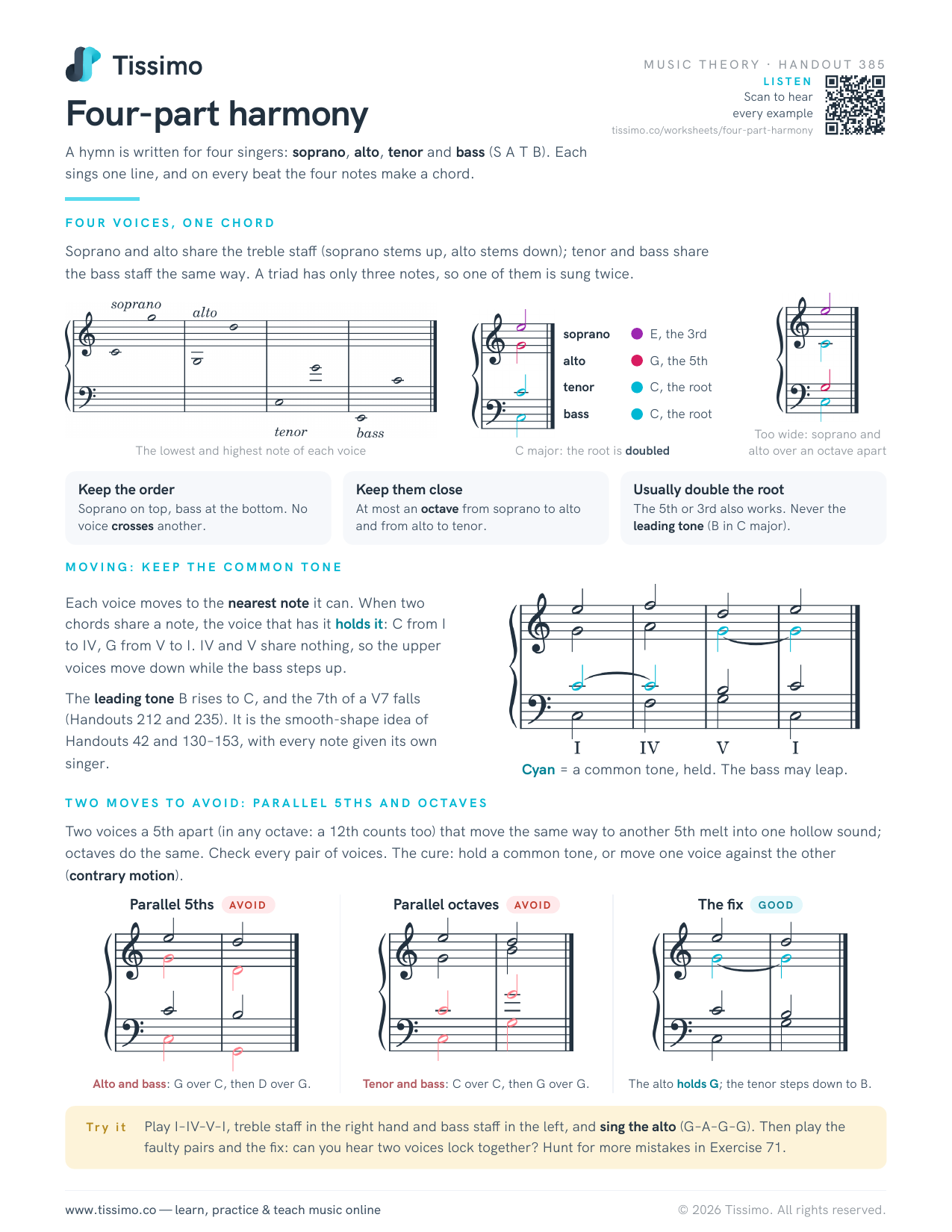 Four-part harmonyA hymn is written for four singers: soprano, alto, tenor and bass (S A T B). Each sings one line, and on every beat the four notes make a chord.
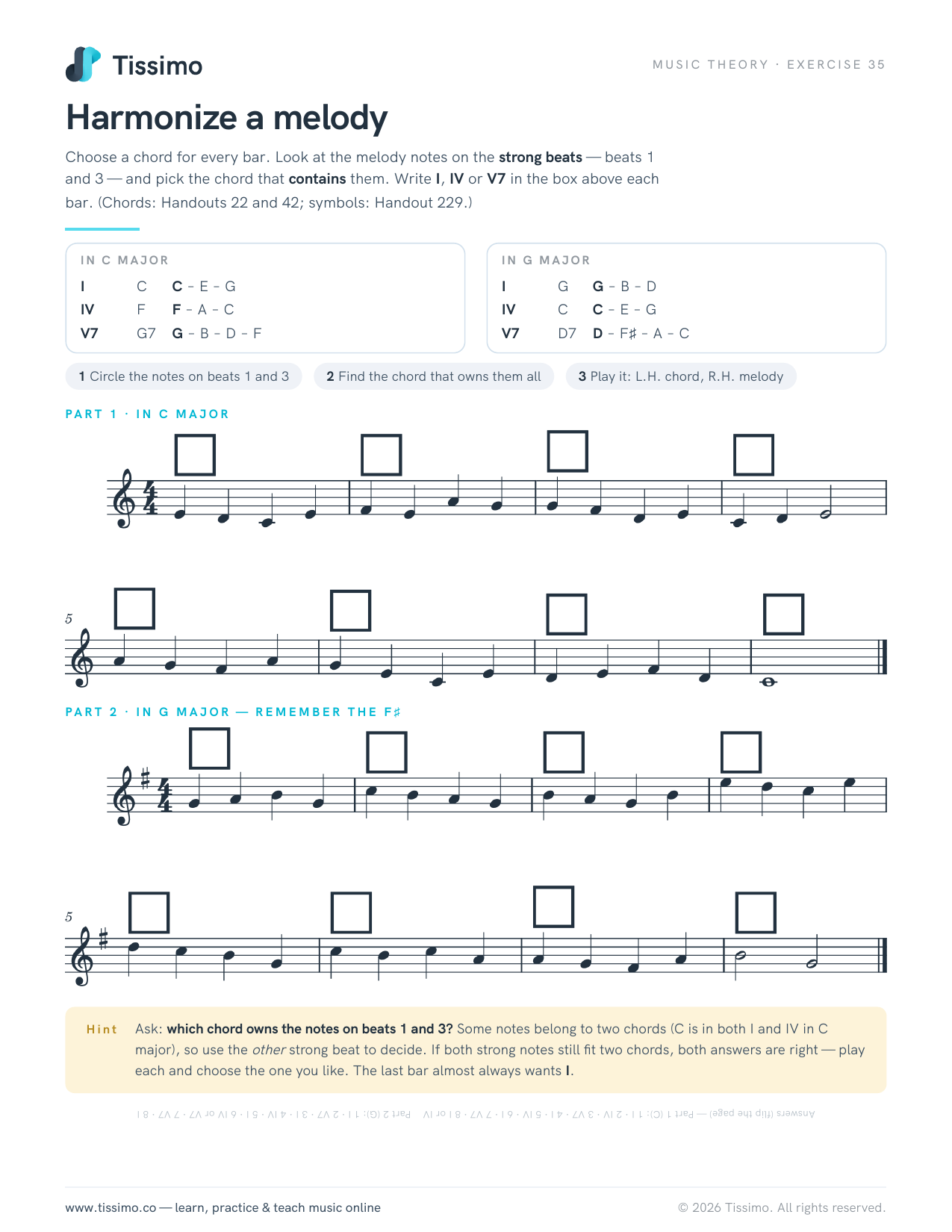 Harmonize a melodyChoose a chord for every bar. Look at the melody notes on the strong beats — beats 1 and 3 — and pick the chord that contains them. Write I, IV or V7 in the box above each bar. (Chords: Handouts 22 and 42; symbols: Handout 229; how to choose: Handout 358.) Next: Exercise 57 adds ii and vi.
Comments