Melody, Texture & Counterpoint
Basso Continuo (Continuo)
Pronounced BAH-soh kon-TEE-noo-ohWritten as b.c.
Basso continuo is the Baroque accompaniment of a bass line plus chords: a cello or bassoon plays the written bass, while a harpsichord, organ or lute improvises the harmony from it, often guided by figures.
Basso continuo, usually shortened to continuo, is the accompaniment that runs under almost all Baroque ensemble music, from about 1600 to 1750. The composer writes out only a bass line, often with small numbers, the figures, that show the harmony. The players turn that single line into a full accompaniment: one plays the bass itself, another adds the chords.
Who plays the continuo
The continuo is a part, not an instrument. "Playing the continuo" means playing from this kind of bass, and the musicians who do it are often called the continuo group:
- A chord instrument fills in the harmony: a harpsichord, an organ (often a small chamber or "continuo" organ), a lute, an archlute or a theorbo, sometimes a harp.
- A bass melody instrument plays the bass line itself: a cello, a viola da gamba, a bassoon, or a double bass or violone an octave lower.
Composers rarely said exactly which instruments to use, so performers decide. In Bach's church cantatas the continuo was typically cello, double bass and organ, often with a harpsichord too, and a bassoon joined in movements with wind instruments. Baroque opera used larger groups, with harpsichords, theorbos and cellos as the core.
How it looks on the page
In a score the continuo is a single bass staff at the bottom, labeled something like Continuo, Basso continuo or b.c., with figures above or below the notes. There are no written chords: the keyboard or lute player realizes the bass, choosing voicings, rhythms and ornaments on the spot (or writing a realization in advance). The figured bass entry shows a bass with figures next to one realization. A marking tasto solo asks the chord player to play the bass notes alone, without chords.
What it does
The continuo holds the ensemble together: it supplies the bass, the harmony and a steady pulse. It accompanies solo songs and sonatas, arias and choruses, and it is the whole accompaniment of secco recitative, where the harpsichord or organ follows the singer's speech-like rhythm. Composers gradually stopped writing continuo parts in the later 18th century, though it lasted longer in some church music.
Continuo and figured bass
The two words are easy to mix up. Figured bass is the notation, the bass line with its figures. Basso continuo is the practice and the part: the line, the instruments that play it and the harmony they improvise. Learning to realize figures was once the first step in learning harmony, together with chorale harmonization. Try Figured bass and Realize the figured bass.
Common questions
What instruments play basso continuo?
Usually a chord instrument, such as harpsichord, organ, lute or theorbo, together with a bass instrument, such as cello, viola da gamba, bassoon or double bass. The exact group varied with the place, the piece and the players available.
Is continuo the same as figured bass?
Not quite. Figured bass is the notation: a bass line with numbers. Continuo is the accompaniment played from it, and also the group of players who play it.
Practice it: free worksheets
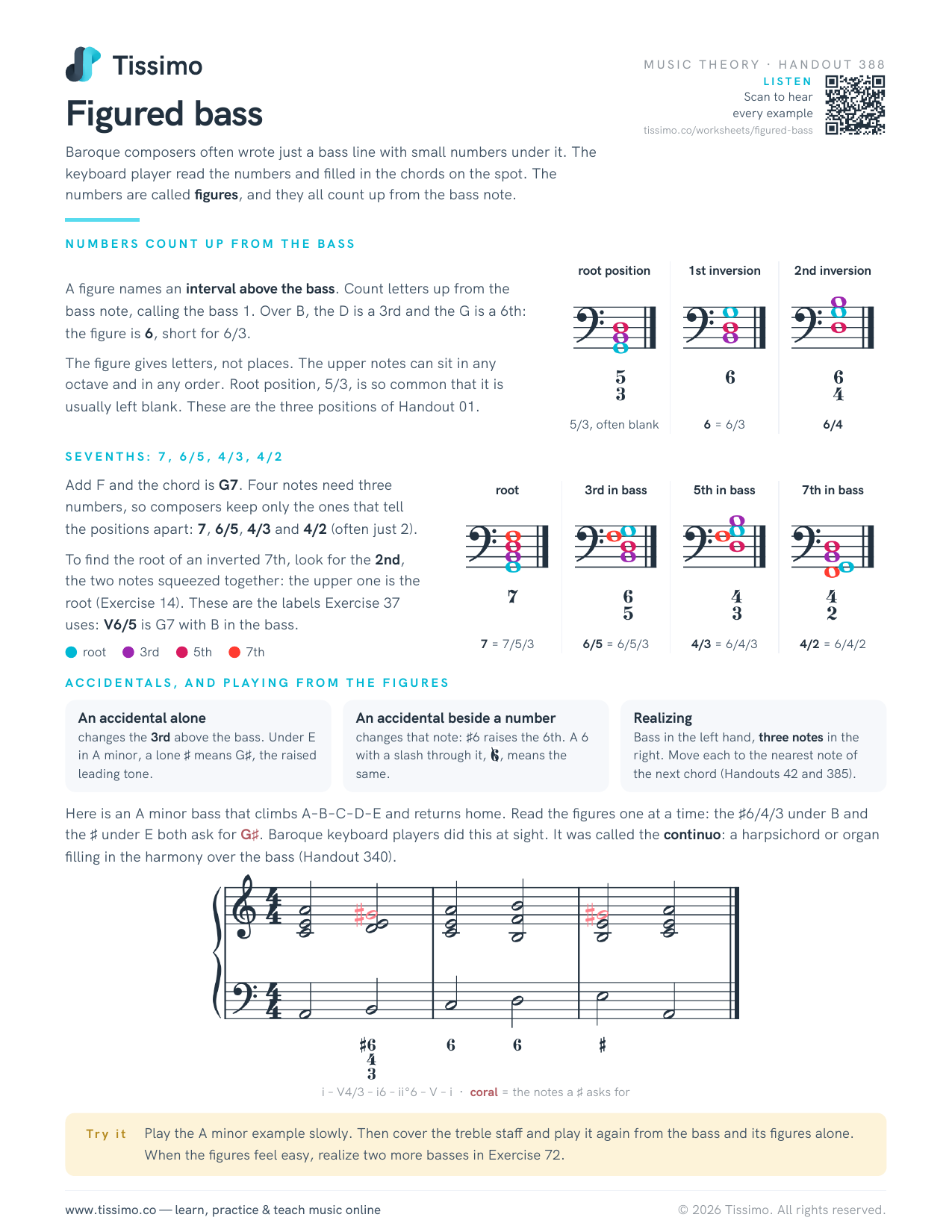 Figured bassBaroque composers often wrote just a bass line with small numbers under it. The keyboard player read the numbers and filled in the chords on the spot. The numbers are called figures, and they all count up from the bass note.
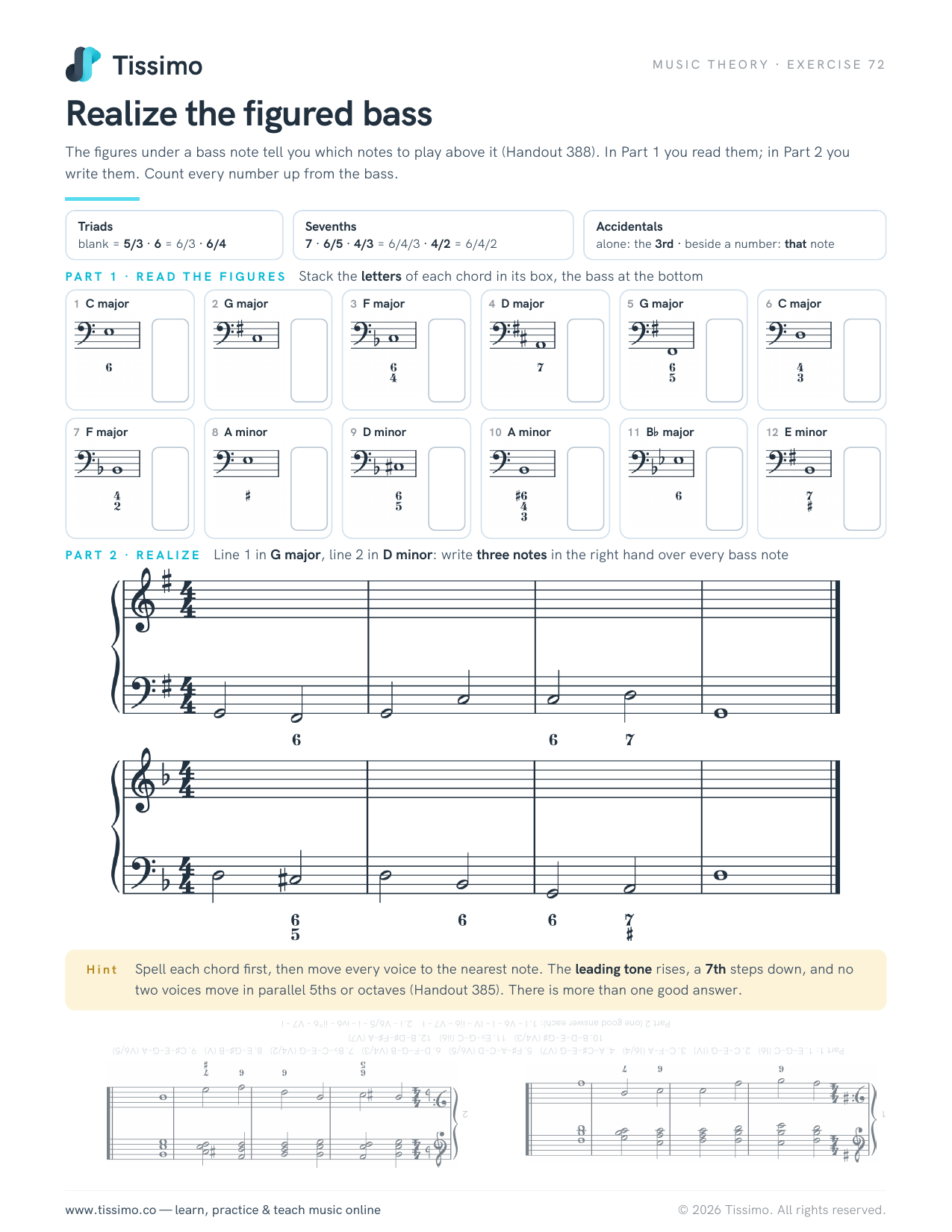 Realize the figured bassThe figures under a bass note tell you which notes to play above it (Handout 388). In Part 1 you read them; in Part 2 you write them. Count every number up from the bass.
Comments