Form & Structure
Opus (Op.)
Pronounced OH-pusWritten as Op.
Opus, abbreviated Op., is a number given to a composer's work or group of works, usually in order of publication, as in Chopin's Prelude in E minor, Op. 28 No. 4.
Opus is Latin for "work." An opus number identifies a composition, or a set of compositions published together, within a composer's output. It is written as Op. followed by a number: Op. 1, Op. 2 and so on.
Reading an opus number
When several pieces share one opus, each gets a second number:
- Op. 28 No. 4: the fourth piece in the group published as Opus 28. Chopin's 24 Preludes are all Op. 28, so his E minor Prelude is Op. 28 No. 4. The Chopin Prelude in E minor study uses this full title.
- Op. 27 No. 2: Beethoven's "Moonlight" Sonata, the second of two sonatas he published together as Opus 27.
- Op. 36 No. 1: the first of Clementi's six sonatinas, Opus 36 (Clementi's Sonatina in C).
Publication order, not composition order
Opus numbers were usually assigned by the composer or the publisher when works were published. They are a rough guide to chronology at best: a piece written early but published late can carry a high number. Some composers numbered carefully, others hardly at all, and publishers sometimes gave the same number to different works. Op. posth. (posthumous) marks a work published after the composer's death.
Catalog numbers
Many composers have no reliable opus numbers, so scholars have made catalogs instead. You will often see these letters:
- BWV: J. S. Bach (Bach-Werke-Verzeichnis), for example the Prelude in C major, BWV 846.
- K. or KV: Mozart (the Köchel catalog), for example the Sonata in C major, K. 545.
- D.: Schubert (the Deutsch catalog).
- Hob.: Haydn (the Hoboken catalog).
- RV: Vivaldi (the Ryom catalog).
- WoO: Beethoven's works without opus number (Werke ohne Opuszahl), such as Für Elise, WoO 59.
BWV Anh. marks pieces in the appendix of the Bach catalog: works that are doubtful or not by Bach, such as the Minuet in G, BWV Anh. 114.
Why it matters
Titles like "Sonata in C" or "Prelude" are not unique; a composer may have written dozens. The opus or catalog number tells your teacher, a music shop or a streaming search exactly which piece you mean.
A different meaning
Magnum opus ("great work") means a composer's or writer's masterpiece. Don't confuse the plural opera (works) with opera, the staged musical drama, which comes from the same Latin word.
Common questions
What does Op. mean in music?
Op. is short for opus, Latin for "work." It is followed by a number that identifies a composition or a set of compositions, usually in order of publication.
What does Op. 28 No. 4 mean?
The fourth piece in the set published as the composer's Opus 28. For Chopin, that is his Prelude in E minor, one of the 24 Preludes of Op. 28.
What is the difference between an opus number and a K. or BWV number?
Opus numbers were usually assigned at publication by the composer or publisher. K. (Mozart) and BWV (Bach) numbers come from catalogs compiled later by scholars.
Practice it: free worksheets
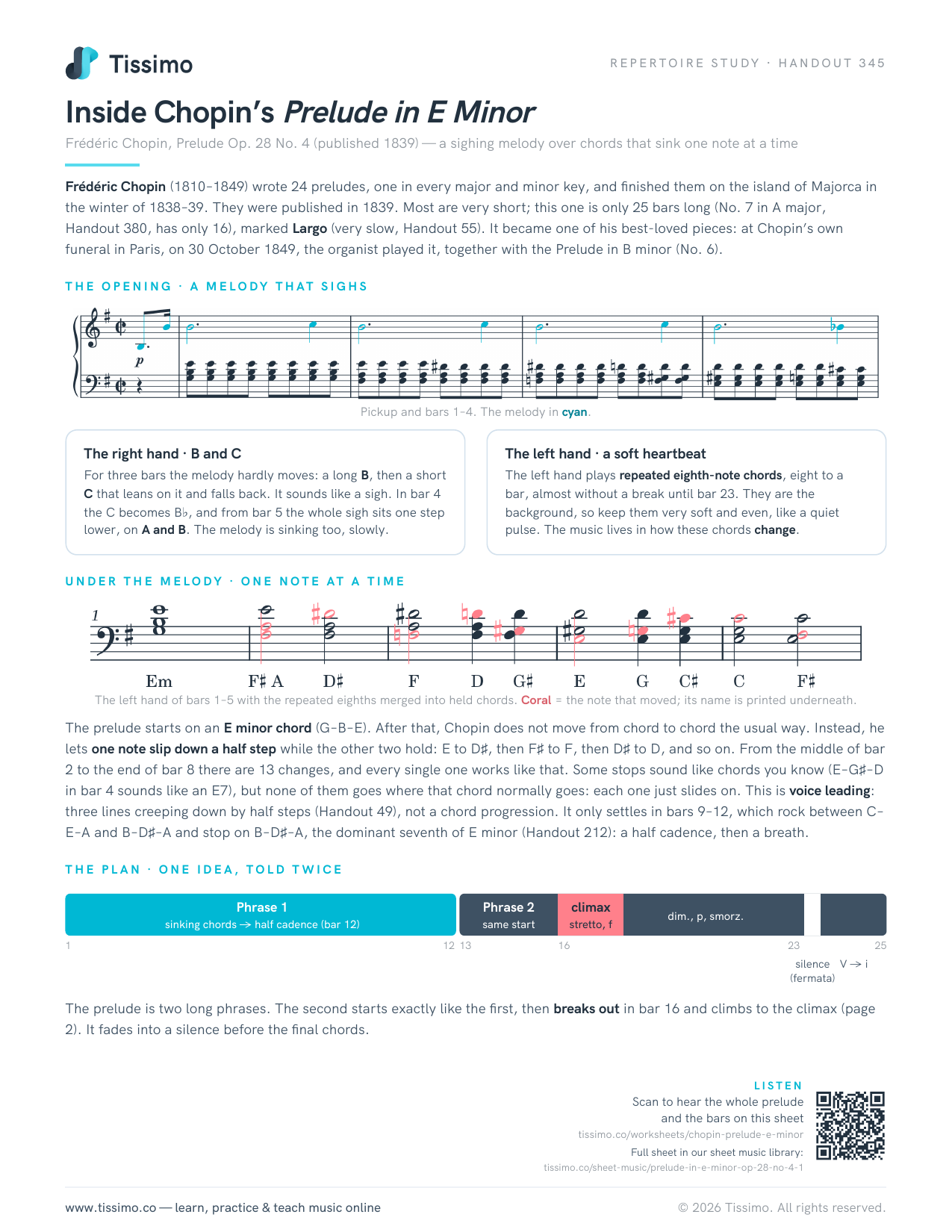 Inside Chopin’s Prelude in E MinorFrédéric Chopin, Prelude Op. 28 No. 4 (published 1839) — a sighing melody over chords that sink one note at a time
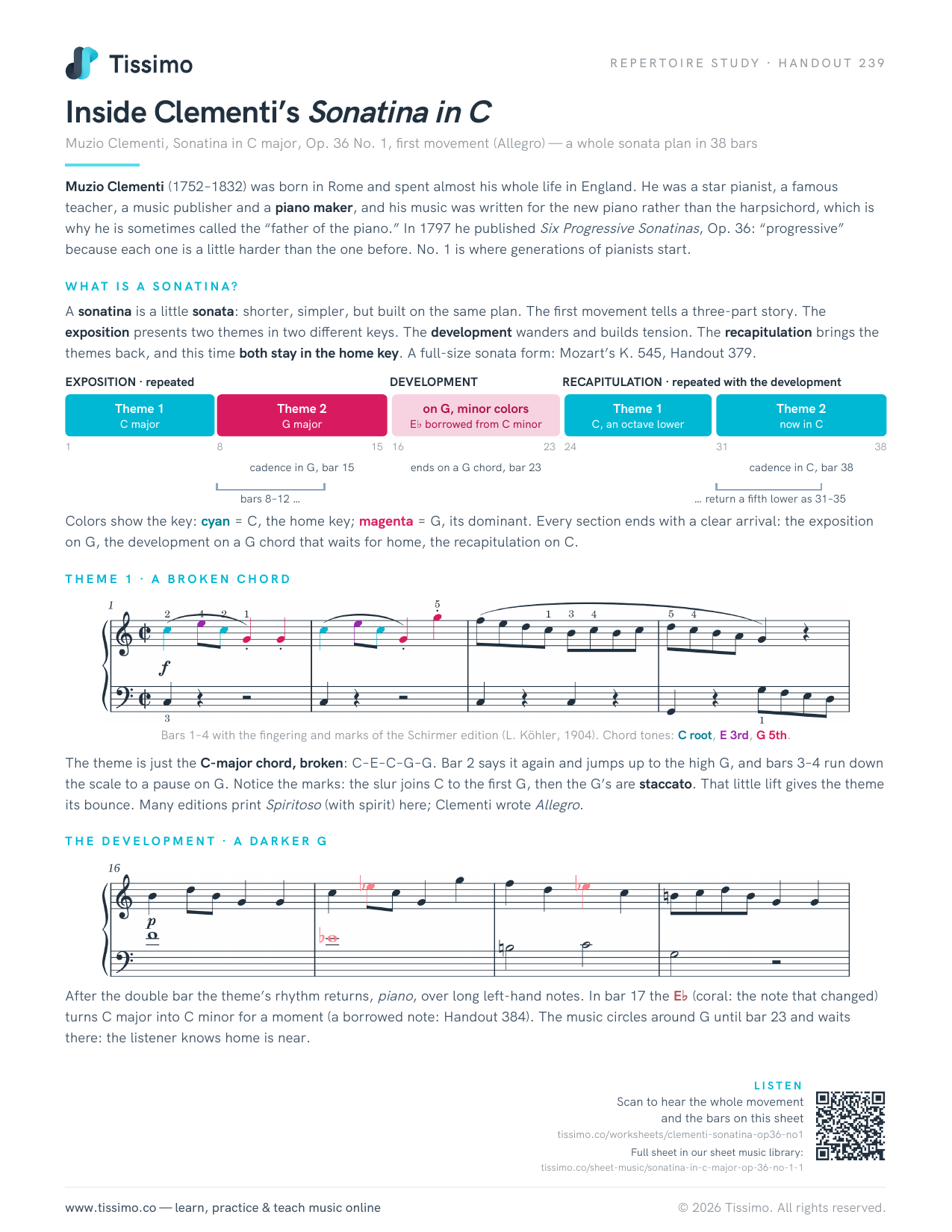 Inside Clementi’s Sonatina in CMuzio Clementi, Sonatina in C major, Op. 36 No. 1, first movement (Allegro) — a whole sonata plan in 38 bars
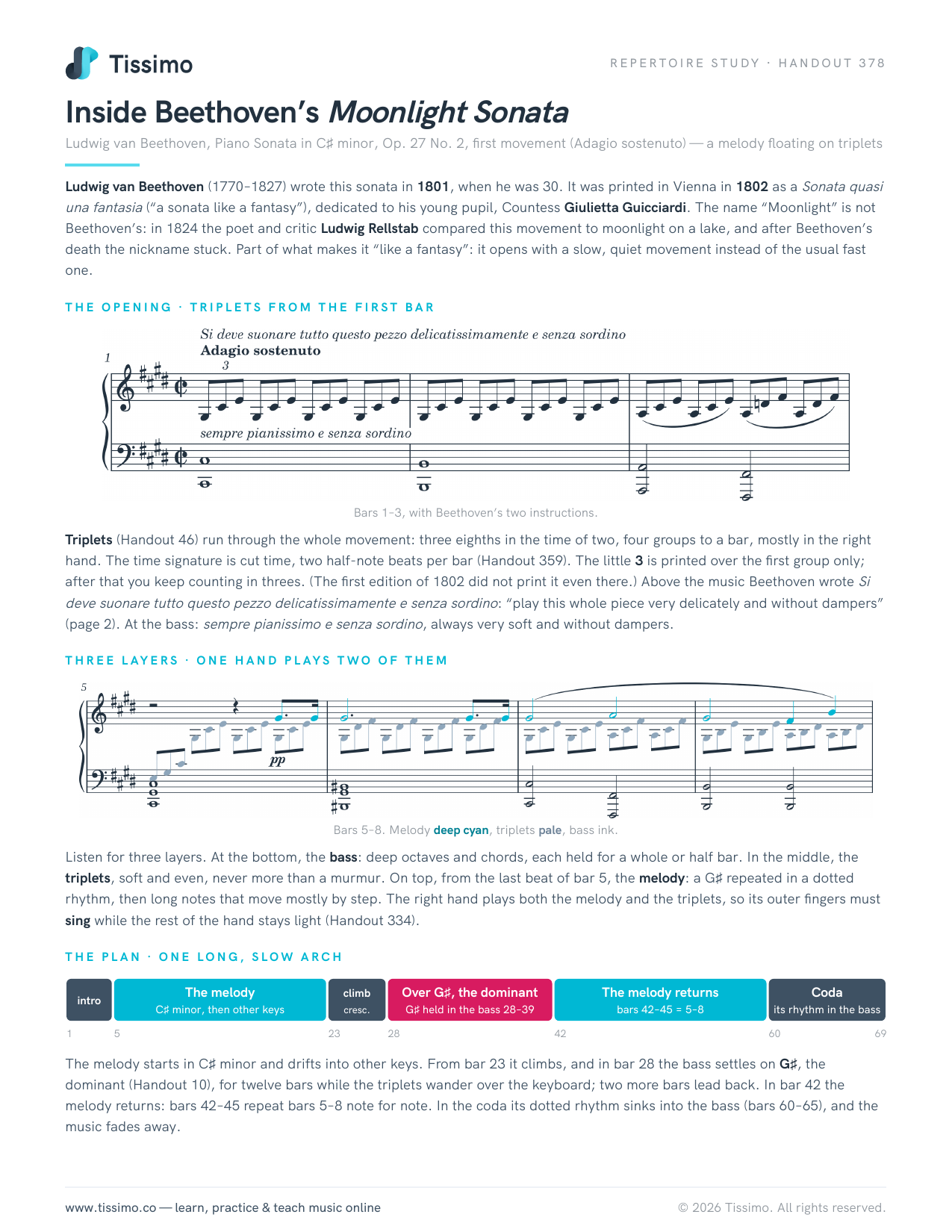 Inside Beethoven’s Moonlight SonataLudwig van Beethoven, Piano Sonata in C♯ minor, Op. 27 No. 2, first movement (Adagio sostenuto) — a melody floating on triplets
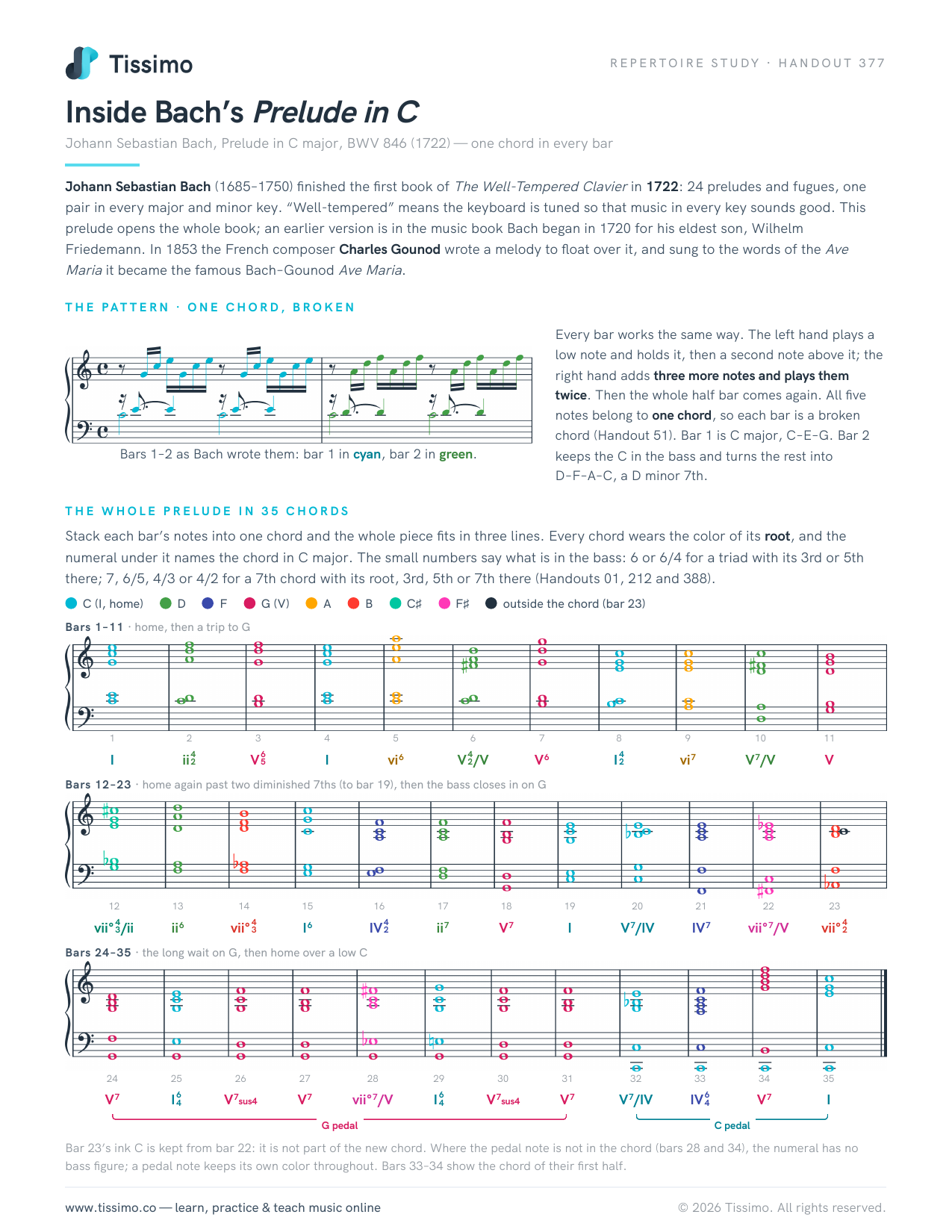 Inside Bach’s Prelude in CJohann Sebastian Bach, Prelude in C major, BWV 846 (1722) — one chord in every bar