Chords & Harmony
Resolution
Resolution is the move from a tense, unstable sound to a more stable one, such as a dissonance settling onto a consonance or the leading tone rising to the tonic. A note or chord that makes this move resolves.
In tonal music some sounds feel finished and others feel as if they need to go somewhere. Resolution is the move from the second kind to the first: a tense note, interval or chord is followed by a more stable one. Musicians say the tense sound resolves. A dissonance resolves to a consonance (or to a milder dissonance), a dominant chord resolves to the tonic, and a suspended note resolves to the chord tone below it. The dissonance entry shows three classic resolutions side by side; this page looks at what makes notes want to move, and at what happens when the expected resolution does not come.
Tendency tones
Some notes in a key lean strongly toward a neighbor. They are called tendency tones:
- The leading tone, the 7th degree (B in C major), tends to rise a half step to the tonic (C).
- The 4th degree (F in C major), when it sits in a dominant chord, tends to fall to the 3rd (E). In G7 it is the chord's seventh, and sevenths in general tend to fall by step.
- In minor, the lowered 6th degree (A♭ in C minor) tends to fall to the 5th (G).
These are tendencies, not laws. A leading tone in the middle of a falling scale, or in an inner voice, can move down instead. But when a melody stops on one of these notes, the ear waits for the next one.
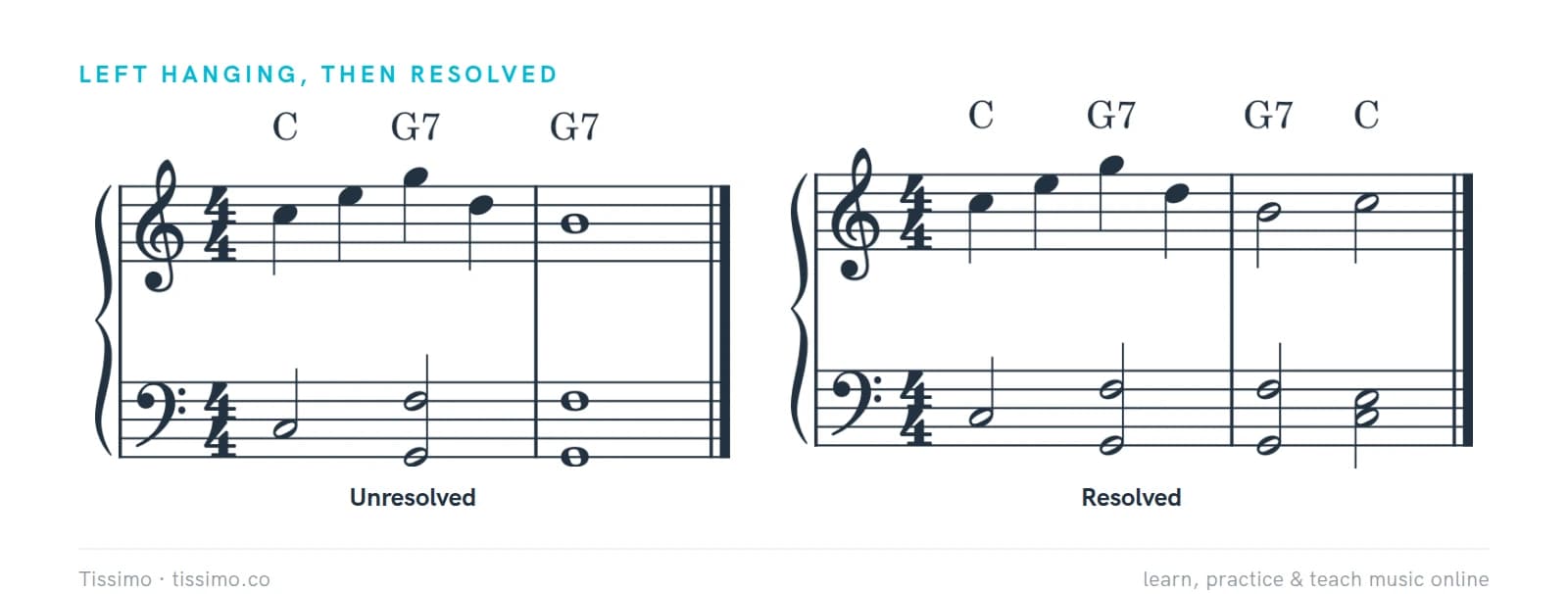
When resolution is delayed or denied
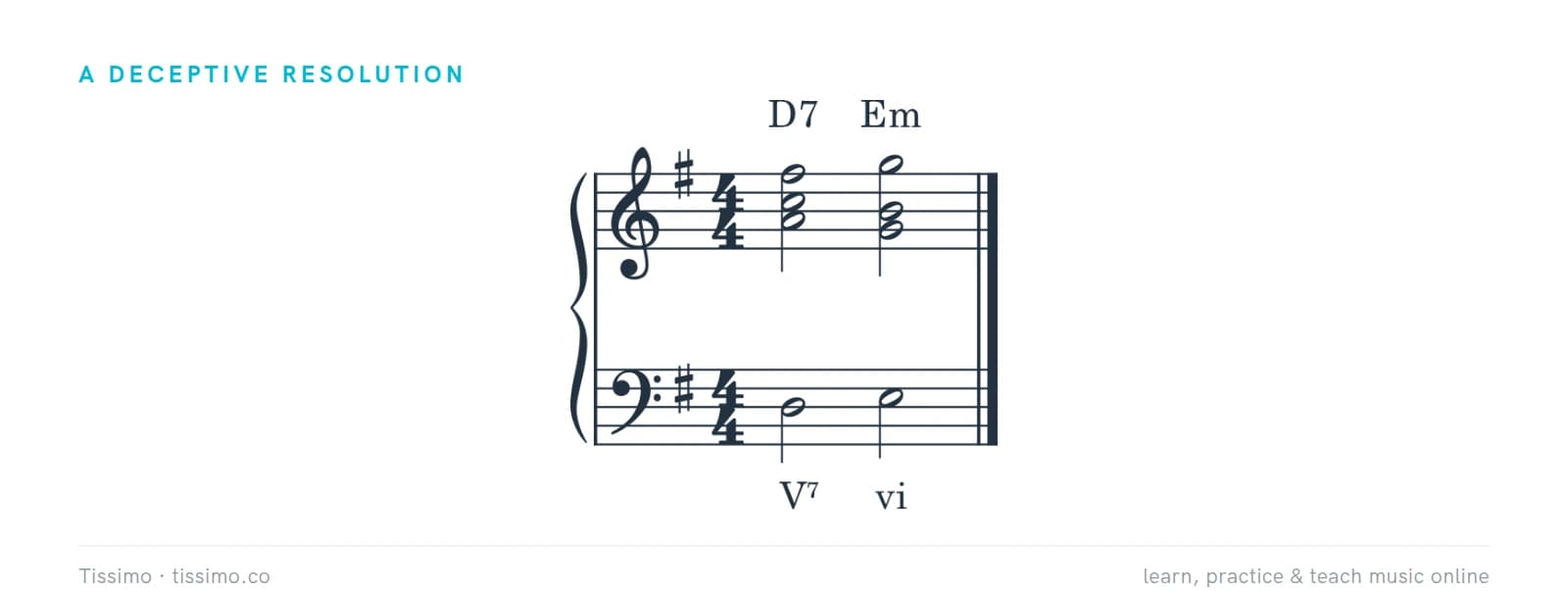
Composers play with that expectation. In a deceptive resolution, a dominant seventh chord does what it should in the upper voices (the leading tone rises, the seventh falls), but the bass rises to the 6th degree instead of falling to the tonic, so the music lands on the vi chord. In C major, G7 moves to A minor instead of C; in G major, as in the example below, D7 moves to E minor instead of G. Heard at the end of a phrase, this is a deceptive cadence.
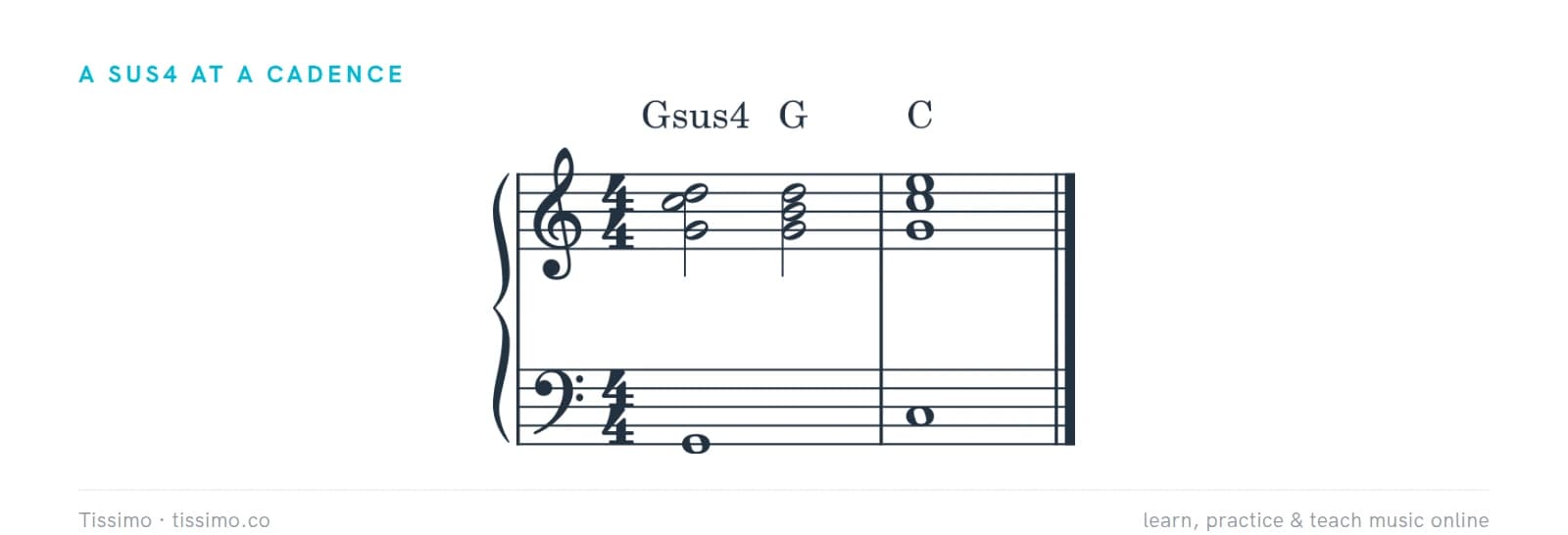
A suspension delays a resolution: a note is held over from one chord into the next, clashes, and only then steps down. Pop and rock songs often do the same thing with a sus chord at a cadence: Gsus4 (G–C–D) holds C where the chord's third should be, C falls to B to make G, and B then rises to the C of the tonic chord.
Resolution and cadence
The two words overlap but are not the same. A cadence is the end of a phrase, a point of arrival. Resolution is the move of a note or chord from tension to rest, and it can happen anywhere in a phrase. Most cadences contain resolutions, but a half cadence stops on V and leaves its tension unresolved until the next phrase.
Hear the three stages of a suspension, the preparation, the dissonance and the resolution, in Prepare, Hold, Resolve, test your ear with When Does the Held Note Resolve?, and practice sus chords with Suspended chords: sus2 and sus4.
Common questions
What does it mean for a chord to resolve?
It means the chord, or the tense notes in it, moves to a more stable chord. The clearest case is V7 to I: in G7 to C, B rises to C and F falls to E, and the tension of the dominant seventh is released on the tonic.
Does every dissonance have to resolve?
Not in every style. In Baroque and Classical harmony dissonances almost always resolve, usually by step. Jazz treats sevenths and ninths as normal chord colors, pop songs can end on a sus chord, and in atonal music dissonances no longer need to resolve at all.
Practice it: free worksheets
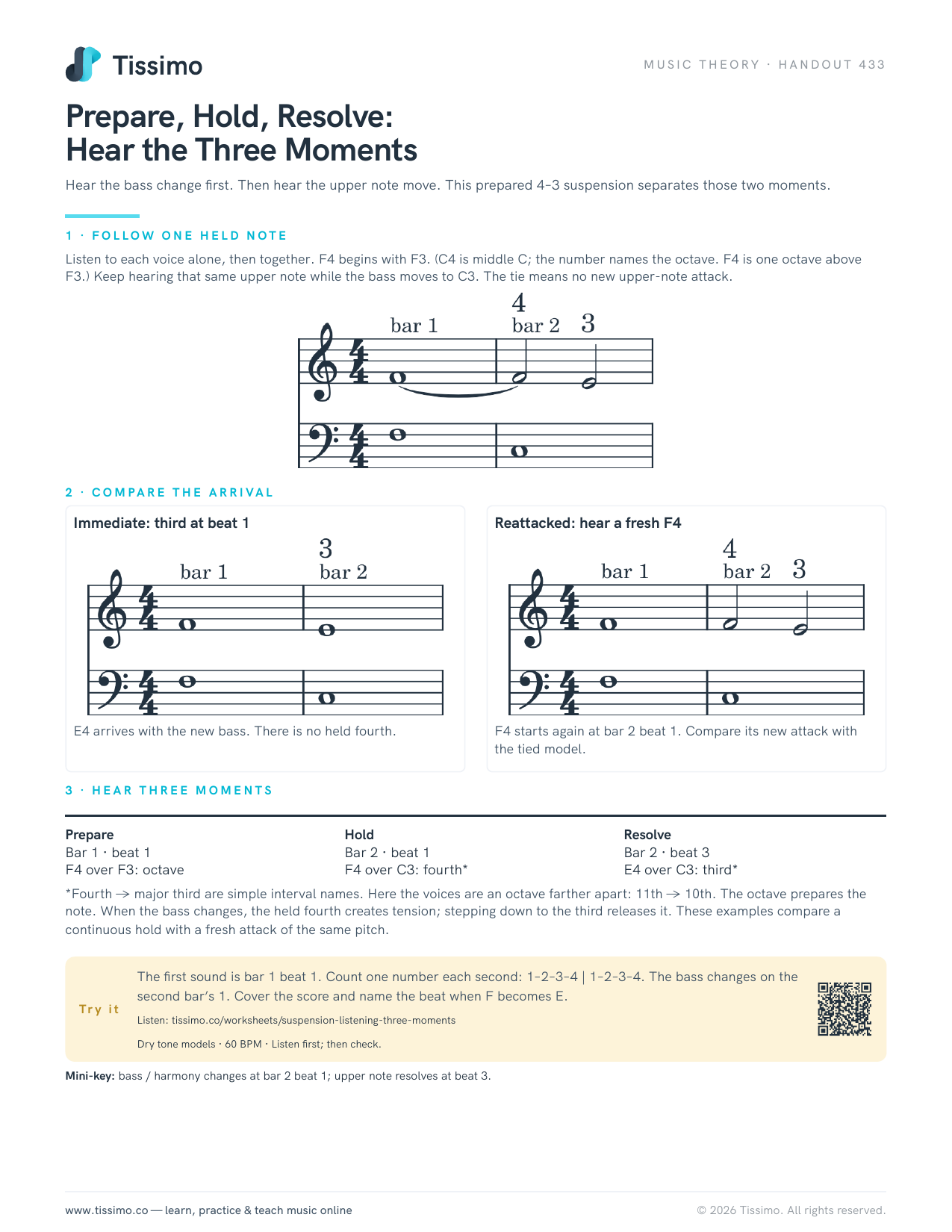 Prepare, Hold, Resolve: Hear the Three MomentsHear the bass change first. Then hear the upper note move. This prepared 4–3 suspension separates those two moments.
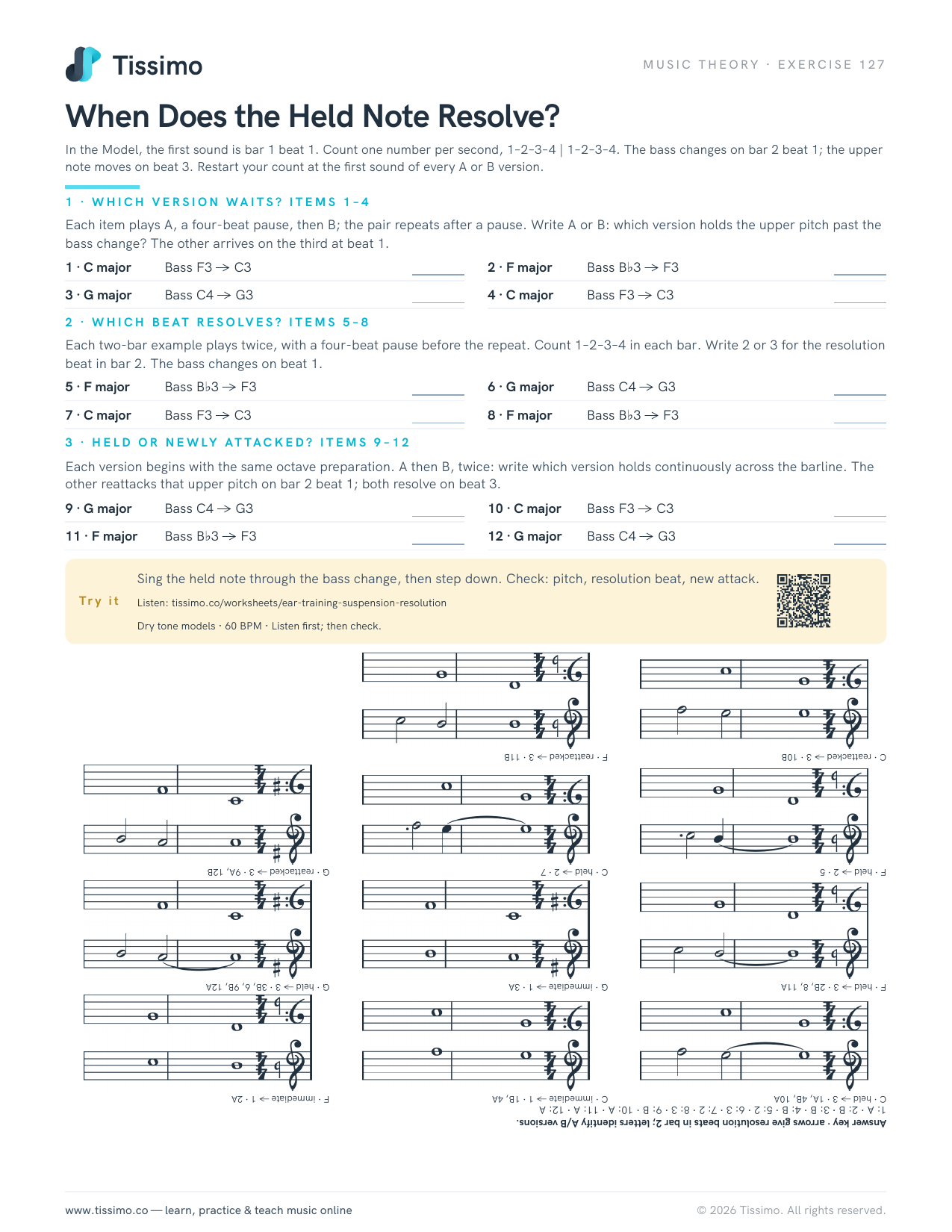 When Does the Held Note Resolve?In the Model, the first sound is bar 1 beat 1. Count one number per second, 1–2–3–4 | 1–2–3–4. The bass changes on bar 2 beat 1; the upper note moves on beat 3. Restart your count at the first sound of every A or B version.
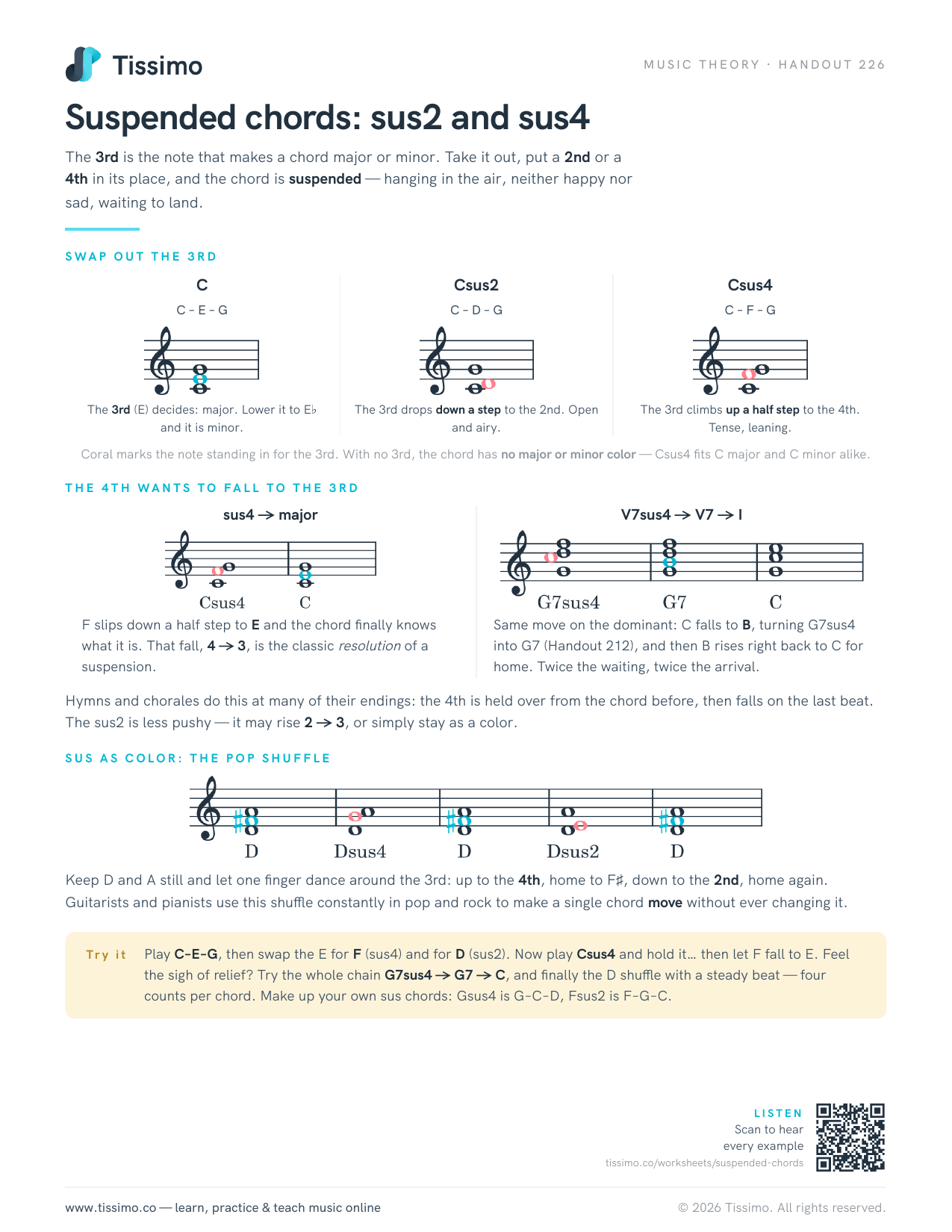 Suspended chords: sus2 and sus4The 3rd is the note that makes a chord major or minor. Take it out, put a 2nd or a 4th in its place, and the chord is suspended — hanging in the air, neither happy nor sad, waiting to land.
Comments