Instruments & Voices
Snare Drum
A snare drum is a shallow two-headed drum with wires, the snares, stretched across its bottom head. They give it the crisp, rattling sound heard in drum kits, marching bands and orchestras.
The snare drum is the bright, cracking drum in the middle of a drum kit, and the drum most percussionists learn first. Its shell is shallow, usually of wood or metal, with a head stretched over each end. Across the bottom head run the snares: a set of strands of wire, gut or metal-wound cord. When you strike the top (batter) head, the bottom head vibrates against the snares, and they add the hissing rattle that gives the drum its name. Like most drums, it has no definite pitch.
Snares on and snares off
A lever on the side of the shell, the strainer, presses the snares against the head or lifts them away. With the snares off, the drum sounds darker and more like a tom-tom. Orchestral players often release the snares while they rest, because the wires can buzz in sympathy with other instruments. A score asks for the effect with "snares off" (Italian senza corde, French sans timbre) and cancels it with "snares on".
Kinds of snare drum
- The concert snare drum is the standard snare drum of the orchestra.
- The piccolo snare has an extra-shallow shell and a brighter, tighter sound.
- The field drum of marching and military bands has a deeper shell and a fuller sound. The other name, side drum, comes from this history: the drum hung at the player's side and was struck from the side, as some marching drummers still do.
How snare music is written
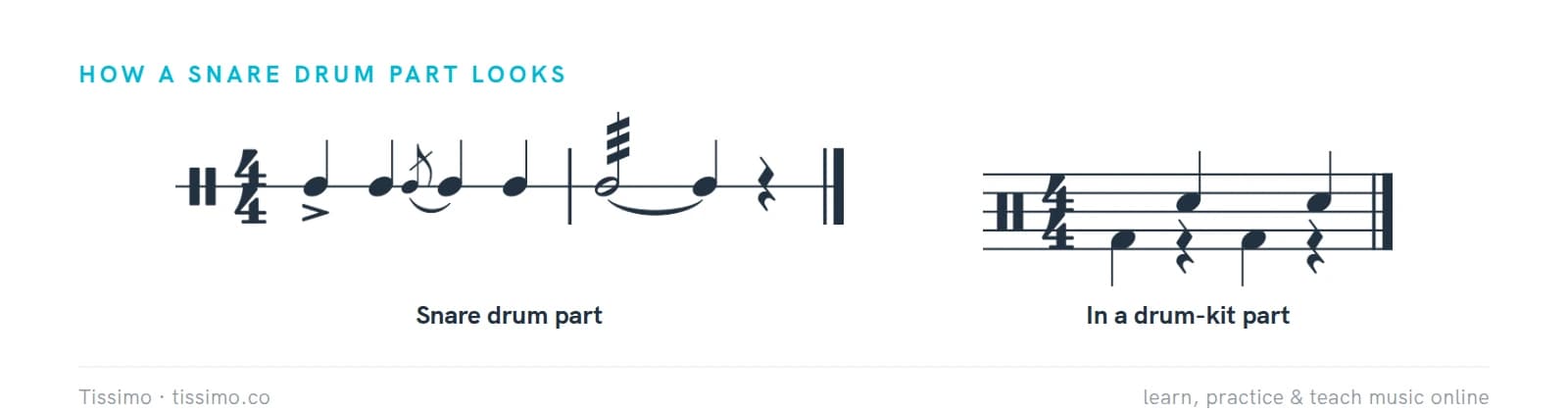
A snare part usually sits on a single line, often with a percussion clef. In a drum-kit part on a five-line staff, the snare goes in the third space. A few marks appear constantly:
- an accent (>) for a louder stroke;
- a small grace note slurred to the main note, a flam: the grace from one hand lands just before the main stroke from the other;
- three slashes through the stem (the tremolo sign), a roll: a sustained sound for the whole note value. A roll tied into the next note stops exactly on that note.
Playing it
You play with two wooden sticks, or with wire brushes in jazz and quiet music. Strike near the center of the head for a full sound; playing nearer the rim is quieter and thinner.
Snare technique is built from single strokes, double strokes (two notes from one hand, using the stick's rebound) and grace-note figures such as the flam. A closed or buzz roll blends many bounces per stroke into one smooth sound; an open roll uses exactly two strokes per hand. Practice the hand patterns in Sticking Detective, the flam in Before the Beat: Your First Flam, and both rolls in Start the Roll, Finish the Span and Two Contacts, Then Change Hands.
A common confusion
"Snare" is everyday shorthand for the whole drum, but strictly the snares are the wires underneath. If a part says "snares off", the wires stay silent and the drum sounds like a tom-tom.
Common questions
Why is it called a snare drum?
After its snares, the strands of wire or gut stretched across the bottom head. It is also called a side drum, because marching drummers carried it at their side and struck it from the side.
What is the difference between a snare drum and a tom-tom?
A tom-tom has no snares, so it gives a rounder, more boomy note. A snare drum with its snares switched off sounds much closer to a tom-tom; with the snares on, it adds a crisp rattle.
Practice it: free worksheets
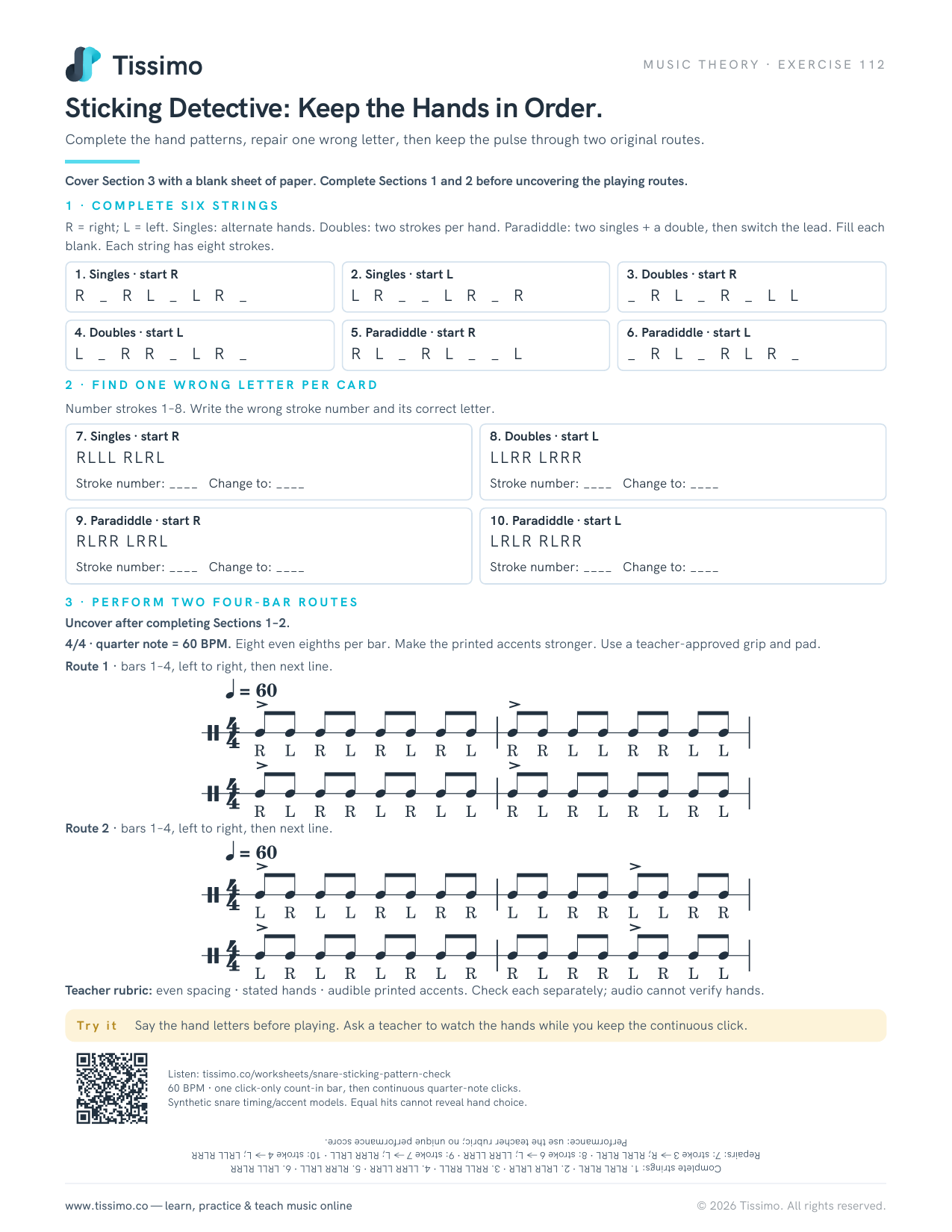 Sticking Detective: Keep the Hands in Order.Complete the hand patterns, repair one wrong letter, then keep the pulse through two original routes.
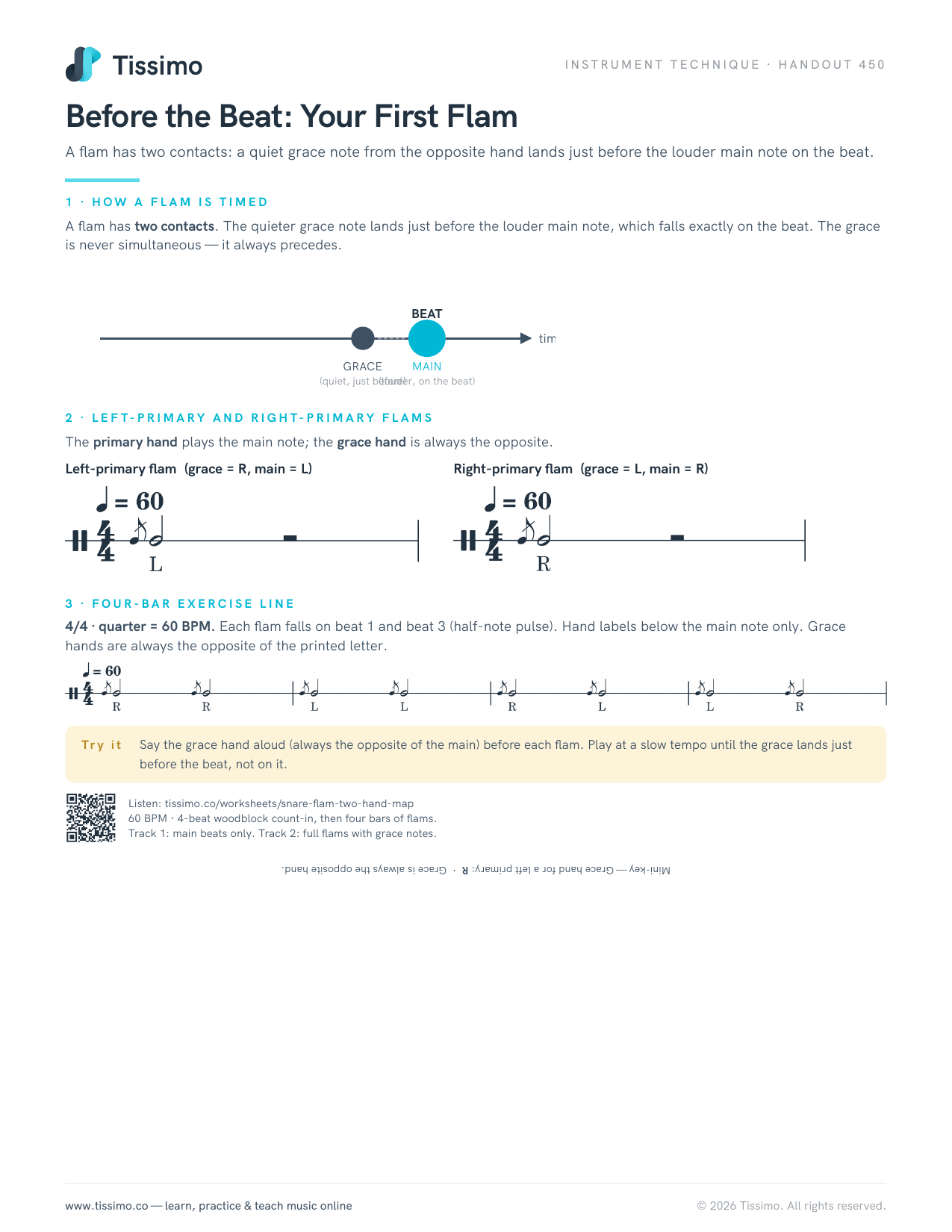 Before the Beat: Your First FlamA flam has two contacts: a quiet grace note from the opposite hand lands just before the louder main note on the beat.
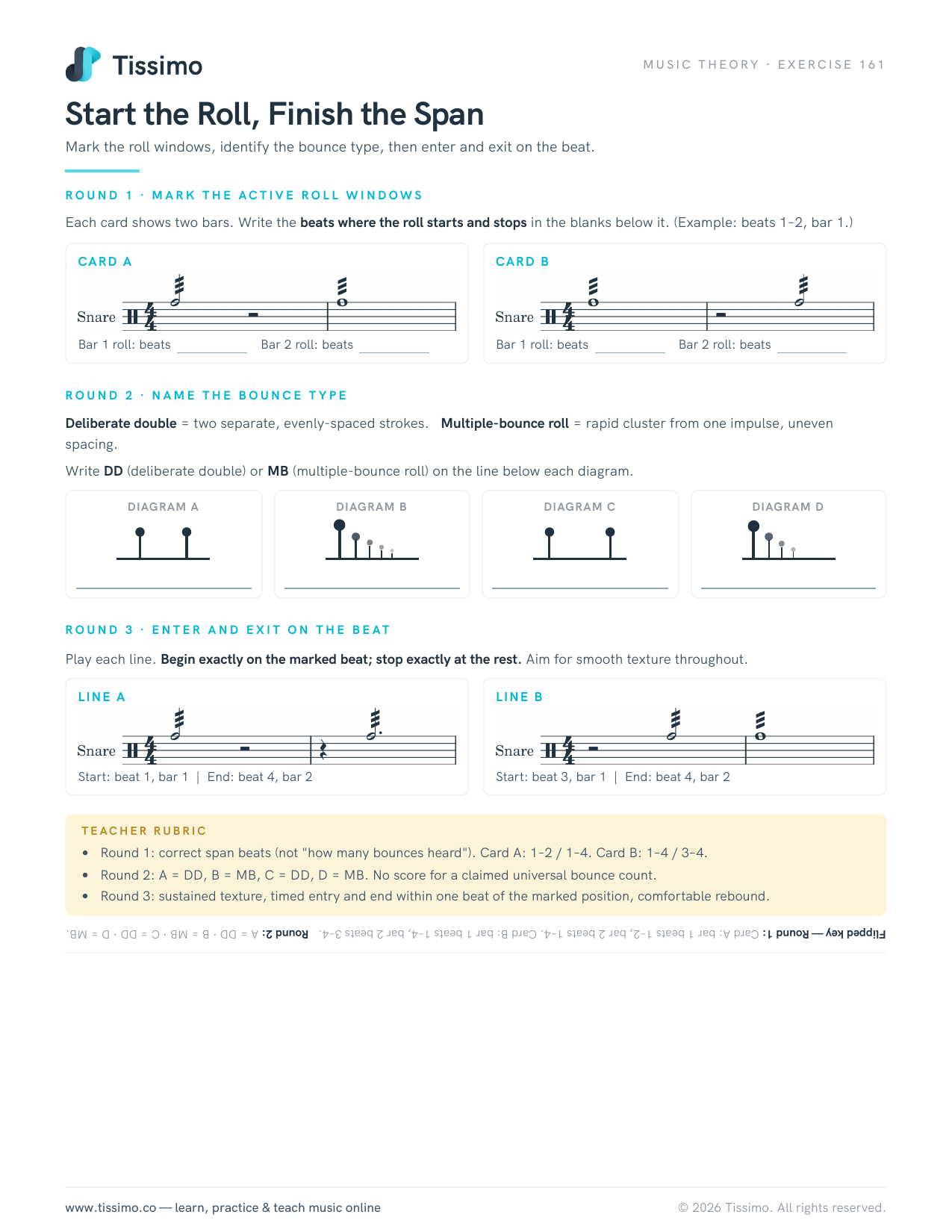 Start the Roll, Finish the SpanMark the roll windows, identify the bounce type, then enter and exit on the beat.
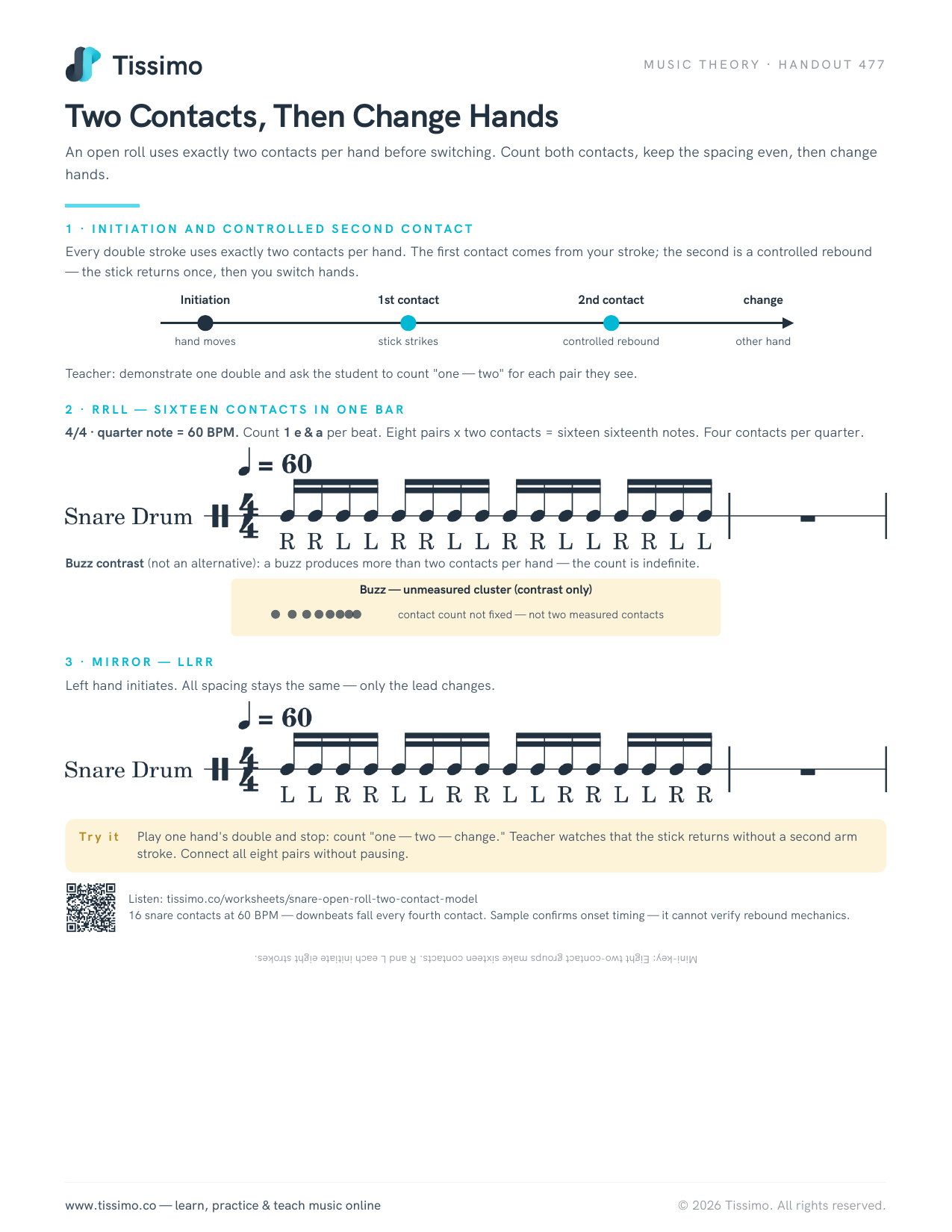 Two Contacts, Then Change HandsAn open roll uses exactly two contacts per hand before switching. Count both contacts, keep the spacing even, then change hands.
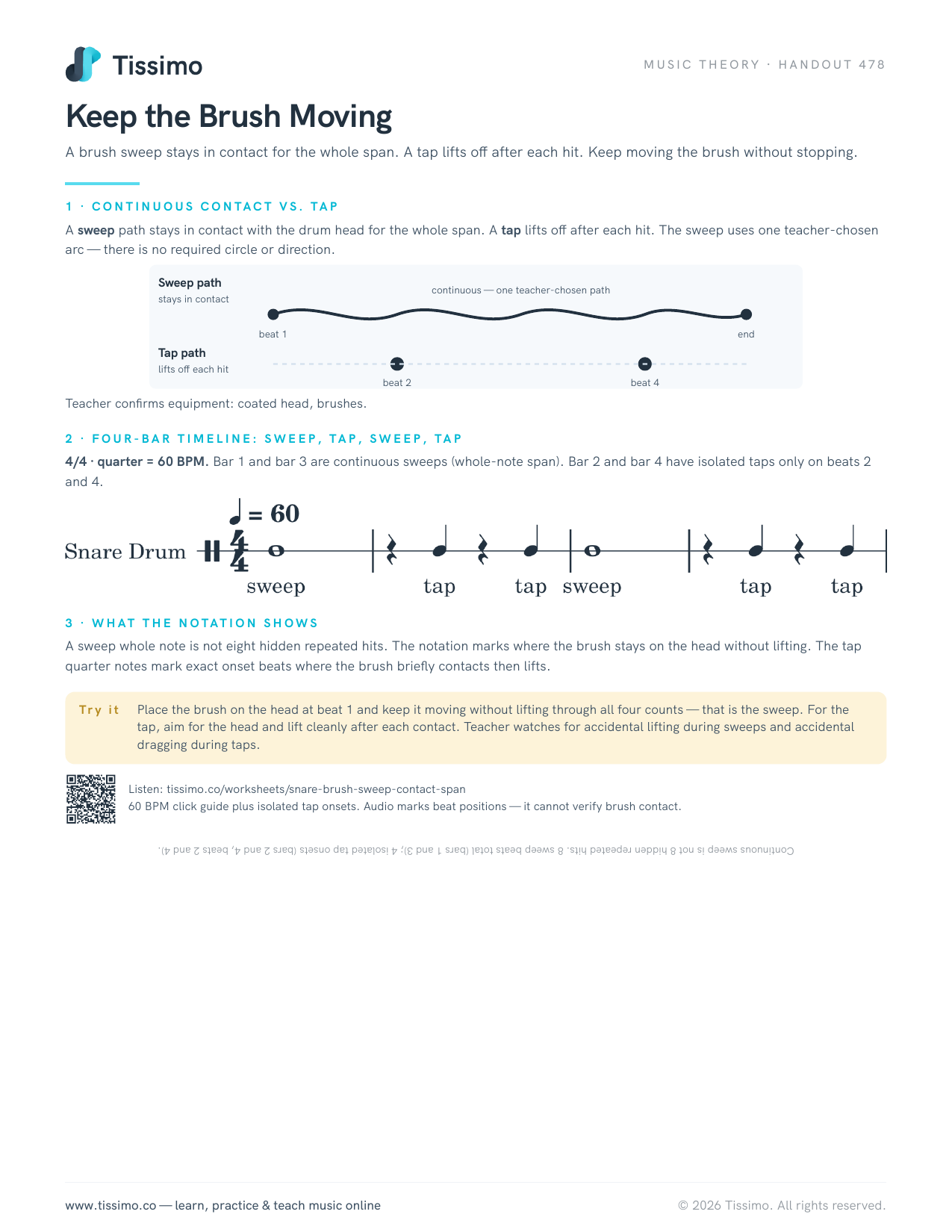 Keep the Brush MovingA brush sweep stays in contact for the whole span. A tap lifts off after each hit. Keep moving the brush without stopping.
Comments