Technique & Performance
Rudiment (Drum Rudiments)
A rudiment is one of the standard sticking patterns that drummers practice, such as the single-stroke roll, the paradiddle and the flam. Each one fixes a rhythm and an order of right- and left-hand strokes.
Rudiments are to drumming what scales are to a pianist: short, standard patterns that build control, speed and evenness in both hands. Each rudiment fixes a rhythm and a sticking, the order of the hands, written with R for right and L for left under the notes. Drummers practice them on a snare drum or a practice pad, then use them in grooves, fills and solos on the drum kit.
The four families
The Percussive Arts Society (PAS) publishes a standard list of 40 International Drum Rudiments. It dates from 1984 and combines the traditional 26 rudiments of American drumming with drum corps, orchestral, European and newer patterns. The list sorts them into four families:
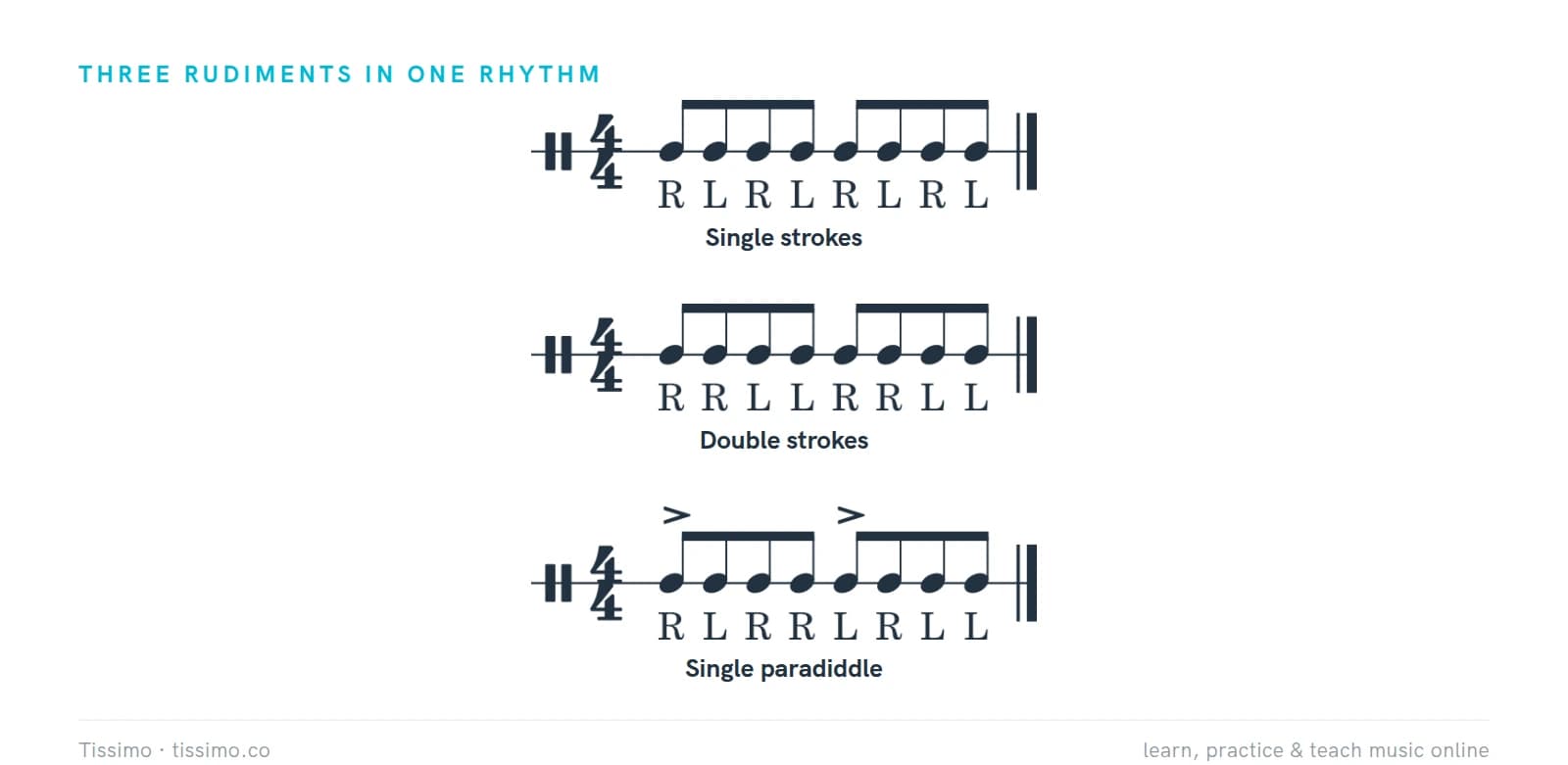
- Roll rudiments: the single-stroke roll (R L R L), the double-stroke open roll (R R L L), the multiple-bounce (buzz) roll, and stroke rolls such as the five-stroke and nine-stroke rolls.
- Diddle rudiments: patterns built around a double stroke, starting with the single paradiddle, R L R R L R L L.
- Flam rudiments: a soft grace note from one hand just before a louder stroke from the other, as in the flam, the flam tap and the flam accent.
- Drag rudiments: two quick grace notes from one hand before the main stroke, as in the drag and the ratamacues.
How to practice them
PAS recommends practicing each rudiment from slow ("open") to fast ("closed") and back to slow, or at an even, moderate march tempo. A few habits help:
- Start slowly with a metronome and make every stroke the same height and volume, unless the pattern has an accent.
- Say the sticking aloud as you play: "right, left, right, right".
- Lead with either hand. The paradiddle switches its leading hand every four notes; practice other patterns starting with the left hand too.
- Move it to the kit. Play the same sticking between the hi-hat, the snare and the toms, and a rudiment turns into a groove or a fill.
Same Rhythm, Different Hands sets singles, doubles and a paradiddle side by side, and Sticking Detective checks your hand order. For the other families, start with Before the Beat: Your First Flam, Two Contacts, Then Change Hands and Many Bounces, One Roll Span.
A rudiment is more than a rhythm
The single strokes and the double strokes in the example look the same on paper: eight even eighth notes. Only the sticking tells them apart. That is why drum music so often prints R and L under the notes: the same rhythm can be played with different hands, and choosing the hands is part of the technique.
Common questions
How many drum rudiments are there?
The Percussive Arts Society's standard list has 40, the International Drum Rudiments. It includes the traditional 26 American rudiments. Drummers also practice many patterns that are not on the list.
Which drum rudiments should I learn first?
Single strokes, double strokes and the single paradiddle make a good first set, because they use only plain, even strokes. Add the flam once those feel steady.
Practice it: free worksheets
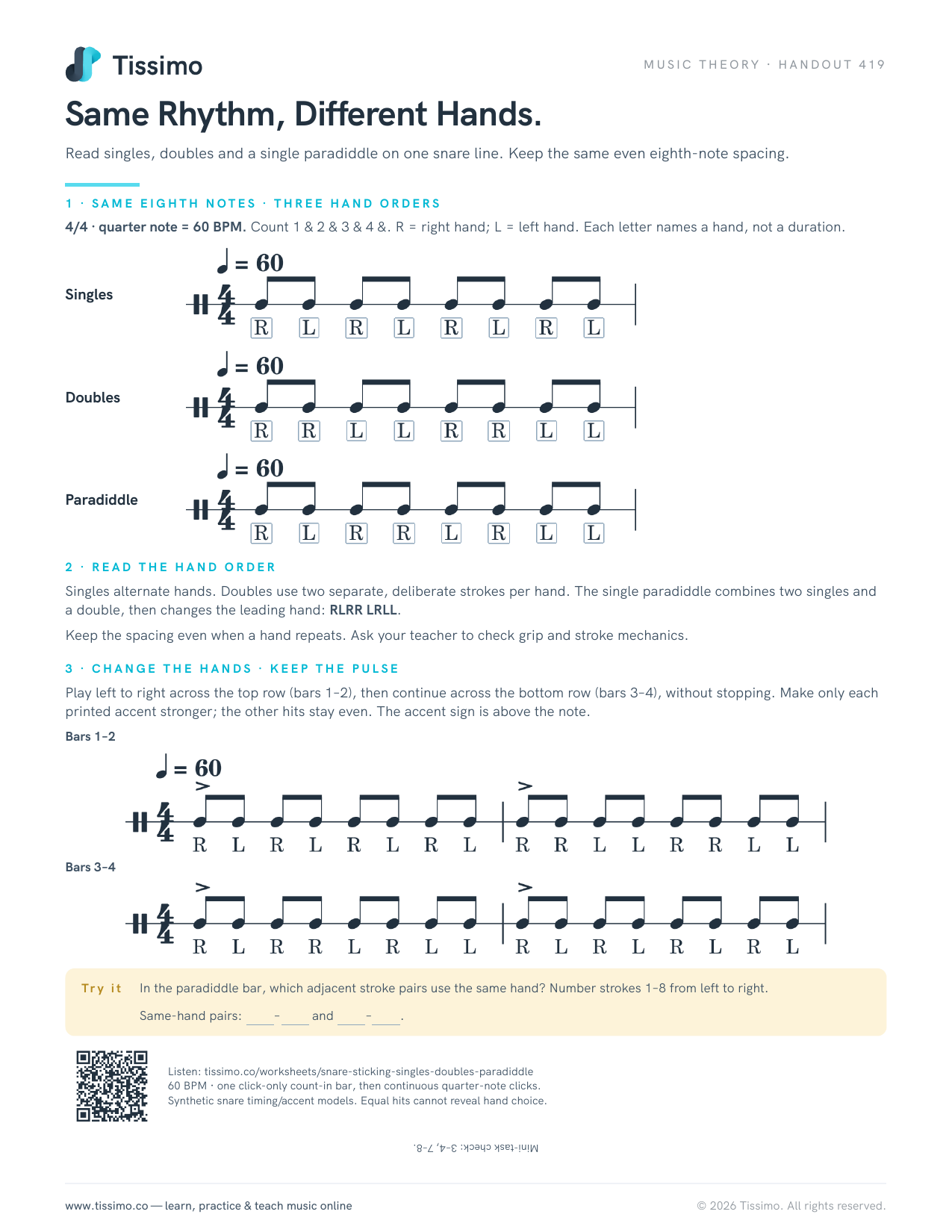 Same Rhythm, Different Hands.Read singles, doubles and a single paradiddle on one snare line. Keep the same even eighth-note spacing.
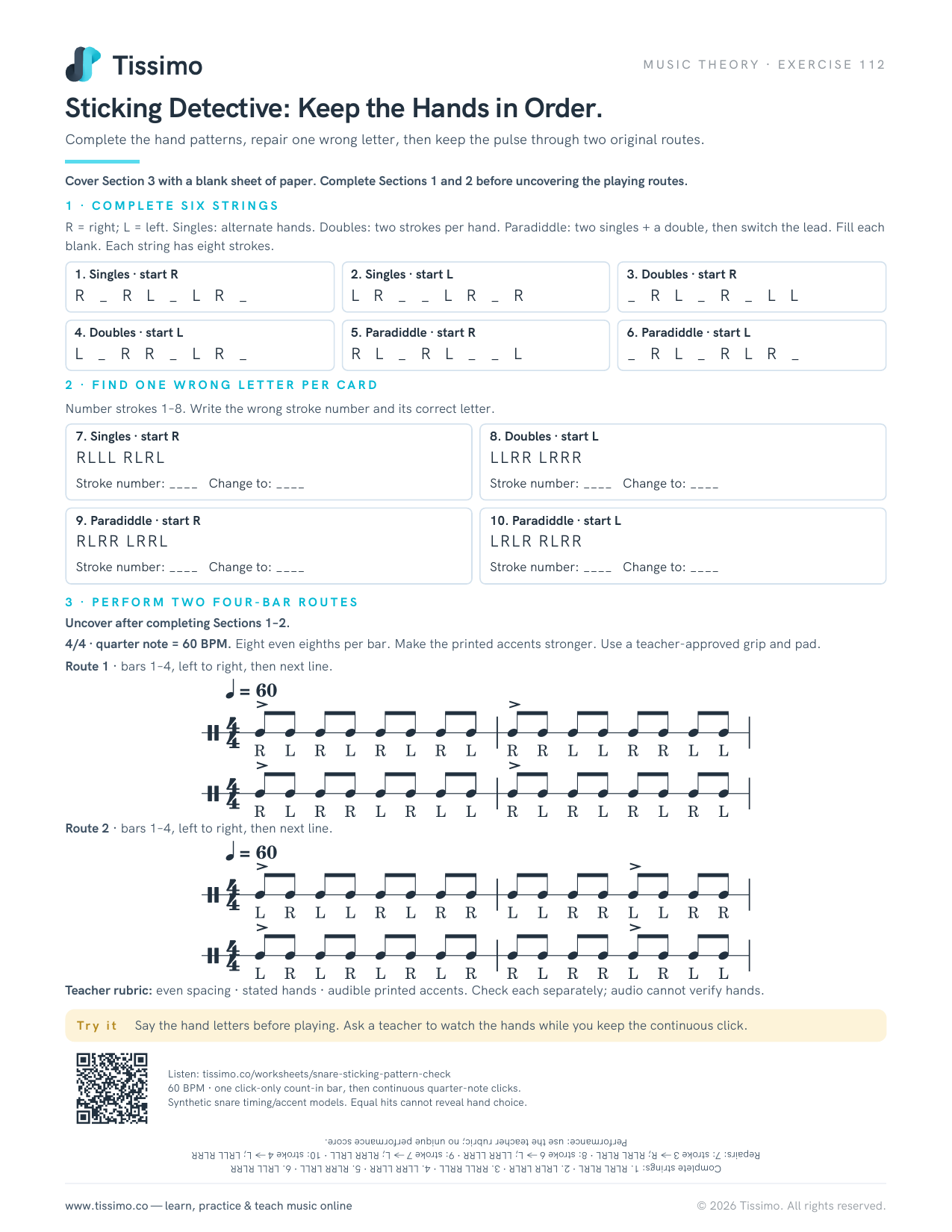 Sticking Detective: Keep the Hands in Order.Complete the hand patterns, repair one wrong letter, then keep the pulse through two original routes.
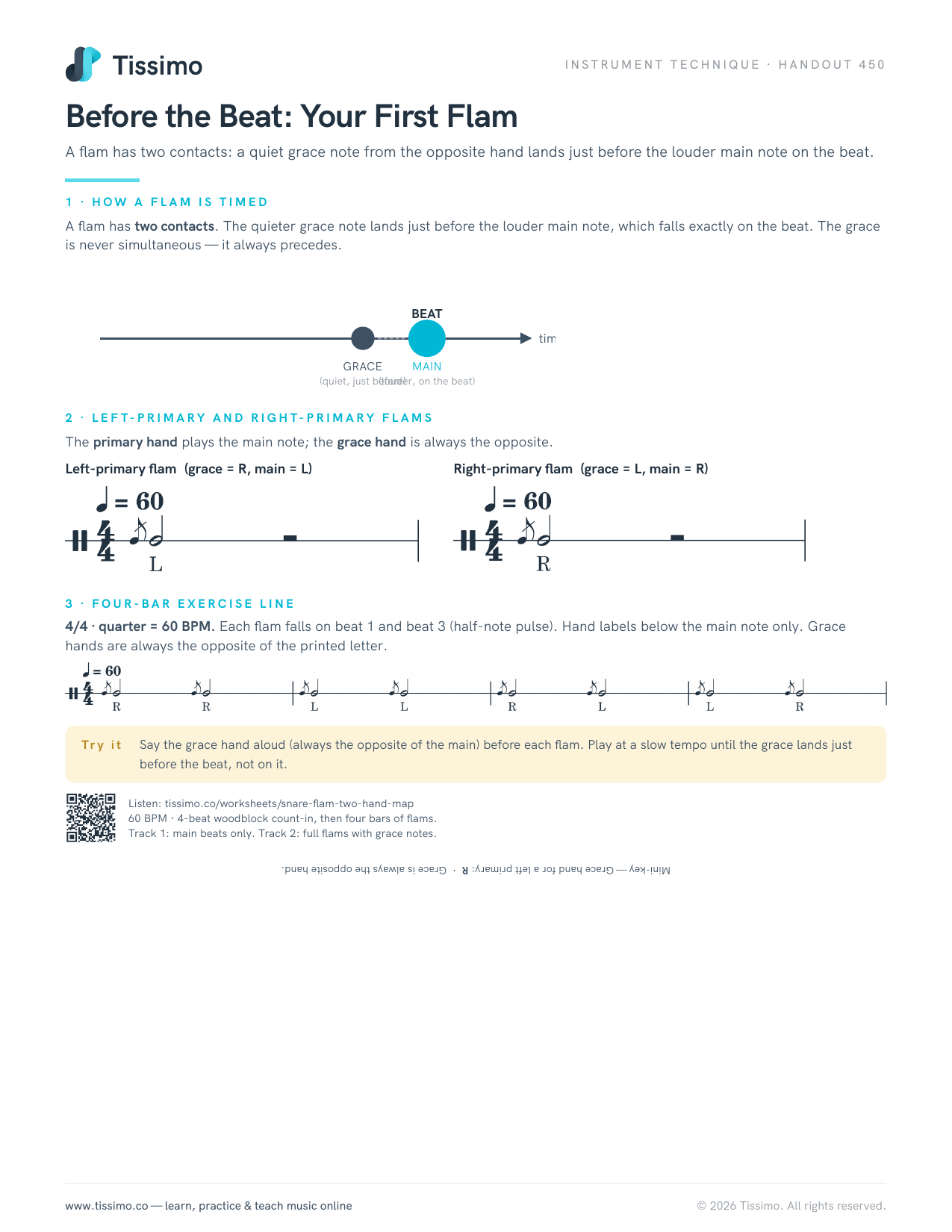 Before the Beat: Your First FlamA flam has two contacts: a quiet grace note from the opposite hand lands just before the louder main note on the beat.
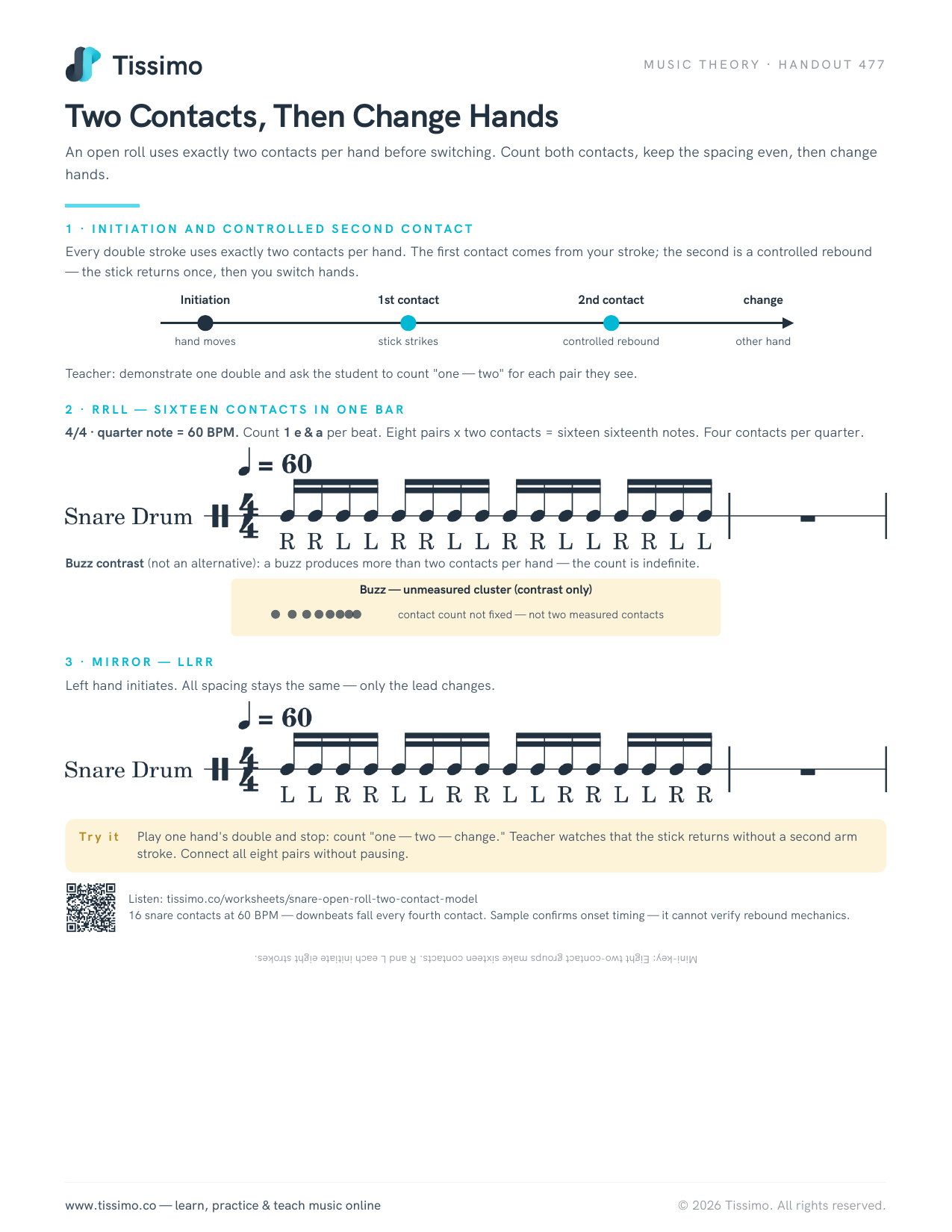 Two Contacts, Then Change HandsAn open roll uses exactly two contacts per hand before switching. Count both contacts, keep the spacing even, then change hands.
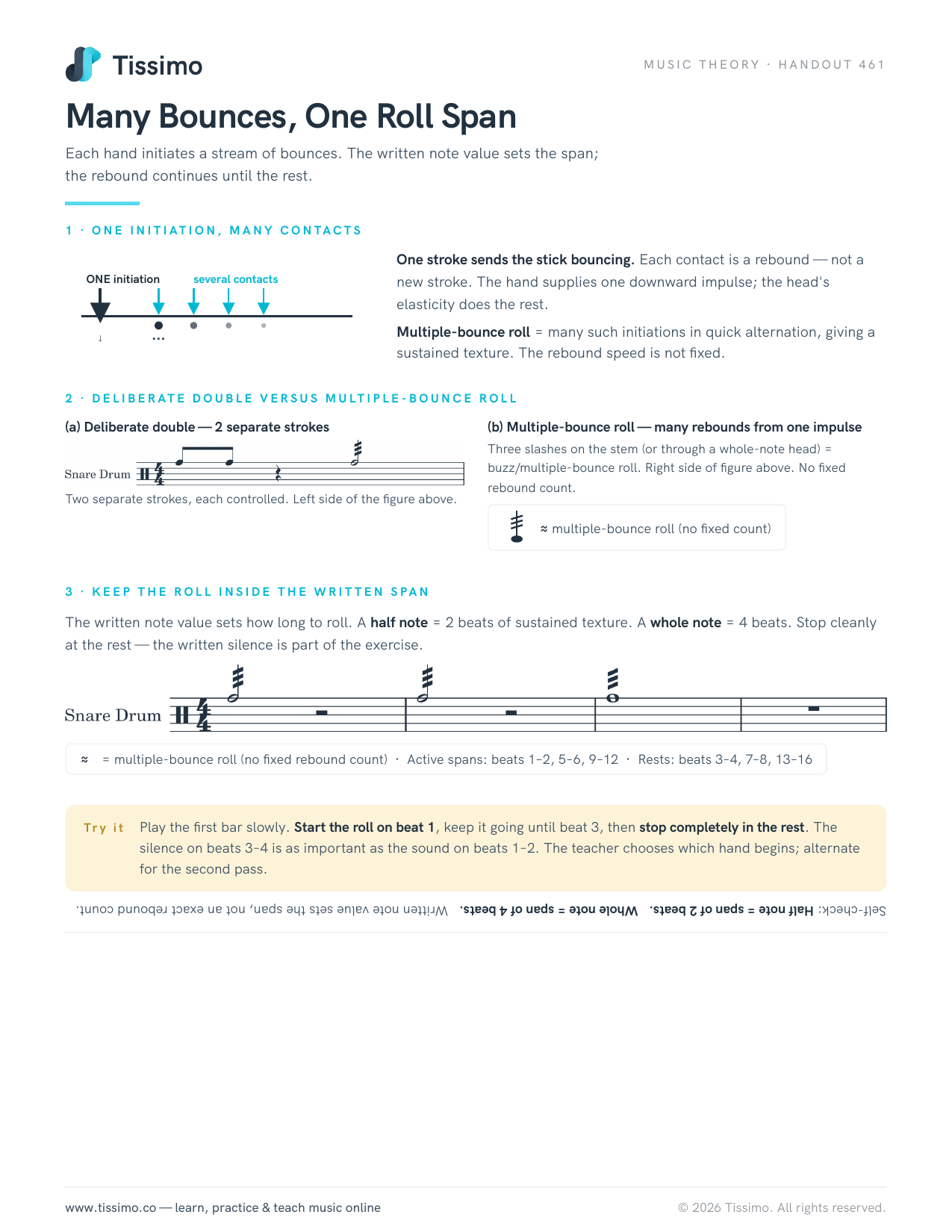 Many Bounces, One Roll SpanEach hand initiates a stream of bounces. The written note value sets the span; the rebound continues until the rest.
Comments