Styles, Genres & Eras
Ska
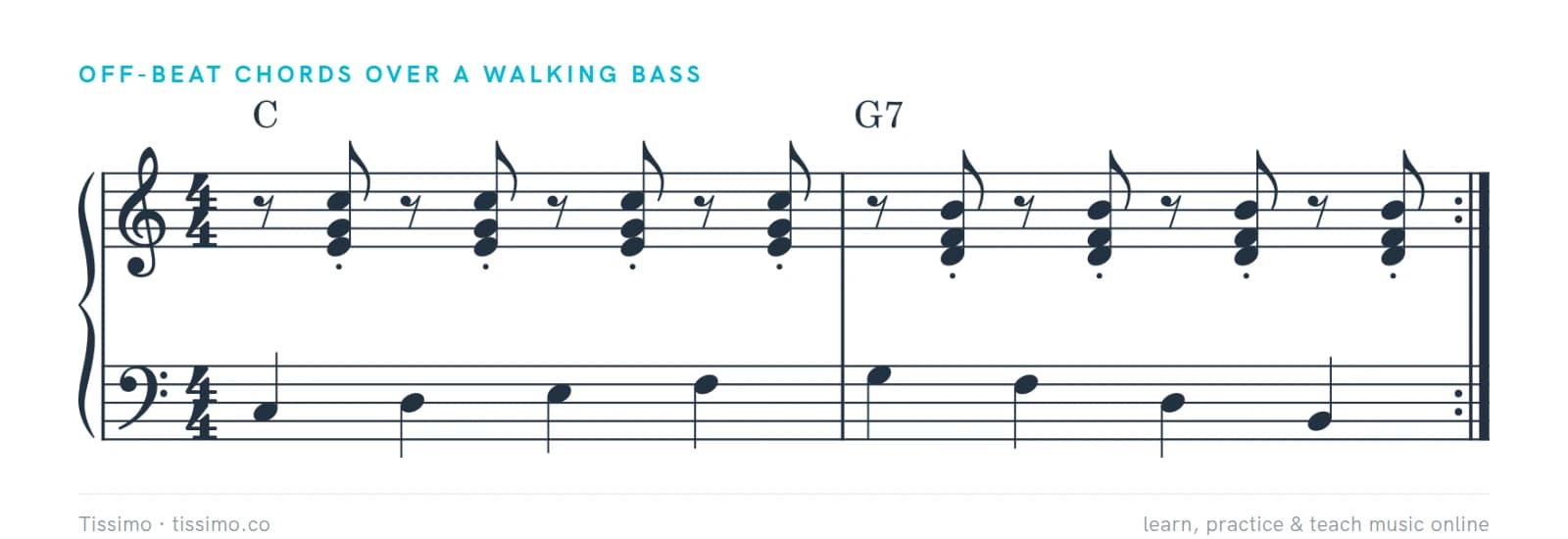
Ska is Jamaican popular music of the early 1960s, the forerunner of rock steady and reggae. Its fast, horn-driven sound rests on short off-beat chords from guitar or keyboard over a walking bass line.
Ska transformed Jamaican popular music. It took shape around 1960, in the years leading up to and following Jamaica's independence from Britain in 1962, and its energetic rhythms are often linked with the optimism of that time. Ska took the place of the older Jamaican mento and drew on American rhythm and blues, jazz and swing: in its first form it was band music, with a horn section and a rhythm section, played for dancing.
The sound
- Off-beat chords: the guitar, piano or organ plays a short, clipped chord on every "and" between the beats (1 and 2 and 3 and 4 and), the ska "skank". In pop and jazz these "ands" are often called the upbeats.
- A walking bass: in early ska the bass, electric or upright, often plays a walking line, one note per beat, stepping from chord to chord.
- Horns: trumpets, trombones and saxophones play melodies, riffs and short punches on the off-beats.
- Speed: ska is fast and driving, faster and busier than the reggae that followed.
Three waves
- Jamaica, the 1960s. Its stars included the Skatalites, a band of leading studio musicians such as Don Drummond and Roland Alphonso, as well as Prince Buster and Desmond Dekker. In the mid-1960s Jamaican musicians slowed ska down into rock steady, which led in turn to reggae.
- 2 Tone, England, late 1970s. The Specials, from Coventry, started their own label, 2 Tone Records, in 1979, and with Madness, the Selecter and the Beat brought ska back with the energy of punk. The Specials were a racially integrated band, and 2 Tone took a stand against racism.
- The 1990s, above all in the United States. A third wave fused ska with punk into ska punk, with bands such as the Mighty Mighty Bosstones, Reel Big Fish and No Doubt. Many of its bass players left the walking line behind.
Ska or reggae?
Both put chords on the off-beats, and reggae grew out of ska. Ska is faster and more continuous, with a walking bass and prominent horns; reggae leaves more space and builds its groove on the drums and a deep bass line. The reggae entry shows its off-beat pattern for comparison.
Playing ska
Count "1 and 2 and 3 and 4 and" aloud. Play the bass on the numbers and the chord on every "and", lifting it quickly so that the silence on the beat stays clean. Off-beat chords are a kind of syncopation, which Syncopation trains, and Turn chords into grooves shows how to turn a chord symbol into a rhythm pattern.
Common questions
What is the difference between ska and reggae?
Ska came first, in early-1960s Jamaica. Both put short chords on the off-beats, but ska is faster, with a walking bass and prominent horns. Reggae, from the late 1960s, is slower and more spacious, with the drums and a deep bass line in front.
What is 2 Tone?
The British ska revival of the late 1970s, named after 2 Tone Records, the label the Specials started in Coventry in 1979. It combined Jamaican ska with the energy of punk and took a stand against racism.
Practice it: free worksheets
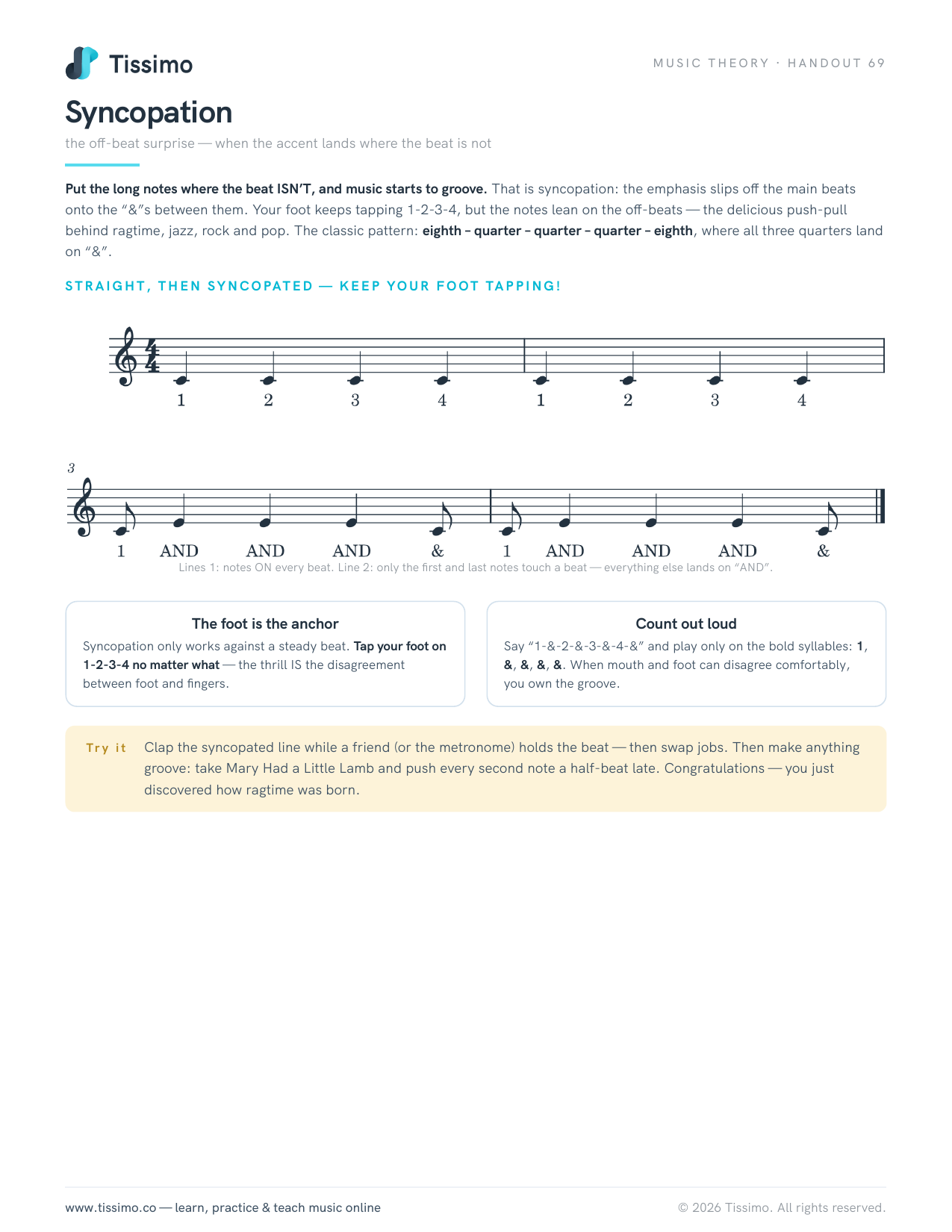 Syncopationthe off-beat surprise — when the accent lands where the beat is not
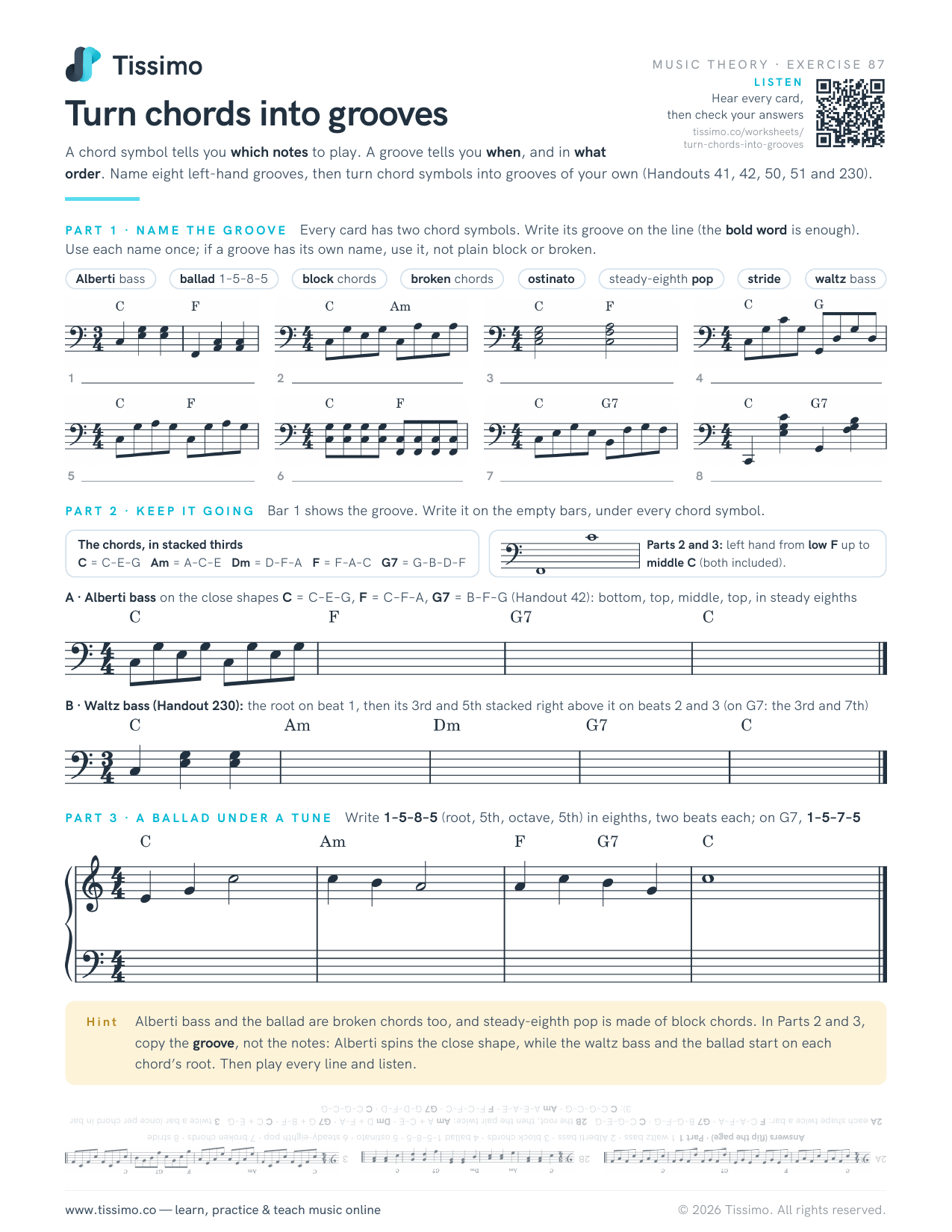 Turn chords into groovesA chord symbol tells you which notes to play. A groove tells you when, and in what order. Name eight left-hand grooves, then turn chord symbols into grooves of your own (Handouts 41, 42, 50, 51 and 230).
Comments