Styles, Genres & Eras
Punk Rock
Punk rock is a fast, loud, stripped-down style of rock that took shape in New York and London in the mid-1970s. Its songs are short, built on a few chords, and played with a do-it-yourself attitude.
Punk rock appeared in the mid-1970s as a reaction against the rock of its day, with its long instrumental solos and elaborate stage shows. Punk bands stripped rock back to its essentials: short songs, a handful of chords, loud, distorted electric guitars, a basic beat in 4/4 and shouted rather than polished vocals, all played fast and with raw energy. Behind the music was an attitude: anyone could start a band, and you did not have to be a virtuoso to say something.
New York and London
- New York: bands such as the Velvet Underground, the Stooges and the New York Dolls prepared the ground. The Ramones, formed in 1974 and playing clubs such as CBGB, are usually considered the first punk rock band. The 14 songs on their first album, Ramones (1976), take about 29 minutes in all, an average of about two minutes each.
- London: the Sex Pistols, formed in 1975, made punk a sensation in Britain in 1976 and inspired bands such as the Clash, the Damned and Buzzcocks.
The first punk era is usually dated to about 1975 to 1980, but the style kept going and kept changing.
The sound
- Speed and brevity: short songs, played fast.
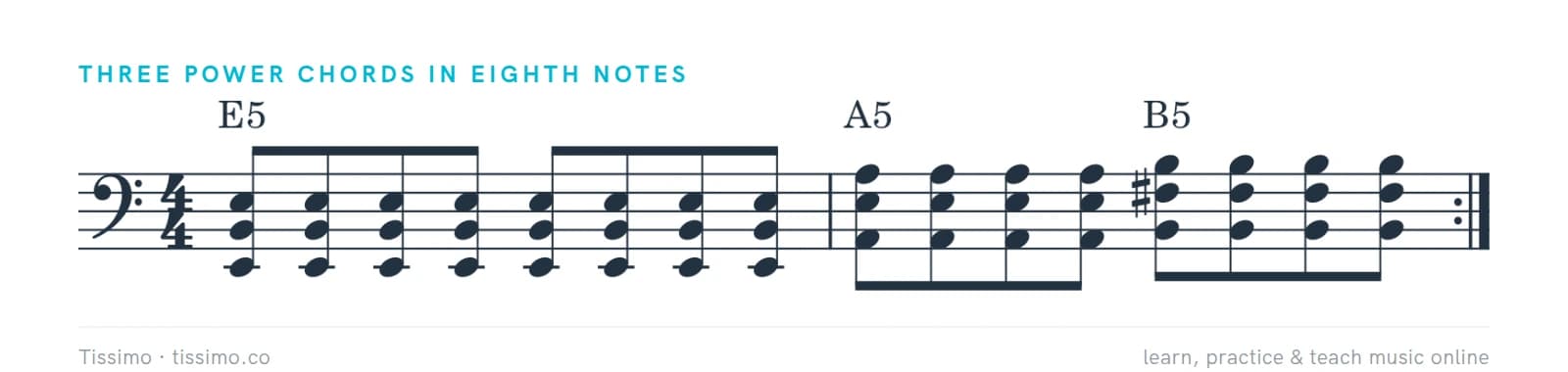
- A few chords, hit hard: power chords and full chords, often only three in a song. The Ramones' guitarist Johnny Ramone famously played almost everything with downstrokes, a steady stream of eighth notes all picked downward.
- Distortion: a loud, overdriven guitar sound.
- Simple drums: basic beats in 4/4, played with drive rather than finesse.
Do it yourself
Punk was as much a culture as a sound. Many bands, ignored by the big record companies, put out their own records on small independent labels, and fans spread the music through homemade magazines (fanzines) and local club scenes. That "do it yourself" approach became part of punk's identity.
After the first wave
In the 1980s hardcore punk, louder and more aggressive, grew strongest in the United States, with bands such as the Dead Kennedys and the Misfits. Later bands as different as Hüsker Dü, Sonic Youth and Green Day built on punk's energy, and punk also fed into new styles such as ska punk (see ska).
Playing it
On guitar, practice even downstrokes in eighth notes with a relaxed arm, then speed up only as far as the strokes stay even. One Shape, Many Roots teaches the movable power-chord shape, and Which Power Chord Is It? trains you to name it from its root.
Common questions
What is the difference between punk and rock?
Punk is a style of rock. It strips rock down: shorter and faster songs, fewer chords, rougher vocals and a do-it-yourself attitude, in reaction against the long solos and big productions of 1970s rock.
What is hardcore punk?
A louder, faster and more aggressive kind of punk that grew in the 1980s, mainly in the United States, with bands such as the Dead Kennedys and the Misfits.
Practice it: free worksheets
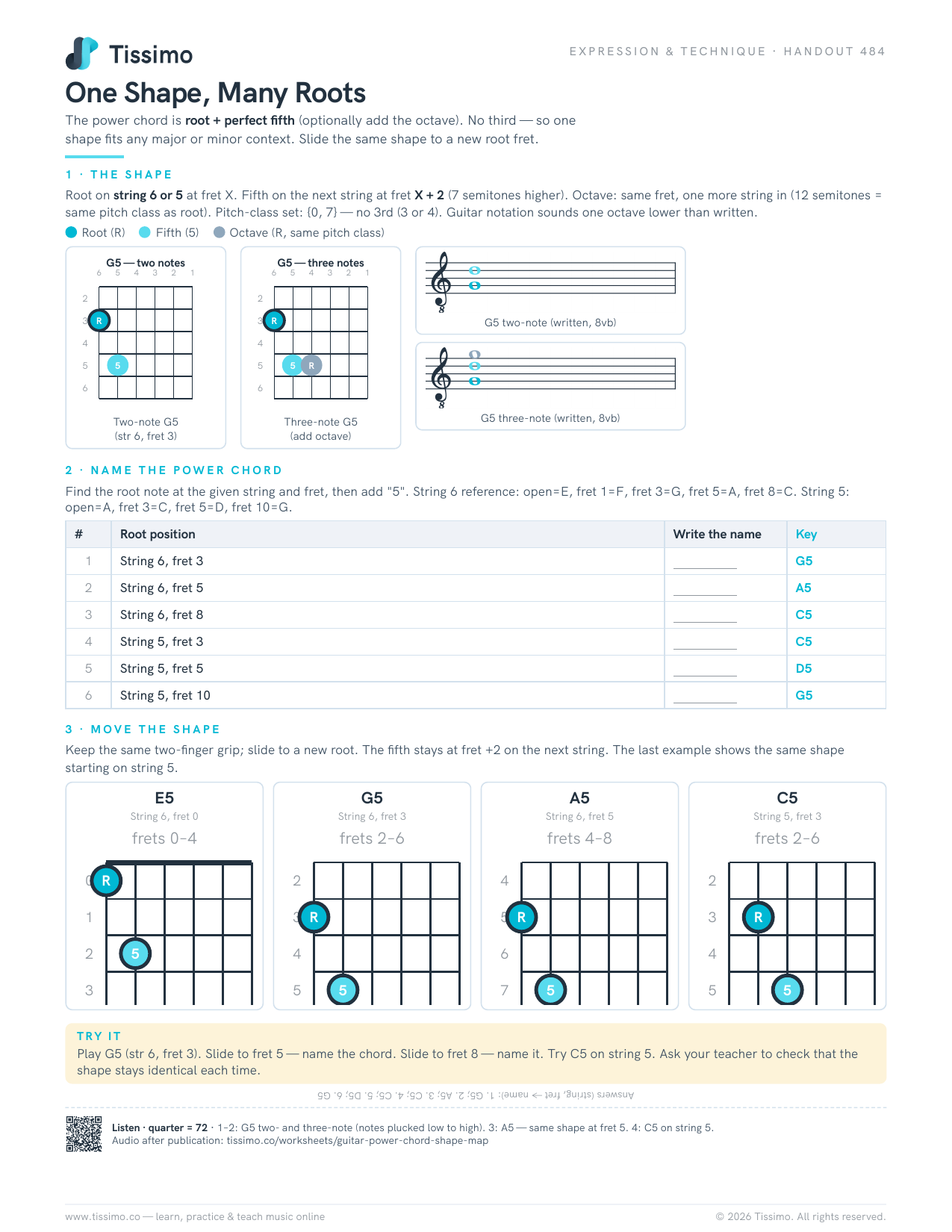 One Shape, Many RootsThe power chord is root + perfect fifth (optionally add the octave). No third — so one shape fits any major or minor context. Slide the same shape to a new root fret.
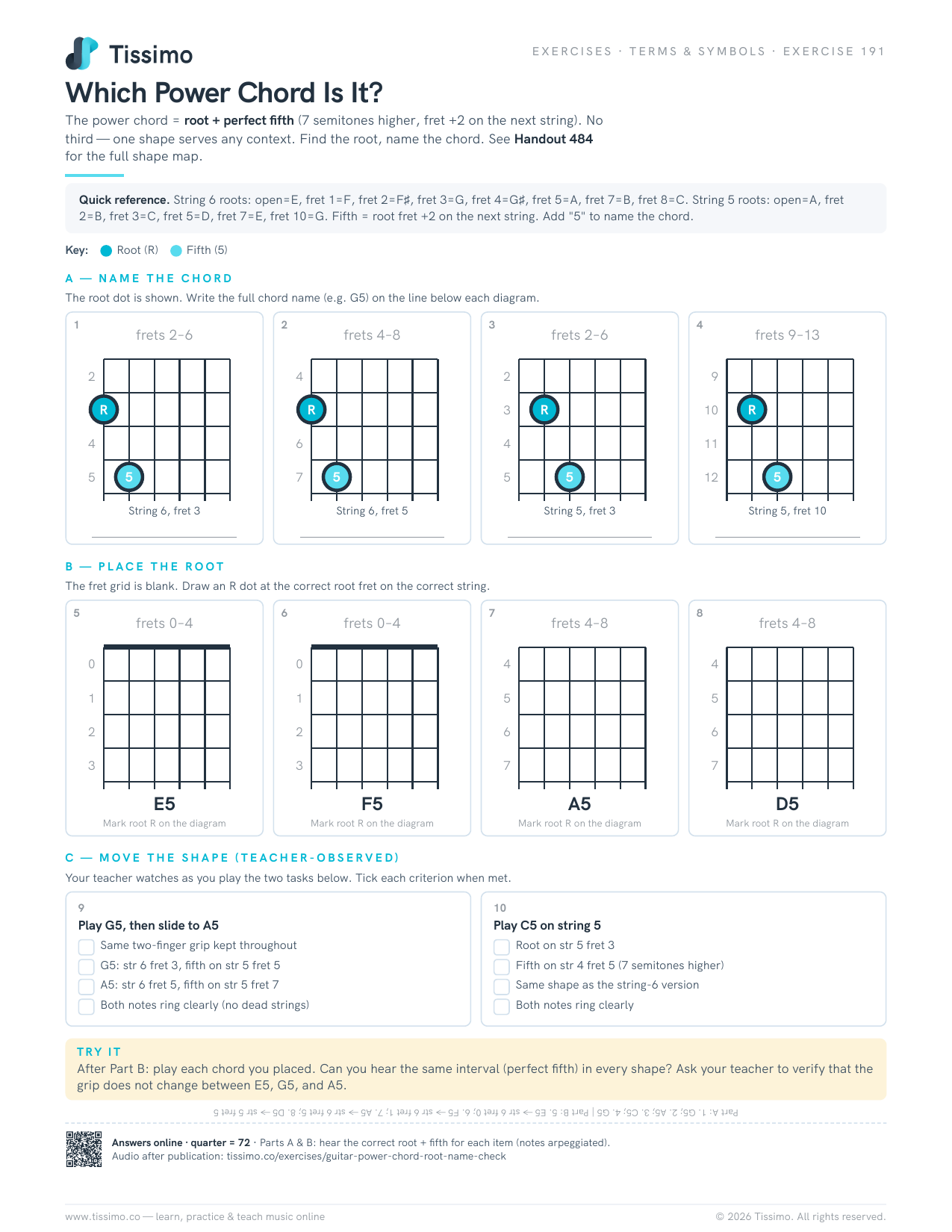 Which Power Chord Is It?The power chord = root + perfect fifth (7 semitones higher, fret +2 on the next string). No third — one shape serves any context. Find the root, name the chord. See Handout 484 for the full shape map.
Comments