Styles, Genres & Eras
Heavy Metal
Heavy metal is a loud, guitar-driven style of rock that took shape around 1970, largely in Britain. It is built on distorted electric guitar, riffs of power chords and palm-muted notes, and virtuoso solos.
Heavy metal grew out of blues-based hard rock. Critics began using the label around 1970, above all for three British bands: Deep Purple, Led Zeppelin and Black Sabbath. All three stressed a distorted guitar sound and long guitar solos; Deep Purple brought in classical influences, Led Zeppelin drew on the blues, and Black Sabbath added a dark, ominous mood.
The sound of metal
- Distorted electric guitar, played loud. Distortion turns the guitar into a sustained, driving sound and is the heart of what players and listeners call "heaviness".
- Riffs that mix single notes with power chords, a root and the fifth above it, sometimes with the octave added.
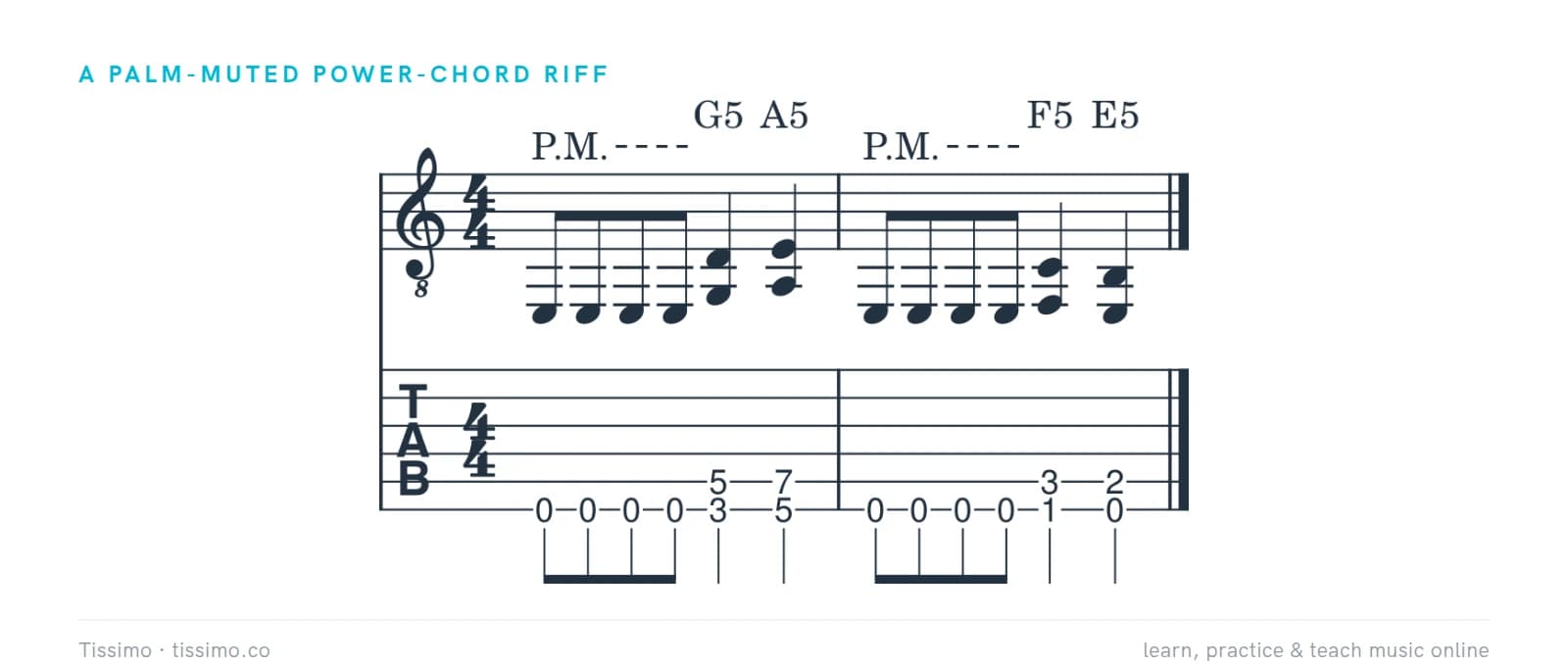
- Palm muting: the fleshy side of the picking hand rests lightly on the strings at the bridge, so the notes come out short and chunky. Riffs often alternate muted notes with open, ringing ones for accent.
- Modes: riffs and solos often use modes such as the Aeolian (natural minor) and the Phrygian, whose second note sits only a half step above the home note.
- Lower tunings: tuning the guitar down gives a darker, heavier low end. Black Sabbath tried it as early as 1971, but it became common only in the 1990s, with death metal.
- Virtuoso solos: metal has prized fast, precise guitar playing, drawing on both blues and classical music.
Styles of metal
In the early 1980s British bands such as Judas Priest, Iron Maiden and Def Leppard, along with Ozzy Osbourne (Black Sabbath's first singer), brought metal back to the charts, while Van Halen, KISS and Mötley Crüe were among the American bands of the decade. Glam metal bands such as Bon Jovi and Poison toned the anger and the volume down. Thrash or speed metal bands such as Metallica and Megadeth went the other way: faster, rawer and more aggressive. Death metal and many later styles pushed the tunings lower still.
Playing metal riffs
Learn the movable power-chord shape first, with One Shape, Many Roots and Which Power Chord Is It?. Then practice palm muting on the open low E string with a metronome, keeping every muted note the same length and loudness, and let the unmuted power chords ring for their full value. Metal guitar parts are often printed in tab, frequently with a staff above it as in the example; One Guitar Phrase, Two Notations teaches you to read both.
Common questions
What is the difference between heavy metal and hard rock?
The line is blurry, and the same bands are often called both. Metal usually means a heavier, more distorted sound, riffs built on power chords and palm muting, darker themes and a stronger taste for virtuoso playing.
What is palm muting?
A guitar technique in which the side of the picking hand rests lightly on the strings at the bridge, so each note sounds short and chunky instead of ringing. In tab and notation it is marked P.M.
Practice it: free worksheets
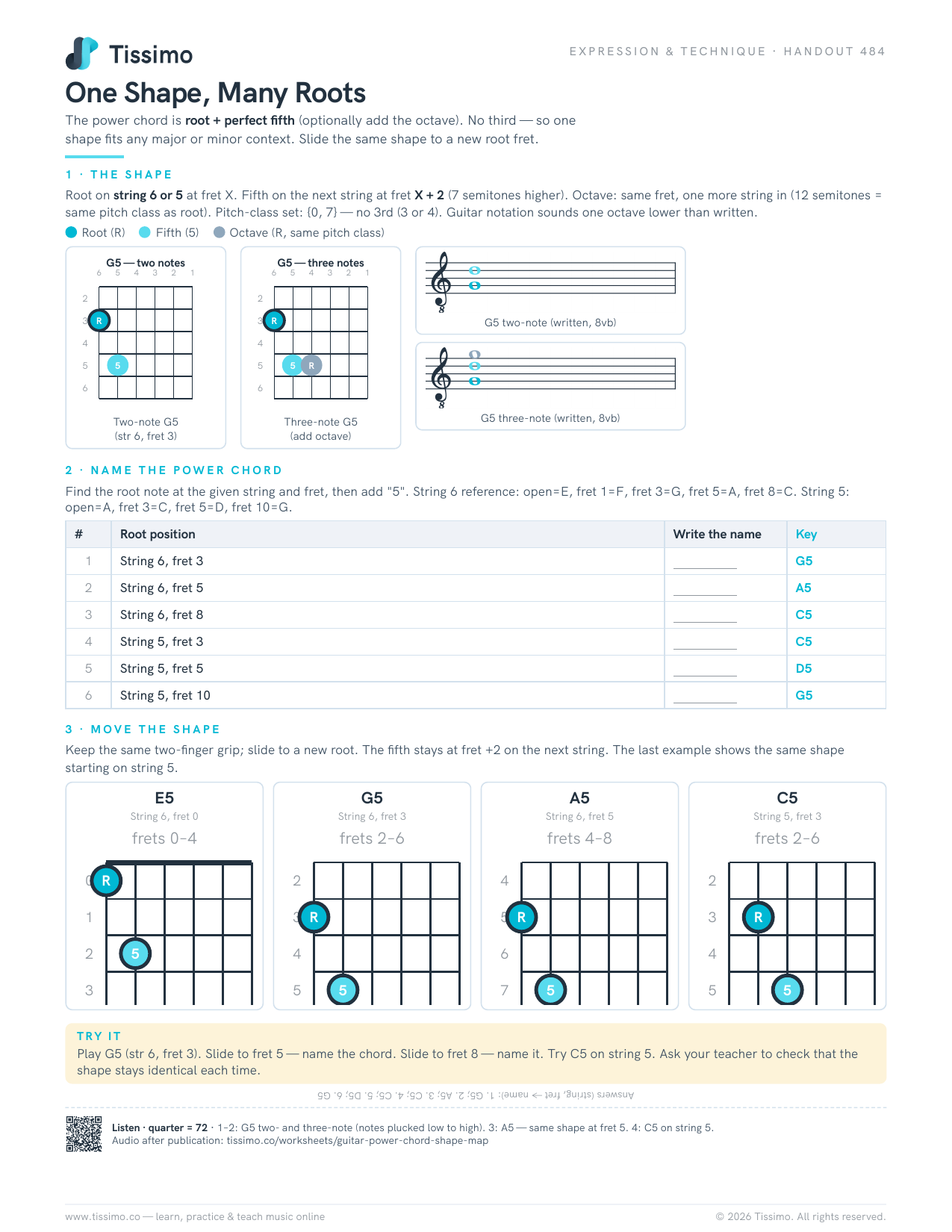 One Shape, Many RootsThe power chord is root + perfect fifth (optionally add the octave). No third — so one shape fits any major or minor context. Slide the same shape to a new root fret.
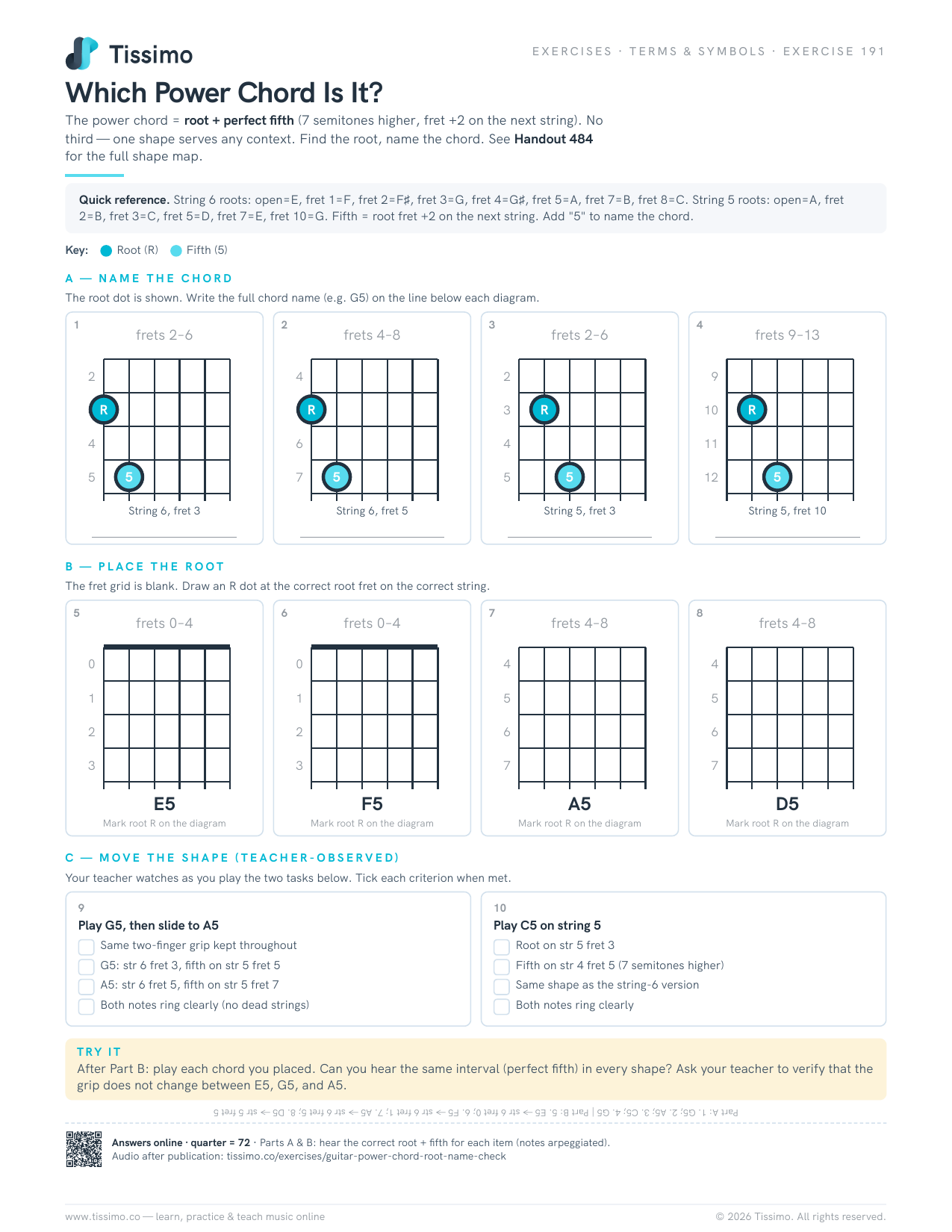 Which Power Chord Is It?The power chord = root + perfect fifth (7 semitones higher, fret +2 on the next string). No third — one shape serves any context. Find the root, name the chord. See Handout 484 for the full shape map.
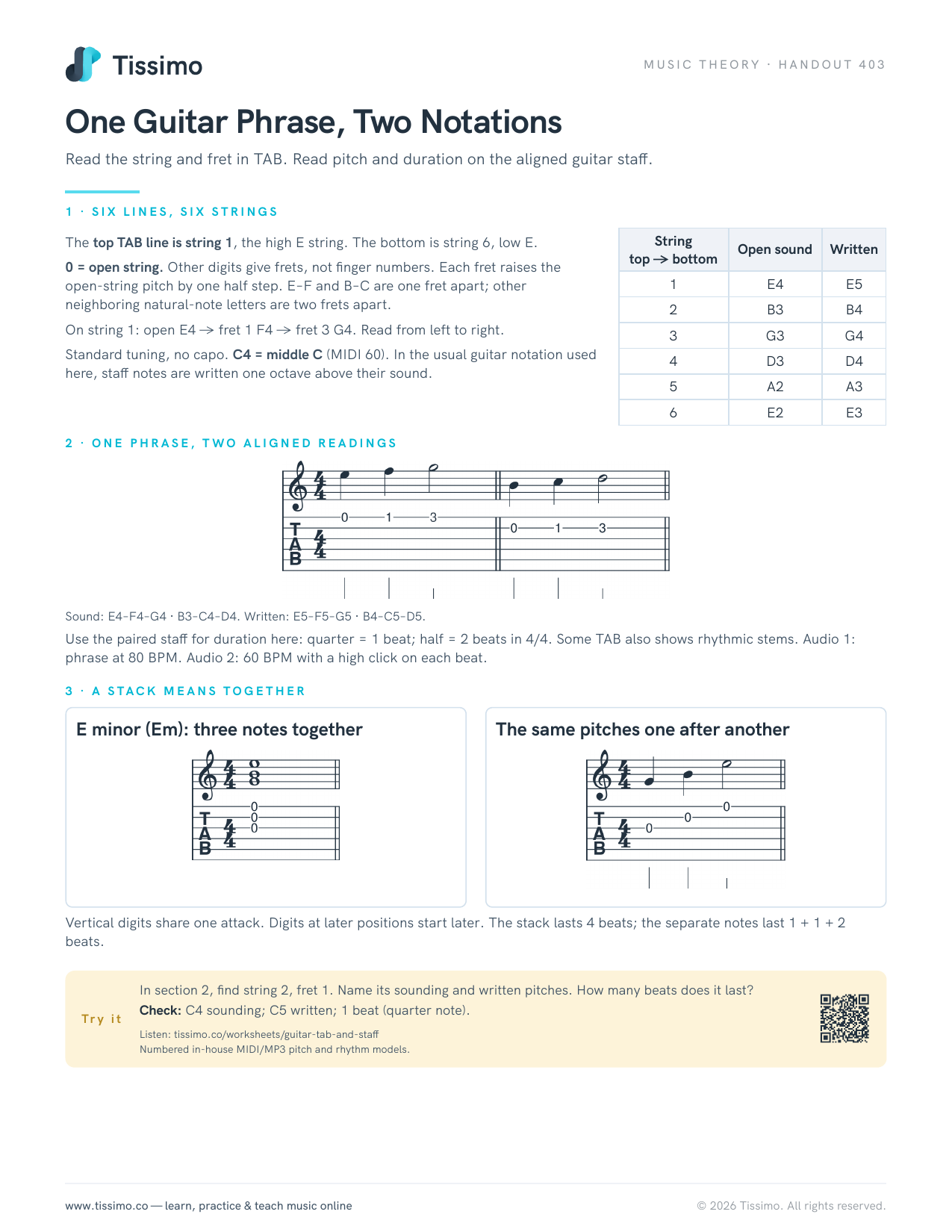 One Guitar Phrase, Two NotationsRead the string and fret in TAB. Read pitch and duration on the aligned guitar staff.
Comments