Styles, Genres & Eras
Reggae
Reggae is popular music from Jamaica that grew out of ska and rock steady in the late 1960s. Its sound rests on short off-beat chords, a deep, prominent bass line and drum beats that leave beat 1 open.
Reggae is popular music from Jamaica. It took shape in the late 1960s, in the poor neighborhoods of western Kingston, and by the 1970s it had become an international style. In 2018 UNESCO added "Reggae music of Jamaica" to its Representative List of the Intangible Cultural Heritage of Humanity.
From ska to reggae
Reggae is the third step in a chain of Jamaican styles that drew on earlier Jamaican music and on American rhythm and blues and soul:
- Ska (early 1960s): fast, horn-driven dance music with roots in jazz, swing and R&B, and a skipping accent off the beat.
- Rock steady (mid-1960s): musicians slowed ska down, and the bass line moved to the front.
- Reggae (from the late 1960s): the drums and bass became even more prominent, and the lyrics turned more and more to social and political themes. Toots and the Maytals and the Wailers (Bob Marley, Peter Tosh and Bunny Wailer) were among its pioneers.
The sound
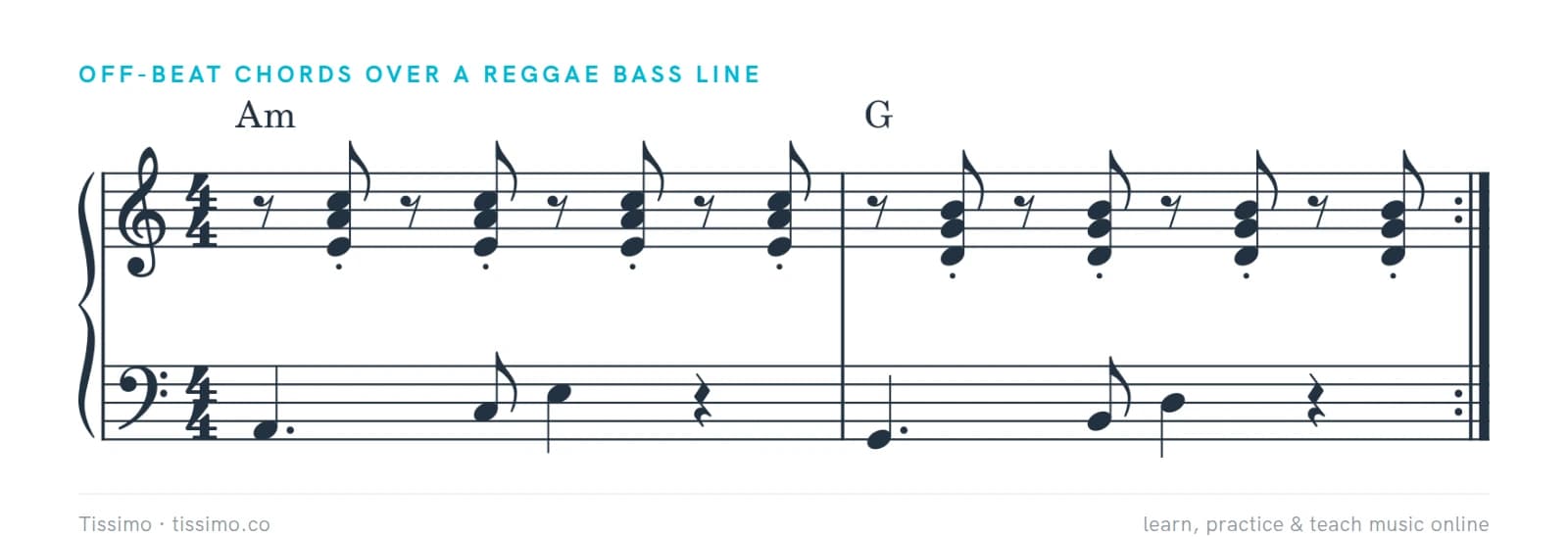
- The skank: short, detached chords on the off-beats, the "ands" between the beats, usually on rhythm guitar and often on piano or keyboard as well. Organ players add a bouncing off-beat pattern called the bubble.
- The bass: deep, melodic and loud in the mix, with gaps that leave space in the groove.
- The one drop: in this classic drum beat, beat 1 is left empty and the bass drum and a snare rim click land together on beat 3. Drummers vary it, and descriptions differ in the details, but the open first beat is the point.
Together these parts lean on the off-beats and keep weight away from the beats a rock band would stress.
Roots, dub and dancehall
In the 1970s reggae became closely tied to the Rastafari movement. Roots reggae, by artists such as Bob Marley and the Wailers, Burning Spear and Culture, sang of Africa, exile, injustice and redemption. Jimmy Cliff starred in the Jamaican film The Harder They Come (1972), which helped carry the music abroad. Reggae stripped down to drums and bass became the basis of dub, an instrumental offshoot, and in Britain artists such as Steel Pulse and Aswad built a reggae scene of their own. Jamaican deejays "toasted" (talked and rhymed) over instrumental tracks, a practice often counted among the roots of hip-hop: DJ Kool Herc, whose Bronx parties of the early 1970s started hip-hop, was born in Kingston. The dancehall deejays of the 1980s and 90s refined toasting further.
Playing a reggae groove
Count the four beats aloud and play short chords only on the "ands", lifting your hand quickly: the silence on each beat is part of the groove. Then add a bass line that leaves the end of the bar empty, as in the example. Off-beat chords are a kind of syncopation; Syncopation trains that feel, and Turn chords into grooves shows how to turn a chord symbol into a rhythm pattern.
Common questions
What is the difference between reggae and ska?
Ska came first, in the early 1960s: fast, horn-driven dance music. Rock steady slowed it down in the mid-1960s, and reggae, from the late 1960s, put the drums and bass in front. All three accent the off-beats.
What is the one drop in reggae?
A classic reggae drum beat that leaves beat 1 of the bar empty and puts the bass drum and a snare rim click together on beat 3. The open first beat gives reggae its floating, laid-back feel.
Practice it: free worksheets
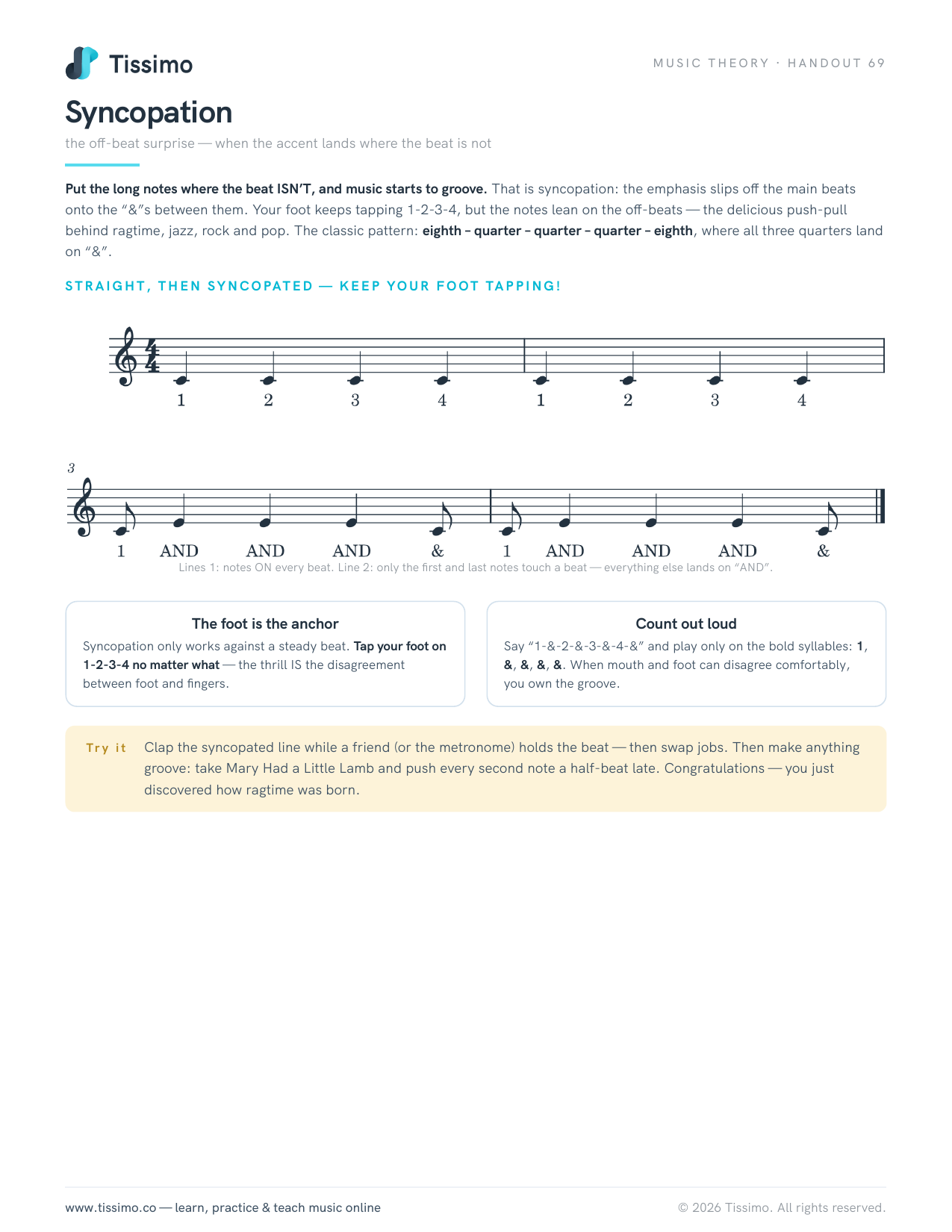 Syncopationthe off-beat surprise — when the accent lands where the beat is not
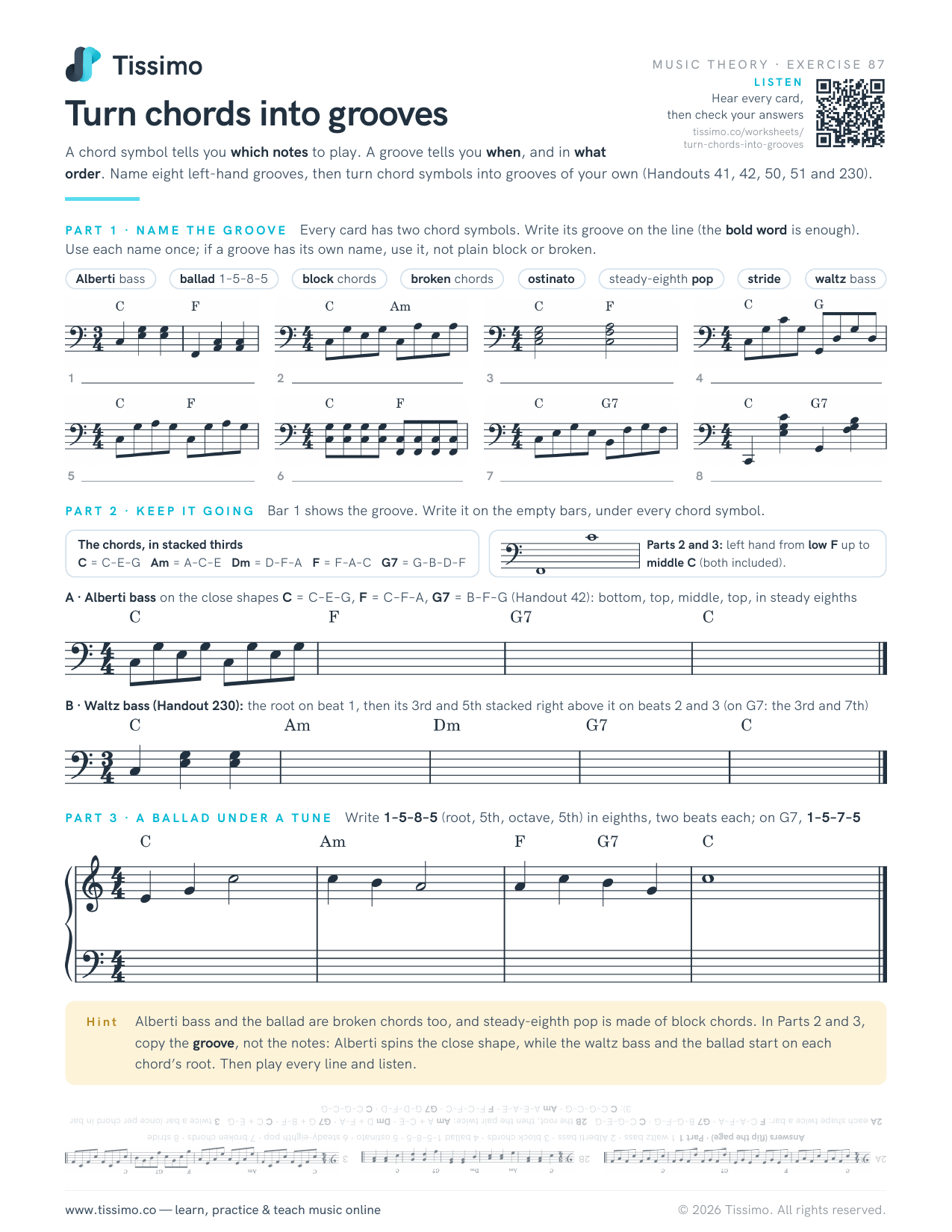 Turn chords into groovesA chord symbol tells you which notes to play. A groove tells you when, and in what order. Name eight left-hand grooves, then turn chord symbols into grooves of your own (Handouts 41, 42, 50, 51 and 230).
Comments