Technique & Performance
Sight-Singing
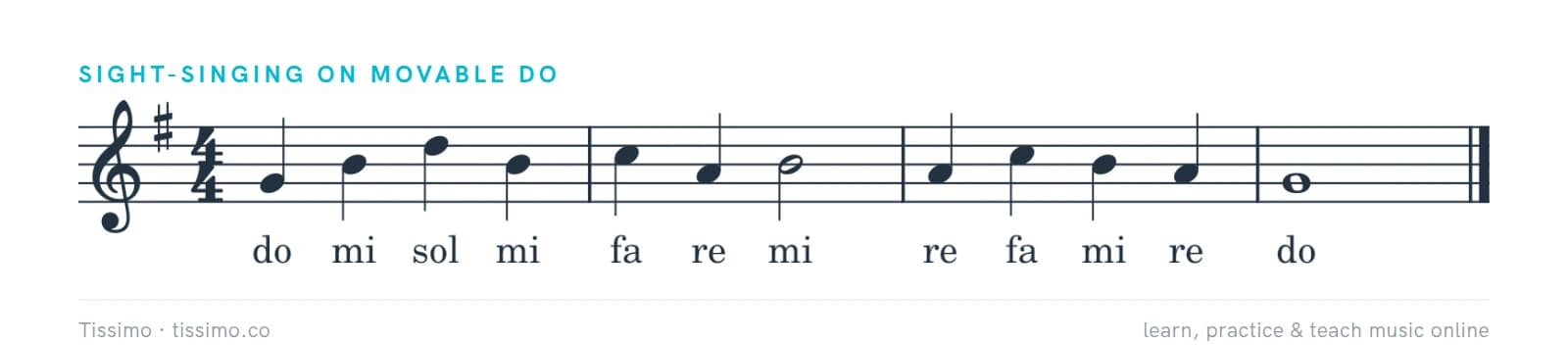
Sight-singing is singing a melody from notation the first time you see it, without hearing it first. Singers find the key and the first note, then sing by the distances between notes, often on solfège syllables.
Sight-singing is sight-reading with the voice. A pianist who sight-reads finds each note on the keys. A singer has no keys, so you have to hear each pitch in your head before you sing it. That is why sight-singing trains the inner ear so well. Choir singers use it to learn new music quickly, and college music programs teach it in their aural-skills classes.
How singers name the notes
Most sight-singers sing on syllables or numbers that show each note's place in the key:
- Movable-do solfège: do is the tonic of the key, re the second degree, and so on. In minor, some teachers start on la and others keep do as the tonic. A survey of American college music departments found this the most common method.
- Scale-degree numbers: 1, 2, 3 and so on, the next most common.
- Fixed do: do is always C, re always D, whatever the key.
- A neutral syllable such as "la", or the letter names.
Movable systems give every pattern one name in every key. Do-mi-sol is always the major triad on the tonic, so once you can hear it in one key, you can hear it in all of them.
Step by step
- Find the key and do. Read the key signature, and check the last note: many melodies end on do.
- Get your starting pitch. Play or hum the tonic, then find the first note from it.
- Speak the rhythm first. Say it on "ta" while you tap the beat.
- Sing by steps and leaps. A step goes to the next syllable; a leap to do, mi or sol uses the notes of the tonic chord as landmarks.
- Keep going. As in sight-reading, a steady beat matters more than one wrong note. Check against a recording or the piano only after you have tried.
Movable Do: The First Five Notes introduces the syllables, and Sing Before the Model: Movable Do 1 and Sing Before the Model: Do-Based Minor let you sing first and hear the model after.
Sight-singing, ear training and perfect pitch
You do not need perfect pitch. Sight-singing works with relative pitch: you hear each note from the tonic or from the note before. It goes hand in hand with ear training, and it is the mirror image of dictation: in dictation you hear a melody and write it down, in sight-singing you see it and sing it.
Common questions
Is sight-singing the same as sight-reading?
Sight-singing is sight-reading with the voice. The difference is that a singer has to hear every pitch before singing it, while an instrumentalist can find it on the instrument.
Do I need perfect pitch to sight-sing?
No. Most sight-singers use relative pitch: they take the tonic from a piano or a pitch pipe and hear every other note from it.
Practice it: free worksheets
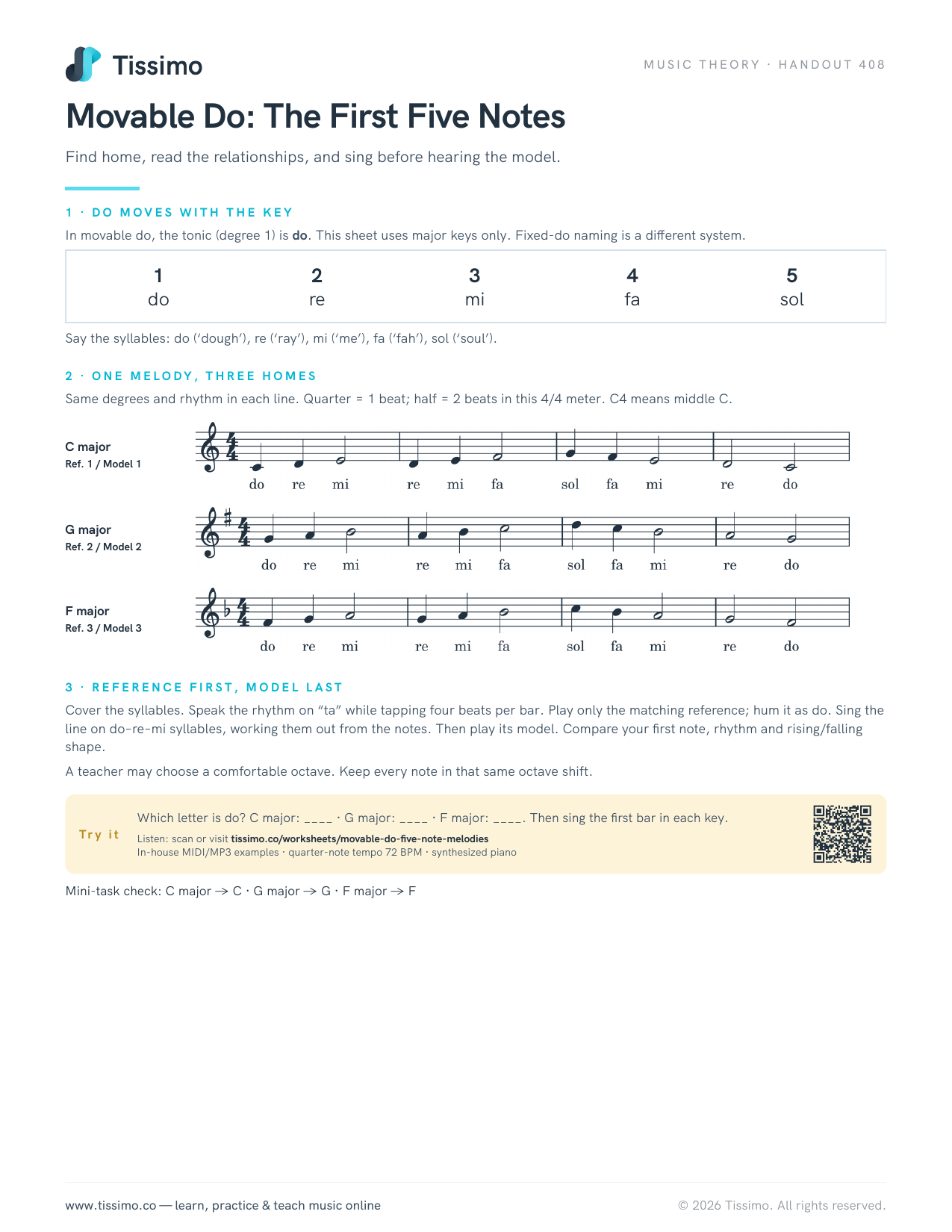 Movable Do: The First Five NotesFind home, read the relationships, and sing before hearing the model.
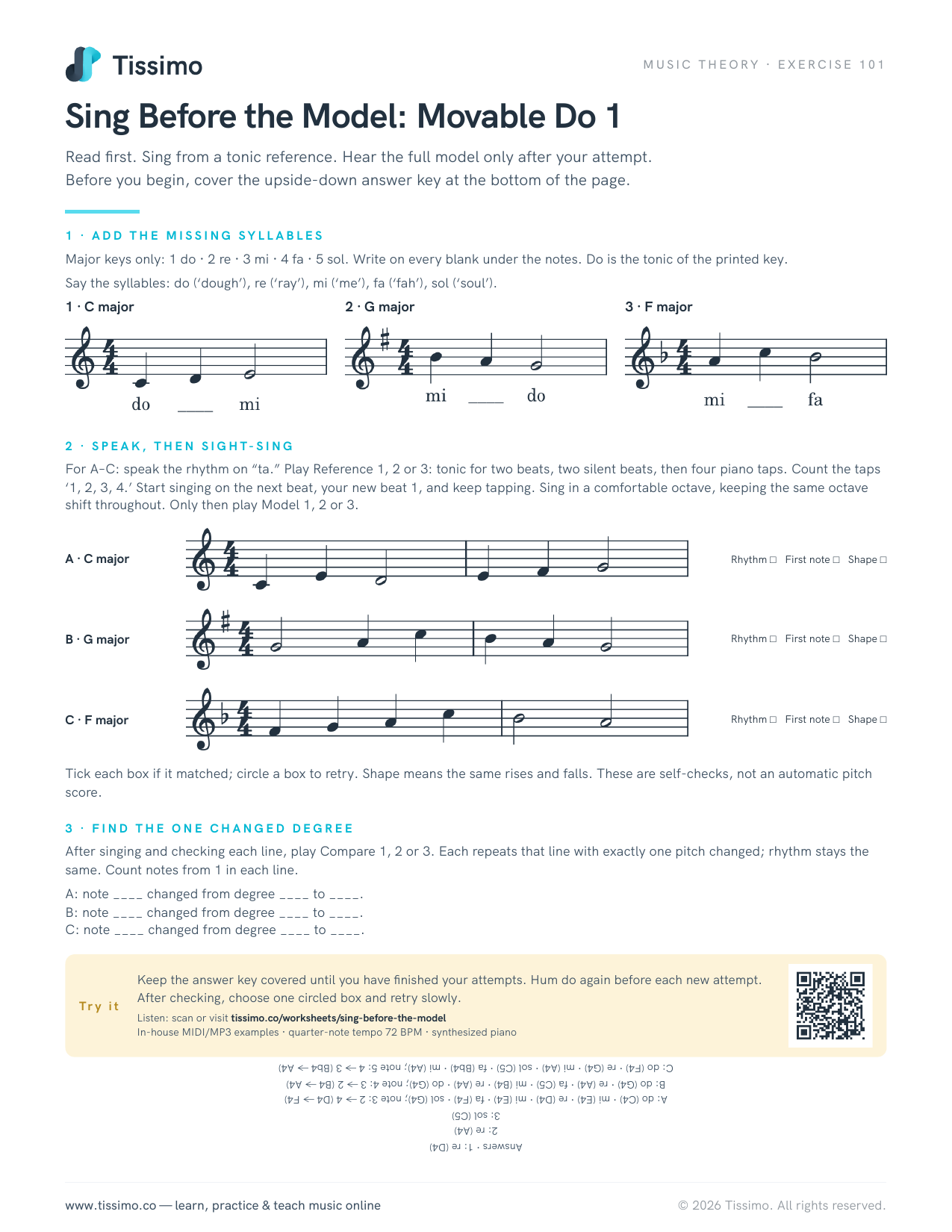 Sing Before the Model: Movable Do 1Read first. Sing from a tonic reference. Hear the full model only after your attempt. Before you begin, cover the upside-down answer key at the bottom of the page.
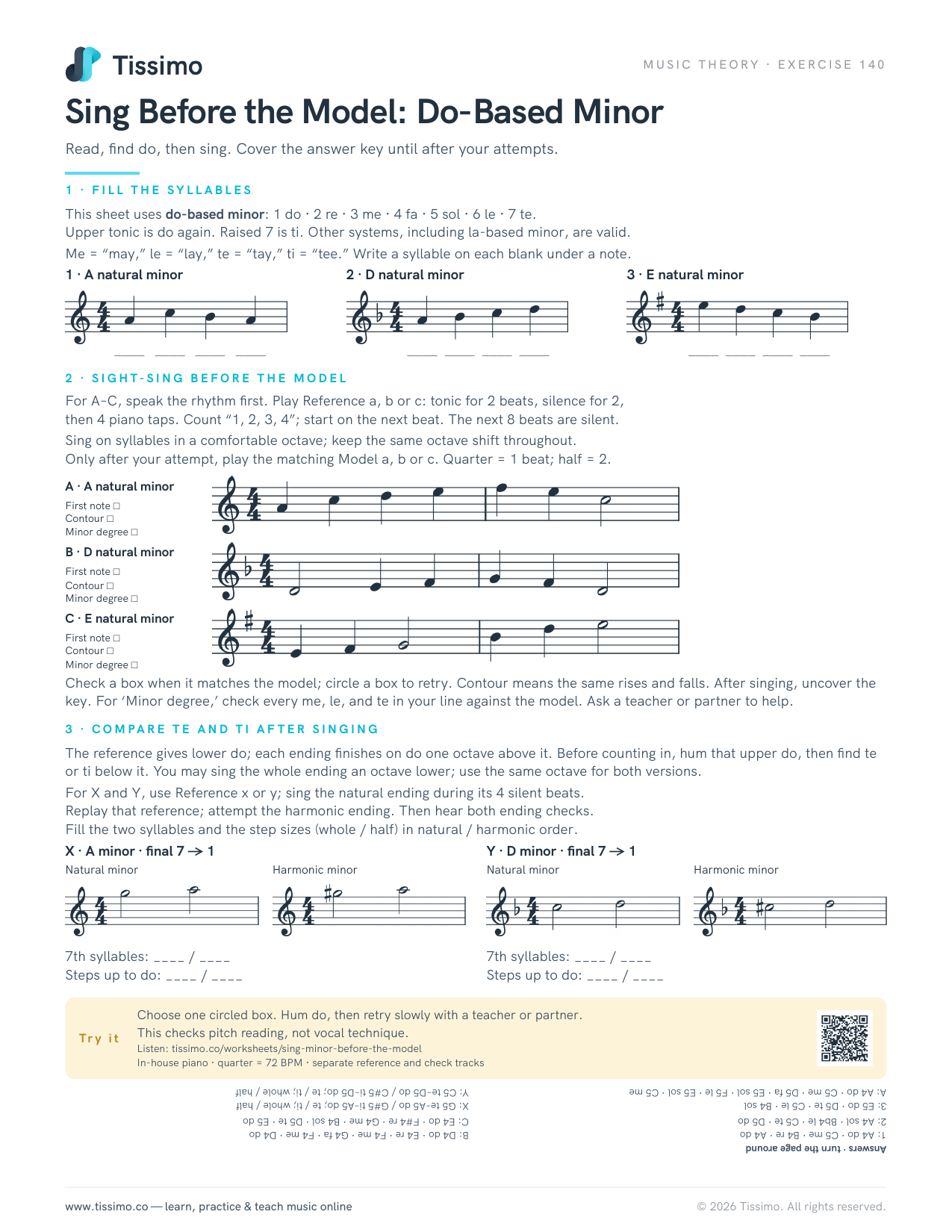 Sing Before the Model: Do-Based MinorRead, find do, then sing. Cover the answer key until after your attempts.
Comments