Technique & Performance
Dictation (Melodic and Rhythmic Dictation)
Dictation is writing down music you hear: a melody (melodic dictation), a rhythm (rhythmic dictation) or a chord progression (harmonic dictation), usually after a set number of hearings and without an instrument.
In a dictation exercise a teacher, a recording or an app plays a short passage, and you write it down in notation. It works in the opposite direction from sight-reading: instead of turning notes on the page into sound, you turn sound into notes on the page. Music schools teach it as part of ear training (aural skills), and it appears in exams. The AP Music Theory exam, for example, has two melodic dictation and two harmonic dictation questions.
Kinds of dictation
- Rhythmic dictation: you hear a rhythm, often played on one pitch or clapped, and write the note values in the given meter.
- Melodic dictation: you write down a melody, its pitches and its rhythm. Usually the key, the meter and the first note are given.
- Harmonic dictation: you hear a short chord progression, often in four parts, then write the bass line and the top line and name the chords, for example with Roman numerals.
Dictation is close to transcription, but stricter: the passage is short, it is played a fixed number of times, and you work without an instrument.
How to take melodic dictation
- Before it plays, look at the key signature and the meter, and sing the tonic and the given first note.
- First hearing: just listen. Find the beat, sing the tune back in your head and notice its shape: where it goes up or down, where it steps and where it leaps (its contour).
- Next hearings: write down what you are sure of first, often the beginning and the end. Many melodies begin and end on notes of the tonic chord.
- Fill in the middle. Some teachers suggest writing the whole rhythm first and then the pitches; others suggest putting pitches on the staff from the first hearing. Try both and keep what works for you.
- Check: sing what you wrote and compare it with the melody in your memory.
Scale-degree numbers or solfège syllables help you hear each note in relation to the tonic, which is what relative pitch means. You do not need perfect pitch.
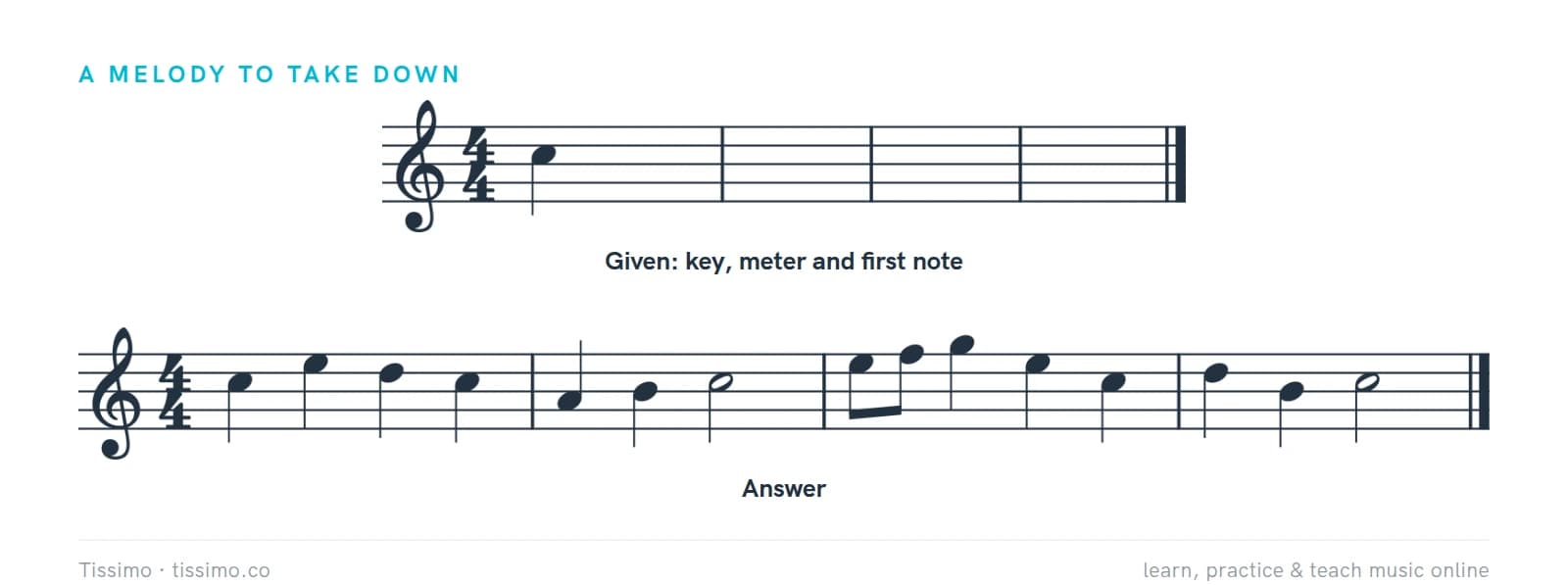
Try it below. Cover the lower staff and the caption, press play on the first panel and write the melody on paper. Then uncover the answer and compare.
Practicing
Start with two-bar melodies in a major key that move mostly by step, and short rhythms in 2/4 or 4/4. Then add leaps, minor keys and compound meter. Tissimo's Melodic Dictation page sets out a plan, and Ear Training: Melodic Dictation, Ear Training: Rhythm Dictation, Minor Melodic Dictation: Hear the Seventh and Rhythm Dictation: Two Beats, Three Parts Each give you material to practice with.
Common questions
What is melodic dictation?
Writing down a melody you hear, both its pitches and its rhythm, usually after a set number of hearings. The key, the meter and the first note are normally given.
Do you need perfect pitch for dictation?
No. Dictation relies on relative pitch: hearing each note in relation to the tonic and to the note before it. That skill grows with regular practice.
Practice it: free worksheets
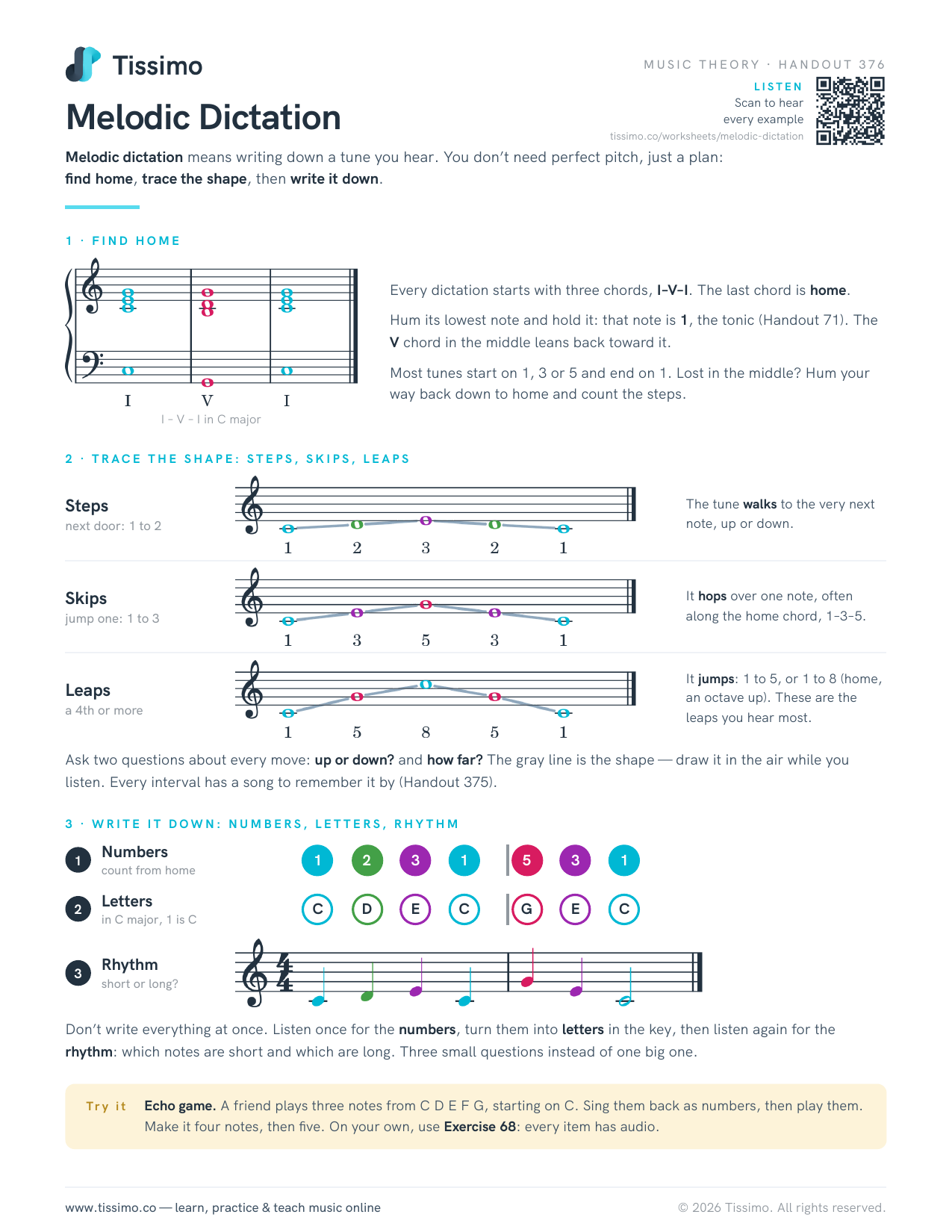 Melodic DictationMelodic dictation means writing down a tune you hear. You don’t need perfect pitch, just a plan: find home, trace the shape, then write it down.
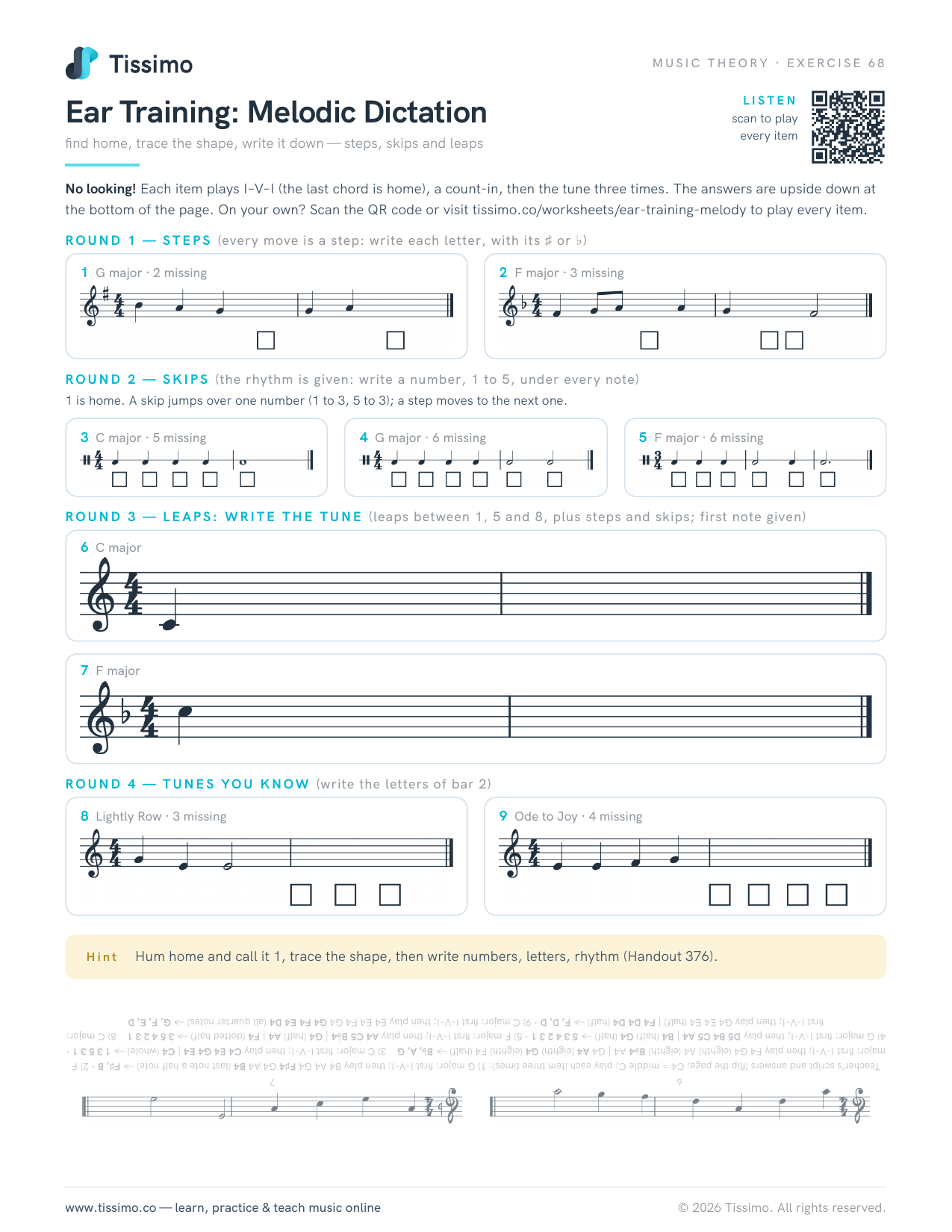 Ear Training: Melodic Dictationfind home, trace the shape, write it down — steps, skips and leaps
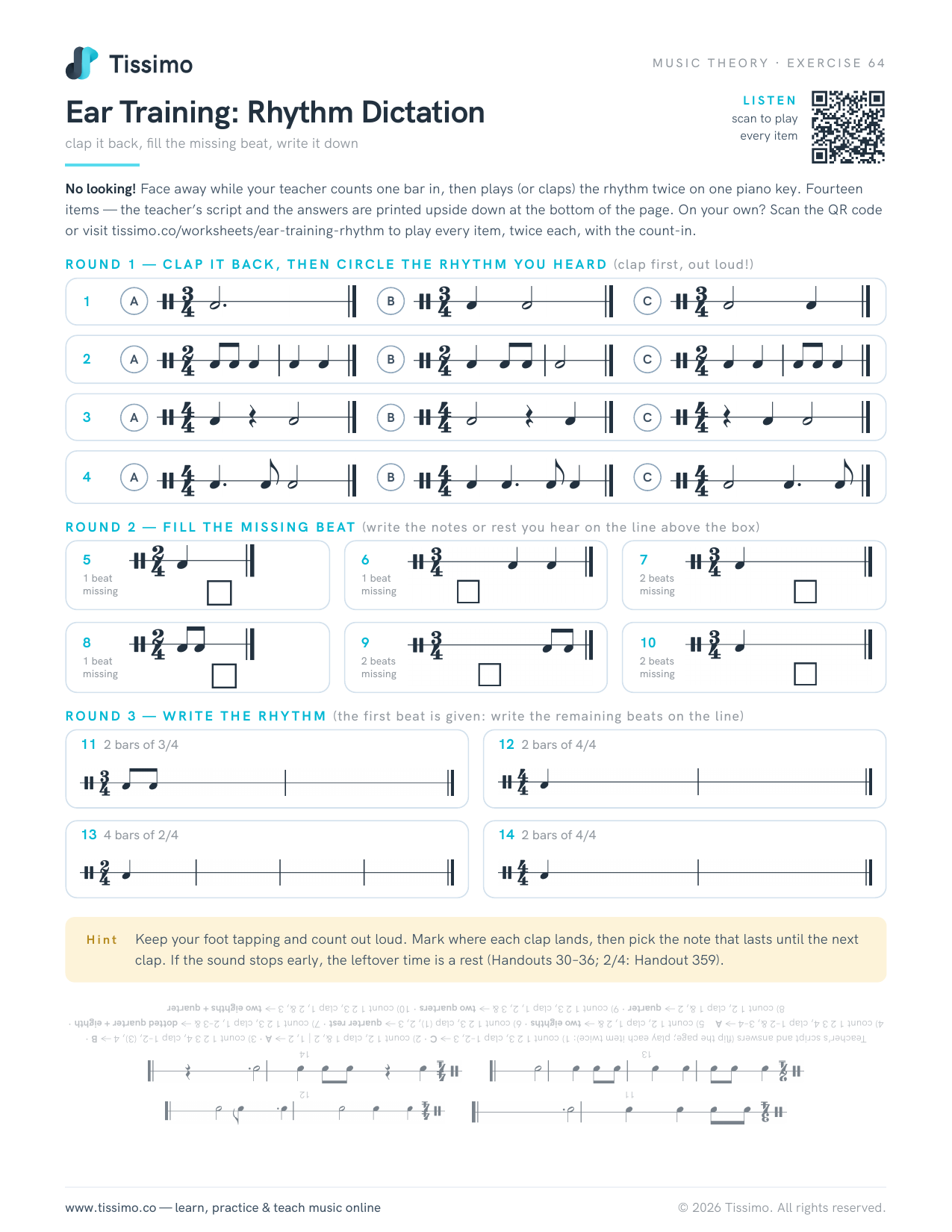 Ear Training: Rhythm Dictationclap it back, fill the missing beat, write it down
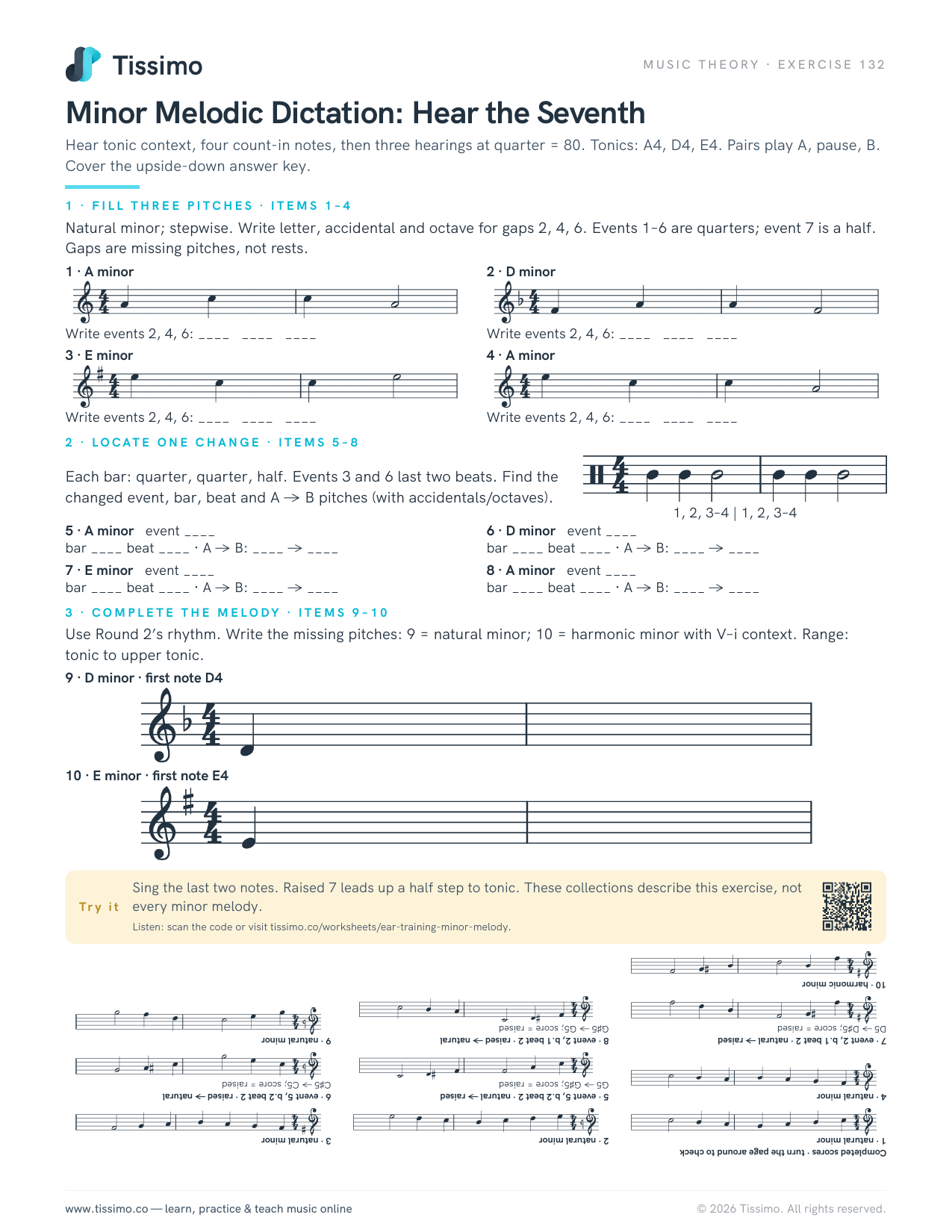 Minor Melodic Dictation: Hear the SeventhHear tonic context, four count-in notes, then three hearings at quarter = 80. Tonics: A4, D4, E4. Pairs play A, pause, B. Cover the upside-down answer key.
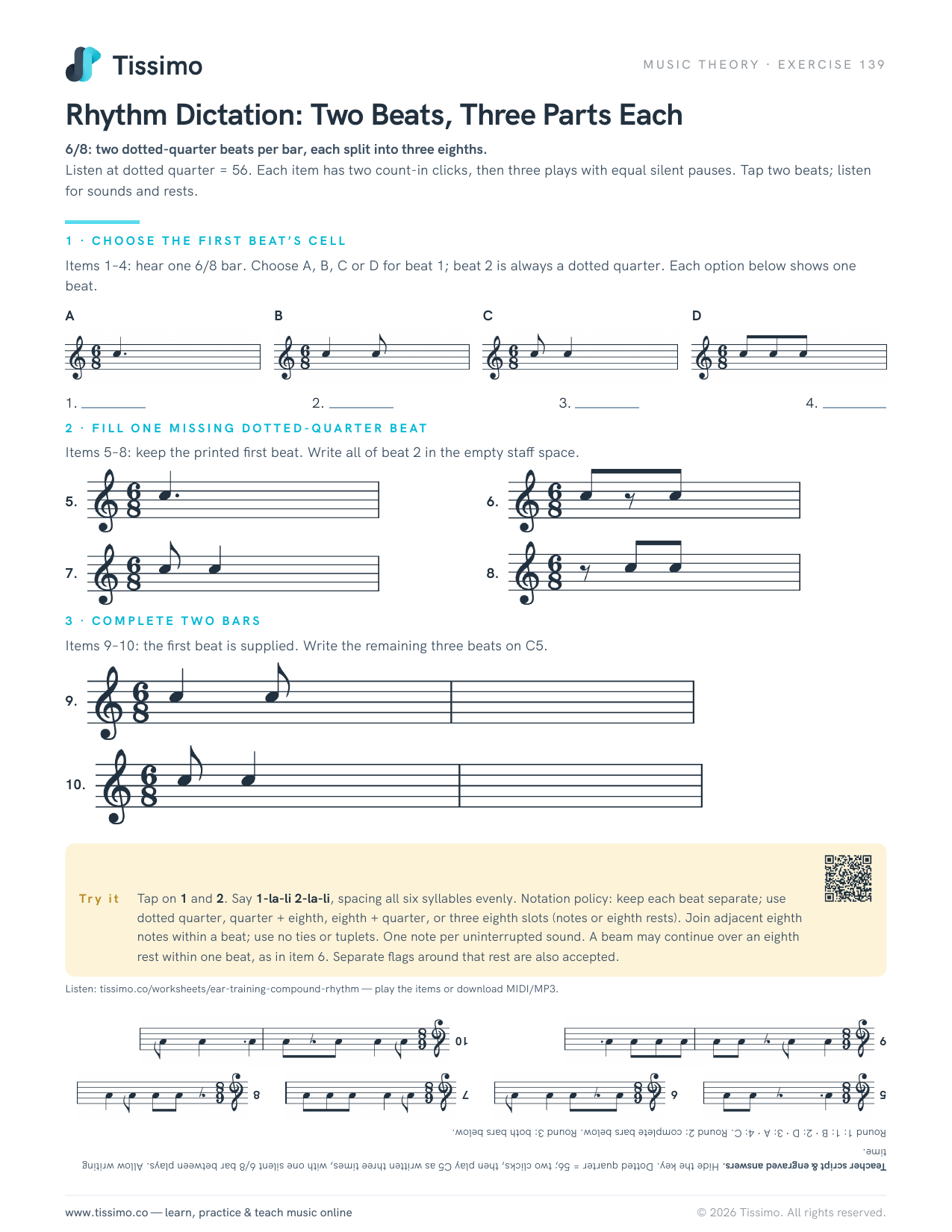 Rhythm Dictation: Two Beats, Three Parts Each6/8: two dotted-quarter beats per bar, each split into three eighths. Listen at dotted quarter = 56. Each item has two count-in clicks, then three plays with equal silent pauses. Tap two beats; listen for sounds and rests.
Comments