Articulation & Ornaments
Flutter-Tonguing
Written as flz.
Flutter-tonguing is a woodwind and brass effect: the player rolls an R, with the tongue tip or in the throat, while blowing, so the note buzzes and flutters. It is marked with three tremolo strokes and often flz.
Flutter-tonguing is a special effect for woodwind and brass players. Instead of starting a note with a single "t" or "d", the player rolls an R while blowing, like the rolled r of Spanish or Italian, so the air stream is chopped very fast and the note buzzes and flutters. Some players use a guttural R in the throat instead, a little like gargling. That way is quieter and suits soft passages, and it helps players who cannot roll a tongue-tip R.
How it is written
The usual sign is three tremolo strokes through the stem, or above or below a whole note, which has no stem. Often a word or abbreviation goes with it:
- flz. or flt., short for German Flatterzunge, "flutter tongue"
- frullato (Italian), sometimes shortened to frull.
- f.t. in English
On a woodwind or brass part, three strokes with no word are generally read as flutter-tonguing too; the word simply removes any doubt.

Where you hear it
Flutter-tonguing is used on the flute, clarinet, saxophone, trumpet, trombone and other winds, though not equally often. On the clarinet it is possible across the whole range but seldom asked for. On the trumpet it works best in the middle register and sounds piercing and exaggerated, especially with a mute. Richard Strauss used it in his tone poem Don Quixote, and in the 20th century it became a familiar orchestral color.
Learning it
- Roll an R on its own, as in the Spanish word perro, without the instrument.
- Keep rolling it while you blow a steady stream of air, still without the instrument.
- Now play a comfortable middle note and roll the R into the sound. Keep the air steady and strong; the flutter should not stop the tone.
- If a tongue-tip R will not come, try the throat R instead.
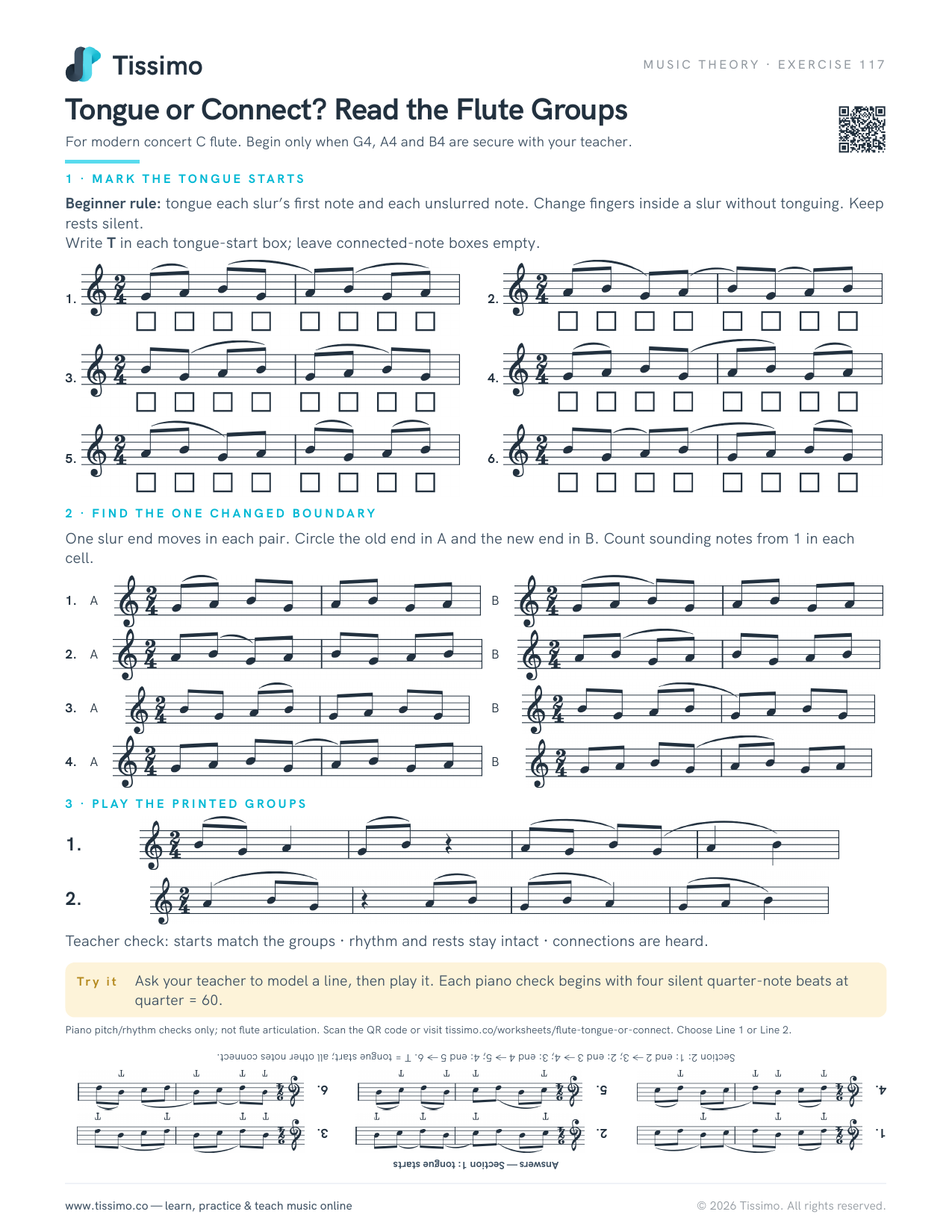
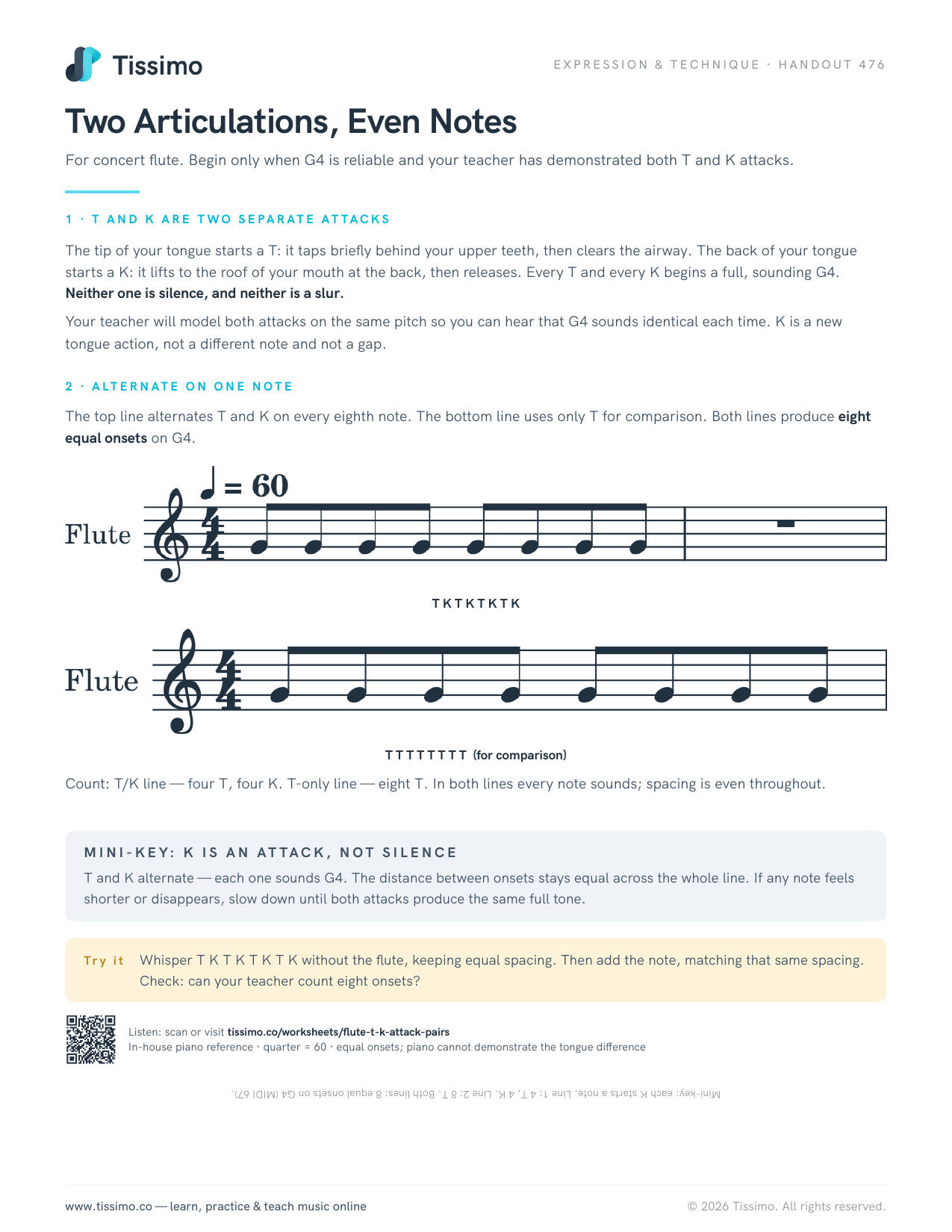
Secure ordinary tonguing first: on the flute, Tongue or Connect? Read the Flute Groups practices single tonguing and slurs, and Two Articulations, Even Notes the T and K attacks of double tonguing.
Not the same as double tonguing
Double and triple tonguing ("ta-ka", "ta-ka-ta") are ways to articulate many separate notes quickly. Flutter-tonguing is a continuous buzz on one note: the R rolls far faster than any tongued notes, and nothing is separated. It is not vibrato either, which is a gentle waver of pitch or intensity.
Common questions
How do you flutter-tongue?
Roll an R, as in Spanish, while you blow a steady stream of air through the instrument, so the tongue chops the air very quickly. If you cannot roll a tongue-tip R, a guttural R in the throat gives a similar, softer effect.
What does flz. mean in music?
It stands for German Flatterzunge, flutter-tonguing. It usually comes with three tremolo strokes on the note: roll an R while playing, so the note buzzes and flutters.
Comments