Styles, Genres & Eras
Disco
Disco is dance music of the 1970s, built on a steady four-on-the-floor bass drum, off-beat hi-hats, busy bass lines and lush strings and horns. It grew out of soul, funk and R&B in the dance clubs.
Disco is the dance music of the 1970s club. The name comes from discotheque, a club where people danced to records played by a DJ rather than to a live band. Disco grew out of soul, funk and R&B, and its roots lie in Black, Latino and gay club scenes in cities such as New York, before it became a mass craze. What set it apart was that it was music not only for dancing but about dancing.
From the clubs to the charts
Records such as George McCrae's "Rock Your Baby" and the Hues Corporation's "Rock the Boat" (both 1974) and Van McCoy's "The Hustle" (1975) carried the sound onto the radio. Donna Summer, Gloria Gaynor, Chic, KC and the Sunshine Band and the Village People followed. The film Saturday Night Fever (1977), with its Bee Gees soundtrack, made disco a mass phenomenon, and the craze peaked around 1978.
The sound
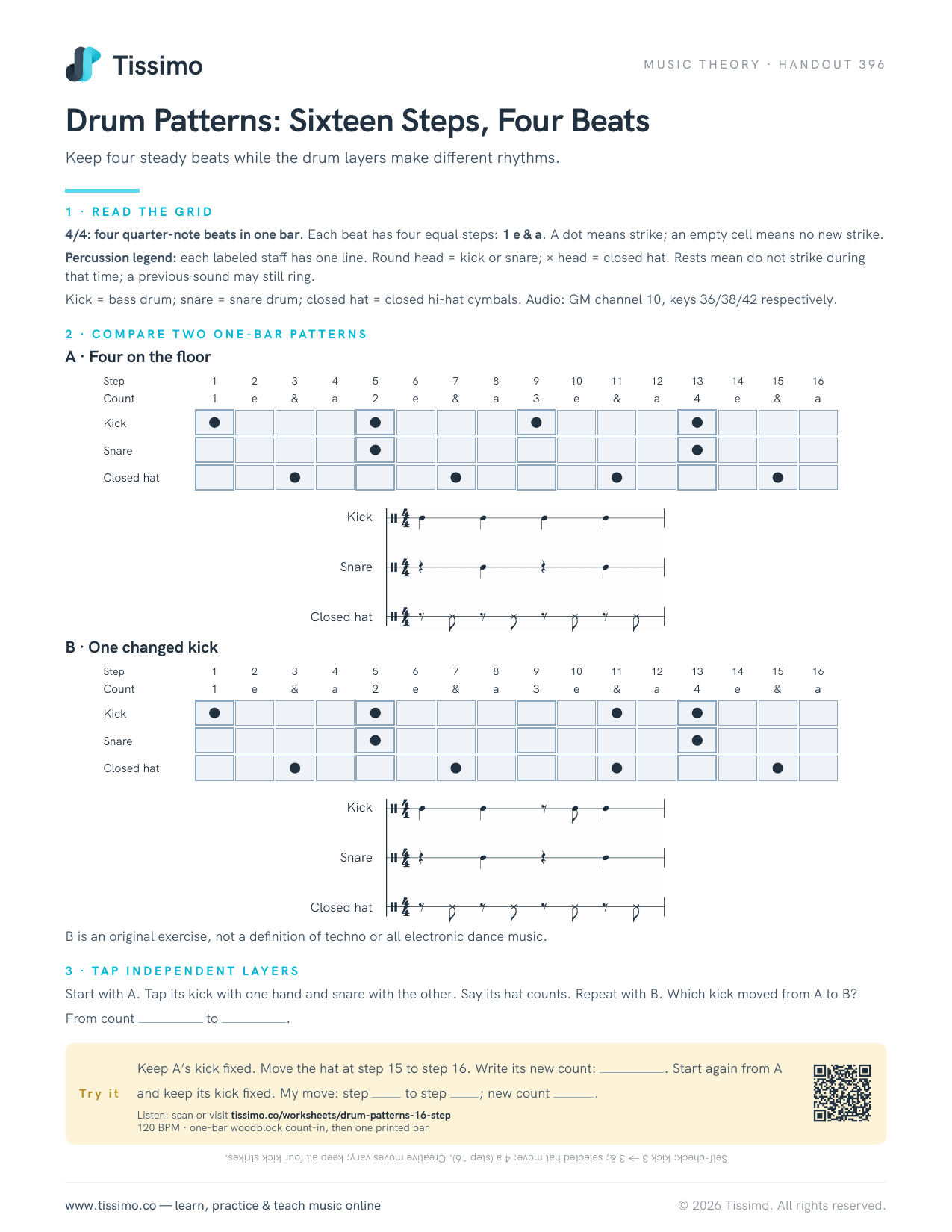
- Four on the floor: the bass drum plays on every beat, with a snare or handclap on 2 and 4. See four on the floor, which shows the beat on a drum kit.
- The hi-hat: steady eighth notes, often opened or accented on every "and" between the beats, the bright "tss" of disco.
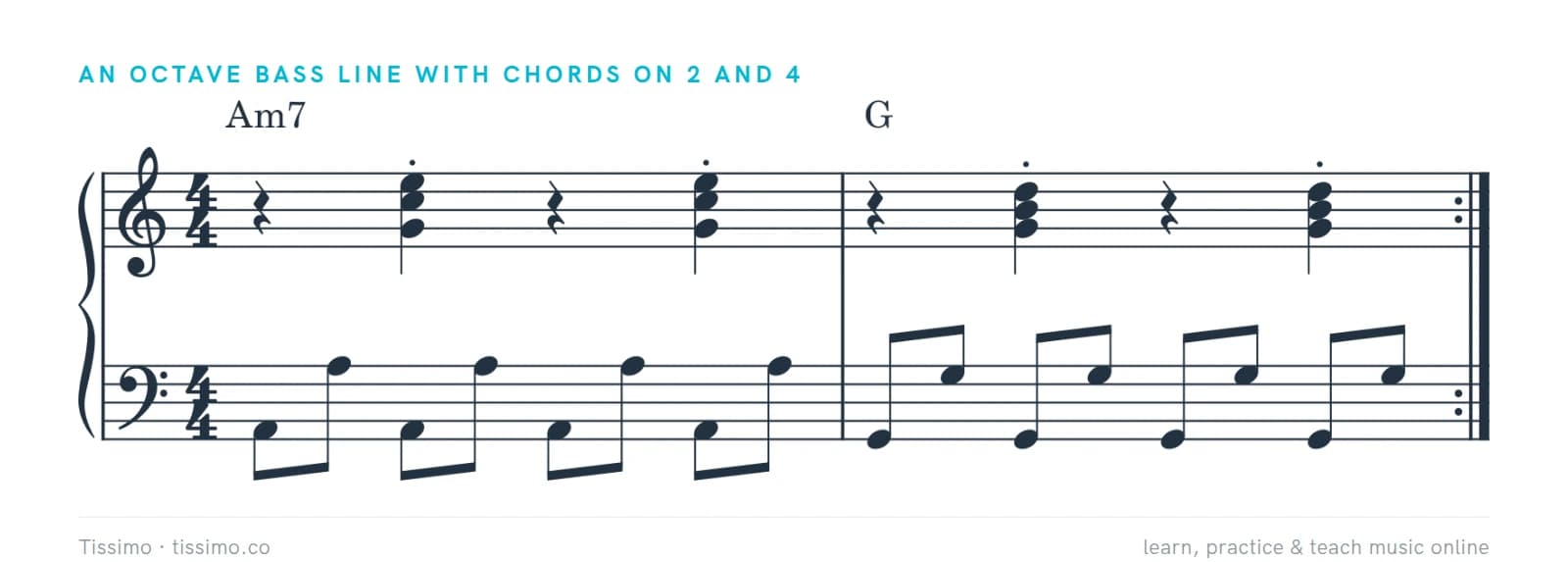
- The bass: busy, syncopated and melodic. A classic disco bass line jumps between a low note on the beat and the same note an octave higher in between.
- Strings, horns and keyboards: lush string and horn arrangements and electric keyboards on top of the rhythm section.
- Tempo: usually about 110 to 130 beats per minute, held steady.
Backlash and legacy
By 1979 disco was everywhere, and a backlash followed. On July 12, 1979, "Disco Demolition Night" at Chicago's Comiskey Park, where fans brought disco records to be blown up, became the symbol of the turn against it, and by 1981 the disco boom was over. The beat survived. House and techno grew directly out of disco's dance-floor music, new wave and rock bands borrowed its four-on-the-floor pattern, and it runs through electronic dance music today.
Playing a disco groove
At the piano, play the octave bass of the example with the left hand alone, keeping the low and high notes perfectly even, then add the right-hand chords on 2 and 4. On a drum kit, the foot plays four even kicks and the hi-hat lifts the "ands". Drum Patterns trains keeping four steady beats while the drum layers move around them.
Common questions
What is the difference between disco and funk?
Disco grew partly out of funk, and the two share syncopated bass and guitar parts. Funk leans on heavy syncopation and space around a strong first beat; disco keeps a steadier, more even dance pulse, with the bass drum on every beat and lush strings and horns on top.
What tempo is disco music?
Usually about 110 to 130 beats per minute, with four even bass-drum beats in every bar.
Comments