Rhythm & Meter
Four on the Floor
Four on the floor is a drum pattern with the bass drum on every beat of a 4/4 bar, usually with a snare or handclap on beats 2 and 4. It is the steady pulse of disco, house and much dance music.
Four on the floor is the steady "boom, boom, boom, boom" of dance music: the bass drum, or kick drum, plays on all four beats of every 4/4 bar. The name is usually explained by the drummer's foot: it works the bass-drum pedal on the floor, and here it comes down on all four beats.
The pattern
The kick on every beat is the defining part. Most often it is joined by a snare drum or handclap on beats 2 and 4, the backbeat, though some tracks leave the snare out altogether. The hi-hat fills in between; in many disco and dance grooves it plays mainly the off-beats, the "&" between the kicks, so the bar bounces between low kick and high cymbal.
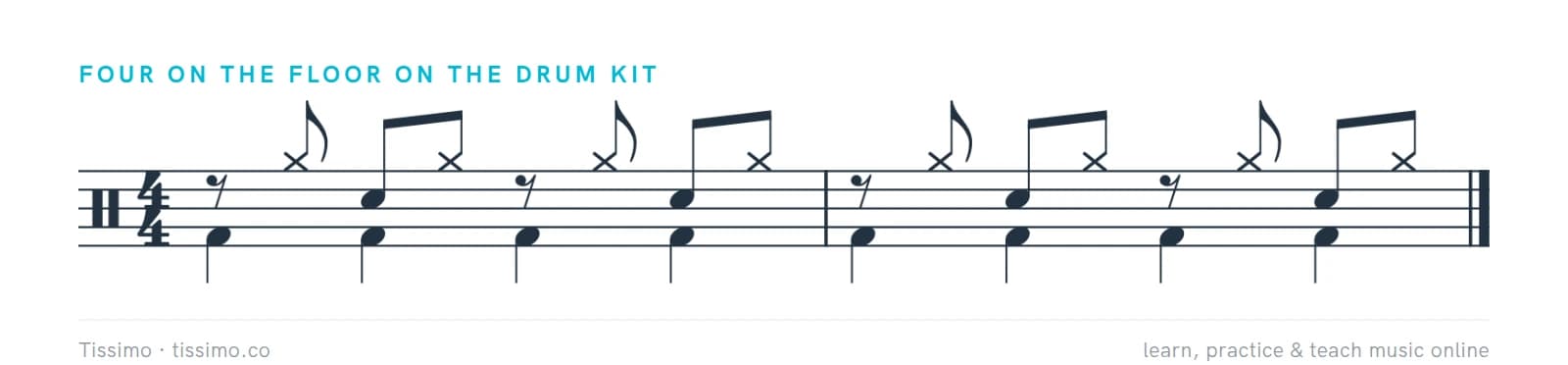
Compare the basic rock beat on the drum kit page, where the bass drum plays only on 1 and 3. With four kicks every beat carries the same weight, which makes the beat easy to find and to dance to.
Where you hear it
Disco made four on the floor its signature in the 1970s. House and techno, which grew out of disco in Chicago and Detroit in the 1980s, kept it, and it runs through much electronic dance music and dance-pop today. The idea is older than disco, though. In the swing era, Gene Krupa's drumming on Benny Goodman's 1937 recording of "Sing, Sing, Sing" keeps the bass drum on all four beats, and some 1950s rock and roll did the same.
Playing it
- On a drum kit: keep the bass-drum foot even and relaxed; every kick should be the same length and volume.
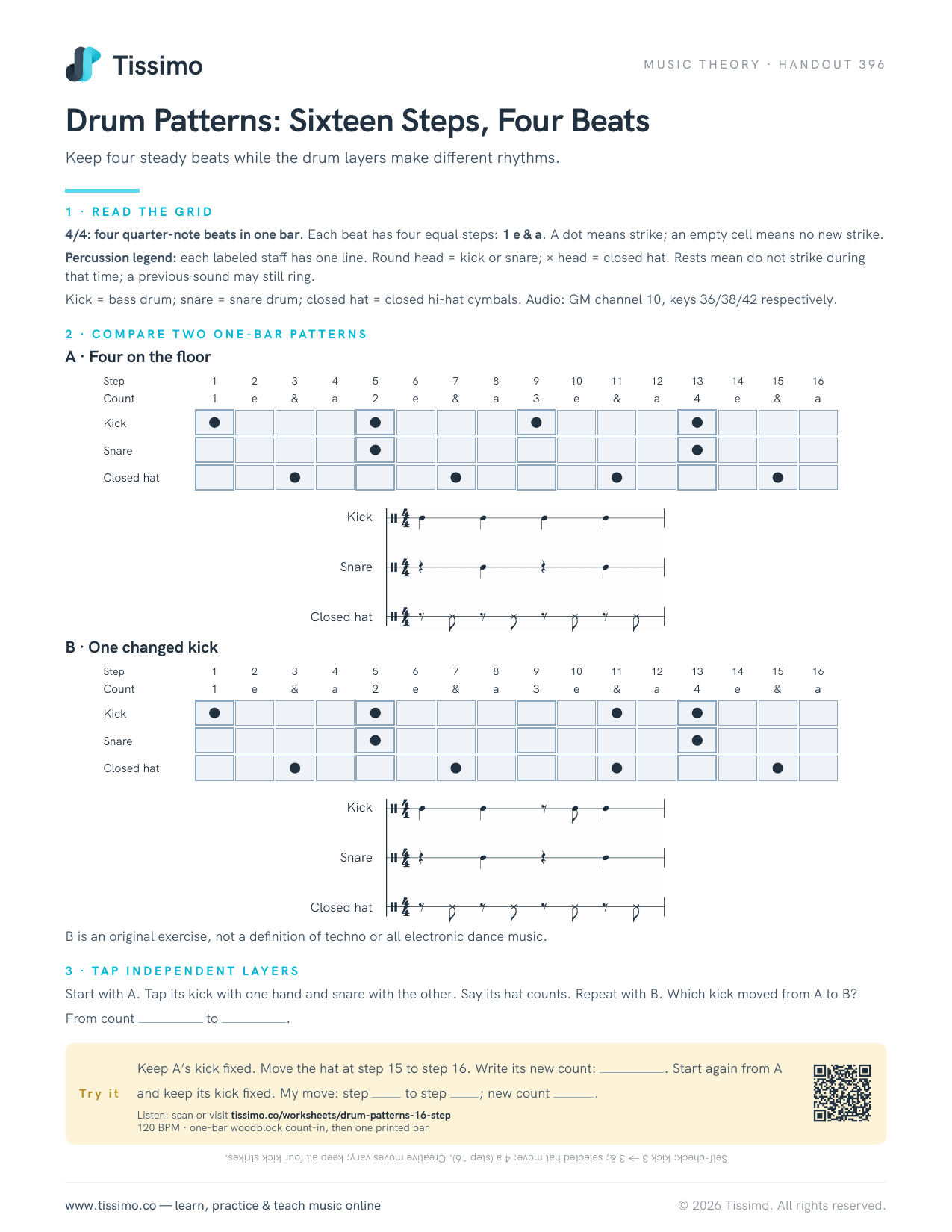
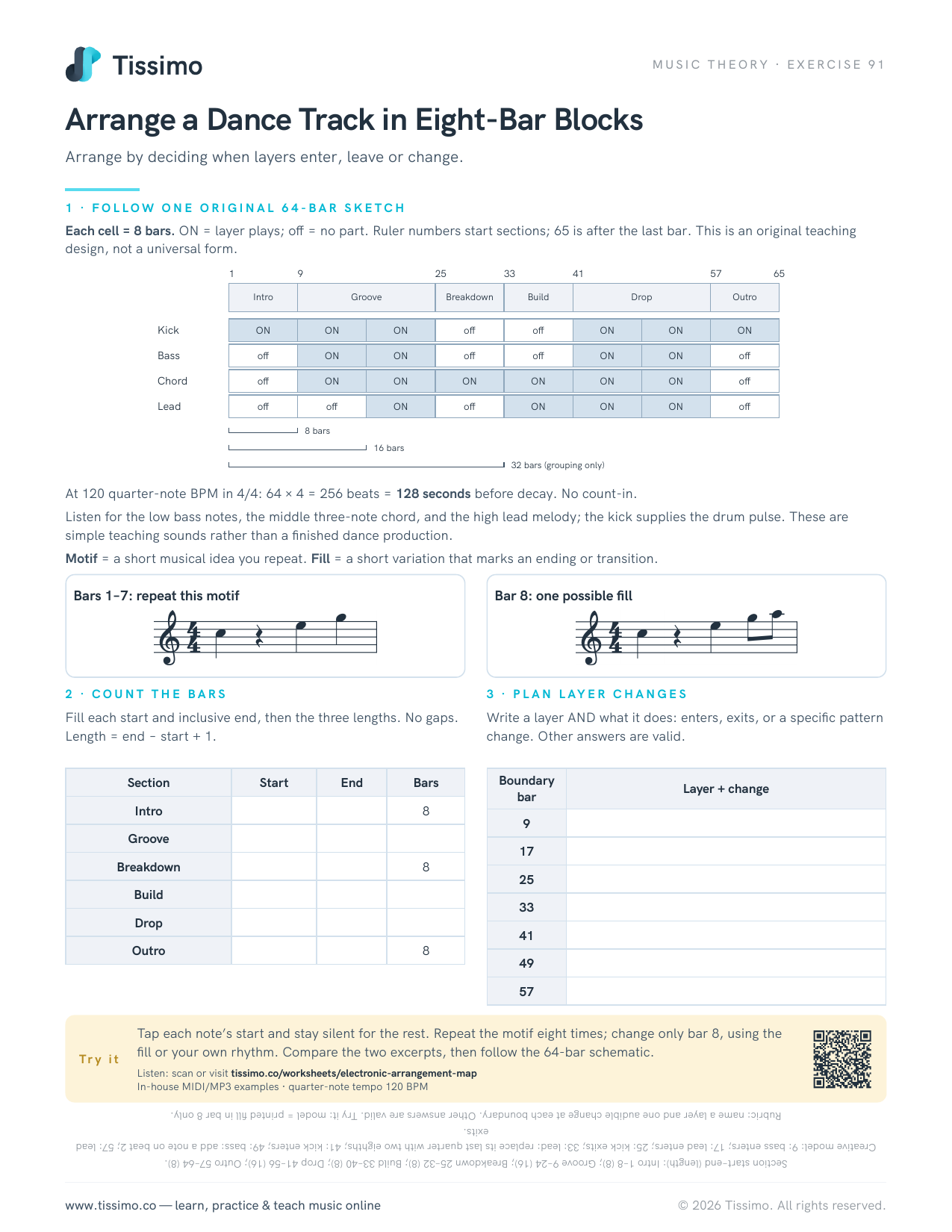
- On a step sequencer or drum machine: in a 16-step bar, put the kick on steps 1, 5, 9 and 13, one on each beat. See Drum Patterns: Sixteen Steps, Four Beats, whose first pattern is four on the floor, and Arrange a Dance Track in Eight-Bar Blocks, where the kick is the layer that carries the pulse.
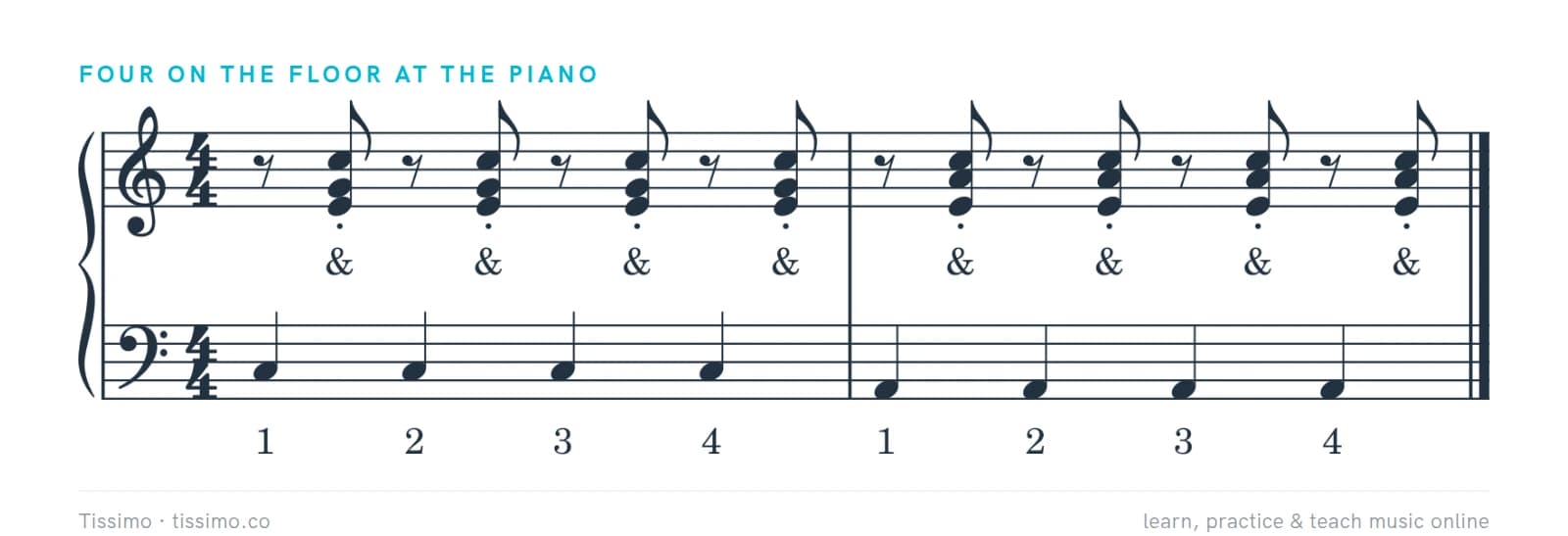
- On the piano: play steady low notes on every beat in the left hand and short chords on the off-beats in the right, as in the second example.
Four on the floor or 4/4?
No. 4/4 is a time signature: it says that each bar holds four quarter-note beats. Four on the floor says what the bass drum does with them. Plenty of music in 4/4, the basic rock beat included, puts the kick on only some of the beats.
Common questions
What does four on the floor mean?
The bass drum plays on every beat of a 4/4 bar: 1, 2, 3 and 4. It is usually combined with a snare or clap on 2 and 4, as in disco and house music.
Why is it called four on the floor?
The usual explanation is the bass-drum pedal: the drummer's foot, down on the floor, plays all four beats of the bar.
Comments