Styles, Genres & Eras
Big Band (Swing Era)
A big band is a large jazz ensemble of saxophones, trumpets, trombones and a rhythm section, playing written arrangements with improvised solos. Big bands defined the swing era of the 1930s and 1940s.
A big band is a large jazz ensemble, typically of 15 or more musicians, that plays written arrangements with room for improvised solos. In the 1930s and the first half of the 1940s, the swing era, big bands played the most popular dance music in the United States, and their leaders were celebrities. Big band music was so closely tied to that time that it was often simply called swing music.
The sections
Band sizes varied, but a big band is organized in sections. The typical lineup is:
- Saxophones: usually five, two altos, two tenors and a baritone. In the swing era the saxophonists often switched to clarinet as well.
- Trumpets: usually four.
- Trombones: usually four.
- The rhythm section: usually four, piano, bass, guitar and drums.
The brass and the reeds play off each other, and the saxophone was the leading solo instrument of the swing era.
The arrangement
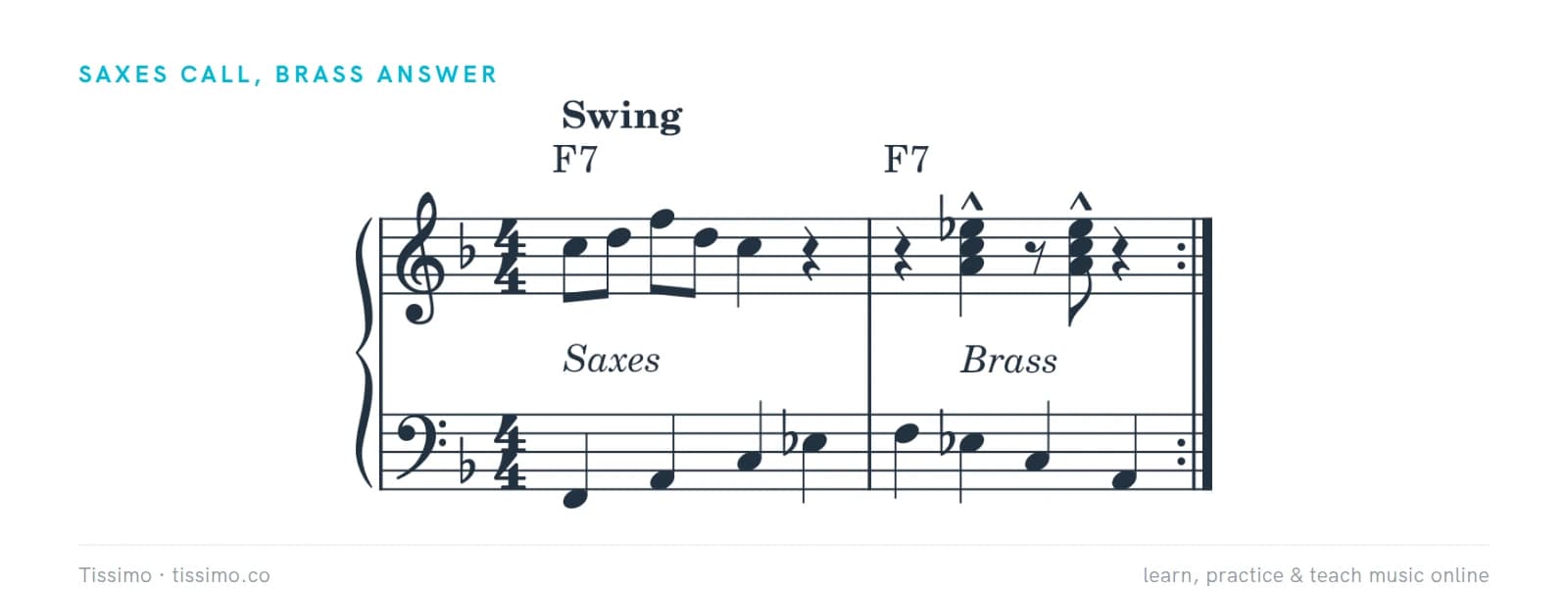
What makes a big band sound like one is the arranger. Fletcher Henderson and Don Redman are credited with creating the formula for the swing arrangement: each section gets its own part, in unison or in harmony, and written passages alternate with improvised solos. Arrangers build whole pieces from short, repeated riffs, pass the melody from section to section, and let the brass and the saxophones answer each other in call and response. Behind it all the bass walks and the drummer drives the beat.
Bands and leaders
- Fletcher Henderson, Duke Ellington and Jimmie Lunceford led celebrated orchestras in New York. Ellington wrote for the particular sound of each of his players.
- In Kansas City, Bennie Moten and Count Basie built a looser, riff-based style; Basie's "One O'Clock Jump" (1937) is a classic example.
- Benny Goodman, the "King of Swing", Artie Shaw and Glenn Miller led some of the most popular bands; their success owed much to African American arrangers such as Fletcher Henderson and Eddie Durham.
- Ella Fitzgerald sang with Chick Webb's orchestra, Frank Sinatra first became famous singing with Tommy Dorsey, and the International Sweethearts of Rhythm (formed in 1937) are remembered as the first multiethnic all-female swing band.
After the swing era
In the 1940s many younger jazz musicians turned to bebop, played by small groups for listening rather than dancing, and in the 1950s the rise of rock and roll took the dance floor. Big bands never disappeared: high school and college jazz ensembles all over the world use the same sections today, and a swing revival came in the 1990s.
Big band or swing?
Swing is also the name of a rhythmic feel: eighth notes written evenly but played long-short. Big bands play with that feel, and so do small jazz groups that have nothing to do with the swing era. "Big band" names the ensemble, "swing" names the feel, and "the swing era" names the period. Practice the feel in Swing Eighths and learn to hear it in Ear Training: Swing or Straight?.
Common questions
How many musicians are in a big band?
Usually 15 or more. The typical lineup, five saxophones, four trumpets, four trombones and a rhythm section of piano, bass, guitar and drums, adds up to 17, but sizes have always varied.
What is the difference between big band and swing?
A big band is the ensemble. Swing is the long-short rhythmic feel jazz is played with, and also the name of the big-band dance music of the 1930s and 1940s, the swing era. Small jazz groups swing too.
Practice it: free worksheets
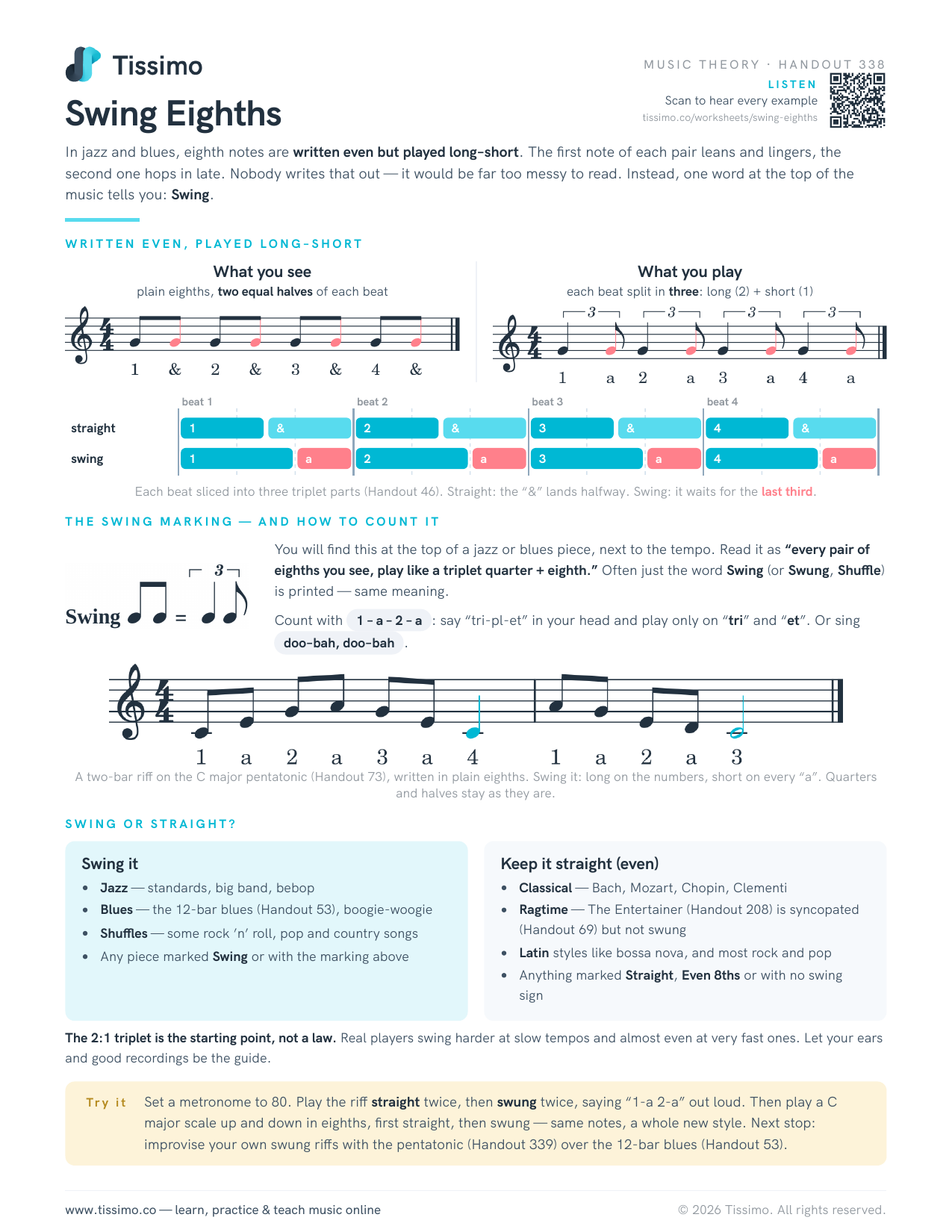 Swing EighthsIn jazz and blues, eighth notes are written even but played long–short. The first note of each pair leans and lingers, the second one hops in late. Nobody writes that out — it would be far too messy to read. Instead, one word at the top of the music tells you: Swing.
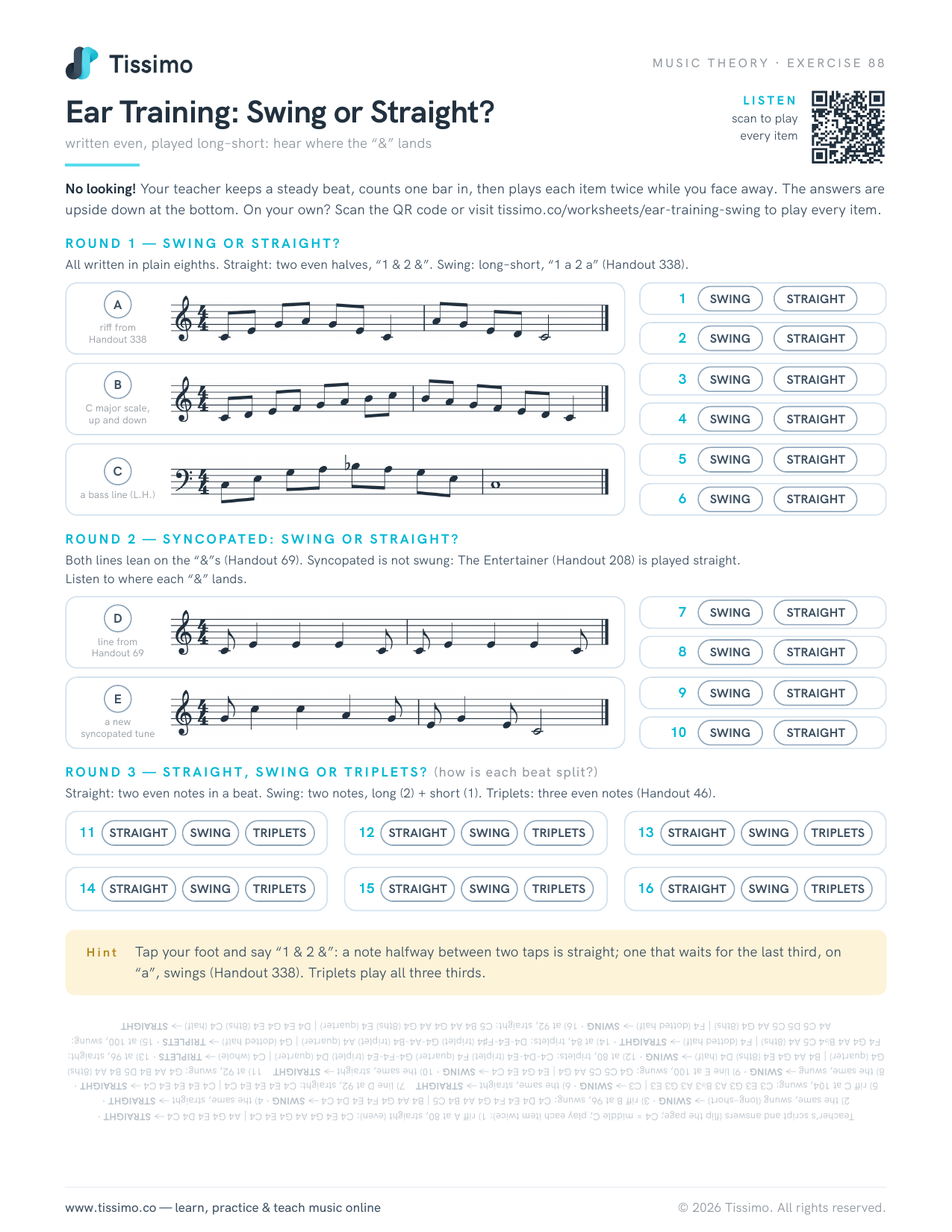 Ear Training: Swing or Straight?written even, played long–short: hear where the “&” lands
Comments