Notation & Symbols
Slash Notation
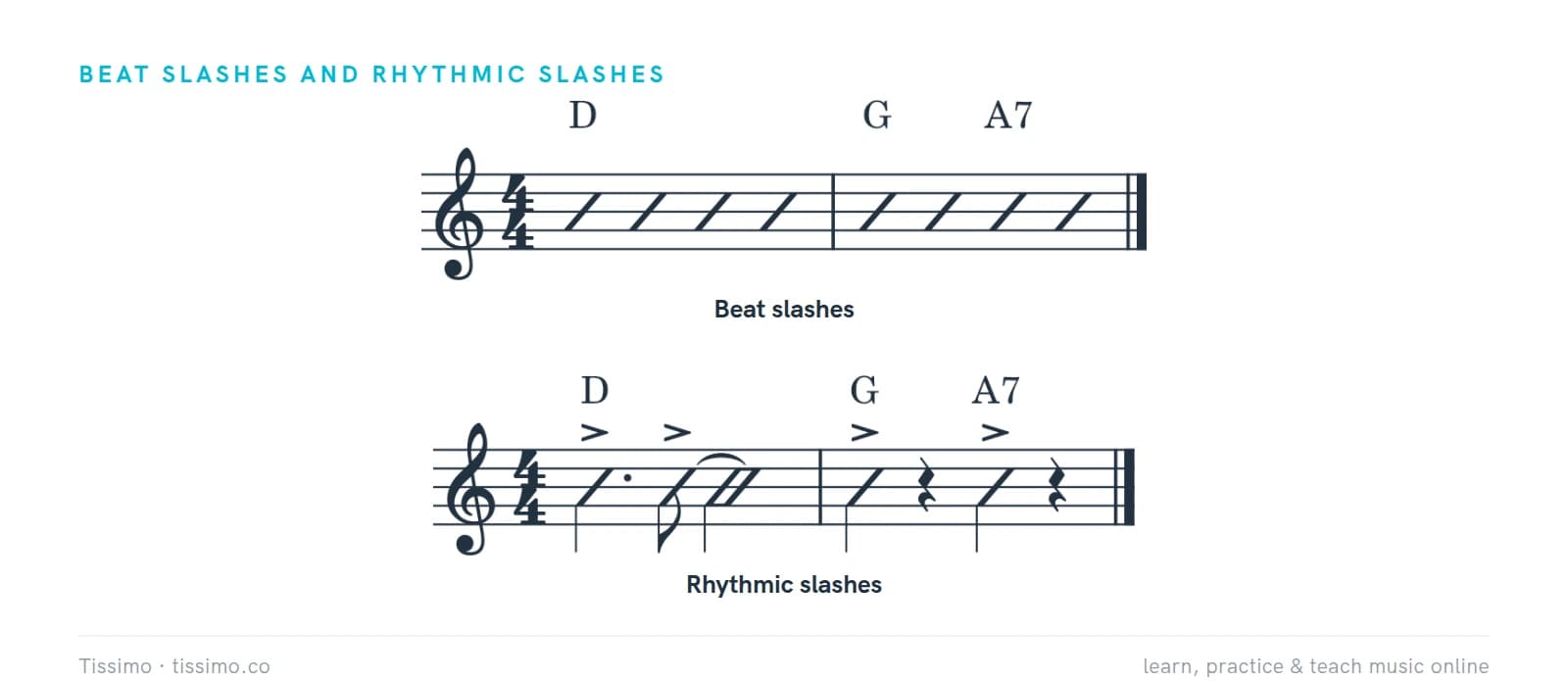
Slash notation writes slanted strokes in place of noteheads under chord symbols. A slash on each beat means play these chords for that many beats in your own rhythm; slashes with stems give an exact rhythm.
Slash notation is the shorthand of rhythm-section parts and chord charts. Instead of writing out every note for the piano, guitar or bass, the arranger writes chord symbols above the staff and puts slashes on the middle line to show the beats. The player makes up the actual notes, which is called comping.
Beat slashes: keep time, choose the rhythm
The most common form has one slash with no stem on each beat: four in a bar of 4/4. The slashes count beats; they do not ask you to strike a chord on each one. Under a C chord, four beat slashes mean "play C for four beats, in a rhythm and voicing that suit the style". Beat slashes are also used under solos and for stretches where the part should simply carry on in the style it has set up.
Rhythmic slashes: play exactly this rhythm
When the arranger wants a particular rhythm, the slashes get stems, flags and beams like ordinary notes. This is often called rhythmic notation. The pitches are still yours, but the rhythm is fixed: play the chord on each slash, for its written length, with any accents. Arrangers use it for hits that the whole band plays together, often with the horns. Both kinds can appear in one part, switching from free time to written hits and back.
Not every slash is slash notation
- A slash inside a chord symbol, as in C/E, names the bass note. That is a slash chord.
- Short diagonal strokes through a note's stem are tremolo strokes: repeat the note quickly.
- A large slash with a dot on each side, filling a whole bar, is a bar-repeat sign: play the previous bar again (see simile).
- A slash across a small note's stem marks an acciaccatura.
Playing from slashes
Count the slashes to keep your place, and watch where the chord symbols change: a symbol over the third slash of a bar starts on beat 3. With beat slashes, listen to the bass and drums and choose a pattern that fits the groove; a simple one played steadily is better than a busy one that wanders. When stemmed slashes appear, lock in with the players who share the hits.
A lead sheet asks for the same skill: read the chords, then build the accompaniment yourself. Practice it in Reading a lead sheet, Realize a lead sheet and Turn chords into grooves. For slashes on the page, play the strumming line in Change on the Count: Open Guitar Chords.
Common questions
What is the difference between slash notation and a slash chord?
Slash notation puts slashes on the staff to show beats or a rhythm. A slash chord is a chord symbol with a slash in it, such as C/E, which names the bass note.
Do I play a chord on every slash?
Not with beat slashes. They show how many beats the chord lasts, and you choose the rhythm. With stemmed rhythmic slashes, yes: play the chord in the written rhythm.
Practice it: free worksheets
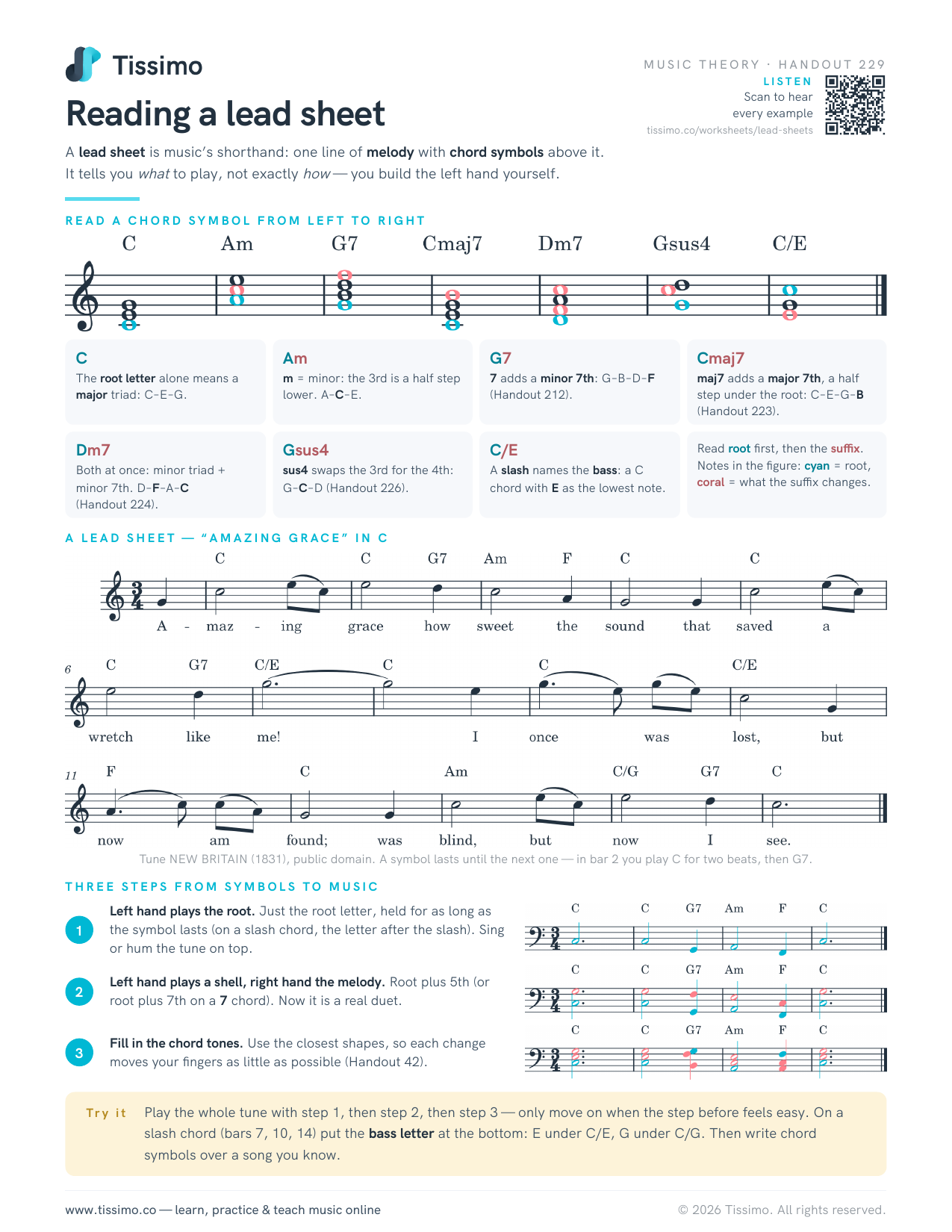 Reading a lead sheetA lead sheet is music’s shorthand: one line of melody with chord symbols above it. It tells you what to play, not exactly how — you build the left hand yourself.
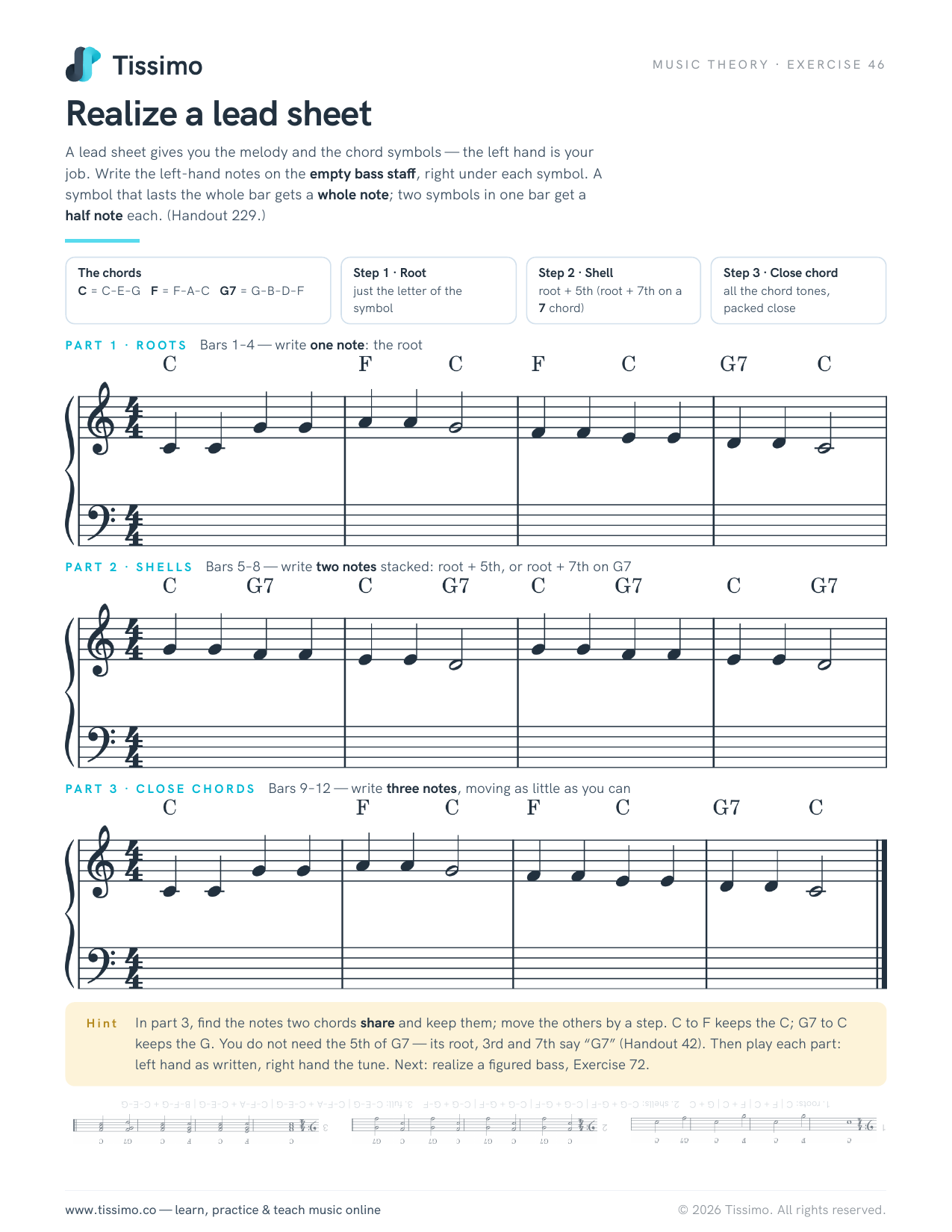 Realize a lead sheetA lead sheet gives you the melody and the chord symbols — the left hand is your job. Write the left-hand notes on the empty bass staff, right under each symbol. A symbol that lasts the whole bar gets a whole note; two symbols in one bar get a half note each. (Handout 229.)
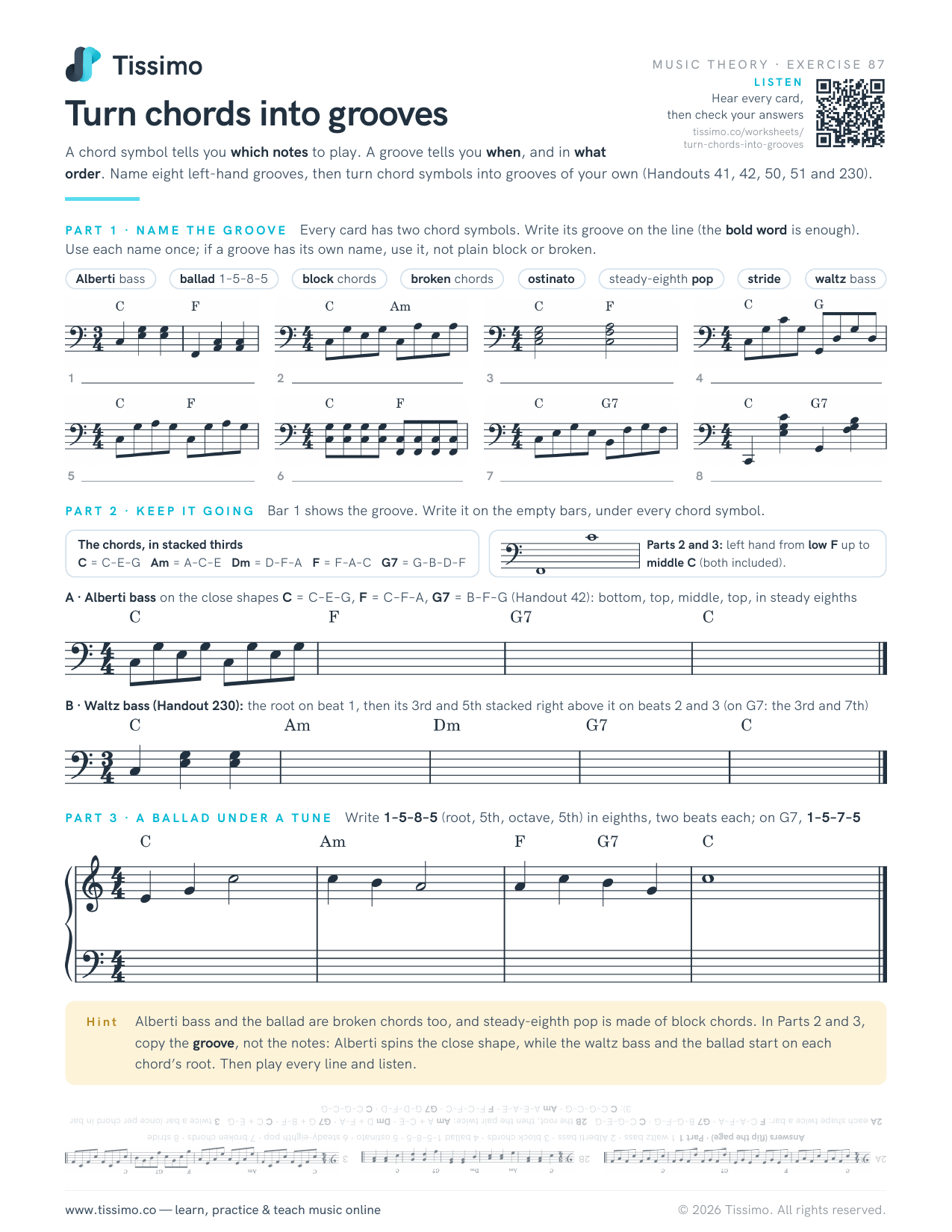 Turn chords into groovesA chord symbol tells you which notes to play. A groove tells you when, and in what order. Name eight left-hand grooves, then turn chord symbols into grooves of your own (Handouts 41, 42, 50, 51 and 230).
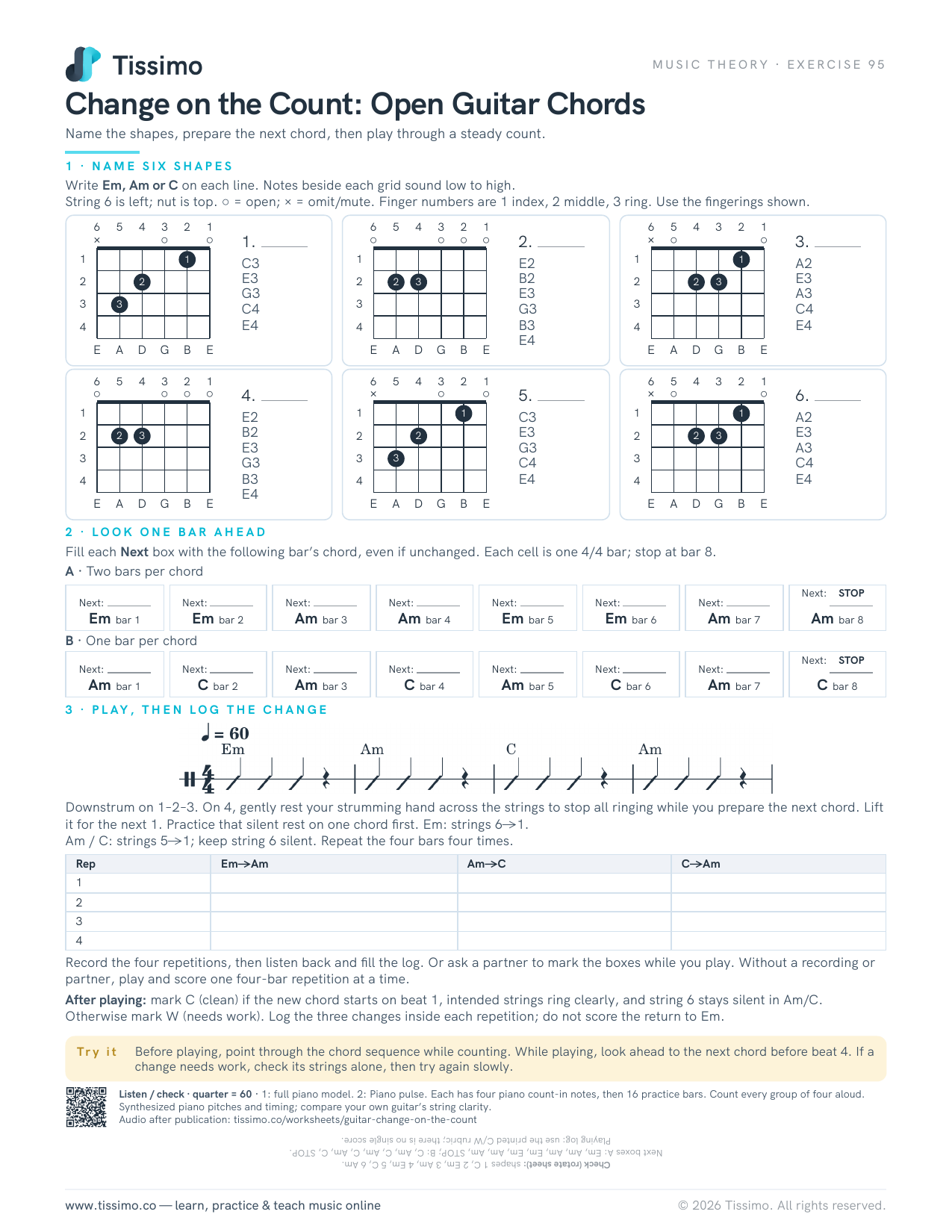 Change on the Count: Open Guitar ChordsName the shapes, prepare the next chord, then play through a steady count.
Comments