Technique & Performance
Ghost Note
A ghost note is a note played so softly that it is felt more than heard, most often a quiet snare stroke between the louder beats of a drum groove. It is usually written with its notehead in parentheses.
In drumming, a ghost note is a very soft stroke, most often on the snare drum, placed between the main notes of a groove. Ghost notes usually fall on the weak sixteenth notes, the "e" and "a" of the count, while the backbeat on 2 and 4 stays loud. They fill in the rhythm and give a groove its motion without getting in the way, and they are a large part of the sound of funk, R&B and many other styles.
How ghost notes are written
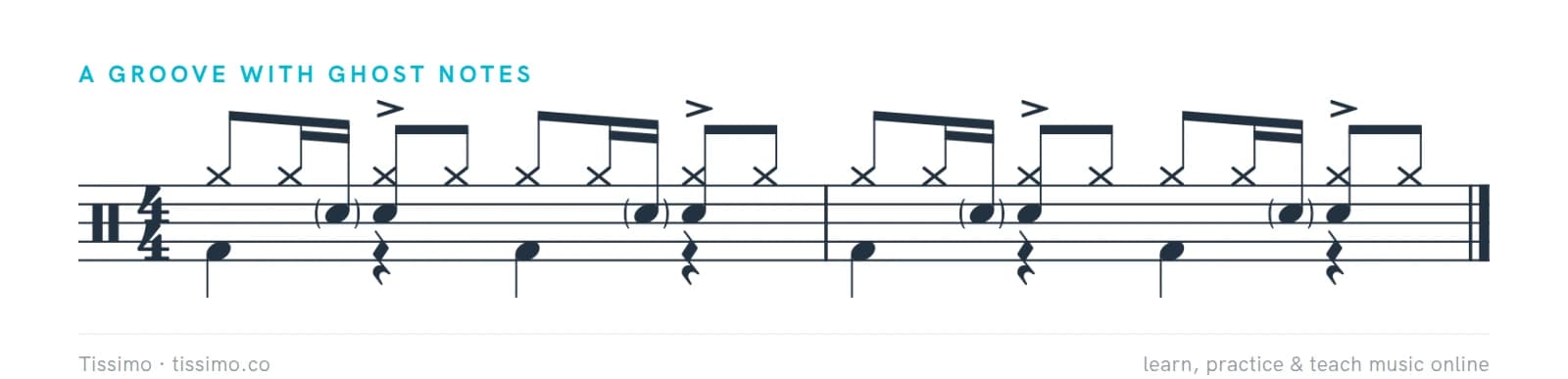
Drum parts usually write a ghost note with its notehead in parentheses. The parentheses do not mean "optional" here: they mean "very soft".
How to play them
The volume of a stroke comes mostly from how high the stick starts. Play ghost notes from very close to the head, only a centimeter or two above it, and play the backbeat from a much greater height. Some teachers suggest playing ghost notes from the wrist rather than the fingers, which helps keep them in time. In a typical groove the right hand keeps time on the hi-hat while the left hand plays both the ghost notes and the backbeats on the snare.
- Play the groove without ghost notes until it is steady.
- Add one ghost note per bar, as quietly as you can, and keep it exactly in its place.
- Add more, and check that the backbeat is still clearly louder.
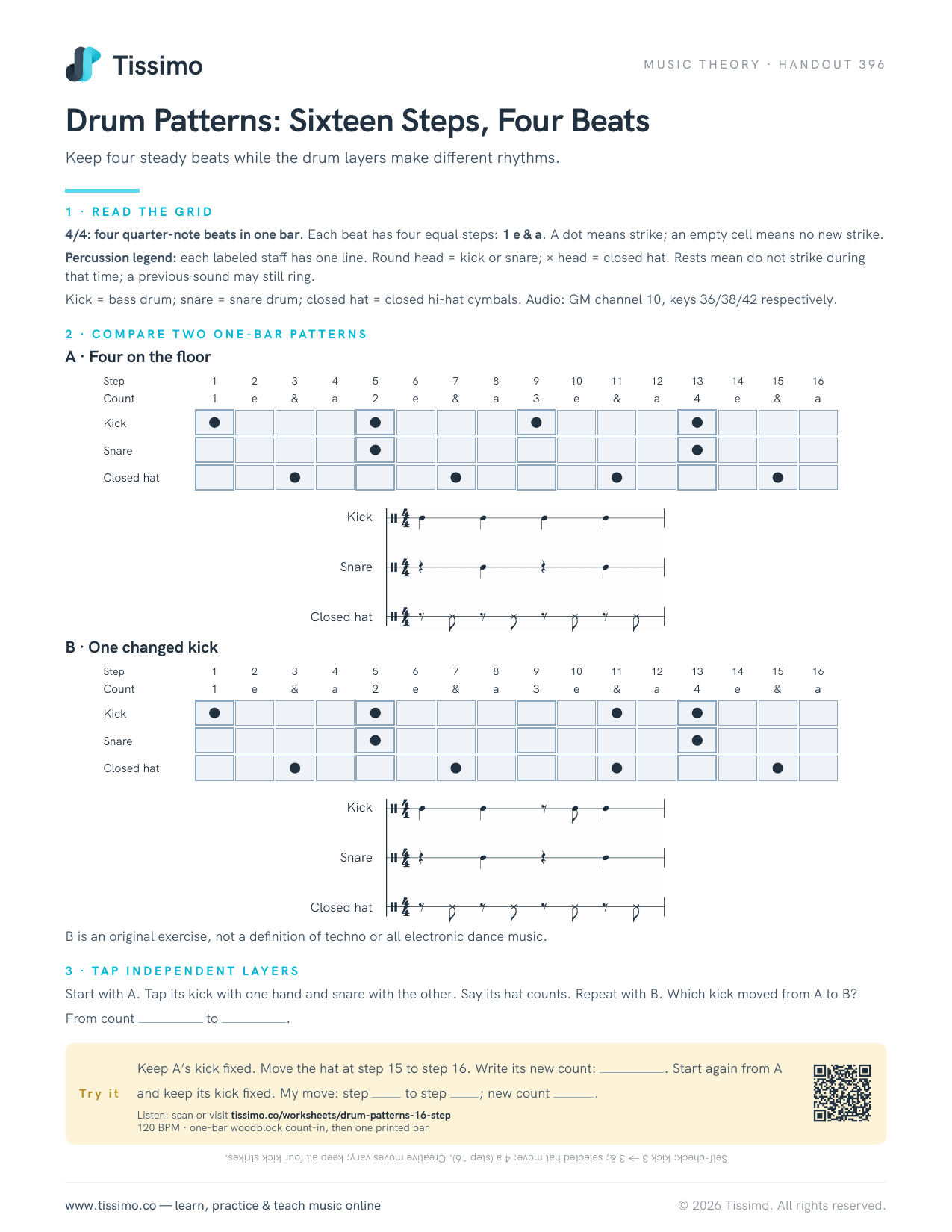
Drum Patterns: Sixteen Steps, Four Beats helps you find each sixteenth-note position.
Ghost notes on bass and guitar
Bass players and guitarists add percussive notes too. A dead note is played by resting the fretting fingers on the string without pressing it down and then plucking it, which gives a short thud with almost no pitch. Dead notes are usually written with an x notehead, on the staff and in tab.

The names are used loosely. Some bassists and books call dead notes "ghost notes" too. Others, such as the Guitar Pro notation software, keep the two apart: a ghost note is a very soft note in parentheses, a dead note a muted note marked x. Read the key or the context of your part.
Ghost note or accent?
They are opposites. An accent is louder than the notes around it, and a ghost note is much softer. Grooves rely on both: the contrast between a loud backbeat and quiet ghost notes is what makes them work.
Common questions
What do parentheses around a drum note mean?
Usually a ghost note: play it very softly, much quieter than the notes around it. Most often it is a snare note between the beats of a groove.
Is a ghost note the same as a dead note?
Not always. On drums, a ghost note is a very soft stroke. On bass and guitar, a dead note is a muted, nearly pitchless note marked with an x; some players call that a ghost note too, while others keep the names apart. Check the key of your part.
Comments