Technique & Performance
Palm Muting
Written as P.M.
Palm muting is a guitar technique in which the edge of the picking hand rests lightly on the strings near the bridge, so the notes sound short, dry and chunky instead of ringing. It is marked P.M. above the music.
In palm muting, the side of your picking hand rests lightly on the strings just where they leave the bridge while you pick. The hand damps the strings a little: the notes keep their pitch but lose their ring, and come out short, dry and punchy. It is a staple of heavy metal and rock rhythm guitar, often on power chords, and it is used, more lightly, in many other styles.
How to do it
- Rest the edge of your palm on the strings where they meet the bridge, holding the pick as usual.
- Pick and listen. Move the hand slightly farther onto the strings for a stronger mute, or back onto the bridge for more ring.
- Find the balance. Too far onto the strings and the notes die completely; too far back and nothing changes. Aim for a clear pitch with a short, chunky sound.
- Keep the pressure light. Let the hand rest, don't press.
To let higher strings ring while you mute the low ones, rest the palm on the bass strings only. Distortion makes palm-muted notes cut through, but the technique works with a clean sound too.
How it is written
Tab and guitar parts mark palm muting with P.M., followed by a dashed line that shows how long to keep muting. Where the line stops, lift the hand and let the notes ring.
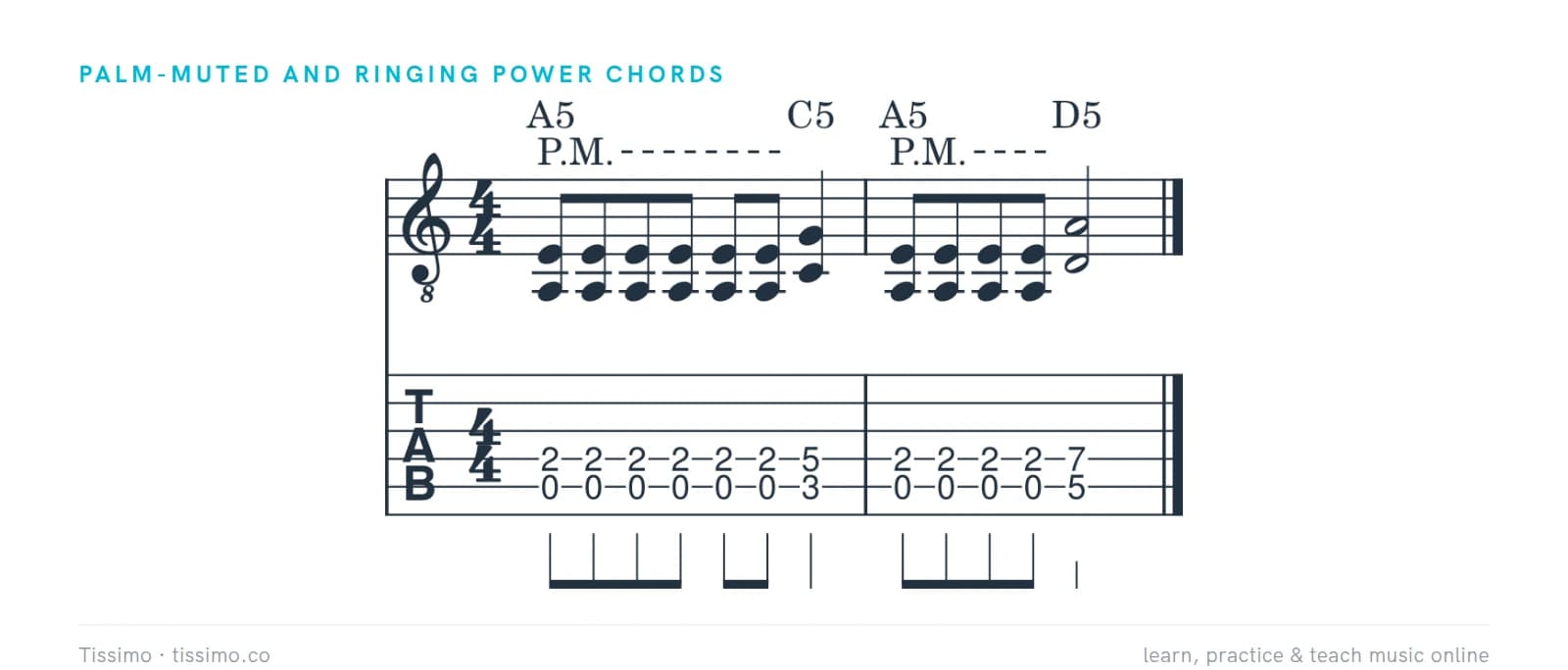
Riffs often alternate muted notes with unmuted, ringing ones, and the contrast gives the ringing chords their punch. Learn the shapes with One Shape, Many Roots and Which Power Chord Is It?, then practice the change slowly with a metronome, keeping each muted note the same length and loudness.
Palm mute, dead note or staccato?
A palm-muted note still has a clear pitch. A dead note, marked x, is muted by the fretting hand until it has almost no pitch; see ghost note. Staccato asks only for a shorter note, while palm muting also changes the tone. Palm muting has nothing to do with a mute, the device that brass and string players put on their instruments.
Common questions
What does P.M. mean in guitar tab?
Palm mute. Rest the side of your picking hand lightly on the strings near the bridge while you pick, for as long as the dashed line after P.M. lasts.
Where should my hand go for palm muting?
On the strings right where they meet the bridge. Move it slightly toward the neck for a stronger mute, or back toward the bridge if the notes sound completely dead.
Practice it: free worksheets
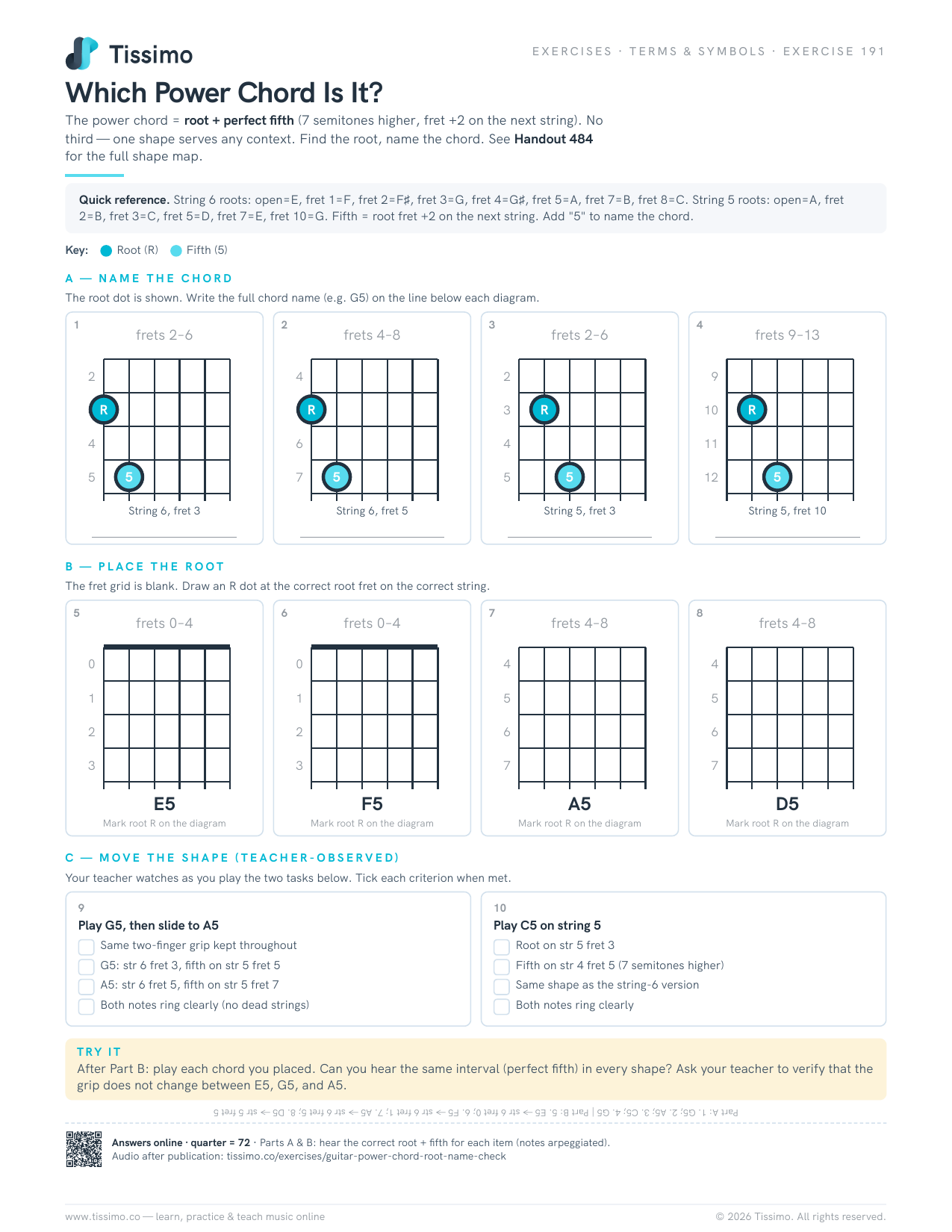 Which Power Chord Is It?The power chord = root + perfect fifth (7 semitones higher, fret +2 on the next string). No third — one shape serves any context. Find the root, name the chord. See Handout 484 for the full shape map.
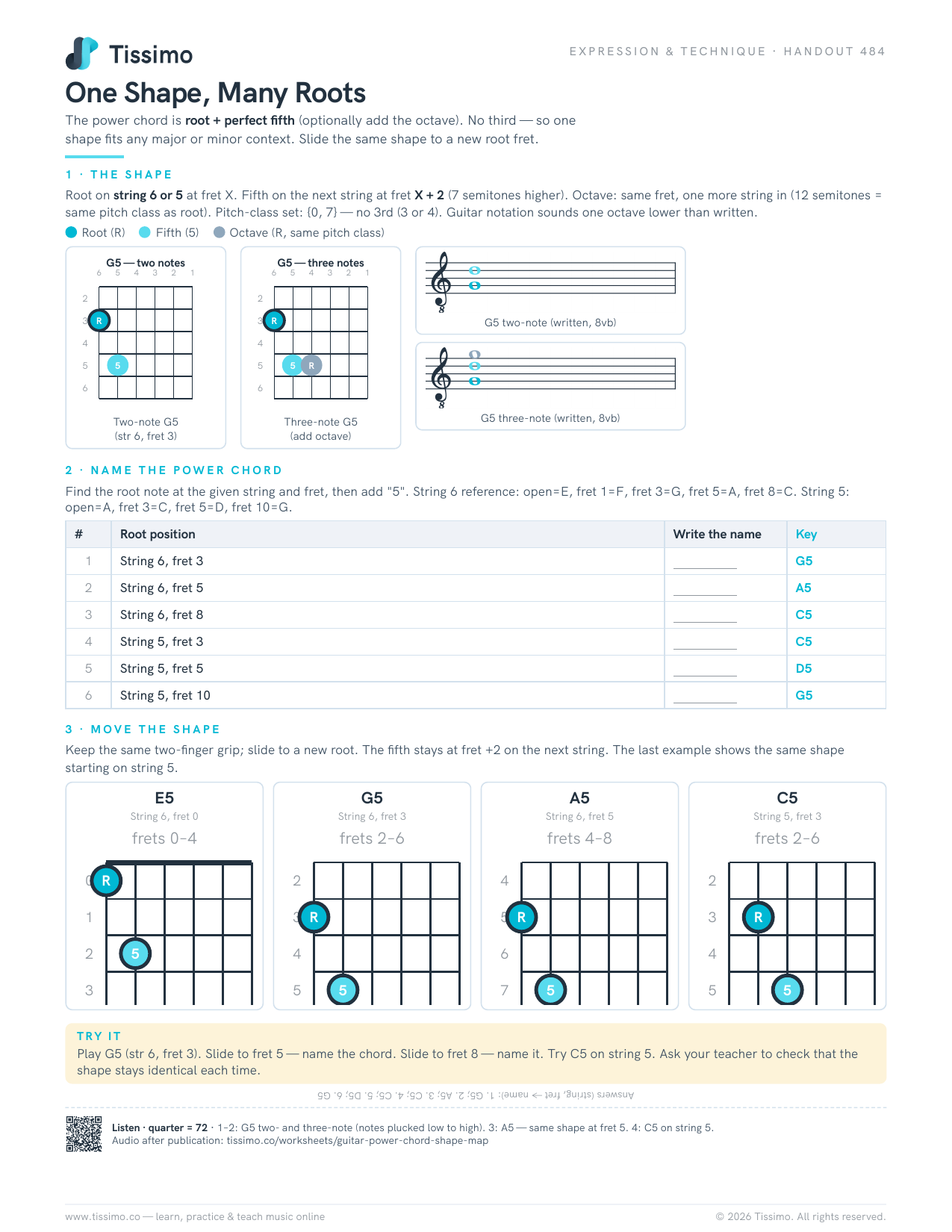 One Shape, Many RootsThe power chord is root + perfect fifth (optionally add the octave). No third — so one shape fits any major or minor context. Slide the same shape to a new root fret.
Comments