Notation & Symbols
Chord Diagram (Chord Box)
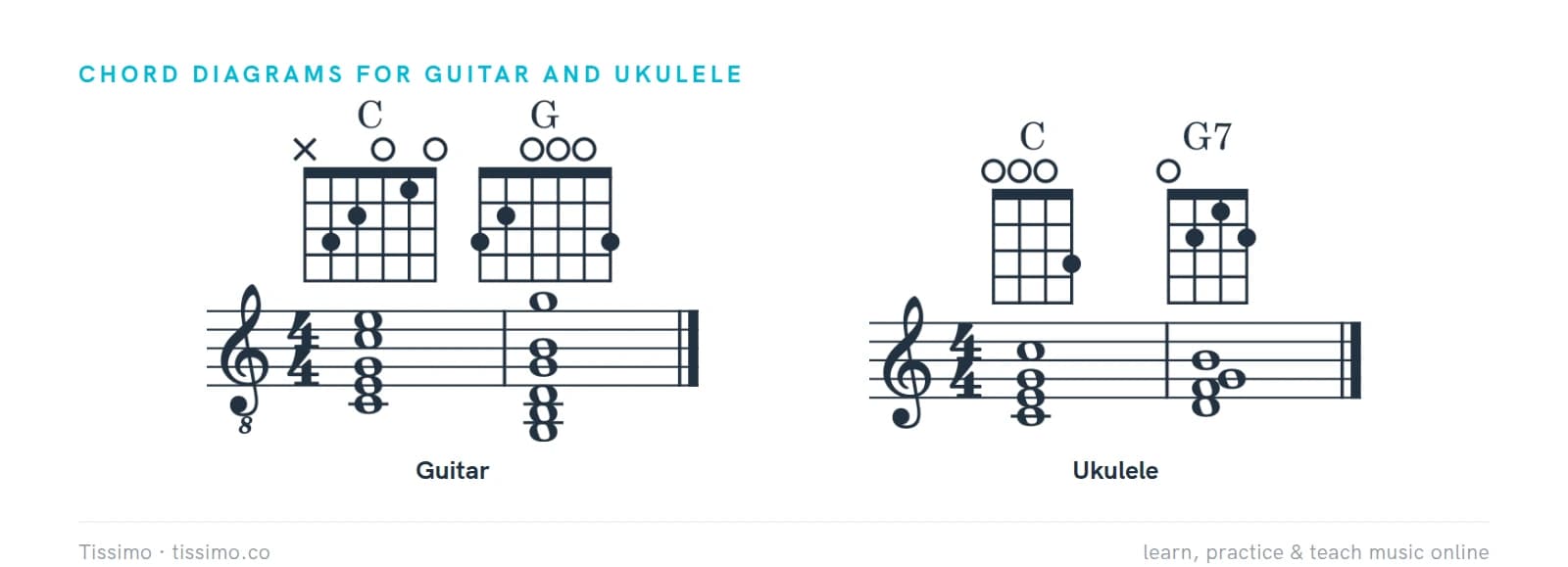
A chord diagram, or chord box, is a small grid that shows how to finger a chord on a guitar or ukulele: vertical lines are strings, horizontal lines are frets and dots mark where to press.
A chord diagram is a picture of the neck of a fretted instrument, standing upright and facing you. It shows one chord shape: which strings to play, where to press them and which to leave open. Guitar and ukulele songbooks print chord diagrams above the music, under the chord symbol, so you can see the shape without working it out.
How to read a chord diagram
- Vertical lines are strings. A guitar diagram has six. The line at the far left is the low E (string 6) and the line at the far right is the high E (string 1). A ukulele diagram has four: G, C, E and A from left to right.
- Horizontal lines are frets. The thick line at the top is the nut. The spaces below it are the first, second and third frets, and so on.
- A dot on a string means press that string in that fret space, just behind the fret. Many diagrams print a finger number inside the dot or in a row under the grid: 1 index, 2 middle, 3 ring, 4 little finger.
- O above a string: play it open. X above a string: do not play it.
- A curved line or bar across several strings is a barre: one finger presses all of them.
- A fret number beside the top of the grid, such as 5fr, means the shape sits higher up the neck. The top line is then a fret, not the nut.
From diagram to sound
Read a diagram from the top down. First check the row of X and O signs, so you know which strings you will strum. Then place each finger, and strum from the lowest string the chord uses. In the C diagram above, the X on string 6 means your strum starts on string 5. If a string buzzes or sounds dead, check that the finger is close behind the fret and is not touching the string next to it.
The staff under each diagram shows the notes the shape sounds, from lowest to highest. The guitar's open C uses only three notes, C, E and G, but it plays C and E twice, in different octaves.
Diagram, tab and chord chart
A chord diagram shows a shape, not when to play it. Tab shows strings and frets in time, note by note, and turns the picture on its side: in tab the strings run across the page, with the highest string on top. A lead sheet or chord chart shows when the chords change, and diagrams printed with it tell you which shape to use. One chord can have several diagrams: C can be the open shape above, or a barre shape further up the neck.
Practice reading four-string diagrams in Chord Shape Check: Ukulele and Four Chords, Four Shapes, and guitar shapes in Change on the Count: Open Guitar Chords.
Common questions
What do X and O mean on a chord diagram?
An O over a string means play it open, with no finger on it. An X means do not play that string: start your strum on the next string, or let a finger lightly touch it so it stays silent.
Which side of a guitar chord diagram is the low E string?
The left. The diagram shows the neck upright and facing you, so the thick low E (string 6) is the leftmost line and the high E (string 1) the rightmost.
Practice it: free worksheets
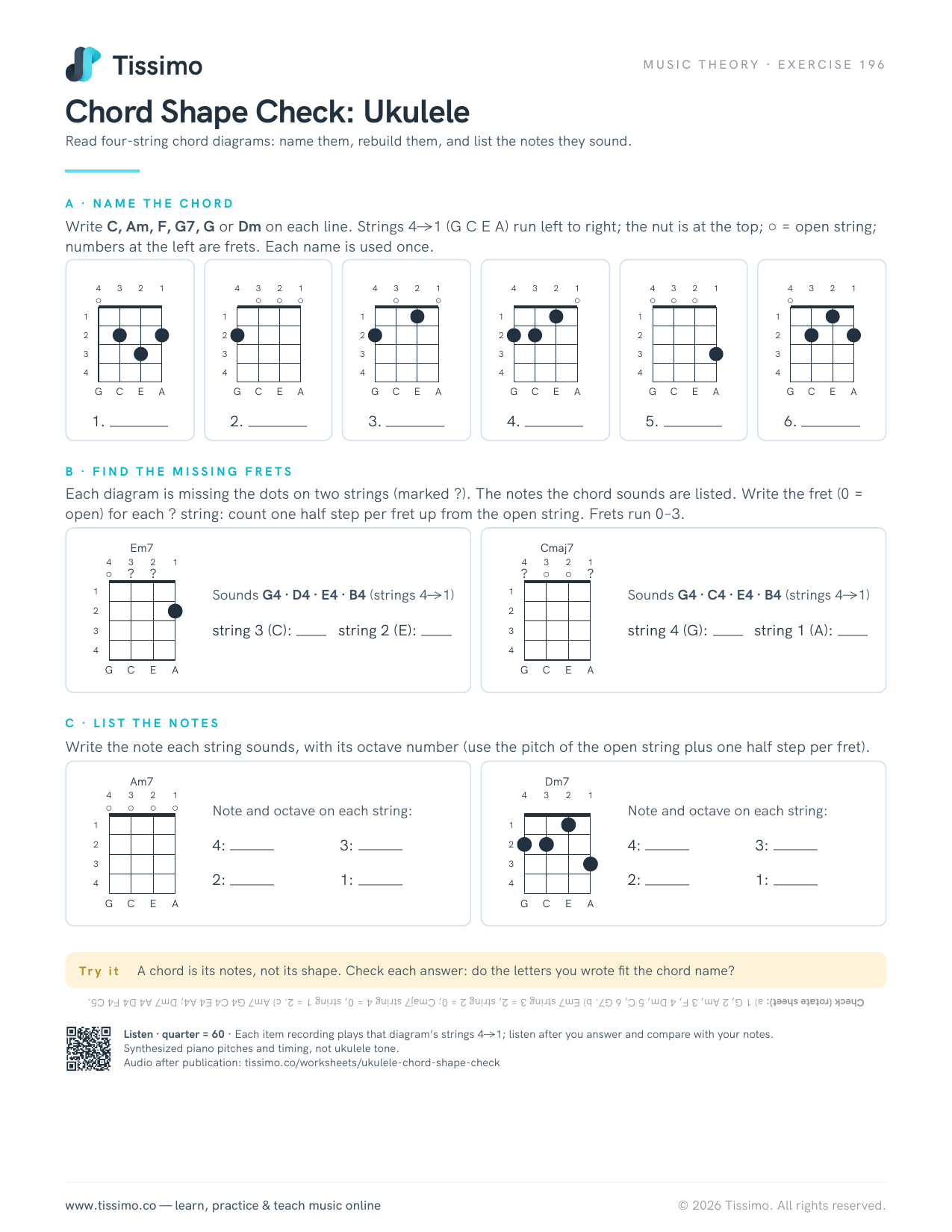 Chord Shape Check: UkuleleRead four-string chord diagrams: name them, rebuild them, and list the notes they sound.
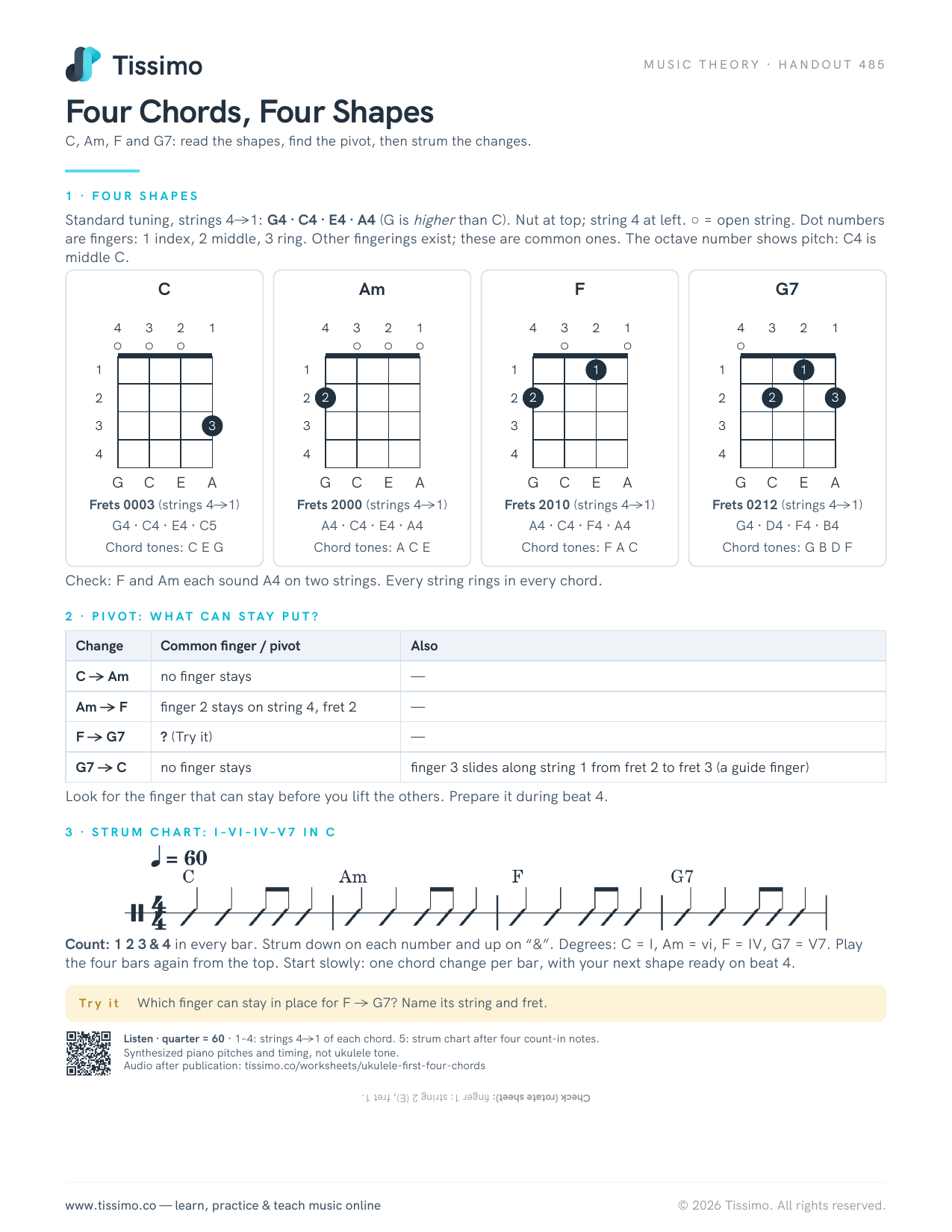 Four Chords, Four ShapesC, Am, F and G7: read the shapes, find the pivot, then strum the changes.
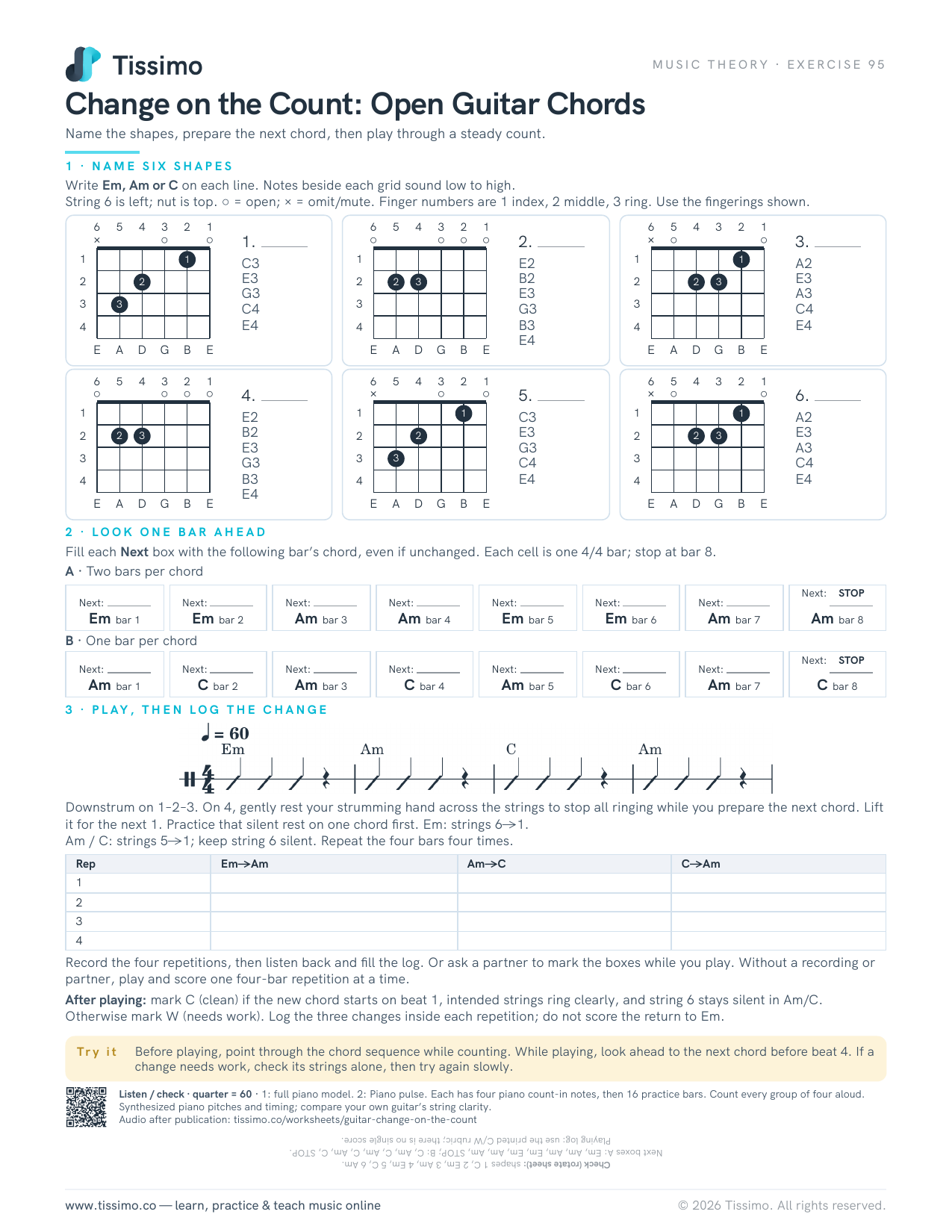 Change on the Count: Open Guitar ChordsName the shapes, prepare the next chord, then play through a steady count.
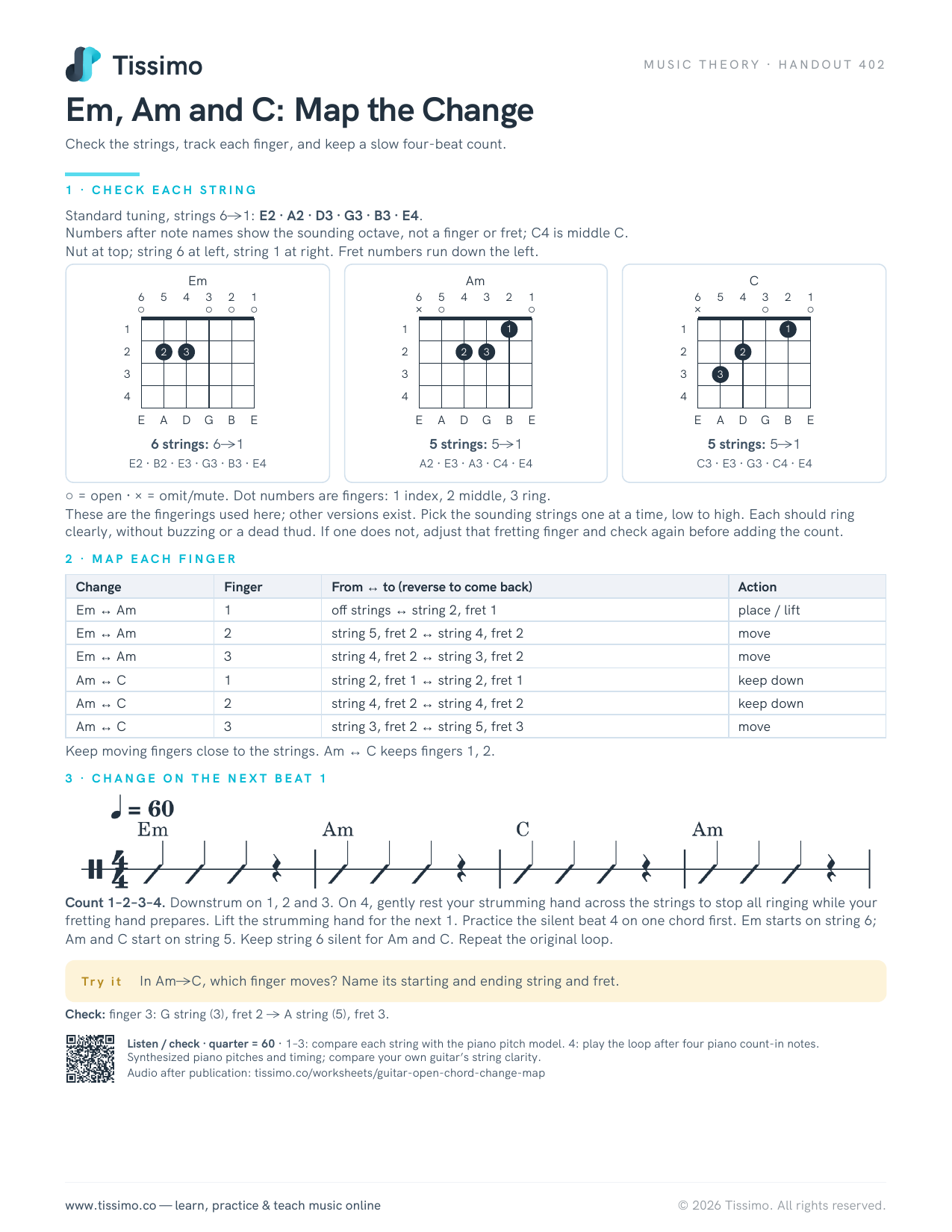 Em, Am and C: Map the ChangeCheck the strings, track each finger, and keep a slow four-beat count.
Comments