Technique & Performance
Hammer-On and Pull-Off
A hammer-on and a pull-off sound a second note on a string with the fretting hand alone: a hammer-on taps a finger down onto a higher fret, and a pull-off plucks the string as a finger leaves it, sounding a lower note.
On a guitar, the picking hand usually starts every note. Hammer-ons and pull-offs let the fretting hand make a second note on its own, so two or more notes come from one pick. The result is smooth and connected, guitar legato. Classical guitarists call both techniques slurs.
Hammer-on
Pick a note, fretted or open, then bring a free finger down sharply onto a higher fret of the same string, just behind the fret. The force of the finger sounds the new note without a second pick. Aim to make it nearly as loud as the picked note.
Pull-off
Fret both notes first: the lower note with one finger and the higher note with another. Pick the higher note, then pull the higher finger slightly sideways off the string, so it plucks the string as it leaves. The lower note sounds. A finger that simply lifts straight off gives a weak, fading note. The finger on the lower note must already be pressing firmly; if the lower note is an open string, there is nothing to hold.
Two Notes, One Pluck walks through both movements, and Count Notes, Then Count Plucks checks which notes need the pick.
How they are written
On the staff and in tab, a slur joins the two notes. In tab an H (hammer-on) or P (pull-off) is often printed above it, and text tabs write the letters between the fret numbers: 5h7 is a hammer-on from fret 5 to fret 7, 7p5 a pull-off back down. The slur goes up for a hammer-on and down for a pull-off; the letter only confirms it.
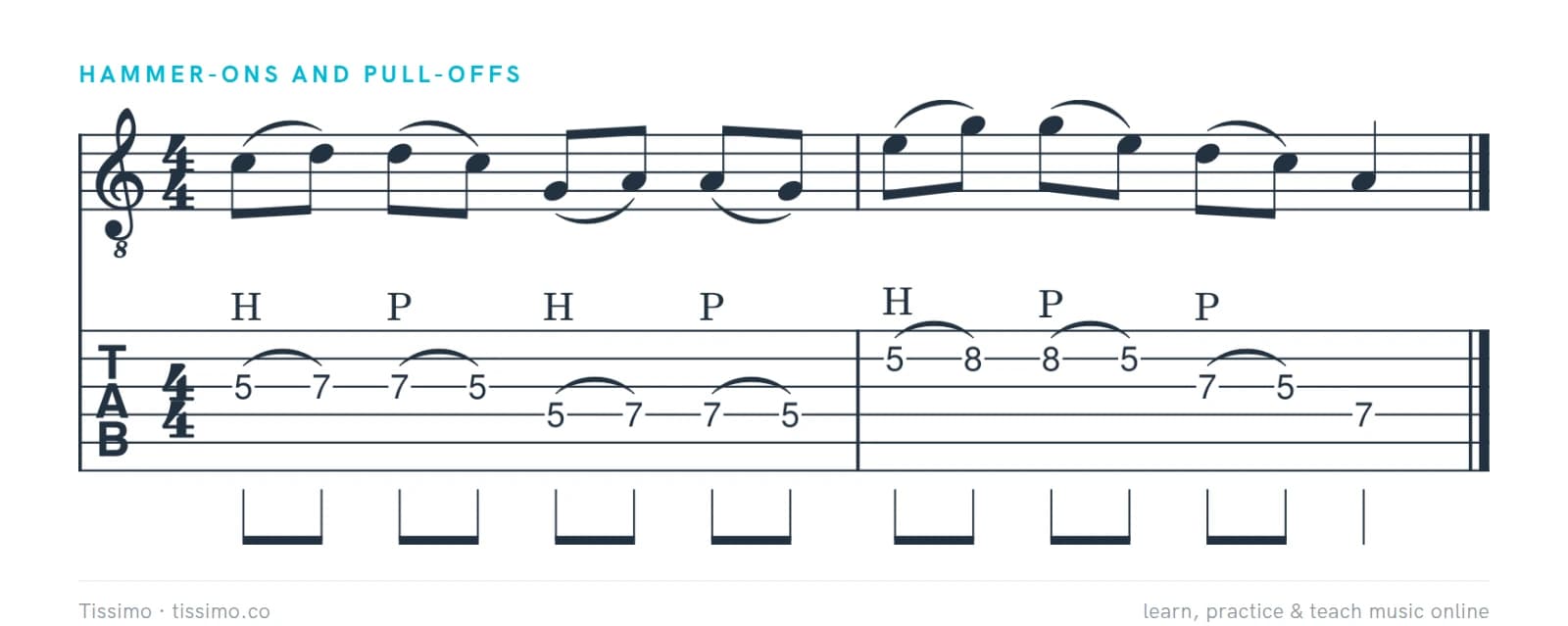
TAB Detective and One Guitar Phrase, Two Notations practice reading staff and tab together.
Slur or tie?
A slur between two different pitches in guitar music means "pick only the first note". A curve between two notes of the same pitch is a tie: the note is held, not played again. Fast alternating hammer-ons and pull-offs make a trill, and slides, bends and slurs together give lead guitar much of its fluency; see string bending.
Common questions
What do h and p mean in guitar tab?
h is a hammer-on and p is a pull-off. 5h7 means pick fret 5, then hammer a finger onto fret 7 without picking again; 7p5 means pick fret 7 and pull off to fret 5.
Do you pick the second note of a hammer-on?
No. You pick only the first note. The second note comes from the fretting finger landing on the string (a hammer-on) or plucking it as it leaves (a pull-off).
Practice it: free worksheets
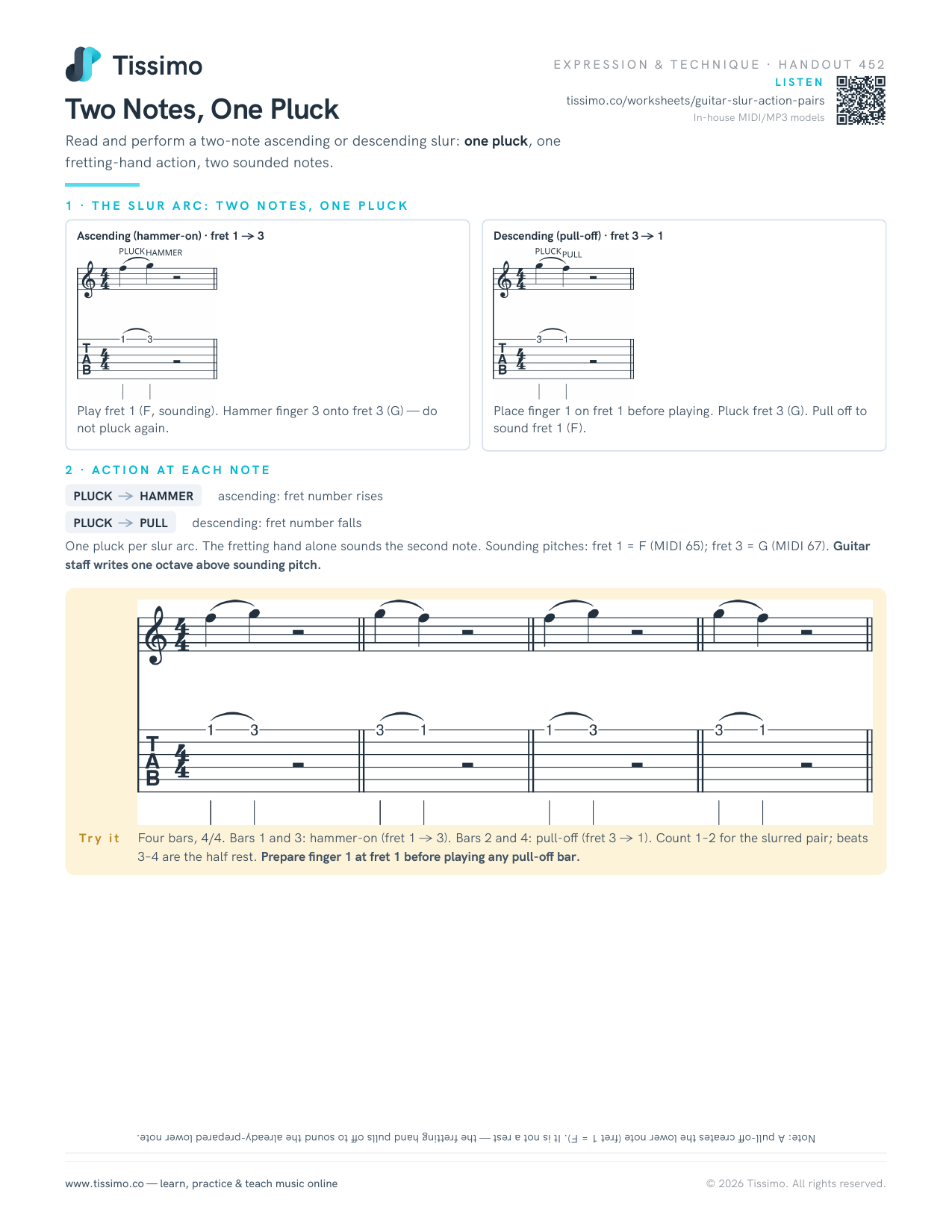 Two Notes, One PluckRead and perform a two-note ascending or descending slur: one pluck, one fretting-hand action, two sounded notes.
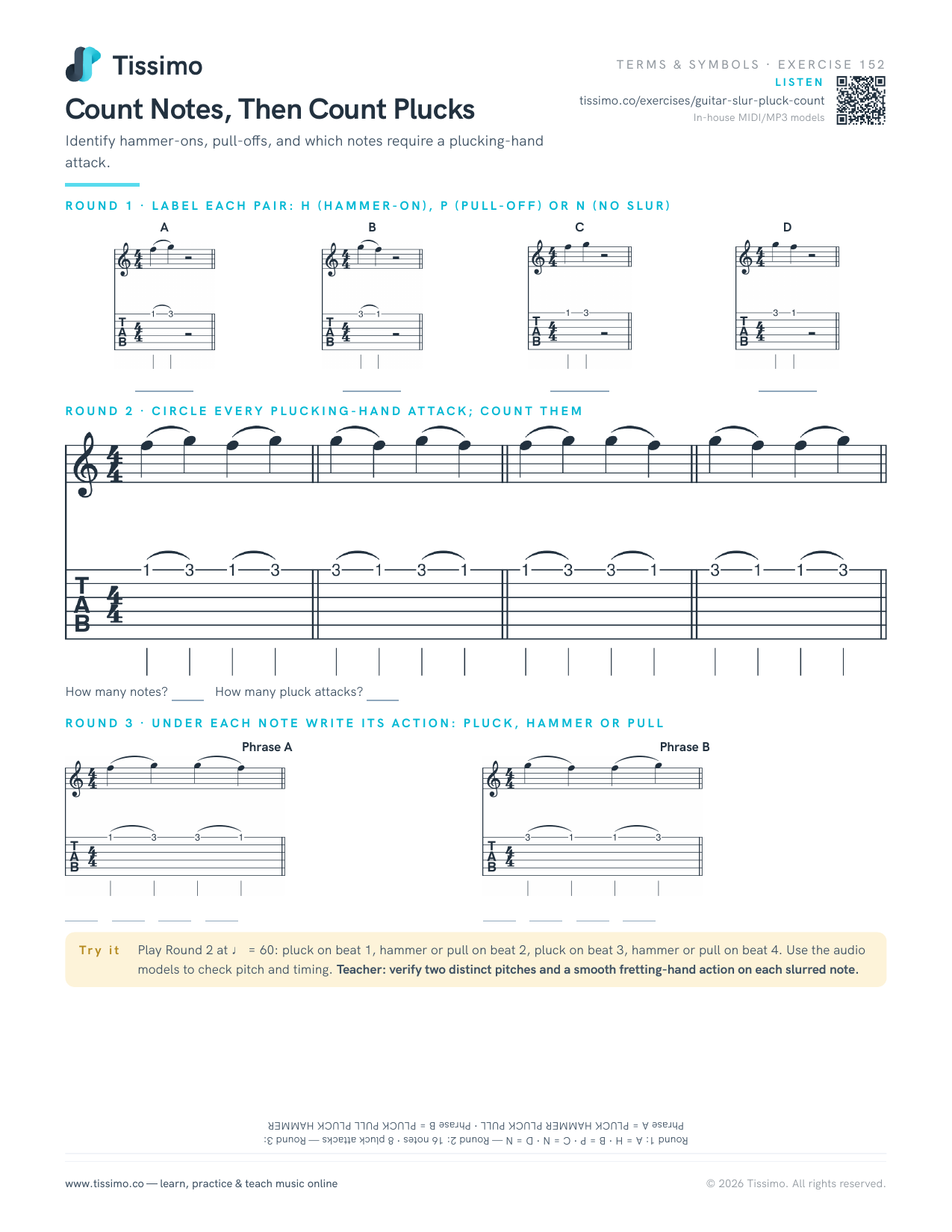 Count Notes, Then Count PlucksIdentify hammer-ons, pull-offs, and which notes require a plucking-hand attack.
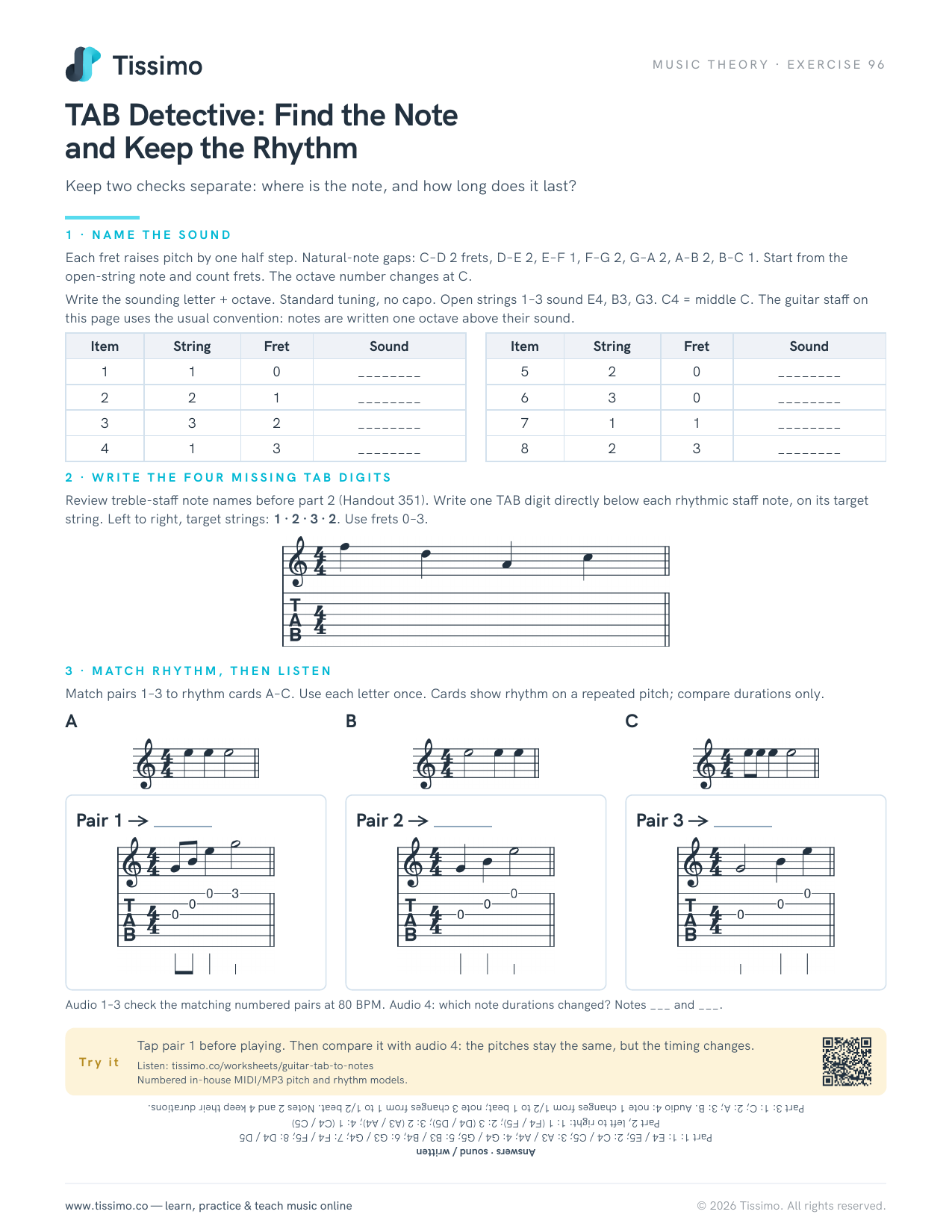 TAB Detective: Find the Note and Keep the RhythmKeep two checks separate: where is the note, and how long does it last?
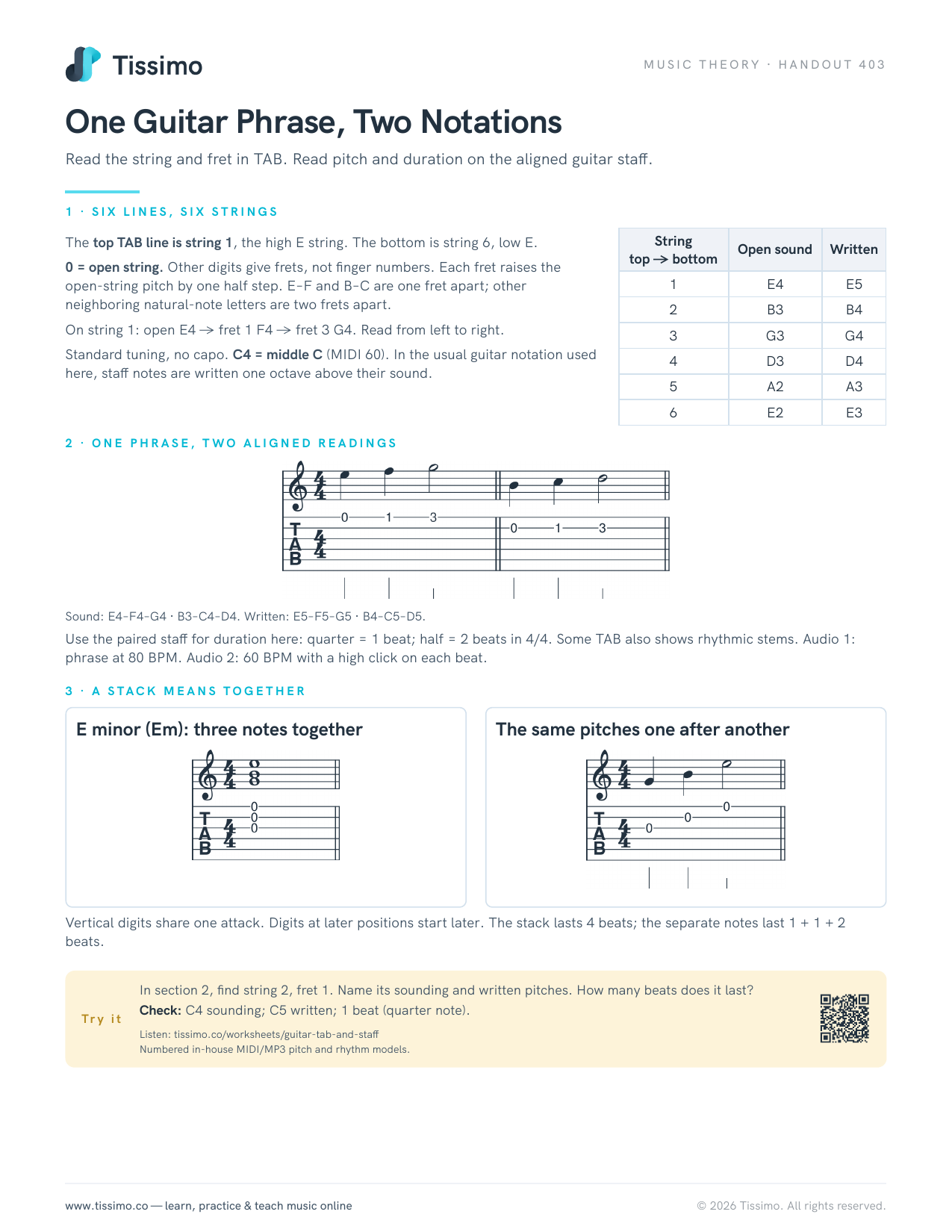 One Guitar Phrase, Two NotationsRead the string and fret in TAB. Read pitch and duration on the aligned guitar staff.
Comments