Technique & Performance
Cross-Stick (Rim Click)
Cross-stick is a snare drum technique in which one end of the stick stays on the drumhead while the shaft clicks against the rim, giving a dry, woody click instead of the full snare sound.
For a cross-stick, you lay the stick across the snare drum instead of striking the head with its tip. One end stays on the head, and you bring the shaft down onto the rim on the far side. The result is a short, dry, woody click, much quieter than a normal snare stroke. Many drummers turn the stick around, so that the thicker butt end does the clicking, for a fuller sound.
Drummers often use it for the backbeat in quiet songs, and it is part of the soft percussion sound of bossa nova.
Cross-stick, head stroke or rimshot?
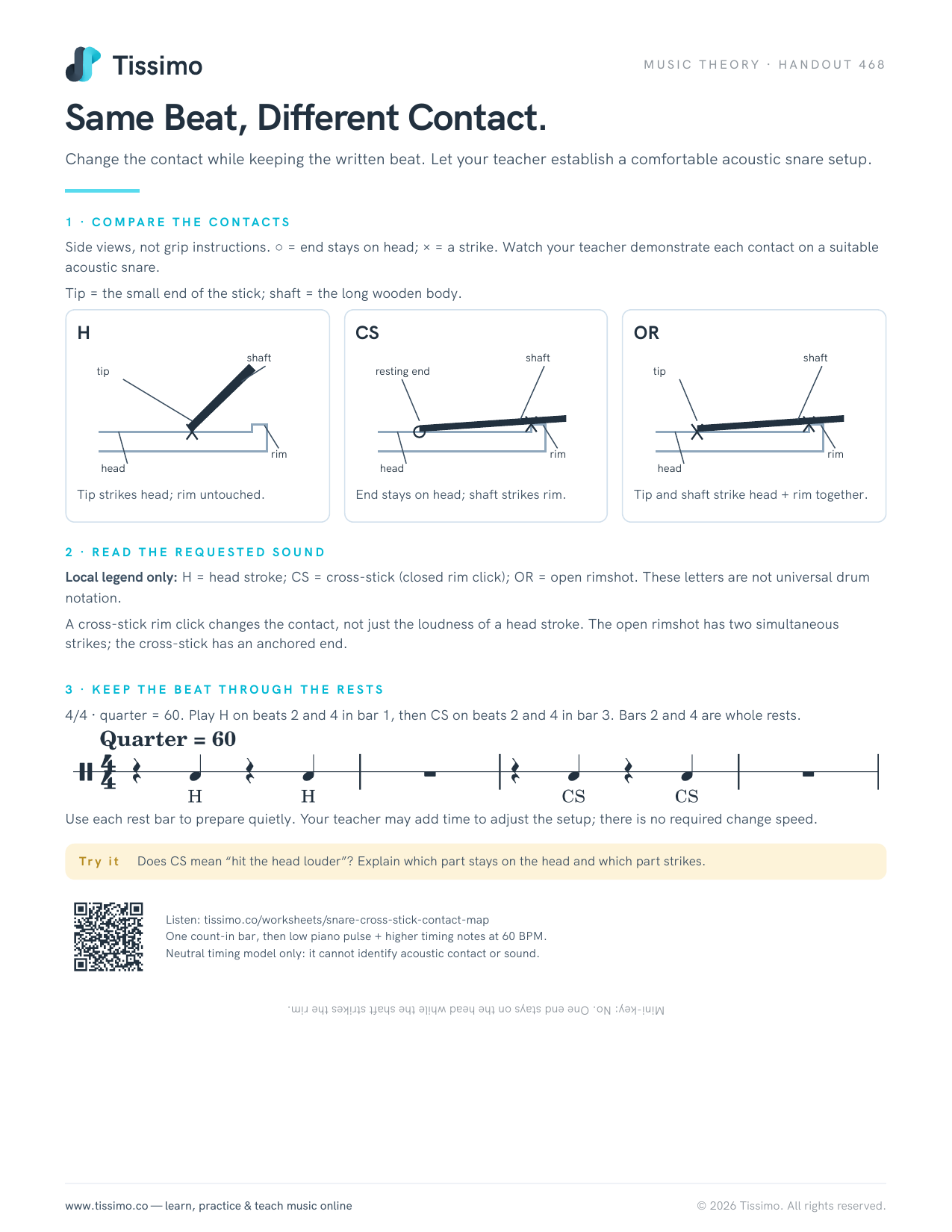
The worksheet Same Beat, Different Contact compares three contacts:
- Head stroke: the tip strikes the head; the rim is not touched.
- Cross-stick: one end stays on the head and the shaft strikes the rim.
- Rimshot: the tip hits the head and the shaft hits the rim at the same moment, for a loud, cutting accent.
So a rim click and a rimshot are different strokes, even though both use the rim.
How it is written
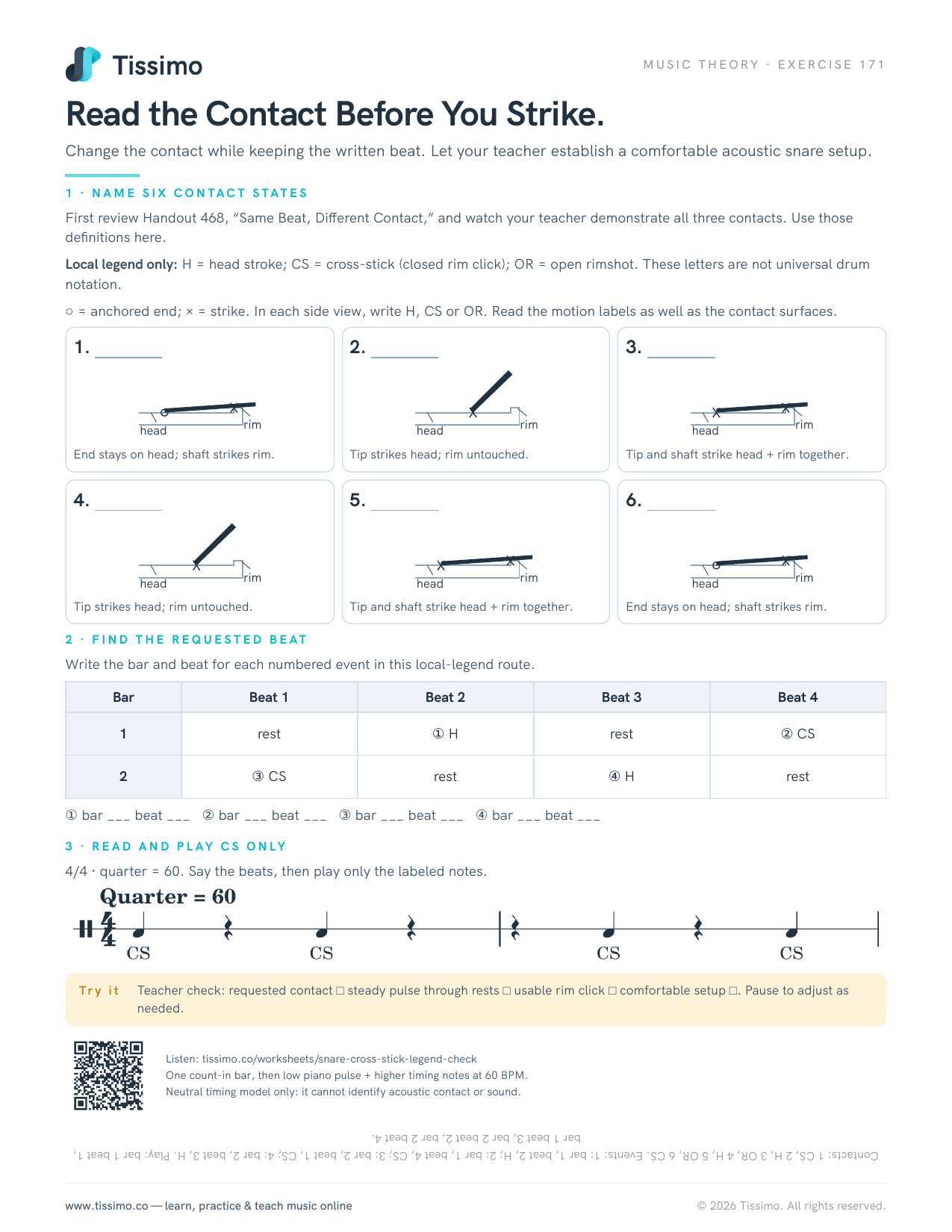
There is no single standard. Many drum parts write a cross-stick as an x notehead in the snare drum's space, but publishers differ: some use another notehead, some add words, and an x can mean something else in another book. Check the key at the start of the part, as you would for any drum kit layout. The worksheets use their own letters, CS for cross-stick, and say that they are a local legend, not universal notation; Read the Contact Before You Strike practices reading them.
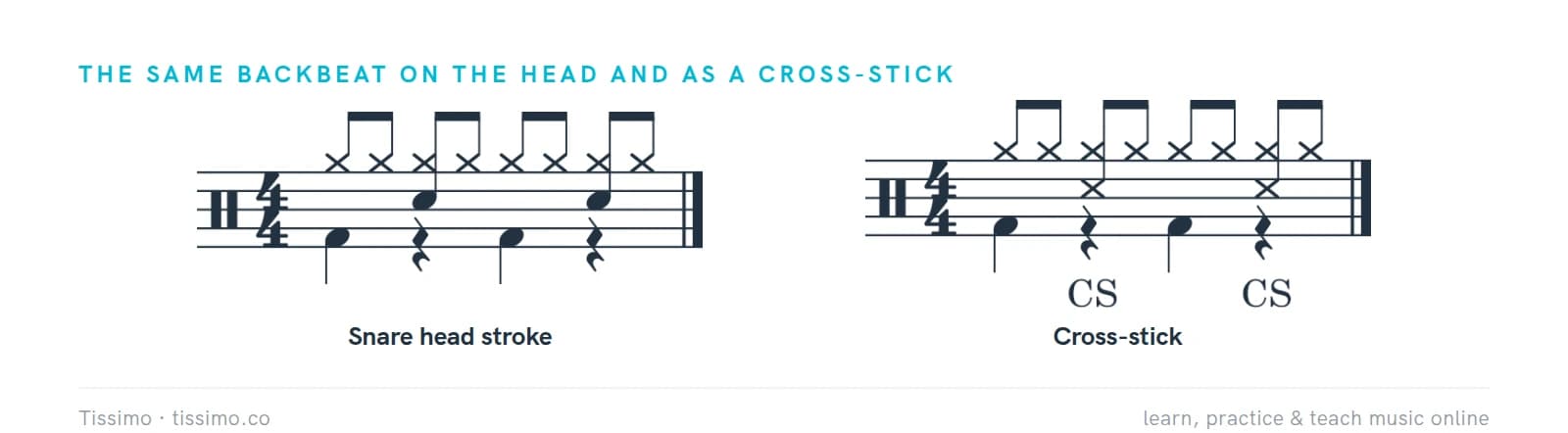
How to play it
- Lay the stick across the drum with one end on the head and the shaft over the rim.
- Find the sweet spot. Slide the stick a little in your hand until the click sounds full and woody, and remember where it is.
- Keep the end on the head and let the shaft fall onto the rim.
- Practice the switch. Play a few bars with ordinary snare strokes, then a few with cross-stick, without losing the beat. Use a rest or a bar of hi-hat to change hand position until the change feels easy.
Common questions
Is a rim click the same as a rimshot?
No. In a rim click (cross-stick) one end of the stick stays on the head and only the shaft hits the rim, for a quiet click. In a rimshot the stick hits the head and the rim at the same moment, for a loud accent.
What does an x in the snare space mean in drum music?
Often a cross-stick, but not in every book. Drum notation is not fully standardized, so check the key at the start of the part.
Comments